



Public Group
Active 1 year, 3 months ago
Group Type By Country
Group Leadership
- Group Administrators
-

Comoros Farmers Community
How can fishing and farming be combined for better income in Comoros?
- This topic is empty.
- AuthorPosts
- September 18, 2026 at 11:37 am #854888
 Agric4ProfitsModerator
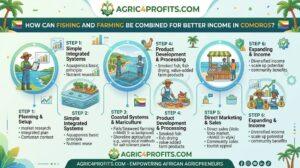
Fishing and farming can be combined to create a more diverse and resilient livelihood for households in the Comoros Islands. Many rural families depend on agriculture, fisheries, livestock, and other natural resources, but they often treat these activities as separate businesses.
An integrated approach allows farmers and fishers to make better use of available land, water, labour, organic materials, and local markets. A household involved in fishing can use agricultural activities to generate income when fishing conditions are poor, while a farmer can use fish-related activities to create an additional source of revenue.
The Comoros has a strong connection with both agriculture and fisheries. Crops such as cassava, bananas, coconuts, vegetables, and other food crops can be produced alongside livestock and fishing activities. By combining these activities carefully, households can spread their financial risks and create multiple sources of income throughout the year.
The goal is not necessarily to operate a large commercial farm and fishing business at the same time. A small-scale household enterprise can combine selected agricultural and fishing activities according to available resources.
1. Combine Fishing With Crop Farming
One of the simplest ways to combine fishing and farming is to operate a small crop farm alongside fishing activities.
A fisher can cultivate crops such as cassava, bananas, sweet potatoes, vegetables, maize, or other suitable crops. These crops can provide food for the household while surplus production can be sold in local markets.
This approach is particularly useful because fishing income can fluctuate according to weather, sea conditions, fish availability, fuel costs, and market prices. Crop farming provides another source of food and income when fishing revenue is lower.
Farmers should select crops according to the soil, rainfall, elevation, available land, and local demand.
Agricultural activity Possible benefit to fishing households Cassava farming Food and additional market income Banana farming Regular household food and sales Vegetable production Short-term income from local markets Sweet potato production Food security and additional revenue Coconut production Long-term income and multiple products Maize production Food, livestock feed, and possible sales A household does not need to grow every crop listed above. Choosing two or three suitable crops can make the system easier to manage.
2. Use Fish Waste and Farm Resources Efficiently
Fishing and farming can be connected through the recycling of useful materials.
Fish processing can produce waste such as heads, bones, and other parts that may have limited value for direct consumption. Where regulations and food-safety practices allow, some fish waste can be processed into useful agricultural inputs such as fish-based fertilizer.
Fish waste should never simply be dumped around farms or water sources because decomposing organic material can create unpleasant odors and environmental problems.
Farmers can also use crop residues carefully within the wider farming system. Some plant materials can become compost, livestock feed, mulch, or other farm inputs when they are suitable and properly prepared.
This creates a more circular system in which fewer useful materials are wasted.
Resource Possible use Fish processing waste Properly processed agricultural fertilizer Crop residues Compost, mulch, or suitable livestock feed Animal manure Compost and soil improvement Vegetable waste Composting Coconut residues Mulching, fuel, or other appropriate farm uses Freshwater from suitable systems Irrigation where safe and appropriate Farmers should make sure that any material used on crops is safe and does not introduce pathogens, excessive salt, contaminants, or other substances that could damage soil or crops.
Read Also: Caafimaadka Daawada ee Astragalus ( Milkvetch)
3. Develop Small-Scale Fish Farming Where Suitable
Fishing households can also consider aquaculture as an additional activity where water resources, technical knowledge, and suitable sites are available.
Aquaculture involves raising fish under controlled conditions rather than depending entirely on wild fish catches. Depending on local environmental conditions and available expertise, farmers may explore suitable freshwater or other aquaculture systems.
However, fish farming should not be started simply because it sounds profitable. Farmers need to understand water availability, species selection, feed requirements, construction costs, disease management, and the local market.
A small pond or other appropriate production system can potentially complement crop farming. Water and nutrients from an aquaculture system may also be incorporated into an integrated farm where the system is technically appropriate and environmentally safe.
Before establishing fish ponds, farmers should check local requirements and obtain appropriate technical advice.
4. Combine Livestock, Crops, and Fishing
Fishing households can expand the integrated model by adding small livestock enterprises.
Goats, poultry, and other suitable livestock can provide meat, eggs, breeding stock, manure, and additional income. These enterprises can operate alongside crop production and fishing when the farmer has enough feed, space, water, and labour.
For example, poultry manure can contribute to compost production, while some crop residues can be used as livestock feed where appropriate. Livestock can then provide another source of income when fishing catches are low.
The following model shows how several activities can complement one another.
Activity Main output Possible connection Fishing Fish Food and market income Vegetable farming Vegetables Household food and sales Poultry Eggs and meat Additional income Goat farming Meat and breeding stock Additional income and manure Composting Organic fertilizer Supports crop production Fish processing Fish products Higher-value sales The farmer should begin with activities that are manageable rather than trying to operate everything at once.
5. Grow Crops That Support the Household Enterprise
Crop selection should consider more than food production. Farmers should look at how crops can support other parts of the business.
For example, some crop residues can be used as livestock feed, while other plant materials can be composted or used as mulch. Crops that mature at different times can also help provide income throughout the year.
Farmers should avoid growing crops solely because they are easy to cultivate. Market demand is equally important.
A useful crop selection strategy should consider:
- Local market demand
- Production costs
- Rainfall requirements
- Soil conditions
- Labour requirements
- Harvest period
- Storage potential
- Transportation costs
- Household food needs
Combining crops with fishing can help reduce dependence on a single source of income.
6. Process Fish and Farm Products to Increase Their Value
Selling raw products is not always the only option.
Fishing households can potentially increase income by processing fish into products that have a longer shelf life or are easier to transport. Depending on local regulations, facilities, and food-safety requirements, fish may be cleaned, dried, smoked, or otherwise processed.
Farm products can also be processed. Cassava, coconut, bananas, vegetables, and other agricultural products may offer opportunities for value addition.
The key is to calculate the additional cost of processing against the expected increase in selling price.
Raw product Possible value-added product Fresh fish Dried or smoked fish Coconut Coconut-based products Cassava Processed cassava products Banana Dried or other processed products Vegetables Cleaned, packaged, or processed produce Eggs Packaged eggs for local sale Food hygiene should always be a priority. Fish and other perishable foods require proper handling, storage, and transportation to reduce contamination and spoilage.
7. Use Fishing Income to Strengthen the Farm
Income from fishing can be reinvested into agricultural production.
Instead of spending all fishing income on household consumption, a family can reserve part of its earnings for productive investments such as improved seeds, farm tools, irrigation equipment, livestock, fencing, storage facilities, or small-scale processing equipment.
Similarly, agricultural income can help a fishing household purchase or maintain fishing equipment when necessary and legally permitted.
This creates a cycle in which one activity supports the other.
A household might use income from a good fishing season to purchase vegetable seeds and livestock. Later, income from vegetables and livestock can help the household cope with periods of poor fishing conditions.
This type of diversification can make household income less dependent on one activity.
8. Plan Production Around Seasons and Market Demand
Seasonal planning is important because both agriculture and fishing can be affected by weather and environmental conditions.
Farmers should identify periods when particular crops are likely to mature and periods when fishing may be more or less productive. The aim is to avoid having all income dependent on one short period.
A simple annual plan can include planting dates, expected harvests, fishing periods, livestock production, processing activities, and market opportunities.
Period Farming activity Fishing-related activity Planting period Prepare land and plant crops Maintain equipment and plan fishing activities Crop growth period Weed, fertilize, and manage crops Fishing and fish processing Harvest period Harvest and sell crops Continue fishing where conditions permit Low farm activity period Prepare the next crop cycle Increase focus on fishing or processing Year-round Livestock management Fish marketing and equipment maintenance The exact calendar should be adapted to local weather, crop cycles, fishing conditions, and market demand.
9. Improve Storage and Reduce Post-Harvest Losses
Income can be lost when fish and agricultural products spoil before they reach consumers.
Fish is particularly perishable, so proper handling immediately after landing is important. Depending on the available facilities, ice, refrigeration, drying, smoking, or other appropriate preservation methods can help reduce losses.
Farmers should also improve the storage of crops where possible. Good storage protects harvested products from moisture, insects, rodents, and contamination.
Reducing post-harvest losses means that more of what the household produces can actually be sold or consumed.
This is especially important for small-scale producers because losing a significant portion of a harvest can eliminate much of the expected profit.
10. Sell Through Cooperatives and Local Markets
Individual farmers and fishers may have difficulty negotiating good prices when they sell small quantities separately.
Working with producer groups, cooperatives, or other organized marketing arrangements can allow households to combine products and potentially reduce some transportation and marketing costs.
A group could coordinate the sale of fish, vegetables, livestock products, or processed foods.
However, farmers should carefully examine the rules, costs, management structure, and reliability of any cooperative before joining.
Local markets, restaurants, hotels, retailers, and direct consumers may also provide opportunities for selling products.
11. Protect Marine and Agricultural Resources
Combining fishing and farming should not lead to environmental damage.
Fishers should follow local fishing laws and avoid destructive fishing practices. Farmers should also protect soil and water resources by preventing excessive erosion, maintaining vegetation where appropriate, and using fertilizers and other farm inputs responsibly.
Waste from fish processing should not be dumped into rivers, coastal waters, or drainage channels.
Similarly, agricultural chemicals should be handled responsibly to reduce the risk of contaminating water bodies.
A healthy marine environment supports fisheries, while healthy agricultural land supports long-term crop production. Protecting both is therefore part of protecting household income.
12. Start Small and Track the Income From Each Activity
Farmers should not assume that diversification automatically means higher profits.
Each activity has costs. Fishing may require fuel, equipment maintenance, ice, transport, labour, and fishing gear. Crop production may require seeds, fertilizer, labour, tools, irrigation, and transportation.
Keeping separate records for each enterprise allows farmers to see which activities are generating income and which ones need improvement.
Record to keep Why it matters Sales revenue Shows income generated Feed and input costs Shows production expenses Equipment costs Helps calculate operating expenses Transport costs Shows the true cost of reaching markets Labour costs Helps measure actual profitability Losses and spoilage Identifies areas for improvement Start with one fishing activity and one or two complementary farming activities. Once the system becomes manageable and profitable, the household can consider expanding.
Frequently Asked Questions
1. Can fishing and farming really provide income at the same time?
Yes. A household can combine fishing with crop production, livestock, aquaculture, or food processing. The main advantage is that income does not have to come from fishing alone.
2. What crops are suitable for a fishing household in Comoros?
Suitable crops depend on the island, soil, rainfall, available land, and market demand. Cassava, bananas, vegetables, sweet potatoes, maize, and coconuts are examples of crops that may fit different farming systems when properly matched to local conditions.
3. Can fish waste be used as fertilizer?
Some fish processing waste can be converted into agricultural fertilizer when it is properly processed and handled. Farmers should avoid dumping raw fish waste around farms or into water bodies because it can create sanitation and environmental problems.
4. Is fish farming a good alternative to fishing in Comoros?
Aquaculture can provide an additional source of fish production where suitable water resources, technical knowledge, inputs, and markets are available. Farmers should first assess the costs, environmental conditions, species, feed requirements, and local market before investing.
5. How can I make more money from fishing and farming together?
Focus on diversification, value addition, good record-keeping, reduced post-harvest losses, and reliable markets. Rather than simply producing more, farmers should look for ways to reduce waste, improve product quality, process products where profitable, and reinvest part of their income into productive activities.
Combining fishing and farming can give households in Comoros several sources of food and income instead of depending entirely on one activity. Crop production, livestock, fish processing, aquaculture, and fishing can complement one another when they are carefully planned.
The best approach is to begin on a manageable scale, use available resources efficiently, protect marine and agricultural environments, and keep accurate financial records. Over time, a well-managed integrated farming and fishing enterprise can provide greater income stability while making better use of the household’s land, labour, and natural resources.
Read Also: what-i-cannot-recycle-list-of-non-recyclable-items
- AuthorPosts


- You must be logged in to reply to this topic.