



Public Group
Active 1 year, 3 months ago
Group Type By Country
Group Leadership
- Group Administrators
-

Comoros Farmers Community
How can I increase sweet potato yield on small farms in Comoros?
- This topic is empty.
- AuthorPosts
- September 16, 2026 at 5:50 pm #854444
 Agric4ProfitsModerator
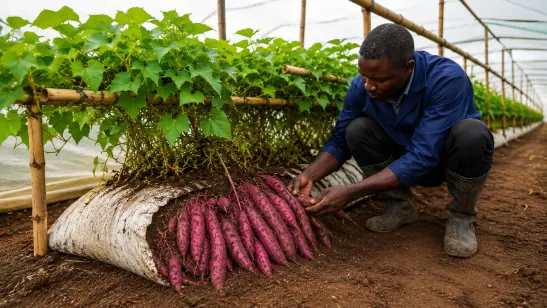
Sweet potato can be an important crop for smallholder farmers in Comoros because it can provide food for households while requiring relatively little land. However, getting a good harvest depends on using healthy planting materials, maintaining fertile soil, managing water properly and protecting the crop from weeds, pests and diseases.
Small farmers can improve production through simple practices that make better use of available land and resources. Good land preparation, suitable varieties, proper spacing and timely field management can help increase the number and quality of roots produced.
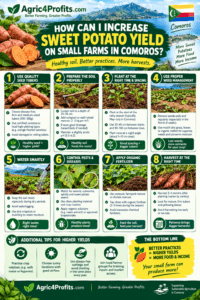
The following practices can help farmers in Comoros achieve better sweet potato yields from small plots.
1. Choose Healthy Planting Materials and Prepare the Soil
The quality of planting material has a major influence on sweet potato production. Farmers should select strong and healthy vine cuttings from vigorous plants that show no obvious signs of disease or serious pest damage. Weak or diseased vines can result in poor establishment and lower yields.
Before planting, prepare the soil thoroughly and remove weeds, large stones and hard clumps. Sweet potato develops its storage roots underground, so loose soil gives the roots enough space to expand properly.
Creating ridges or raised beds can be particularly useful in areas that receive heavy rainfall. Raised planting areas improve drainage and reduce the risk of water remaining around the developing roots.
Adding well-decomposed manure or compost can improve soil fertility and structure. Organic matter also helps the soil retain moisture while providing nutrients for plant development.
Farmers should avoid applying fresh manure directly to newly planted vines. Properly decomposed manure is safer and allows nutrients to become available gradually.
2. Plant at the Right Time and Use Proper Spacing
Sweet potato should be planted when there is enough moisture in the soil to support the establishment of new vines. In rainfed areas of Comoros, farmers should take advantage of periods when rainfall becomes sufficiently reliable.
Planting into very dry soil can cause poor establishment, while planting in excessively wet conditions can create problems with root development. Farmers who have access to irrigation have greater flexibility because they can provide water when rainfall is insufficient.
Spacing is also important. Plants that are placed too close together may compete for sunlight, water and nutrients. Excessive spacing can leave large areas of exposed soil and encourage weed growth.
The appropriate distance depends on the variety and growing conditions. Farmers should maintain relatively uniform spacing so that plants have enough room to develop healthy vines and storage roots.
Timely planting combined with proper spacing gives the crop a strong start and helps farmers make better use of their available land.
Read Also: 16 Medicinal Health Benefits Of Sassafras albidum (Common Sassafras)
3. Manage Water, Weeds and Soil Fertility
Sweet potato needs adequate moisture during establishment and root development. Although the crop can tolerate some dry conditions once established, prolonged moisture stress can reduce root size and overall production.
During dry periods, farmers with access to water should provide irrigation when necessary. Water should be managed carefully because excessive moisture can create unfavourable conditions for the roots.
Mulching with clean plant materials such as dry grass or suitable crop residues can help reduce evaporation and keep the soil moist. Mulch can also suppress weeds and gradually contribute organic matter to the soil.
Weed control is particularly important during the early stages of growth. Weeds compete with sweet potato for water, nutrients and sunlight. Small farms can control weeds by hand or with simple farm tools.
Farmers should also maintain soil fertility by using compost, well decomposed manure or appropriate fertilizers where available. Excessive nitrogen should be avoided because it can encourage excessive vine growth without producing a similar increase in storage roots.
4. Control Pests and Diseases
Pests and diseases can significantly reduce sweet potato production if they are not detected early. Farmers should regularly inspect their fields for damaged leaves, unusual discoloration, wilting, holes and other signs of problems.
Healthy planting material is one of the first lines of protection. Farmers should avoid transferring vines from fields with serious disease or pest problems.
Sweet potato weevils are among the pests that can damage the crop. Keeping roots properly covered with soil and avoiding unnecessary exposure of developing roots can help reduce damage.
Crop rotation is another useful practice. Planting sweet potato continuously on the same piece of land can encourage the buildup of certain pests and diseases. Where possible, rotate sweet potato with other suitable crops.
Farmers should also remove seriously affected plants and manage crop residues properly. Keeping the field clean makes it easier to identify problems and reduces potential sources of infection.
5. Harvest at the Right Time and Protect Future Production
Harvesting at the appropriate stage helps farmers obtain good quality sweet potato roots. The exact maturity period varies according to the variety and growing conditions, so farmers should observe the development of the crop rather than relying only on a fixed number of days.
Avoid leaving mature roots in the soil for unnecessarily long periods if they are becoming vulnerable to pests, cracking or other forms of damage.
During harvesting, handle the roots carefully. Cuts, bruises and other injuries can shorten their storage life and increase the risk of deterioration.
After harvesting, farmers should maintain soil fertility for the next crop. Suitable plant residues can be composted or used as organic matter rather than being wasted.
Sweet potato should also be rotated with other crops where possible. Crop rotation can help maintain soil productivity and reduce the buildup of pests and diseases.
With good planting material, careful soil management, timely weed control and proper harvesting, small farms can produce more sweet potatoes from the land available to them.
Frequently Asked Questions
1. How can I increase sweet potato yield on a small farm in Comoros?
Start with healthy planting vines, select a suitable variety, prepare loose and fertile soil, plant at the right time and maintain proper spacing. Regular weed control, good water management and early detection of pests and diseases can also improve yields.
2. What type of soil is best for sweet potatoes?
Sweet potatoes grow well in loose, fertile and well drained soil that allows the storage roots to expand easily. Sandy loam and other soils with good drainage can be suitable when they contain sufficient organic matter and nutrients.
3. Can sweet potatoes be grown during the rainy season in Comoros?
Yes. Sweet potatoes can grow during periods of adequate rainfall, provided the field has good drainage. Farmers should avoid areas where water remains stagnant for long periods because excessive moisture can damage the roots.
4. What planting material should I use for sweet potatoes?
Healthy vine cuttings from vigorous plants are commonly used. Farmers should choose planting material that is free from obvious signs of disease and serious pest damage.
5. How can I improve sweet potato production without spending too much money?
Farmers can improve yields by using healthy vines, preparing the soil properly, applying compost or well decomposed manure, controlling weeds early and managing water carefully. These practices can improve production without requiring large investments in expensive inputs.
Increasing sweet potato production on small farms in Comoros does not always require expensive equipment or large quantities of farm inputs. Better planting materials, suitable soil preparation, proper spacing and timely field management can make a significant difference.
Farmers who regularly monitor their crops, control weeds, manage moisture and respond quickly to pest and disease problems can improve both yield and root quality. Maintaining soil fertility and practising crop rotation can also help keep the land productive for future seasons.
- AuthorPosts

- You must be logged in to reply to this topic.