



Public Group
Active 1 year, 3 months ago
Group Type By Country
Group Leadership
- Group Administrators
-

Comoros Farmers Community
How Do I Start Poultry Farming on a Small Budget in Comoros?
- This topic is empty.
- AuthorPosts
- September 17, 2026 at 4:13 pm #854860
 Agric4ProfitsModerator
Comoros imports an estimated 90 percent of the food its population consumes, and poultry meat is a significant part of that bill, with millions of dollars spent every year on frozen chicken shipped in from suppliers as far away as Poland and Ukraine.
That is a striking gap for a country where chickens have always been part of rural life, and it points to a real opportunity for anyone willing to start small and grow a flock with care. You do not need a large plot of land or a commercial loan to begin. Many successful poultry keepers across the region start with a handful of local birds in a simple shelter and grow their flock step by step as profits allow.
Small-budget poultry farming rewards patience and good habits far more than it rewards a large upfront investment. A farmer who starts with ten well-kept, healthy birds and reinvests steadily will usually end up ahead of one who starts with fifty birds but skips vaccination or feeds them poorly. The goal of this article is to walk you through exactly how to begin on a modest budget, from choosing the right birds and building simple housing, to feeding, disease prevention, and finally selling your eggs and meat for steady income.
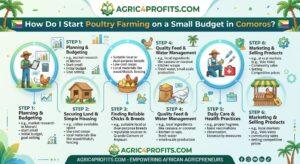
This article covers five practical steps: choosing a breed that fits your budget and goals, building low-cost housing without overspending, feeding your birds using resources you already have access to, protecting your flock from disease from day one, and planning how you will sell your eggs and meat once your first birds are producing. Each section includes concrete numbers where they help, but every farm is different, so treat these as a starting framework you can adjust to your own situation.
1. Choose a breed that fits your budget and your goals
Your very first decision, the breed of chicken you start with, has a bigger effect on your costs and your results than almost anything else you will do. Local, indigenous chickens are far cheaper to acquire and are naturally suited to scavenging for much of their own food, which keeps early costs low. Improved breeds cost more upfront but can lay more eggs or grow faster for meat, which may pay off once you have the budget and experience to manage them well.
Breed type Typical strengths Best for Local or indigenous chicken Low cost, hardy, resistant to local disease, able to scavenge for feed First-time farmers starting on a tight budget Improved layer breed Higher, more consistent egg production Farmers focused mainly on egg income Improved broiler breed Faster growth and larger body weight Farmers focused mainly on meat sales For a first flock on a genuinely small budget, most new farmers do best starting with ten to twenty local hens and a rooster or two, since local breeds need less specialized feed and handle Comoros’ climate well. You can always add improved breeds later, once you understand your local market and have built up some savings from your first sales.
2. Build low-cost housing without overspending
Chickens do not need an elaborate structure to stay healthy and productive, but they do need shelter from rain, direct sun, and predators, along with enough space to move without overcrowding. A simple wooden or bamboo frame, covered with local roofing material and enclosed with wire mesh, is enough for a small starter flock.
Budget item What it covers Cost approach Basic shelter frame Wood or bamboo poles, simple roof Use materials already available on the farm where possible Wire mesh or fencing Enclosure to keep predators out Buy only what is needed for a small starter flock, expand later Nesting boxes Simple wooden boxes for laying hens Can often be built from scrap wood or repurposed containers Feeders and drinkers Basic containers for feed and clean water Locally made or repurposed containers work fine to start Bedding material Dry straw, wood shavings, or similar Sourced locally, replaced regularly for hygiene Keep your first structure small and simple, sized for the flock you are actually starting with, since it is far cheaper to expand a working system later than to build something oversized from the start and struggle to fill or maintain it. Good ventilation and dry bedding matter more than the materials being expensive, since damp, poorly ventilated housing is one of the fastest ways to invite disease into a small flock.
Read Also: Farm Finance Calculator for Coffee Robusta Farming in Comoros
3. Feed your birds using resources you already have access to
Feed is usually the largest ongoing cost in poultry farming, so managing it well is central to staying on a small budget. Local chickens raised in a free-range or semi-free-range system can source a meaningful share of their own diet through scavenging, which significantly reduces how much purchased feed you need.
Kitchen scraps, cereal by-products, and garden waste can all supplement a flock’s diet at very low cost, and many smallholder farmers across the region rely on exactly this approach. Where you do need to buy feed, focus on a simple, balanced mix rather than expensive specialty formulas, since young chicks and laying hens have different needs but neither requires premium commercial feed to thrive.
Groundnut cake and soybean by-products, when available locally, are valuable low-cost protein sources that support both growth and egg production. Always provide clean, fresh water, since this is one of the cheapest inputs on the farm and one of the most important for keeping a flock healthy and productive.
4. Protect your flock from disease from day one
Disease is consistently one of the biggest threats to small poultry flocks, and Newcastle disease in particular can wipe out an entire unvaccinated flock within days. The good news is that prevention is inexpensive compared to the losses a disease outbreak can cause, which makes this one of the highest-return investments a small farmer can make.
Start vaccination early and keep to a consistent schedule, since chicks are most vulnerable in their first few weeks of life. Work with a local veterinary service or agricultural extension officer where available, both to source vaccines reliably and to get guidance suited to conditions on your specific island.
Beyond vaccination, simple hygiene practices go a long way: keep housing dry and clean, isolate any bird that appears sick before it can infect the rest of the flock, and avoid mixing new birds into an established flock without a short observation period first. These habits cost little but protect the investment you have already made in your birds.
5. Plan how you will sell your eggs and meat for steady income
A small flock can generate income in two main ways, through egg sales and through meat sales, and thinking through your market before you scale up will save you time and money later. Eggs provide a more frequent, steady stream of income, while meat sales tend to come in larger amounts less often, particularly around festivals and family celebrations when demand for chicken typically rises.
Start by identifying who will actually buy from you, whether that is neighbors, a local market, a small shop, or a community cooperative, since a reliable buyer matters more in the early months than trying to reach the widest possible market.
Keeping simple records of your costs and sales, even informally in a notebook, will help you see clearly which parts of your operation are actually profitable as you grow. As your flock and your confidence grow, reinvesting profits into a few more birds, better housing, or improved breeds is usually a safer path to expansion than taking on debt early, since it keeps your farm resilient if a season does not go as planned.
Frequently asked questions
- How many chickens should I start with on a small budget? Most new farmers do well starting with ten to twenty local hens, since this keeps housing and feed costs low while still producing a meaningful number of eggs for both household use and sale.
- Do I need to buy commercial feed, or can I rely on scavenging? Local, free-range chickens can source a significant share of their diet through scavenging and kitchen scraps, though a modest amount of purchased feed, particularly for young chicks, generally improves growth and egg production.
- Why is vaccination so important for a small flock? Diseases such as Newcastle disease can spread quickly through an unvaccinated flock and cause near-total losses within days, so the relatively small cost of vaccination protects a much larger investment in birds, housing, and time.
- Should I focus on eggs or meat when I am just starting out? Eggs generally provide steadier, more frequent income, which makes them a good focus for a first flock, while meat sales can be added once you have more birds and a clearer sense of local demand.
- How can I expand my flock without taking on too much financial risk? Reinvesting profits gradually into more birds, better housing, or improved breeds is generally safer than borrowing early, since it keeps your farm sustainable even if a particular season underperforms.
Have you started keeping chickens on your own farm here in Comoros? Share what has worked for you, or what challenges you have run into, in the comments below, your experience could help another farmer just getting started.
Read Also: classification-of-solid-waste
- AuthorPosts

- You must be logged in to reply to this topic.