



Public Group
Active 1 year, 3 months ago
Group Type By Country
Group Leadership
- Group Administrators
-

Comoros Farmers Community
What is the best feed for backyard chickens in Comoros?
- This topic is empty.
- AuthorPosts
- September 17, 2026 at 4:26 pm #854866
 Agric4ProfitsModerator
Backyard chicken keeping is a common feature of rural and peri-urban life across the Comoros, providing households with eggs, meat and a small but steady source of income. Yet feeding these flocks well is not always straightforward.
Comoros imports the large majority of its food, including most commercial animal feed, and domestic agricultural production covers less than half of the country’s total food needs. That reality shapes how backyard poultry keepers across Grande Comore, Anjouan and Moheli actually feed their birds, relying far more on local ingredients and free-range scavenging than on bagged commercial feed.
The good news is that a healthy, balanced diet for backyard chickens does not have to come from an expensive imported feed sack. With a mix of local energy sources, protein-rich by-products and a source of calcium, Comorian farmers can keep their flocks productive using what is already grown, fished or processed on the islands. This article breaks down what makes a good backyard chicken diet in Comoros, which local ingredients work best, and how to keep your flock healthy without relying entirely on imported feed.
1. Why Imported Commercial Feed Is Not Always the Answer
Comoros depends heavily on food imports, and rice and wheat alone account for over seventy percent of the population’s calorie intake, leaving little room in most household budgets for costly imported poultry feed.
Commercial layer or broiler feed, when available, is typically shipped in from abroad and priced well beyond what many smallholder households can afford to feed a small backyard flock day after day. This is why the vast majority of Comorian backyard chickens are raised under a traditional, low-input system, foraging for part of their diet and receiving home-mixed supplementary feed rather than a fully commercial ration.
2. Building a Balanced Diet from Local Ingredients
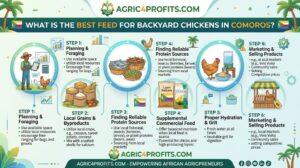
A good backyard chicken diet needs three things: energy, protein and calcium, and Comoros has local sources of all three. For energy, small amounts of cracked maize, rice bran and well-dried cassava meal work well, since all three are already produced or processed on the islands.
For protein, coconut cake left over from oil pressing, dried fish scraps from the country’s active fishing communities, and kitchen leftovers such as vegetable peels and cooked rice all provide a useful boost, especially for laying hens and growing chicks that need more protein than adult birds kept mainly for scavenging.
Calcium deserves special mention because it is easy to overlook. Laying hens that do not get enough calcium in their diet will produce eggs with thin, weak or soft shells, and over time their own bone health suffers as well. Crushed, baked eggshell fed back to the flock, or ground coral limestone where available near the coast, is a simple and free way to fill this gap.
3. The Role of Free-Range Scavenging
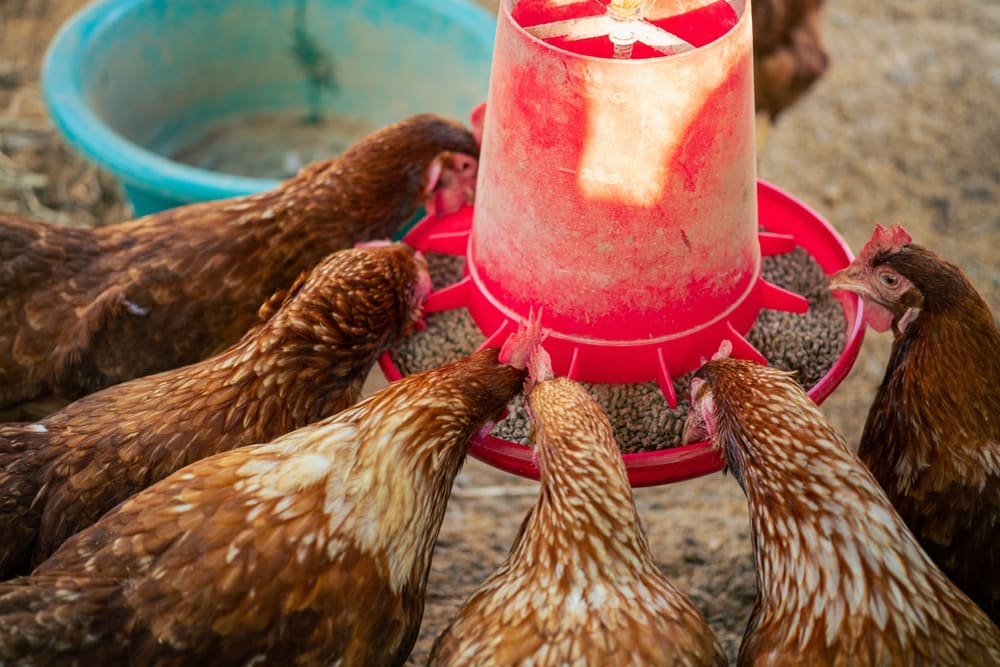
Most backyard flocks in Comoros are not confined all day, and this free-range scavenging habit is not just a tradition, it is a genuine part of the bird’s nutrition. Chickens allowed to roam the compound will pick up insects, worms, fallen fruit, and green leafy matter on their own, which naturally supplements whatever grain or kitchen scraps the household provides.
Farmers who let their birds scavenge for part of the day and then supplement with a measured feed ration in the morning and evening tend to get the best balance between low feed cost and steady bird health.
4. Simple Tips for Feeding Chicks, Growers and Layers
Chicks need a higher-protein start than adult birds, so where possible, mash or finely crumbled feed with a good share of fish powder or coconut cake in the first weeks supports faster, healthier growth. As birds mature into growers, the ratio can shift toward more energy feed such as maize or rice bran, since their protein needs are lower once they are past the rapid early growth stage.
Laying hens, on the other hand, need that calcium boost added back in, alongside consistent daily feeding, since irregular feeding is one of the most common reasons backyard hens lay fewer eggs than they are capable of.
The table below summarises the main local feed ingredients available to Comorian backyard poultry keepers.
Feed Ingredient Nutrient Supplied Notes for Comorian Farmers Cracked maize / maize bran Energy (carbohydrate) Grown locally in small volumes, can be bought at local markets when available Rice bran / broken rice Energy, some protein A useful by-product since rice is widely milled and consumed across the islands Cassava meal (dried, grated) Energy Must be well dried, fresh cassava contains compounds that are unsafe in large amounts Coconut cake / grated coconut meal Protein and fat A by-product of local coconut processing, widely available near the coast Fish scraps and dried fish powder Protein Comoros has an active fishing sector, making fish waste a practical protein source Kitchen scraps and banana peel Mixed nutrients Common supplementary feed for scavenging backyard flocks Crushed eggshell or coral limestone Calcium Important for laying hens to prevent thin or soft eggshells Frequently Asked Questions
1. Can backyard chickens survive on scavenging alone in Comoros?
They can survive, but they will not lay or grow at their best. Scavenging supplies useful variety and some protein, but a daily supplementary feed, even a small handful of maize or rice bran mixed with a protein source, makes a noticeable difference to egg output and growth.2. Is cassava safe to feed to chickens?
Yes, as long as it is well dried and ground into meal first. Fresh, undried cassava contains natural compounds that can be harmful in large quantities, so drying it properly before feeding is an important safety step.3. What is a cheap source of protein for backyard flocks in Comoros?
Dried fish scraps and coconut cake are two of the most accessible local protein sources, since both are by-products of activities already common across the islands, fishing and coconut processing.4. How can I tell if my laying hens need more calcium?
Thin, soft or easily cracked eggshells are the clearest sign. Adding crushed baked eggshell or ground coral limestone to the feed usually resolves the issue within a couple of weeks.5. Do chicks need a different diet from adult chickens?
Yes, chicks need a higher proportion of protein in their first few weeks to support rapid growth, while adult birds, especially those kept mainly for scavenging, can manage on a higher share of energy feed such as maize or rice bran.Feeding backyard chickens well in Comoros comes down to making the most of what is already available locally, coconut by-products, fish scraps, cassava, rice bran, and a bit of free-range foraging, rather than depending on costly imported feed.
Have you tried mixing your own poultry feed at home, or found a local ingredient that works particularly well for your flock? Share your thoughts and experiences in the comments below, we would love to hear from you.
Read Also: 7-steps-on-how-to-burn-waste-motor-oil-in-a-diesel-engine
- AuthorPosts

- You must be logged in to reply to this topic.