


Public Group
Active 1 year, 3 months ago
Group Type By Animal
Group Leadership
- Group Administrators
-

Fish Farmers Community — Classified by Fish Classes:
Agnatha: Jawless fish like lampreys and hagfish.
Chondrichthyes: Cartilaginous fish like sharks, rays, skates, and chimaeras.
Osteichthyes: Bony fish, which make up the vast majority of fish species. E.g. catfish, tilapia, salmon, carp, trout, cod, mackerel, sardines, snapper, tuna, eel (some types), bass, grouper, etc.
Practical Tips for Fish Pond Aeration
- This topic is empty.
- AuthorPosts
- June 25, 2026 at 2:54 pm #775632
 Agric4ProfitsModerator
Aeration is one of the most important aspects of successful fish farming. It refers to the process of increasing the amount of dissolved oxygen in pond water to support the health, growth, and survival of fish. Oxygen is essential for fish respiration, feed utilization, metabolism, and overall productivity. Without adequate oxygen levels, fish become stressed, grow slowly, consume less feed, become more susceptible to diseases, and may even die during severe oxygen shortages.
In natural water bodies such as rivers and lakes, oxygen is continuously replenished through water movement, aquatic plants, and contact with the atmosphere. However, fishponds often have limited natural aeration, especially when stocking densities are high. As fish populations increase, the demand for oxygen rises significantly. At the same time, decomposing organic matter, fish waste, uneaten feed, and microorganisms consume oxygen from the water, creating a potential imbalance.
Poor oxygen levels are among the leading causes of fish losses in aquaculture. Fish farmers frequently encounter problems such as fish gasping at the water surface, reduced feeding activity, slow growth rates, and unexpected mortalities due to inadequate aeration. These issues can severely affect profitability and farm sustainability.
Fortunately, effective pond aeration does not always require expensive equipment. While mechanical aerators are widely used in commercial aquaculture, several practical management practices can also help maintain healthy oxygen levels. Understanding how oxygen behaves in pond ecosystems enables farmers to make informed decisions that improve water quality and fish performance.
This article explores practical tips for fishpond aeration. It explains the importance of dissolved oxygen, methods of improving aeration, pond management practices, monitoring techniques, and strategies for preventing oxygen depletion. By implementing these recommendations, fish farmers can create a healthier environment that promotes faster growth, better feed conversion, and higher production.
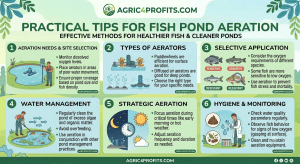
1. Understand the Importance of Dissolved Oxygen
Dissolved oxygen is the oxygen available in water for fish and other aquatic organisms. Fish obtain oxygen through their gills, and insufficient levels can quickly lead to stress and poor health.
The amount of dissolved oxygen in a pond change throughout the day. Oxygen levels are usually highest in the late afternoon because aquatic plants produce oxygen through photosynthesis during daylight hours. Levels often drop during the night and reach their lowest point just before sunrise.
Fish require adequate oxygen for growth, digestion, movement, and reproduction. When oxygen levels fall below recommended limits, fish become lethargic, stop feeding, and may gather near water inlets or at the pond surface where oxygen concentrations are slightly higher.
Understanding these daily fluctuations helps farmers identify periods when aeration may be most necessary. Consistent monitoring allows early intervention before oxygen shortages become severe.
2. Avoid Overcrowding the Pond
One of the most common causes of oxygen depletion is excessive stocking density. The more fish present in a pond, the greater the demand for dissolved oxygen.
Stocking Factor Effect on Oxygen Levels High fish density Increases oxygen consumption Large fish population Greater respiratory demand Excessive biomass Faster oxygen depletion Poor stocking management Increased stress and mortality Balanced stocking Maintains healthier oxygen levels When ponds are overcrowded, oxygen can be depleted rapidly, particularly during hot weather or cloudy periods when photosynthesis is reduced. Overstocked ponds are also more likely to accumulate waste, which further consumes oxygen as it decomposes.
Farmers should follow recommended stocking rates for their specific fish species and pond size. Proper stocking management helps maintain water quality and reduces the risk of oxygen-related problems.
3. Use Mechanical Aerators When Necessary
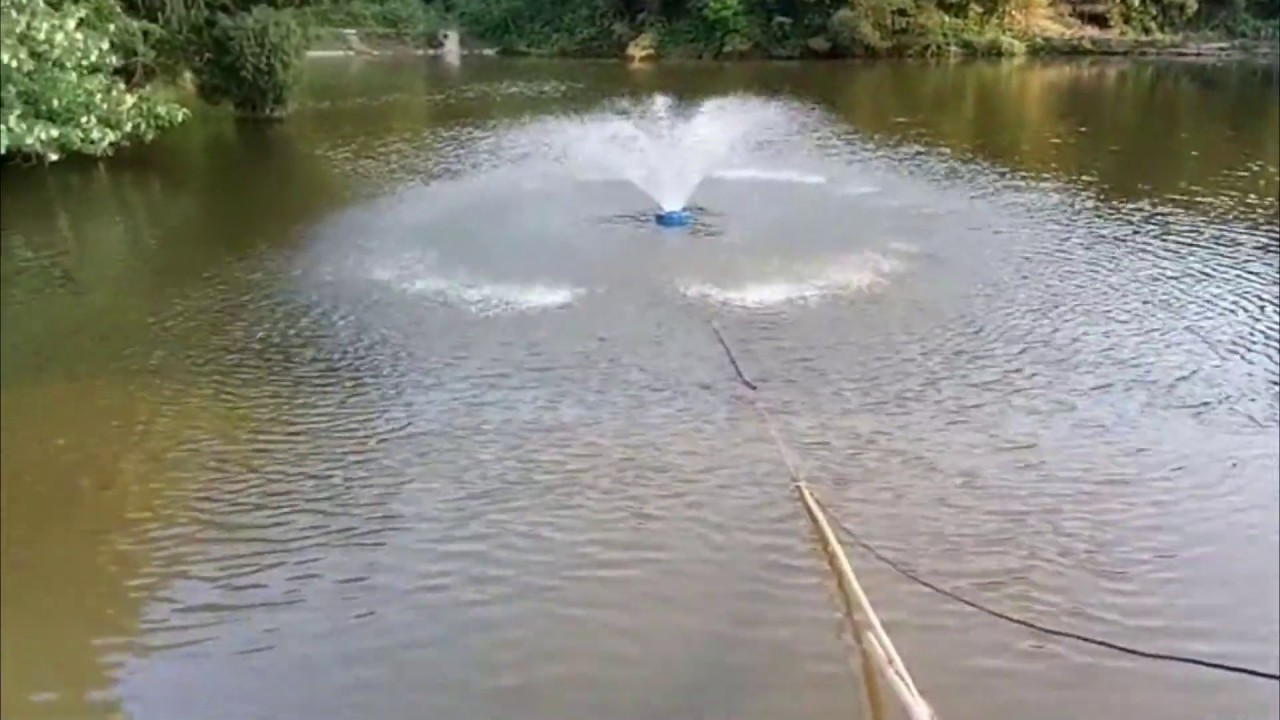
Mechanical aerators are among the most effective tools for increasing dissolved oxygen levels in fish ponds. These devices improve oxygen transfer by creating water movement and increasing contact between water and air.
Paddlewheel aerators are commonly used in commercial fish farming because they circulate water efficiently and distribute oxygen throughout the pond. Air diffusers release bubbles that increase oxygen transfer while improving water circulation.
Mechanical aeration becomes particularly important during periods of high fish density, warm temperatures, or poor water quality. Farmers who use aerators often experience better fish growth, improved feed conversion, and lower mortality rates.
Although mechanical aerators require investment and energy costs, the benefits often outweigh the expenses through improved production and reduced losses.
4. Manage Feeding Practices Properly
Feeding management has a direct influence on pond oxygen levels. Uneaten feed sinks to the pond bottom where it decomposes and consumes oxygen. Excess feeding can therefore contribute to oxygen depletion and poor water quality.
Farmers should provide only the amount of feed that fish can consume within a reasonable period. Observing feeding behavior helps determine whether adjustments are needed.
Feeding should also be timed appropriately. During periods of low oxygen, fish may not eat efficiently. Reducing feed during stressful conditions can help prevent waste accumulation and protect water quality.
Proper feeding management not only improves oxygen balance but also reduces production costs by minimizing feed wastage.
5. Maintain Good Water Quality
Water quality management is essential for maintaining adequate oxygen levels. Several environmental factors influence the amount of oxygen available in pond water.
Water Quality Factor Impact on Aeration Temperature Higher temperatures reduce oxygen availability Organic matter Increases oxygen consumption Algae balance Supports oxygen production Water circulation Improves oxygen distribution Pond cleanliness Reduces oxygen demand Warm water naturally holds less oxygen than cool water. During hot seasons, fish farmers should pay closer attention to aeration needs. Excessive organic matter from dead plants, fish waste, and leftover feed should be minimized because decomposition consumes oxygen.
Maintaining balanced algae populations can be beneficial because algae contribute oxygen during daylight hours. However, excessive algae blooms can cause oxygen crashes when large quantities die suddenly.
6. Monitor Oxygen Levels Regularly
Regular monitoring allows farmers to detect oxygen problems before they become dangerous. Fish behavior often provides valuable clues about oxygen conditions.
Fish gasping at the surface, congregating near water inlets, or showing reduced feeding activity may indicate low oxygen levels. Observing ponds early in the morning is particularly important because oxygen concentrations are often lowest at this time.
Portable dissolved oxygen meters provide accurate measurements and help farmers make informed management decisions. Even simple observation techniques can be effective when combined with routine pond inspections.
Monitoring enables timely responses such as increasing aeration, reducing feeding, or improving water circulation.
Frequently Asked Questions
1. Why is aeration important in fishponds?
Aeration increases dissolved oxygen levels, supporting fish growth, health, feeding activity, and survival.
2. What are signs of low oxygen in a fish pond?
Fish gasping at the surface, reduced feeding, sluggish behavior, and increased mortality are common signs.
3. What is the best time to check oxygen levels?
Early morning is usually the best time because oxygen levels are often lowest just before sunrise.
4. Can overfeeding reduce oxygen levels?
Yes. Uneaten feed decomposes and consumes oxygen, leading to poorer water quality.
5. Are mechanical aerators necessary for all ponds?
Not always. Small ponds with low stocking densities may rely on natural aeration, but intensive systems often require mechanical aerators.
6. How does temperature affect dissolved oxygen?
Warm water holds less oxygen than cool water, increasing the risk of oxygen shortages during hot weather.
7. How can farmers improve aeration naturally?
Proper stocking rates, water circulation, algae management, and avoiding excessive organic matter can help improve natural aeration.
Have you experienced oxygen-related challenges in your fish pond? Which aeration methods have worked best for maintaining healthy fish and good water quality? Do you rely on natural aeration, mechanical aerators, or a combination of both?
Share your experiences, challenges, and solutions in the comments section. Your practical insights may help other fish farmers improve pond management and achieve better production results.
- AuthorPosts

- You must be logged in to reply to this topic.