



Public Group
Active 1 year, 3 months ago
Group Leadership
- Group Administrators
-

Pest and Disease Control Community
Effective Crop Rotation Plans for Disease Control
- This topic is empty.
- AuthorPosts
- July 21, 2026 at 2:14 pm #790107
 Agric4ProfitsModerator
Crop rotation stands as one of the oldest and most reliable disease management tools available to farmers, working by disrupting the life cycles of soil-borne and crop-specific pathogens that would otherwise build up steadily under continuous planting of the same or related crops.
Despite its proven effectiveness, many farmers apply crop rotation inconsistently or without a clear disease-focused plan, missing much of the protective benefit that a well designed rotation sequence can provide against persistent field pathogens.
This article covers how to design an effective crop rotation plan specifically focused on disease control, from understanding pathogen host ranges to structuring multi-year sequences that keep disease pressure manageable across your fields.
Whether you grow vegetables, grains, or a mix of crops, applying these rotation planning principles will help you reduce reliance on chemical disease control while building a more resilient, disease-suppressive farming system over time.
1. Understand Pathogen Host Ranges Before Planning
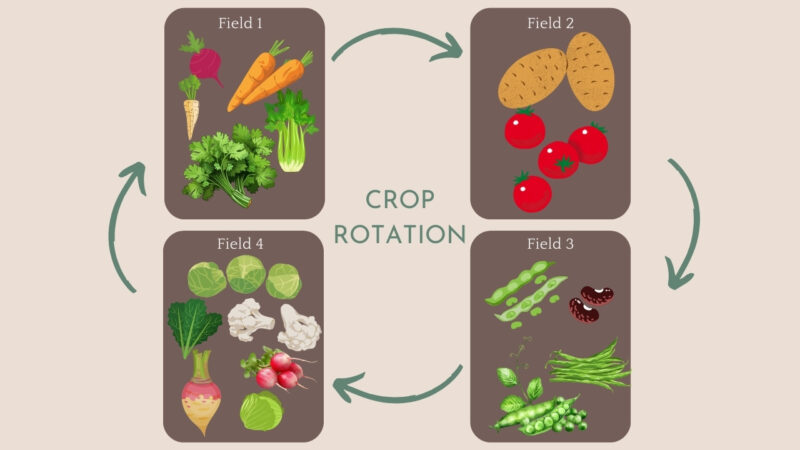
Effective rotation planning starts with understanding which pathogens affect which crop families, since rotating between crops that are all susceptible to the same pathogen provides little actual disease control benefit despite technically varying the crop grown.
Grouping crops by family, since many soil-borne pathogens attack specific plant families rather than individual crop species, helps farmers design rotations that genuinely break disease cycles rather than simply alternating crop names.
2. Design Rotation Sequences of Adequate Length
Most soil-borne pathogens require a minimum break of two to three years without a susceptible host crop to decline to manageable levels, though some particularly persistent pathogens may require even longer rotation gaps for effective control.
Mapping out a three to four year rotation plan in advance, rather than deciding crop placement field by field each season, helps ensure adequate disease break periods are consistently maintained across your entire rotation.
Sample Disease-Focused Rotation Sequence
Year Crop Family Group Disease Control Purpose Year 1 Solanaceous crops (tomato, pepper) Establish baseline, monitor disease Year 2 Legumes Break Solanaceous-specific pathogen cycle Year 3 Grasses or cereals Further disease cycle disruption Year 4 Brassicas or other family Complete rotation before returning 3. Incorporate Non-Host Cover Crops Into the Sequence
Cover crops that are not hosts for the pathogens of concern can be incorporated into rotation gaps, providing soil health and erosion control benefits while extending the disease break period without sacrificing an entire season’s cash crop potential.
Some cover crop species, including certain brassicas grown specifically for their biofumigant properties, can actively suppress soil pathogens when incorporated into the soil, adding an extra disease control dimension to the rotation.
4. Account for Regional Disease History in Planning
Fields with a documented history of specific disease problems warrant particular attention in rotation planning, with longer break periods or more careful family grouping applied specifically to address the known problem pathogens in that location.
Keeping field-specific disease records over multiple seasons allows farmers to refine their rotation plans based on actual observed disease pressure rather than generic recommendations that may not perfectly match local conditions.
Minimum Rotation Gaps for Common Pathogen Groups
Pathogen Group Minimum Break Period Notes Fusarium species 3 to 4 years Can persist longer in heavy soils Verticillium species 4 or more years Very persistent, broad host range Bacterial wilts 2 to 3 years Sanitation also critical Common root rots 2 to 3 years Improve drainage alongside rotation 5. Combine Rotation With Sanitation and Resistant Varieties
Rotation works best as part of a broader disease management strategy that also includes field sanitation, removing infected debris, and selecting resistant varieties where available, rather than being relied upon as a sole disease control measure.
This combined approach provides overlapping layers of protection, meaning even if rotation timing is occasionally imperfect due to market or practical constraints, other measures continue providing meaningful disease suppression.
6. Monitor and Adjust the Rotation Plan Over Time
Regular field monitoring for disease symptoms, combined with periodic review of how well the rotation plan is performing, allows farmers to identify when adjustments are needed, whether extending break periods or reconsidering crop family groupings.
A rotation plan should be treated as a living document that evolves based on observed results rather than a fixed schedule set once and never revisited, since disease pressure and farm circumstances both change over time.
Frequently Asked Questions
- Why doesn’t simply alternating crops always control disease?
Rotating between crops susceptible to the same pathogen provides little disease control benefit, making it important to understand pathogen host ranges rather than just varying crop names.
- How long should a disease-focused rotation gap typically last?
Most soil-borne pathogens require a minimum break of two to three years without a susceptible host, though particularly persistent pathogens may require even longer rotation gaps.
- Can cover crops be used within a disease control rotation?
Yes, non-host cover crops extend disease break periods while providing soil health benefits, and some species with biofumigant properties can actively suppress soil pathogens when incorporated.
- Should rotation plans account for a field’s specific disease history?
Yes, fields with documented disease problems warrant longer break periods or more careful family grouping specifically addressing the known problem pathogens in that location.
- Is crop rotation alone enough to control soil-borne diseases?
Rotation works best combined with sanitation, resistant varieties, and other management practices rather than being relied upon as a sole disease control measure.
- How far in advance should a rotation plan be designed?
Mapping out a three to four year rotation plan in advance, rather than deciding field by field each season, helps ensure adequate disease break periods are consistently maintained.
- Do all soil-borne pathogens require the same length of rotation break?
No, some pathogens like Verticillium species are notably persistent and may require four or more years, while others decline more quickly within two to three years.
- Can rotation plans be adjusted after they are established?
Yes, a rotation plan should be treated as a living document that evolves based on monitoring results rather than a fixed schedule set once and never revisited.
- How does grouping crops by family help with rotation planning?
Many soil-borne pathogens attack specific plant families rather than individual species, so grouping by family helps design rotations that genuinely break disease cycles.
- What role does field sanitation play alongside crop rotation?
Removing infected debris and practicing good field sanitation provides overlapping protection alongside rotation, ensuring disease suppression even if rotation timing is occasionally imperfect.
Designing an effective disease-focused crop rotation plan requires understanding pathogen host ranges, committing to adequate break periods, and combining rotation with complementary sanitation and variety selection practices. This multi-year planning approach delivers far stronger disease control than reactive, season-by-season decisions. How do you structure crop rotation for disease control on your farm? Share your approach with the Agric4Profits farming community.
Read Also: steps-to-convert wood wastes into compost
- AuthorPosts

- You must be logged in to reply to this topic.