


Public Group
Active 1 year, 3 months ago
Group Leadership
- Group Administrators
-

Pest and Disease Control Community
Mulch management to suppress weeds and pests
- This topic is empty.
- AuthorPosts
- July 28, 2026 at 9:04 am #793250
 Agric4ProfitsModerator
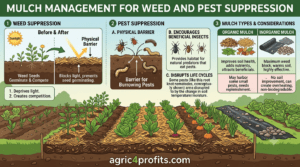
Mulch serves a dual purpose that many farmers underutilize, providing effective weed suppression while simultaneously disrupting the habitat and life cycles that many soil dwelling and surface active pests depend upon for survival between crop cycles.
Beyond these direct management benefits, well managed mulch also conserves soil moisture, moderates temperature extremes, and, for organic materials, gradually contributes organic matter, making it one of the most versatile low cost tools available for integrated farm management.
This article covers how to manage mulch specifically to maximize both weed and pest suppression benefits, from material selection to application and maintenance techniques that get the most value from this dual purpose practice.
Whether you are managing mulch primarily for weed control, pest reduction, or both simultaneously, understanding these combined management principles will help you extract maximum value from an investment you may already be making on your farm.
1. Select Mulch Materials That Serve Both Purposes
Organic mulch materials like straw and wood chips block light needed for weed germination while also creating a physical barrier that many soil surface pests, including certain beetles and slugs, find difficult to navigate compared to open, exposed soil.
Some materials offer additional targeted pest deterrent properties beyond basic physical barrier effects, such as certain aromatic mulches that may help repel specific pest species, adding a further layer of benefit to thoughtful material selection.
2. Apply Mulch at Weed and Pest Suppressing Thickness
Effective weed suppression generally requires mulch thickness of at least five to ten centimeters, and this same thickness range also provides meaningful disruption to many pest life cycles that depend on easy access to bare soil surfaces for movement, egg laying, or overwintering.
Maintaining consistent thickness throughout the growing area, rather than allowing thin spots to develop, ensures both weed and pest suppression benefits remain effective across the entire mulched area rather than only in the most heavily covered sections.
Mulch Materials and Their Dual Benefits
Material Weed Suppression Pest Disruption Effect Straw Good Reduces surface pest movement Wood chips Very good Long lasting physical barrier Plastic sheeting Excellent Blocks soil pest emergence Dried leaves Moderate Some barrier, faster breakdown 3. Time Mulch Application to Disrupt Pest Life Cycles
Applying mulch before pest emergence periods, where this timing is known for specific problem pests, can prevent adults from reaching the soil surface to lay eggs or can block emerging larvae from reaching host plants above the mulch layer.
This timing consideration works alongside the standard weed suppression timing principle of applying mulch before weed seed germination, meaning well timed application often serves both purposes simultaneously without requiring separate scheduling.
4. Maintain Mulch Coverage for Ongoing Dual Protection
As organic mulch breaks down over the growing season, both its weed suppression and pest disruption effectiveness gradually decline, making periodic topping up important for maintaining consistent protection through the full crop cycle rather than only at initial application.
Areas where mulch has thinned or been disturbed often become weak points for both weed emergence and pest activity simultaneously, making these areas worth particular attention during routine field monitoring and maintenance.
Mulch Maintenance Schedule for Dual Protection
Maintenance Task Frequency Purpose Coverage inspection Every 2 to 3 weeks Identify thin spots Topping up thin areas As needed based on inspection Maintain suppression thickness Edge maintenance Monthly Prevent weed and pest entry points Full replacement Based on material breakdown rate Restore full protective thickness 5. Combine Mulch With Other Weed and Pest Management Practices
Mulch works most effectively as part of a broader integrated approach, combined with pre-planting weed control and other pest management practices like beneficial insect support, rather than being relied upon as a complete standalone solution.
This combined approach ensures that mulch’s substantial dual suppression benefits are not undermined by weed or pest pressure sources that mulch alone cannot fully address, such as deep rooted perennial weeds or highly mobile flying pests.
Read Also: how-to-make chickens lay more eggs daily
6. Monitor Results Across Both Weed and Pest Metrics
Tracking both weed emergence and pest activity in mulched versus unmulched areas provides practical evidence of how effectively your specific mulch management approach is delivering on both fronts simultaneously.
This dual monitoring helps identify whether adjustments are needed, such as increased thickness for better weed control or different material selection for improved pest deterrent effect, refining your approach based on actual observed results.
Frequently Asked Questions
- Can mulch really help with pest control, not just weeds?
Yes, mulch creates a physical barrier that disrupts many pest life cycles depending on soil surface access for movement, egg laying, or overwintering, in addition to its weed suppression benefits.
- How thick should mulch be for both weed and pest suppression?
Effective suppression for both purposes generally requires thickness of at least five to ten centimeters, since this range blocks weed germination light while also disrupting pest surface access.
- Do all mulch materials provide equal pest suppression benefits?
No, materials vary in their pest disruption effectiveness, with wood chips providing a long lasting physical barrier while some organic materials also offer aromatic deterrent properties.
- Does mulch timing matter for pest management specifically?
Yes, applying mulch before known pest emergence periods can prevent adults from reaching soil to lay eggs or block emerging larvae, working alongside standard weed suppression timing.
- How often does mulch need to be maintained for continued dual protection?
Coverage should be inspected every two to three weeks, with thin areas topped up as needed, since both weed and pest suppression effectiveness decline as organic mulch breaks down.
- Can mulch alone eliminate the need for other pest management practices?
No, mulch works most effectively combined with other practices like beneficial insect support, since it cannot fully address highly mobile flying pests or deep rooted perennial weeds alone.
- What areas of mulched beds are most vulnerable to weed and pest breakthrough?
Areas where mulch has thinned or been disturbed become weak points for both weed emergence and pest activity, making these areas important to monitor during routine maintenance.
- Is plastic mulch effective for pest suppression as well as weeds?
Yes, plastic sheeting provides excellent weed suppression while also blocking soil pest emergence, offering strong dual protection compared to some organic alternatives.
- How can farmers evaluate if mulch is working for pest control?
Tracking pest activity in mulched versus unmulched areas provides practical evidence of effectiveness, helping identify whether adjustments to thickness or material are needed.
- Should mulch maintenance be prioritized differently for weeds versus pests?
Generally no, since maintaining consistent coverage and thickness serves both purposes simultaneously, meaning well planned mulch maintenance addresses both concerns together.
Managing mulch thoughtfully for both weed and pest suppression maximizes the value of a practice many farmers already use, extracting dual benefit from a single, relatively low cost input. Consistent maintenance and appropriate material selection make the difference between adequate and excellent results. How has mulch management helped with weed and pest control on your farm? Share your experience with the Agric4Profits farming community.
Read Also: processes of sludge treatment
- AuthorPosts


- You must be logged in to reply to this topic.