


Gumboro Disease also known as Infectious bursal disease (IBD) threatens poultry farmers mostly because it is a killer type of disease. It is an acute infectious disease that is common with chicks of 3-6 weeks old. Gumboro disease disturbs the growth of broilers in most severe manners.
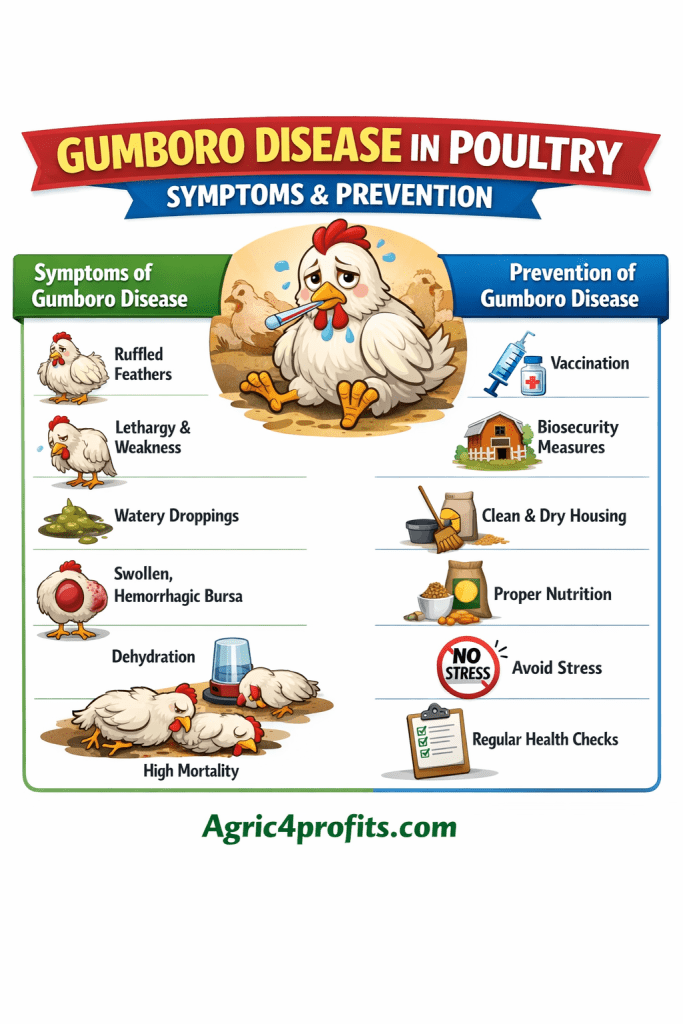
Symptoms: Chickens infected with Gumboro disease would not be able to feed well and start to pass out watery whitish diarrhea. The feathers would become ruffled and appear very sluggish.
The clinical disease often occurs quite suddenly among poultry chickens with a rapid increase in mortality rate which results to loss to the poultry farmer. The clinical symptoms of Gumboro disease may include trembling, ruffled feathers, poor appetite, dehydration, huddling, vent pecking, and depression. The majority of the lesions are found in the bursa of Fabricius when birds are necropsied.
Prevention: To prevent the outbreak of Gumboro disease, you must make sure that you improve your sanitary measures by disinfecting all poultry equipment and cleaning of every place in the house regularly.
As there is no treatment for Gumboro disease outbreak only a vaccination, poultry farmers should always advised to follow strictly the vaccination program of their birds and administer each drugs and vaccines accordingly and also to contact a nearby veterinary clinic for special advice whenever this disease is suspected.
Note: you should not apply any drug or vaccine without the advice of an expert unless you are sure of what to do to avoid vaccination failure or mistakes.
Read Also: How to Make Good Money from Africa’s love of Poultry Chicken and Eggs
Now let’s explain Gumboro Disease in details below:
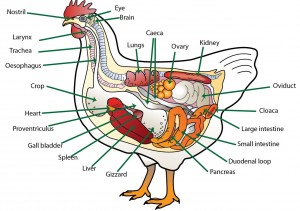
Infectious bursal disease (IBD), also known as Gumboro, is a highly contagious viral infection that is found in chicken flocks in most countries. The severity of the disease will depend on the age and breed of chicken (White Leghorns are more susceptible than broilers and brown-egg layers) and the virulence of the virus.
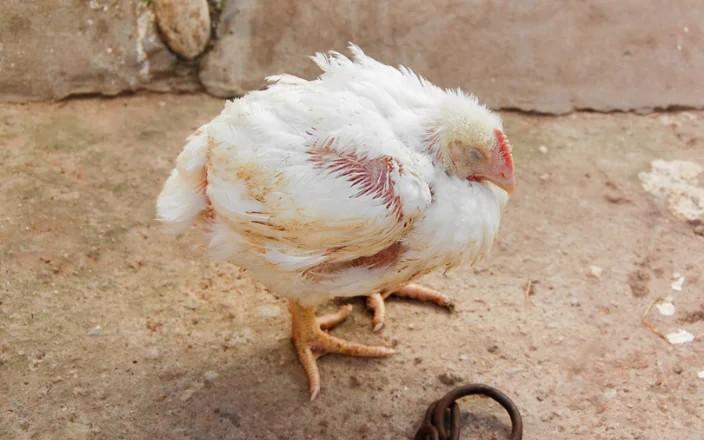
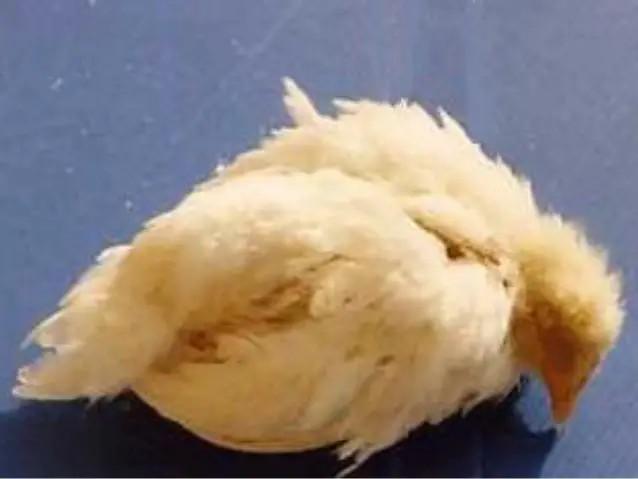
Signs of the disease can include a rapid drop in feed and water consumption, mucoid (slimy) diarrhoea with soiled vent feathers, ruffled feathers, listless chicks with unsteady gait or sitting in hunched position, picking at own vent and sleeping with beak touching the floor.
Infections before 3 weeks of age are usually subclinical (no detectable symptoms). Chickens are most susceptible to clinical disease at 3-6 weeks and severe infections have occurred in Leghorn chickens up to 18 weeks old.
Early subclinical infections are the most economically important as the disease can cause severe, long-lasting suppression of the immune system. Chickens that are immunosuppressed by early IBD infections do not respond well to vaccination and are more susceptible to other diseases, including those that don’t normally affect healthy chickens.
In clinical infections, onset of the disease is sudden after an incubation of 3-4 days. Mortality is usually low but has been reported to be as high as 20%. Recovery from the disease usually occurs in less than a week, however broiler weight gain is delayed by 3-5 days.
The presence of maternal antibody (antibody passed to the chick from the mother) will modify the way the disease progresses. The virulence of field strains varies considerably. Very virulent (vv) strains of the virus that cause high mortality and morbidity were first detected in Europe, and have not yet been detected in Australia.
Read Also: Layers or Broilers: Find Out which is More Profitable in Poultry Business
1. What causes infectious bursal disease?
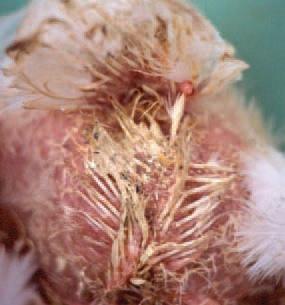
Infectious bursal disease is caused by a birnavirus (IBDV) that is most readily isolated from the bursa of Fabricius which is an organ of the immune system. The virus can also be isolated from other organs. It is shed in the faeces and spreads between birds or by contact with a contaminated environment and is possibly also carried in dust.
The virus can be transferred from house to house on fomites (any inanimate object or substance that is capable of carrying infectious organisms from one individual to another) and rodents. The virus is very stable and difficult to eradicate.
There is no vertical transmission (from parents directly to offspring) and mealworms and litter mites may harbour the virus for 8 weeks. Infected birds shed large amounts of virus for up to 2 weeks after infection.
2. Control and Prevention of Gumboro Disease
If Gumboro is an issue, vaccination is the most effective control method, either through enhanced MDA in parent stock or through active immunity by means of direct vaccination of chicks.
Vaccination policy against Gumboro disease tends to vary by area and the degree of challenge – in cases where the level of challenge is low, birds can develop immunity and vaccination will not be required.
However, where vaccination is used, all protocols strive to provide passive protection to the hatching chick, followed by active immunization and a series of boosts in layer and breeder flocks (Saif, 1998).
Live vaccines are usually administered in drinking water when the birds are 12 – 21 days old. If there is a challenge to birds from Gumboro, live vaccines are normally administered through drinking water or eye-drops to chicks at 12-21 days.
Removal of the virus from contaminated sites can be difficult, as large quantities are excreted and the virus is stable. An all-in all-out housing policy, coupled with stringent disinfection with formaldehyde and iodophors, can prove effective in reducing challenge to levels and enhancing the impact of vaccination.
Spread of the disease has been associated with the use of infected manure on fields adjoining poultry housing. It is therefore advisable to locate poultry manure away from poultry houses and to store for more than 3 months.
Protecting manure heaps from wildlife could also be desirable in controlling infection. Outbreaks of recent virulent epidemics of IBD have been spread rapidly by litter taken from infected houses. Routine blood testing can be conducted to assess the immune status of flocks.
Read Also: How to Make Good Money from Africa’s love of Poultry Chicken and Eggs
3. Prevention and Treatment of Infectious Bursal Disease (IBD)
There is no treatment for IBD but support therapies such as vitamin and electrolyte supplements and antibiotics to treat any secondary bacterial infections, may reduce the impact of the disease.
Depopulation and rigorous disinfection of contaminated farms have achieved some limited success in preventing disease spread. Prevention is through good biosecurity and vaccination, including passive protection via breeders and vaccination of progeny depending on virulence and age of challenge.
In most countries, breeders are immunised with a live vaccine at 6-8 weeks of age and then re-vaccinated with an oil-based inactivated vaccine at 18 weeks.
Birds that have recovered from a natural infection have a strong immunity. If maternal antibody was still high at the time of vaccination, immunity in chicks that receive live vaccine can be poor.
Due to the high degree of variation between naturally occurring IBD viruses there are a number of vaccines available. Vaccines need to be selected based on the types of viruses present in the area.
Gumboro disease cannot be successfully treated, so if there is a risk of this disease, vaccination is the best policy. The virus is resistant to a number of disinfectants.
Pattison (1993) recommends the following disinfection procedure after contagious and infectious disease:
- The buildings should be closed and isolated from all visitors
- The bedding, litter and all areas in intimate contact with the birds should be sprayed with a disinfectant at adequate concentration
- The litter should subsequently be removed from the building and may be burnt or buried so there is no possible contact with poultry or other livestock
- Portable equipment and fittings should be given the same treatment, preferably in the house, and later be taken out and aerated
- The floors and lower part of the walls are treated with a detergent disinfectant
- Surfaces should then have a disinfectant applied with a wide spectrum of activity, capable of killing all types of pathogens present
- It may be advisable to skim off the top few inches of the soil around a heavily infected area
- The approaches to the building should be treated with disinfectant; foot dips should be provided for personnel and wheel-dips for vehicles
Good Practice based on Current Knowledge
- If there is a risk of Gumboro, vaccinate all birds at a week old
- Operate an ‘all-in, all-out’ policy between batches of birds
- Maintain high standards of hygiene, particularly with regard to disinfection between batches
- Store poultry manure for at least 3 months before spreading
- Do not spread manure on land used for poultry
- Protect manure heaps from wildlife
Summary on Gumboro Disease: Symptoms and Prevention
| Aspect | Details |
|---|---|
| Disease Name | Gumboro Disease |
| Also Known As | Infectious Bursal Disease (IBD), Infectious Bursitis, Infectious Avian Nephrosis |
| First Identified | Gumboro, Delaware, USA (1962); spread across USA (1960-1964) and Europe (1962-1971) |
| Causative Agent | Infectious Bursal Disease Virus (IBDV); a non-enveloped, double-stranded RNA virus belonging to genus Avibirnavirus, family Birnaviridae |
| Serotypes | Two serotypes: Serotype 1 (pathogenic; causes clinical disease in chickens) and Serotype 2 (non-pathogenic; no cross-protection between serotypes) |
| Virus Strains | Classic/Standard, Variant (breaks through maternal antibodies), and Very Virulent (vvIBDV; causes 60-100% mortality); worldwide, 60-76% of isolates are vvIBDV genotype |
| Hosts Affected | Primarily chickens; turkeys, ducks, guinea fowl, pheasants, and ostriches may be subclinically infected; clinical disease occurs exclusively in chickens |
| Most Susceptible Age | 3-6 weeks (peak bursal mass); susceptibility begins at 18 days; birds under 3 weeks typically show subclinical infection; birds over 10 weeks rarely show clinical disease |
| Distribution | Worldwide; ranked among the top five most impactful poultry diseases in almost all countries globally; OIE/WOAH notifiable disease (listed 2017) |
| Transmission | Fecal-oral route (primary); direct contact with infected birds; contaminated feed, water, litter, fomites, equipment, clothing, boots; darkling beetles serve as mechanical vectors; no egg (vertical) transmission |
| Virus Shedding | Infected birds shed high levels of virus in feces for approximately 2 weeks post-infection |
| Virus Persistence | Survives at least 4 months in poultry house environment; weeks in contaminated water, feed, and feces; resistant to most common disinfectants |
| Incubation Period | 2-3 days post-infection; clinical signs appear within 48-72 hours |
| Morbidity Rate | Up to 100% in susceptible naive flocks |
| Mortality Rate | Generally low (5-20%); very virulent strains cause 50-100% mortality; mortality peaks around day 3 of clinical disease and subsides after 5-7 days |
| Key Clinical Signs | Sudden cessation of feed and water intake; white watery diarrhea; severe depression and lethargy; ruffled feathers; vent pecking and pasted vent; unsteady gait and trembling; dehydration and weight loss; unkempt appearance; birds sleep with beak touching floor |
| Subclinical Form | No visible signs but severe long-lasting immunosuppression; birds respond poorly to vaccines; increased susceptibility to E. coli, Mycoplasma, coccidiosis, and other secondary infections; often more economically damaging than clinical disease |
| Primary Organ Targeted | Bursa of Fabricius (cloacal bursa); virus destroys actively dividing B-lymphocytes, causing irreversible immunosuppression |
| Secondary Organs Affected | Spleen, cecal tonsils, thymus, and other lymphoid tissue |
| Immunosuppression Consequences | Infected birds mount poor responses to vaccinations; increased susceptibility to necrotic enteritis, inclusion body hepatitis (IBH), gangrenous dermatitis, respiratory diseases, and secondary bacterial infections |
| Post-mortem Lesions | Dehydrated carcass; swollen, edematous, or hemorrhagic bursa (early); atrophied bursa (later); hemorrhages in thigh and pectoral muscles; occasional hemorrhages in proventriculus mucosa; enlarged, pale kidneys; bursal oedema in first 4 days followed by atrophy |
| Differential Diagnosis | Infectious Bronchitis (renal form), Coccidiosis, Hemorrhagic syndrome, Cryptosporidiosis of the bursa, Marek’s Disease, nutritional deficiencies |
| Diagnosis | Clinical signs and flock history; necropsy (bursal lesions); confirmed by RT-PCR (preferred), ELISA, agar gel precipitation (AGP/AGID), immunofluorescence, immunohistochemistry, in-situ hybridization, or virus isolation; serology monitors vaccine responses |
| Treatment | No specific antiviral treatment; supportive care with vitamin and electrolyte supplements; antibiotics for secondary bacterial infections; depopulation and rigorous disinfection for outbreak containment |
| Breeder Vaccination Program | Live attenuated vaccine at 6-8 weeks (spray or drinking water) → live vaccine at approximately 4 weeks → live vaccine at 8-10 weeks → inactivated oil-emulsion vaccine at 12 weeks → inactivated booster at 18 weeks → revaccinate at 38-42 weeks if titers are low |
| Broiler Vaccination Program | Live vaccine at hatch or day 7 (eye drop or oral) → revaccination at 21 days; maternal antibody levels must be considered to time live vaccine correctly |
| Vaccine Types | Live attenuated (mild, intermediate, intermediate-plus/hot); inactivated oil-emulsion (breeders); immune-complex vaccines (ICX; given at hatch or in ovo, overcomes maternal antibody interference); recombinant vectored vaccines (HVT-IBD) |
| Maternal Antibody Role | Antibodies passed from vaccinated breeders through the egg protect chicks for the first 2-3 weeks; high maternal antibody titers can neutralize live vaccines, requiring careful timing of broiler vaccination |
| Vaccine Challenge | Variant IBDV strains can break through high maternal antibody levels; rampant use of live vaccines without genotype matching has driven viral evolution and emergence of reassortant chimeric strains; genotype-matched vaccines improve protection |
| Biosecurity Measures | Restrict farm access; use footbaths and clothing changes; practice all-in/all-out management; thorough cleaning and disinfection between flocks (use formaldehyde or ammonia-based products; standard disinfectants largely ineffective); quarantine new stock; control darkling beetles and other insects; monitor breeder antibody titers regularly |
| Economic Impact | Major global economic losses from mortality, immunosuppression, vaccination failure, secondary disease susceptibility, poor production performance, and increased antibiotic use; economic impact difficult to fully quantify due to complex cascading effects on flock health |
Frequently Asked Questions About Gumboro Disease: Symptoms and Prevention
1. What exactly is Gumboro disease and why is it so economically important?
Gumboro disease, formally known as Infectious Bursal Disease (IBD), is a highly contagious viral infection caused by IBDV that targets and destroys the bursa of Fabricius, the primary organ responsible for developing B-lymphocytes in young chickens. Its economic importance stems from two compounding effects: direct losses from mortality (which can reach 100% with very virulent strains) and indirect losses from the immunosuppression it causes. Immunosuppressed birds respond poorly to all other vaccines, become highly susceptible to secondary infections, grow poorly, and generate higher antibiotic costs. This cascade of secondary effects makes Gumboro one of the most costly poultry diseases globally, ranked among the top five in nearly every country.
2. How does Gumboro disease spread on a poultry farm?
The primary route of spread is fecal-oral transmission. Infected birds shed massive quantities of virus in their feces for up to two weeks after infection. Other birds become infected by ingesting contaminated feed, water, or litter. The virus can also be carried mechanically on clothing, boots, equipment, and vehicles moving between farms. Darkling beetles (litter beetles) are recognized mechanical vectors that can harbor and transmit the virus within and between houses. Once a poultry house becomes contaminated, the highly resistant virus persists for at least four months and tends to recur in subsequent flocks unless thorough disinfection and downtime are maintained.
3. Why does Gumboro disease cause immunosuppression and why is this such a serious problem?
IBDV specifically targets and destroys rapidly dividing B-lymphocytes in the bursa of Fabricius. These B-cells are the foundation of the humoral immune system responsible for producing antibodies. When they are destroyed, the chicken loses its ability to mount effective immune responses to both natural infections and vaccines. Birds that survive clinical Gumboro disease or experience subclinical infection are left with a permanently damaged immune system. They respond poorly to Newcastle Disease, Infectious Bronchitis, and Marek’s Disease vaccines, making the entire flock vaccination program less effective. They are also far more susceptible to secondary bacterial infections (E. coli, Clostridium), coccidiosis, inclusion body hepatitis, and gangrenous dermatitis.
4. What is the difference between clinical and subclinical Gumboro disease, and which causes more damage?
Clinical Gumboro disease presents with obvious visible signs including watery diarrhea, depression, vent pecking, and potentially significant mortality. It is quickly noticed and treated. Subclinical Gumboro disease occurs when birds are infected at a very young age (under 3 weeks) or with low doses of virus, producing no visible signs but severe long-lasting immunosuppression. Subclinical infection is widely regarded as the more economically damaging form because it goes undetected, affects entire flocks silently, undermines the entire vaccination program, and predisposes birds to every other disease on the farm throughout the production cycle. A flock can appear healthy while quietly losing performance, feed efficiency, and disease resistance.
5. What is the role of maternal antibodies in Gumboro disease prevention and what happens when they are insufficient?
Maternal antibodies are antibodies produced by vaccinated breeder hens that are transferred through the egg yolk to their chicks. These antibodies protect young chicks against IBDV during their most vulnerable first 2-3 weeks of life, before their own immune system is mature enough to respond effectively to vaccination. When breeder vaccination programs are properly implemented and maternal antibody titers are high and uniform, chicks are well protected early in life. When maternal antibodies are insufficient (due to poor breeder vaccination or low vaccine response), chicks are unprotected and highly susceptible to early IBDV infection, which causes the most severe and permanent immunosuppression. This is why breeder vaccination is considered the cornerstone of any IBD control program.
6. Why does the timing of Gumboro vaccination in broilers matter so much?
Timing is critical because high maternal antibody levels in chicks will neutralize a live vaccine virus before it can stimulate an immune response. If the vaccine is given while maternal antibodies are still high, the vaccine is blocked and the chick remains unprotected as maternal titers decline. If vaccination is delayed too long, the chick becomes exposed to field virus before it has built active immunity. The ideal vaccination window is when maternal antibody titers have fallen to a low enough level to allow vaccine virus replication but before the chick faces significant field virus challenge. This window is calculated mathematically using day-old serology results and the known half-life of maternal antibodies (3.5-4 days). Getting this timing right is one of the most technically demanding aspects of IBD control.
7. What are immune-complex (ICX) vaccines and why are they useful for Gumboro control?
Immune-complex vaccines consist of live IBDV combined with specific antibodies that partially neutralize the vaccine virus. When administered at hatch or in ovo, the antibody-virus complex is not immediately neutralized by maternal antibodies in the chick’s blood. Instead, the complex is slowly released over time, delivering the vaccine virus to the bursa at the point when maternal antibodies have naturally declined enough to allow a response. This technology effectively overcomes the maternal antibody interference problem that makes conventional live vaccine timing so difficult. ICX vaccines provide more consistent protection across flocks with variable maternal antibody levels and are particularly valuable in integrated broiler operations where chick uniformity is critical.
8. How resistant is the Gumboro virus to disinfection and what does this mean for farm management?
IBDV is exceptionally resistant to environmental conditions and to most common disinfectants. It can survive for at least four months in a contaminated poultry house and for weeks in feces, water, and feed. Standard quaternary ammonium compounds and most phenolics used routinely in poultry houses have poor efficacy against IBDV. Effective disinfection requires complete removal of all organic matter (thorough cleanout), followed by washing, drying, and then application of formaldehyde-based, oxidizing, or iodophor disinfectants under appropriate conditions. Once a farm has a history of IBD outbreaks, the virus is virtually impossible to eliminate completely, making vaccination and biosecurity permanently essential management tools on that site.
9. What are very virulent IBDV strains (vvIBDV) and why are they particularly dangerous?
Very virulent IBDV (vvIBDV) strains were first identified in Europe in the 1980s and have since spread to Africa, Asia, Latin America, and the Middle East. They now account for an estimated 60-76% of IBDV isolates worldwide. Unlike classic strains that cause 0-20% mortality, vvIBDV can cause 50-100% flock mortality, affecting birds of all breeds including those previously considered more resistant (broilers and brown-egg layers). These strains also cause more severe and rapid immunosuppression and are capable of breaking through moderate levels of maternal antibody protection. Their emergence has significantly complicated control efforts and has driven the development of stronger intermediate-plus vaccines and genotype-matched vaccination strategies.
10. What are the most important steps for preventing Gumboro disease on a poultry farm?
A comprehensive Gumboro prevention program rests on four integrated pillars. First and most critically, implement a rigorous breeder vaccination program to ensure high, uniform maternal antibody transfer to chicks, as this provides the essential first line of defense in the critical early weeks of life. Second, design a carefully timed broiler vaccination program using the appropriate vaccine category (mild, intermediate, intermediate-plus, or ICX) matched to the level of field virus challenge and maternal antibody profile on your farm. Third, enforce strict biosecurity measures including all-in/all-out management, thorough cleanout and effective disinfection between flocks, control of darkling beetles, and restriction of farm access by personnel and vehicles. Fourth, monitor flock antibody titers regularly through serology to confirm that vaccination programs are working effectively, identify gaps in coverage early, and detect the presence of variant or vvIBDV strains that may require a change in vaccine strategy.
Read Also: How to Make Your Own Organic Pesticides