



Kpomo is a type of food commonly eaten in West Africa, particularly in Nigeria. It is a delicacy made from the skin of cows, goats or sheep that has been processed and cooked until it becomes tender and chewy.
Kpomo is usually sold in markets or supermarkets, either dried or already cooked, and it is used as an ingredient in various dishes such as soups, stews, and sauces. It is also commonly eaten as a snack or as a side dish with beer or other drinks.
In Nigeria, kpomo is a popular ingredient in dishes such as pepper soup, jollof rice, egusi soup, and stew. It is also used as a filling in certain pastries, such as meat pies or samosas. Despite its popularity, some people are wary of consuming kpomo due to health concerns about its high fat content.
Read Also: Health Benefits and Uses of Sausage
Description of Kpomo
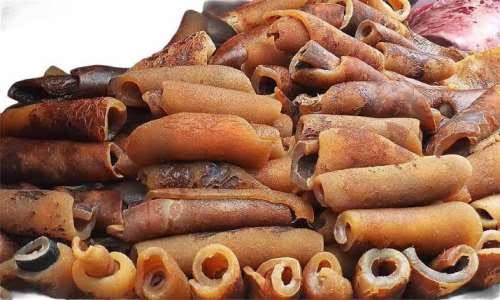
Kpomo is a type of food made from the skin of cows, goats or sheep that has been processed and cooked until it becomes tender and chewy. The texture of kpomo is rubbery and slightly gelatinous, with a slightly sweet and salty taste
Kpomo is usually sold in markets or supermarkets, either dried or already cooked. If sold dried, it is usually rehydrated by boiling it for several hours until it becomes soft and tender. If sold already cooked, it may be sold in large pieces or cut into smaller strips or cubes.
In its cooked form, kpomo is commonly used as an ingredient in various dishes such as soups, stews, and sauces. It is also commonly eaten as a snack or as a side dish with beer or other drinks. Kpomo is highly valued for its flavor and texture, and it is considered a delicacy in many parts of West Africa.
Health Benefits of Kpomo
- High in protein: Kpomo is an excellent source of protein, which is essential for building and repairing tissues in the body.
2. Rich in collagen: Kpomo is high in collagen, which helps to improve skin elasticity and promote healthy hair growth.
3. Good for bone health: Kpomo contains high amounts of calcium, phosphorus, and magnesium, which are all essential for strong bones.
4. Promotes digestive health: Kpomo is rich in fiber, which helps to promote healthy digestion and prevent constipation.
5. Boosts the immune system: Kpomo is rich in vitamins A and C, which are essential for a healthy immune system.
6. Low in fat: Kpomo is relatively low in fat, making it an excellent choice for people who are trying to maintain a healthy weight.
7. Helps regulate blood pressure: Kpomo is rich in potassium, which helps to regulate blood pressure and prevent hypertension.
8. Rich in iron: Kpomo is an excellent source of iron, which is essential for the production of red blood cells and the prevention of anemia.
9. Promotes wound healing: Kpomo is rich in zinc, which helps to promote wound healing and prevent infection.
10. Improves brain function: Kpomo is high in choline, which is essential for brain function and can help to improve memory and cognitive performance.
11. Helps regulate blood sugar: Kpomo is rich in chromium, which helps to regulate blood sugar levels and prevent diabetes.
12. Promotes healthy skin: Kpomo is high in vitamin E, which is essential for healthy skin and can help to reduce the signs of aging.
13. Boosts energy levels: Kpomo is high in B vitamins, which are essential for energy production and can help to reduce fatigue.
14. Good for eye health: Kpomo is high in vitamin A, which is essential for healthy vision and can help to prevent night blindness.
15. Promotes healthy hair: Kpomo is high in biotin, which is essential for healthy hair growth and can help to prevent hair loss.
Read Also: Health Benefits and Uses of Shaki Meat
Uses of Kpomo

Kpomo, also known as cow skin, is a versatile ingredient that can be used in many different ways in cooking. Below are some common uses of kpomo in African cuisine:
- Soup thickener: Kpomo is often used as a natural soup thickener due to its gelatinous texture. It can be added to soups and stews to add thickness and richness.
2. Flavor enhancer: Kpomo has a rich, meaty flavor that can enhance the taste of many dishes. It is often used in Nigerian cuisine to add depth and complexity to soups and stews.
3. Snack: Kpomo can be boiled or fried and served as a snack or appetizer. It is a popular street food in many African countries.
4. Main course: Kpomo can also be used as a main ingredient in dishes such as kpomo pepper soup or kpomo jollof rice.
5. Ingredient in traditional dishes: Kpomo is a common ingredient in many traditional African dishes, such as egusi soup, okra soup, and banga soup.
6. Alternative to meat: Kpomo can be used as a meat substitute in vegetarian or vegan dishes. Its chewy texture and rich flavor can add depth to vegetable-based dishes.
7. Salad ingredient: Kpomo can be boiled, diced, and added to salads for a protein-rich topping.
8. Flavoring for beans: Kpomo is often used to add flavor to beans dishes such as beans and plantain porridge.
9. Filling for sandwiches: Kpomo can be boiled, sliced, and used as a filling for sandwiches or wraps.
10. Dog food: Kpomo is also used as a dog food ingredient.
Overall, kpomo is a versatile ingredient that can be used in many different ways in African cuisine. Whether used as a thickener, flavor enhancer, or main ingredient, kpomo adds a unique texture and flavor to many dishes.
How to Prepare Kpomo for Cooking

Preparing kpomo for cooking can be a bit time-consuming, but it is worth the effort as it will yield a tender and flavorful result. Here are the general steps for preparing kpomo for cooking:
- Clean the kpomo: Rinse the kpomo thoroughly in cold water to remove any dirt or debris. You may need to use a brush to scrub off any stubborn spots.
2. Soak the kpomo: Place the kpomo in a large bowl or pot and cover with cold water. Soak for at least 24 hours to soften the skin and remove any excess salt or preservatives. Change the water at least once during soaking.
3. Boil the kpomo: After soaking, drain the kpomo and transfer to a large pot. Cover with fresh water and bring to a boil. Reduce the heat and simmer for about 2-3 hours, or until the kpomo is tender and cooked through. Skim off any foam or impurities that rise to the surface.
4. Peel the skin: Once the kpomo is cooked, remove it from the pot and let it cool slightly. Use a sharp knife to peel off the outer layer of skin, which will reveal the tender inner layer. Discard the skin.
5. Cut the kpomo: Cut the peeled kpomo into small pieces or strips, depending on how you plan to use it in your recipe.
6. Store the kpomo: If you’re not using the kpomo right away, you can store it in an airtight container in the refrigerator for up to 3-4 days. Alternatively, you can freeze it for longer storage.
Note: Depending on the type of kpomo you are using, you may need to adjust the soaking and boiling times. Some types of kpomo may require longer soaking or boiling to become tender or soft. Also, it is very important to keep in mind that smoked kpomo will have a stronger flavor than fresh kpomo.
Read Also: Stop or Reduce The Intake of These 2 Things If You Don’t Want To Have Kidney Disease
Frequently Asked Questions About the Health Benefits and Uses of Kpomo
- What is Kpomo?
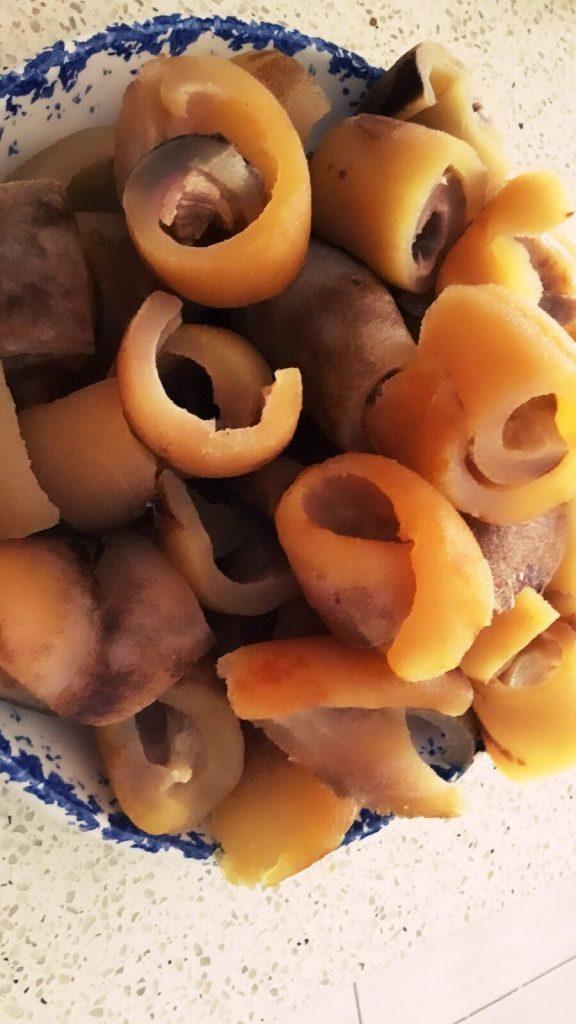
Kpomo, also known as ponmo, cow skin, or cowhide, is the skin of a cow that is processed and cooked for human consumption in many African countries, especially Nigeria. - Is Kpomo a source of protein?
Yes, but it contains very little protein compared to other animal products. Its protein content is not enough to serve as a main protein source. - Does Kpomo have any nutritional value?
Kpomo contains small amounts of protein, collagen, and minerals like iron and zinc, but its nutritional value is generally low compared to other meats. - Can Kpomo be part of a healthy diet?
Yes, when eaten in moderation and prepared hygienically. However, it should not replace other protein-rich foods. - Is Kpomo good for weight loss?
Kpomo is low in fat and calories, so it can be part of a weight loss diet when consumed in small quantities. - Is Kpomo safe to eat?
Yes, if properly cleaned and cooked. However, it can be dangerous if processed with harmful chemicals or burned with toxic materials like tires. - What are the health risks of eating Kpomo?
If not properly processed, Kpomo may contain harmful substances or bacteria that can cause food poisoning or other health issues. - Can Kpomo improve skin health?
There are claims that collagen in Kpomo may support skin health, but the amount is minimal and unlikely to make a significant difference. - Does Kpomo help in bone development?
It contains some collagen, which supports joints and bones, but not in a significant amount to replace other sources like bone broth. - Is Kpomo good for children?
Children can eat Kpomo occasionally, but it should not replace nutrient-dense foods like eggs, milk, or fish in their diet. - Does Kpomo contain cholesterol?
Kpomo has very little fat and cholesterol, especially when the outer layer is properly removed during processing. - What are common dishes that use Kpomo?
It is often added to soups like egusi, ogbono, vegetable soup, pepper soup, jollof rice, and asun (spiced grilled meat). - Can vegetarians eat Kpomo?
No. Kpomo is derived from animals and is not suitable for vegetarians or vegans. - How is Kpomo traditionally processed?
It is usually boiled, burned, or scraped to remove hair, and then further cooked until soft and edible. - Can Kpomo be harmful if overcooked?
Overcooked Kpomo may become rubbery and hard to digest, but it is not necessarily harmful unless toxic materials were used in processing. - Is Kpomo good for people with high blood pressure?
Kpomo itself is low in fat and sodium, but it depends on how it is cooked. Avoid versions cooked with excessive salt or seasoning cubes. - Can Kpomo cause indigestion?
Yes, for some people, especially when not cooked properly, Kpomo can be difficult to digest. - Is Kpomo a good source of collagen?
It contains some collagen, which may support skin and joint health, but it’s not a concentrated source like bone broth or supplements. - How often should one eat Kpomo?
It should be eaten occasionally, not regularly, as part of a balanced diet that includes other protein-rich foods. - What should I check before buying Kpomo?
Ensure it is clean, free from chemical smells, and processed in a hygienic environment. Avoid those burned with tires or waste materials.