



Watermelon is a refreshing, water-rich fruit that’s often recommended during pregnancy for its hydrating properties and essential nutrients. Composed of about 92% water, it’s low in calories, naturally sweet, and easy to digest—making it an ideal choice for early pregnancy when morning sickness and hydration needs are high. Beyond being affordable and widely available, watermelon provides key vitamins, minerals, and antioxidants that support both maternal health and fetal development.
Nutrient Content of Watermelon
A typical serving (around 152g or 1 cup diced) includes:
- Low calories (about 46)
- High water content (around 92%)
- Carbohydrates and natural sugars
- Small amounts of protein
- Vitamin B6
- Folate
- Dietary fiber
- Vitamin C
- Minimal fat
- Potassium
- Phosphorus
- Calcium
- Iron
- Magnesium
- Zinc
- Vitamin A
- Niacin, riboflavin, thiamin, pantothenic acid

Image: Fresh watermelon benefits for early pregnancy
Health Benefits of Watermelon Fruit during Early Pregnancy
1. Reduce Pregnancy/Edema
Watermelon’s high water content and natural compounds help reduce swelling (edema) by improving fluid balance and easing blood vessel pressure common in pregnancy.
2. Prevents Dehydration
With 90-92% water, watermelon effectively meets increased fluid needs, preventing dehydration that could harm mother and fetus.
3. Prevents Pigmentation
Antioxidants and vitamins promote smoother, healthier skin, potentially reducing stretch marks and pigmentation for a glowing appearance.
4. Prevent Muscle Cramps
Minerals like potassium and magnesium relax muscles and prevent common cramps during pregnancy.
5. Overcoming Morning Sickness
Its mild flavor, hydration, and natural sugars soothe nausea and vomiting, especially in the first trimester.
Read Also: Health Benefits of taking Watermelon Fruits for Males and Females Fertility
6. Overcome Digestive Complaints
Fiber content supports healthy digestion, easing constipation and other issues as the fetus grows.
7. Maintain Heart Health
Lycopene acts as an antioxidant to support cardiovascular function, beneficial during pregnancy’s increased demands.
8. Maintain the Immune System
High vitamin C strengthens immunity, protecting against infections that could affect mother and baby.
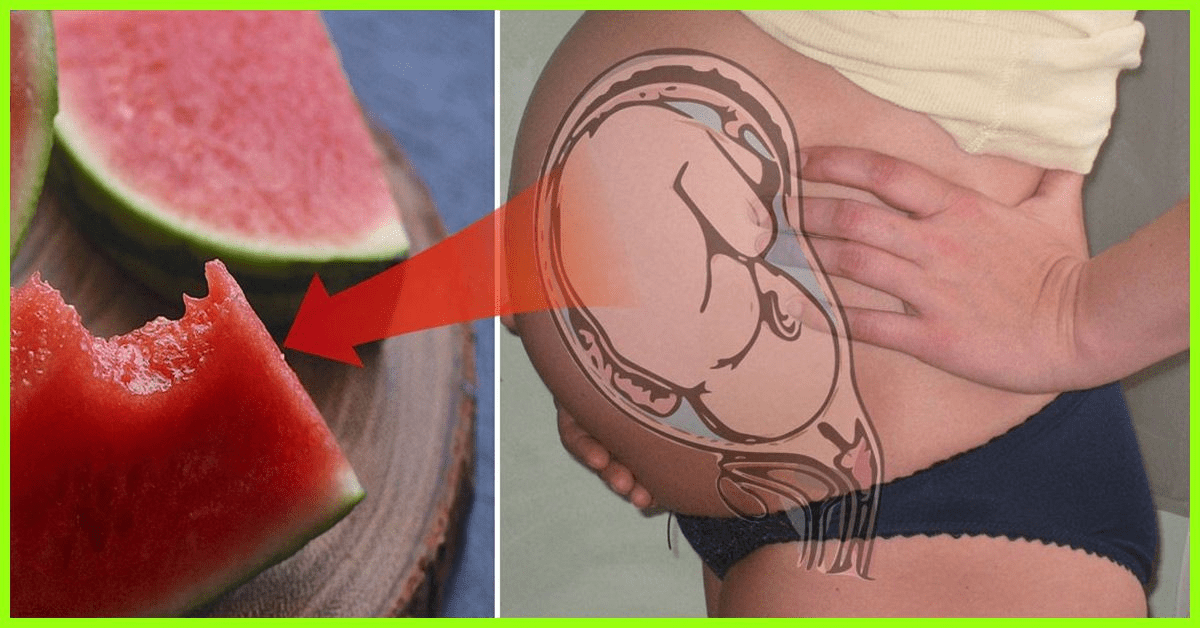
Image: Watermelon supporting immune and overall health in pregnancy
9. Rich in Antioxidants
Vitamins A and lycopene combat free radicals, providing protective benefits for maternal and fetal cells.
10. Formation of Fetal Bone
Potassium helps retain calcium, aiding proper bone development in the early stages of fetal growth.
Watermelon During Pregnancy to Treat Nausea
Many pregnant women find watermelon easy to tolerate during morning sickness. Try fresh slices, juice, or ice pops: Purée seedless watermelon, strain for smoother juice, or freeze purées in molds with lemon or other flavors for refreshing relief.
Benefits of Watermelon Seeds for Pregnant Women
Don’t discard the seeds—roast them for a nutritious snack. They offer:
- High vitamin C to boost fetal immunity.
- Healthy fats, protein, folate, B vitamins, iron, magnesium, potassium, and zinc for overall fetal growth and development.
Are There Any Side-Effects of Consuming Watermelon While Pregnant?
Generally safe, but watch for:
- Excess sugar potentially raising blood glucose and gestational diabetes risk.
- Diuretic effects flushing out nutrients if overconsumed.
- Spoiled or old watermelon causing nausea or GI issues—always eat fresh.
Caution
Avoid overconsumption to prevent low blood pressure, dizziness, or other issues. Moderation ensures optimal benefits.
Scientific Evidence and Case Studies on Watermelon During Early Pregnancy
1. Hydration and Reduced Complications: High water content (92%) helps meet increased fluid needs, potentially lowering risks of constipation, hemorrhoids, preterm delivery, and poor fetal growth.
2. Lycopene for Preeclampsia Risk: Lycopene antioxidant may reduce preeclampsia risk (up to 50% in some studies with daily intake), supporting blood pressure and cardiovascular health.
3. Morning Sickness Relief: Tolerated well in hyperemesis gravidarum cases, aiding weight regain and reducing nausea symptoms in clinical trials.
4. Nutrient Support for Fetal Development: Folate, vitamin B6, and antioxidants aid neural tube development, brain function, and protection from oxidative stress.
5. Immune and Antioxidant Benefits: Vitamin C and lycopene boost maternal immunity and combat free radicals, potentially reducing infection risks.
Nutritional Value Of Watermelon During Early Pregnancy
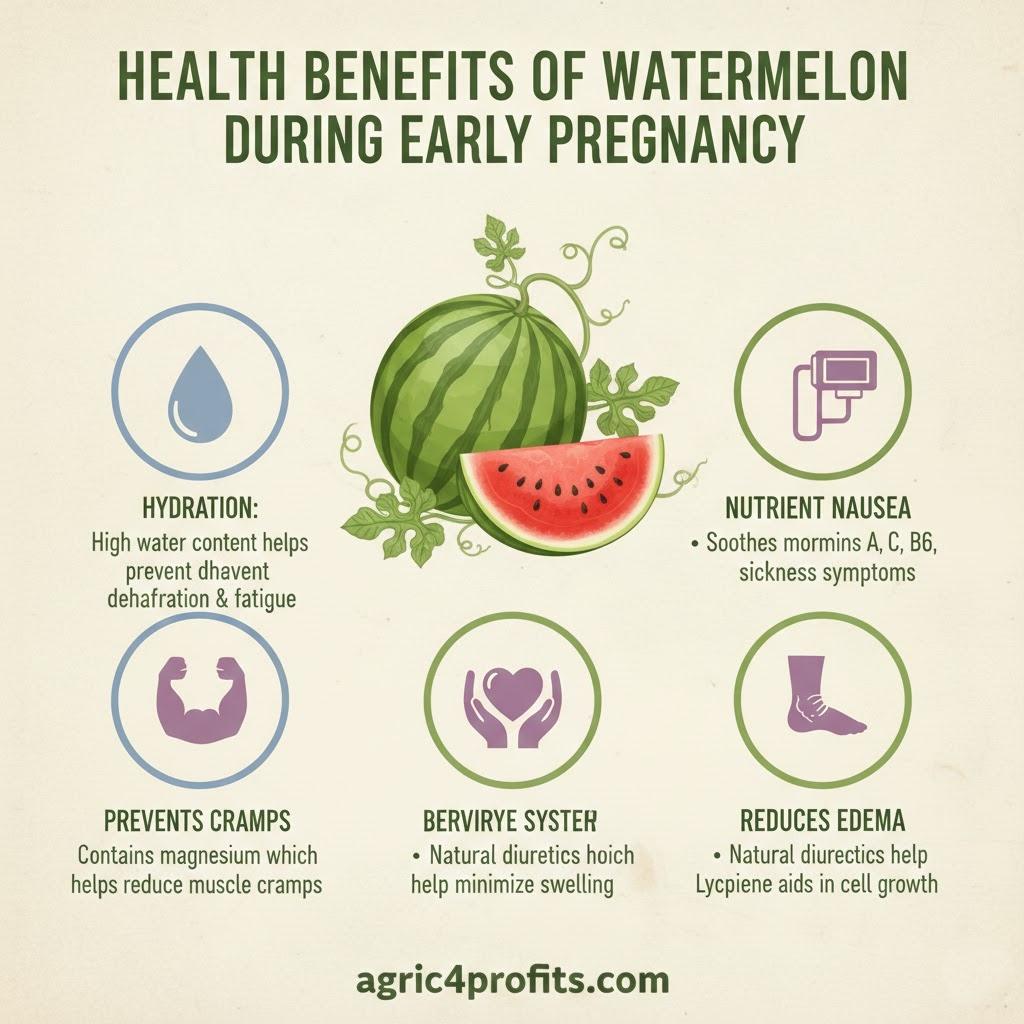
1. High Water Content: 92% water for superior hydration, supporting amniotic fluid and preventing dehydration-related issues.
2. Vitamin C: Boosts immunity, enhances iron absorption, and supports collagen for skin and tissue health.
3. Folate: Essential for preventing neural tube defects and aiding fetal DNA synthesis and brain development.
4. Potassium: Regulates fluid balance, reduces swelling, and prevents muscle cramps.
5. Lycopene: Powerful antioxidant protecting against oxidative stress and potentially lowering preeclampsia risk.
6. Vitamin A: Supports fetal eye, skin, and immune system development.
7. Magnesium and Other Minerals: Aid muscle relaxation, bone formation, and energy metabolism.
Summary of Watermelon During Early Pregnancy
| Aspect | Key Details |
|---|---|
| Introduction | Hydrating, nutrient-rich fruit (92% water); ideal for early pregnancy nausea, hydration, and fetal support. |
| Nutrient Highlights | High water, vitamin C, folate, potassium, lycopene; low calories, natural sugars. |
| Main Benefits | Reduces edema/swelling, prevents dehydration, eases morning sickness/cramps/digestion, boosts immunity, supports heart/fetal bone health, rich in antioxidants. |
| Special Uses | Treats nausea via juice/pops; seeds provide extra nutrients for fetal growth. |
| Cautions | Moderation to avoid blood sugar spikes, nutrient loss, or low blood pressure; eat fresh only. |
| Recommendations | Include daily in moderation; consult doctor for personalized intake. |
Frequently Asked Questions
1. Is watermelon safe to eat in early pregnancy?
Yes, watermelon is safe and highly recommended in moderation during early pregnancy for its hydration and nutrient benefits.
2. How does watermelon help with morning sickness?
Its mild flavor, high water content, and natural sugars make it easy to tolerate, soothing nausea and providing quick hydration and energy.
3. Can watermelon prevent dehydration during pregnancy?
Yes, with about 92% water, it effectively boosts fluid intake, supporting amniotic fluid levels and reducing dehydration risks.
4. Does watermelon reduce swelling or edema in pregnancy?
Water content and potassium help balance fluids and ease blood vessel pressure, reducing common pregnancy swelling.
5. Is watermelon good for preventing muscle cramps?
Minerals like potassium and magnesium in watermelon support muscle relaxation and help prevent cramps.
6. How does watermelon support fetal development?
Folate aids neural tube formation, potassium supports bone growth, and antioxidants protect against oxidative stress.
7. Can watermelon boost immunity during pregnancy?
High vitamin C strengthens the immune system, helping prevent infections harmful to mother and baby.
8. Are there risks to eating too much watermelon while pregnant?
Excess may spike blood sugar (gestational diabetes risk), cause diuretic effects losing nutrients, or lead to low blood pressure.
9. Should pregnant women eat watermelon seeds?
Yes, roasted seeds offer extra protein, fats, folate, iron, and minerals beneficial for fetal growth.
10. How much watermelon is recommended daily during pregnancy?
1-2 cups (or equivalent) in moderation provides benefits without risks; always choose fresh and consult a healthcare provider.
Do you have any questions, suggestions, or contributions? If so, please feel free to use the comment box below to share your thoughts. We also encourage you to kindly share this information with others who might benefit from it. Since we can’t reach everyone at once, we truly appreciate your help in spreading the word. Thank you very much for your support and for sharing!
Disclaimer: This article is for educational and informational purposes only. The health benefits described are based on scientific research and traditional knowledge. They are not a substitute for professional medical advice, diagnosis, or treatment. Always consult a healthcare professional before using any herb or natural remedy for medical purposes.
Read Also: Anatomy of Fishes: Female Fish and their Reproductive Strategies
interesting
Thanks