


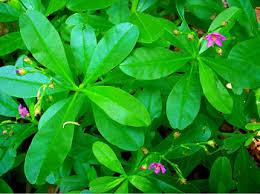
Scientifically named Talinum triangulare, waterleaf is an herbaceous perennial plant native to Mexico. It grows in many countries across Asia, South America, Central America, and West Africa as an all-season vegetable.
In Nigeria, it is widely cultivated and consumed in the Southern regions, especially in Cross River and Akwa Ibom States, where high demand makes it a major income source for farmers.
Waterleaf thrives in rainy seasons or with irrigation but tolerates drought due to its crassulacean acid metabolism (CAM) pathway. This adaptation allows plants to close stomata during the day to reduce evapotranspiration and open them at night to absorb CO2, enabling efficient use of moisture and carbon dioxide in arid conditions.
Read Also: The Basics of Planting and Growing a Vegetable Garden
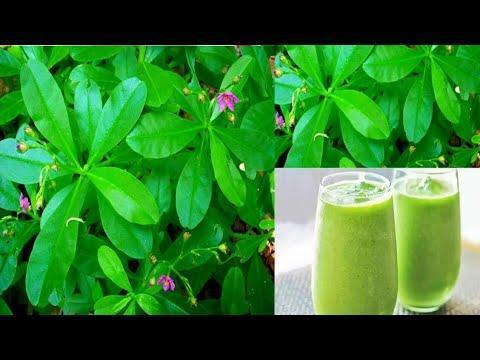
Its high demand stems from its nutrient value and role as a “softener” when cooking fibrous leafy vegetables like Afang (Gnetum africana). Some view it as a stubborn weed that grows year-round, flourishing more in the rainy season. It is a good source of vitamin A.
Research indicates that diets rich in vitamin C reduce the risk of Alzheimer’s disease and slow age-related cognitive decline. Waterleaf provides about 31 mg of vitamin C per 100 grams.
Studies show waterleaf can inhibit cancer cell proliferation and shrink tumours. It also offers cerebral-protective benefits, enhancing brain function and protecting brain tissues. Additionally, it serves as a remedy for insomnia.
Waterleaf contains more protein than cashew nuts, more pectin (a digestive fiber) than apples, and high levels of vitamin B, essential amino acids, omega-3 fatty acids, resins, iron, calcium, copper, manganese, and zinc.
It is rich in carotenoids, vitamin C, vitamin A, thiamine, riboflavin, niacin, alpha and beta tocopherols. Pounded waterleaf soothes inflammations, leaf infusions act as diuretics, and boiled roots help with prostate enlargement (half a glass twice daily).
Waterleaf is safe and beneficial for pregnant women and children, boosting blood levels. Regular consumption as soup regulates hypertension and diabetes. It is effective as a vegetable, dried herb, infusion, or—best of all—juice.
Read Also: How to Clean your Kidney now with Garden Egg Leaves
What is Waterleaf juicing?

Juicing extracts vitamins, minerals, and liquids from fruits and vegetables. To juice waterleaf, chop stems and leaves, add two or three handfuls to a blender with one cup of water, blend like tomatoes or fruits, sieve out the chaff, and drink the dark green liquid (packed with nutrients) within 10 minutes.
If you feel tired and weak, battle diabetes, hypertension, arthritis, frequent malaria, cancer risks, or seek glowing skin, try waterleaf juice twice a week. It is also effective against measles in children: pound, add warm water, strain, and use as an enema every morning for about a week.
Scientific Evidence and Case Studies on Health Benefits of Waterleaf (Talinum triangulare)
1. Antioxidant properties: Studies show aqueous extracts of Talinum triangulare exhibit strong antioxidant effects and protect organs in animal models.
2. Anticancer potential: Research demonstrates that waterleaf inhibits proliferation of cancer cells, reduces tumour growth, and shows antitumor activities linked to its bioactive compounds.
3. Anti-inflammatory effects: Extracts display anti-inflammatory properties, helping regulate inflammatory responses and related conditions.
4. Neuroprotective benefits: Consumption enhances cognitive function, protects brain tissues, and shows positive effects on neurons in the cerebrum.
5. Immunomodulatory and protective roles: The plant’s flavonoids and phenolic acids provide immunomodulatory effects, protect against toxicity (e.g., lead-induced reproductive damage), and support overall health management.
Summary of Health Benefits of Waterleaf (Talinum triangulare)
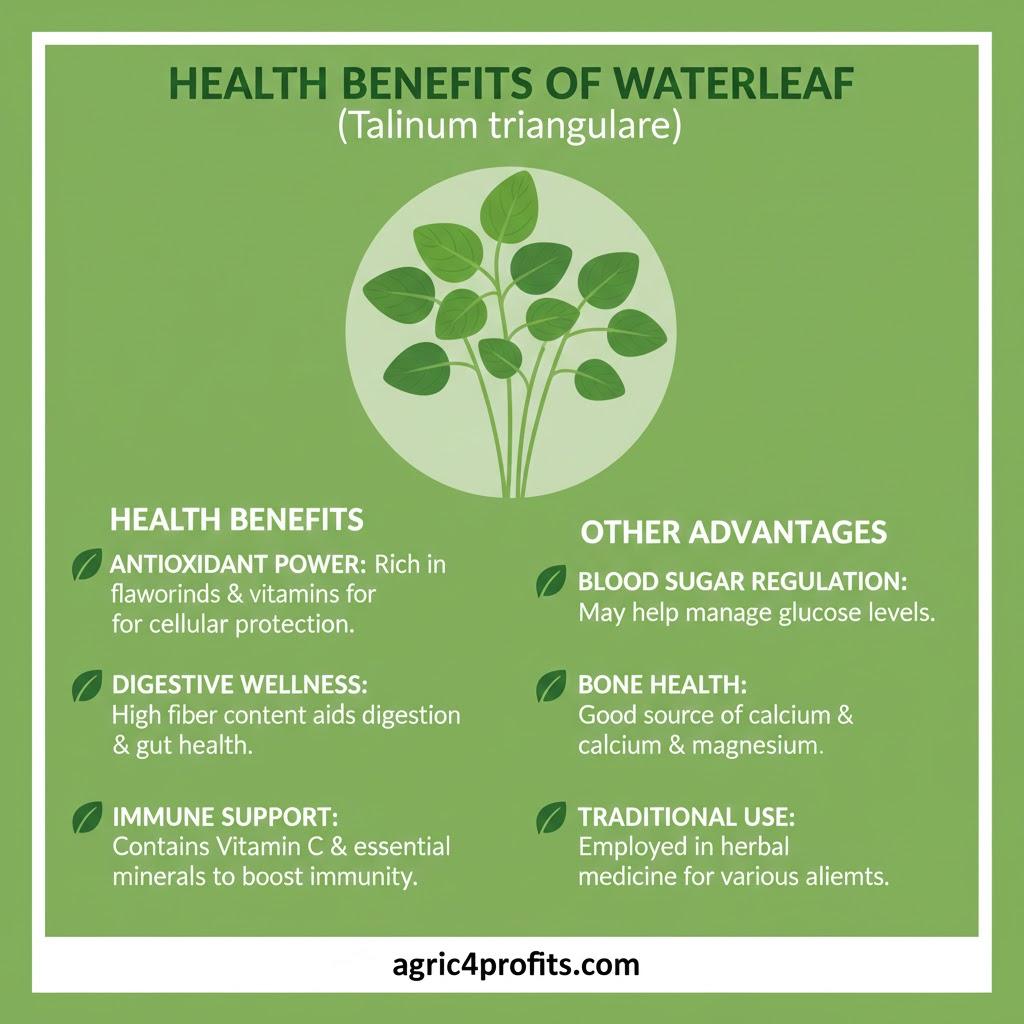
| Aspect | Key Points |
|---|---|
| Nutritional Content | Rich in fibre, protein, vitamins (A, C, B-complex), minerals (calcium, iron, magnesium, potassium, etc.), antioxidants, omega-3, essential amino acids, pectin. |
| Botanical & Growth | Herbaceous perennial (Talinum triangulare), native to Mexico, grown in tropical regions; drought-tolerant via CAM pathway; all-season vegetable. |
| Traditional Uses | Softens fibrous vegetables in soups; used as diuretic, anti-inflammatory poultice, remedy for insomnia, prostate issues, measles (enema), and more. |
| Health Benefits | Boosts blood levels (good for pregnancy/children); regulates hypertension, diabetes; supports brain health; reduces cancer risk; aids digestion; promotes skin health; fights fatigue/weakness. |
| Preparation Methods | Best as fresh juice (blend chopped leaves/stems with water, sieve, drink quickly); also soups, infusions, dried herbs, pounded for topical use. |
| Other Notes | High demand in Southern Nigeria; safe and beneficial overall; try regularly for preventive health. |
Frequently Asked Questions
1. What is waterleaf scientifically known as?
Waterleaf is scientifically known as Talinum triangulare.
2. Is waterleaf rich in vitamins and minerals?
Yes, it is rich in vitamins like A, C, and B-complex, along with minerals such as calcium, iron, magnesium, potassium, and phosphorus.
3. Can waterleaf help with cancer prevention?
Studies indicate that waterleaf can inhibit cancer cell proliferation and shrink tumours due to its antioxidant and bioactive compounds.
4. Is waterleaf good for brain health?
Yes, it offers cerebral-protective benefits, enhances cognitive function, protects brain tissues, and may help slow age-related cognitive decline.
5. How does waterleaf help with hypertension and diabetes?
Regular consumption as soup or juice helps regulate blood pressure and blood sugar levels.
6. What is the best way to consume waterleaf for maximum benefits?
Juicing is the most effective method—blend chopped leaves and stems with water, sieve, and drink fresh within 10 minutes.
7. Is waterleaf safe for pregnant women and children?
Yes, it is safe and beneficial, as it boosts blood levels and provides essential nutrients for growth and health.
8. Can waterleaf be used for skin health?
Yes, its nutrients and antioxidants support glowing, youthful skin and overall vitality.
9. Does waterleaf have anti-inflammatory properties?
Yes, pounded leaves soothe inflammations, and extracts show strong anti-inflammatory effects.
10. How does waterleaf tolerate drought conditions?
It uses the crassulacean acid metabolism (CAM) pathway to efficiently conserve water and absorb CO2 at night.
Do you have any questions, suggestions, or contributions? If so, please feel free to use the comment box below to share your thoughts. We also encourage you to kindly share this information with others who might benefit from it. Since we can’t reach everyone at once, we truly appreciate your help in spreading the word. Thank you very much for your support and for sharing!
Disclaimer: This article is for educational and informational purposes only. The health benefits described are based on scientific research and traditional knowledge. They ayre not a substitute for professional medical advice, diagnosis, or treatment. Always consult a healthcare professional before using any herb or natural remedy for medical purposes.