


If you can’t get an expert before buying your point-of-lay birds, ask for the records from where you’re buying them. This includes the age, source, vaccination, and other medication records. But it’s still better to get an expert. If you need help, you can contact the author of this article.
Now let’s talk about the ideal method of raising layers for maximum egg production and profits.
Layer poultry farming means raising egg-laying poultry birds for commercial egg production. Layer chickens are a special species of hens that need to be raised from when they are one day old. They start laying eggs commercially from 18-19 weeks of age. They continue laying eggs continuously till their 72-78 weeks of age. They can produce about one kg of eggs by consuming about 2.25 kg of food during their egg-laying period.
According to the nature and color of the egg, layer hens are of two types. Here’s a short description of these two types.
1. Types of Layer Hens
A. White Egg Laying Hens
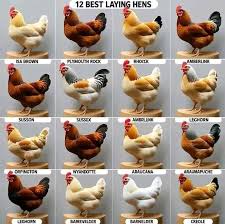
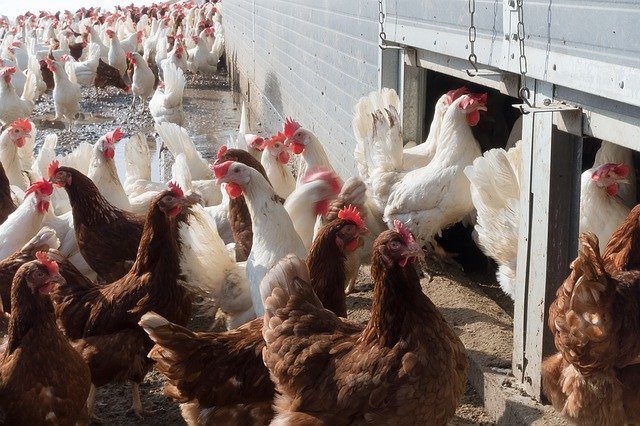
These hens are comparatively smaller in size. They eat less food, and the egg shell is white. Isa White, Lehman White, Nikchik, Bab Cock BV-300, Harvard White, Hi Sex White, Sever White, Hi Line White, and Bovanch White are some popular white egg-laying chickens.
White egg layers are popular in some markets where white eggs are preferred. They’re more economical to feed because of their smaller size.
B. Brown Egg Laying Hens
Brown egg-laying hens are larger in size. They eat more food compared to white egg layers. They lay bigger eggs than other laying breeds. The eggshell is brown colored. There are many types of brown layers available. Among those, Isa Brown, Hi Sex Brown, Sever 579, Lehman Brown, Hi Line Brown, Bab Cock BV-380, Gold Line, Bablona Tetro, Bablona Harko, and Havard Brown are very suitable for commercial layer.
In most markets, brown eggs sell better and at higher prices, even though there’s no nutritional difference from white eggs.
You have to select breeds that are suitable for your layer poultry farming business and can produce well in your area.
The common breeds of chickens in Nigeria are Isa Brown, Arbor Acres, Marshall, Ross, Kuroiler, White Cockerel, and Black Cockerel. Always ask about the breed you’re buying as well as the peculiarity of the breed.
2. Selecting the Right Breed
For commercial egg production, read below before selecting your breed. Choose highly productive laying hens correctly.
- Not all types of hens produce equal numbers of eggs
- The chosen breeds must have good production capability
If your chosen breed contains the desired characteristic and has a reputation for egg production, then that breed is suitable for your business.
Read Also: How to Make Money as a Poultry Farmer
3. Setting Up a Layer Farm
To set up a layer farm, follow these steps:
A. Location
The housing system is very important for rearing layers and effective keeping and management. As a new person to the livestock business, you don’t want to invest all your capital into buying land in an urban area, which may turn out not being used because government policy is against setting up poultry farms near residential/urban areas for health reasons.
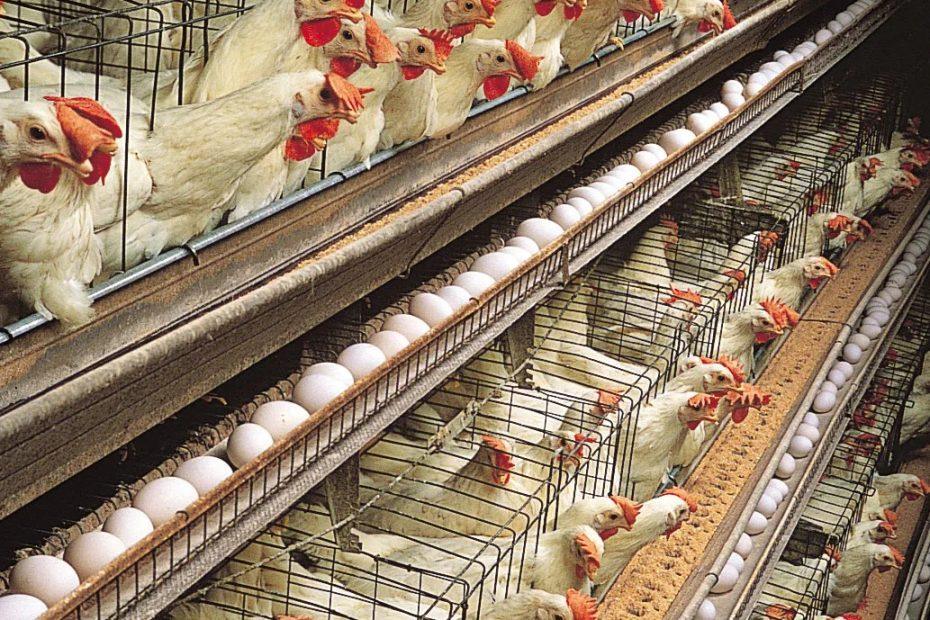
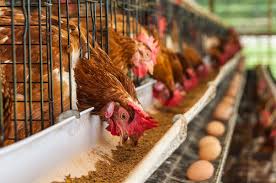
Battery cages are the best housing cages for laying birds because they create comfort and stability for them.
Choose a location that’s far enough from residential areas but still accessible for feed delivery and egg distribution. Check local regulations before buying land.
B. Set-Up Capital
With a location in mind, you now have a clearer idea of the capital required. Write down your detailed capital and investment requirements for your poultry farming in Nigeria venture and set out to source it.
Like every other farming project, the bigger you plan to start, the more investment is required. You need to decide on the level of capital investment you’re willing to commit to this business before starting.
Budget for housing, equipment, initial stock, feed for at least 3 months, medication, and operating expenses. Don’t forget a contingency fund for emergencies.
C. Get Chicks
Look for a good hatchery where you can get healthy day-old chicks to start with.
Visit the hatchery first. Check their facilities, ask about their biosecurity measures, and request records of their hatch rates and chick quality.
D. Feeds and Water Management
You can buy feed from your local market or make the feed at your own house. Just make sure the one bought or made is enriched with protein and mineral which are very essential for laying hens.
Feeding guidelines:
- Give them at least 2% calcium for 2 weeks after birth
- Feed them with starter feed for 8 weeks
- Serve them two or three times daily till they are 18 weeks old
- Serve them layer poultry feed according to their age and weight
- Don’t decrease their feed while laying (even if their weight increases)
- Provide adequate water according to the demand of your laying hens (supply cold water during hot weather, and lukewarm water in cold weather)
Clean water is critical. Change it at least twice daily. Dirty water spreads disease faster than almost anything else.
E. Vaccination
This makes your hens disease-resistant. It helps to keep them free from infections and reduces the mortality rate. But before vaccination, take note that ill hens don’t need to be vaccinated anymore (separate ill birds to avoid spreading). Make sure vaccination equipment is washed with hot boiled water or an antiseptic/germicide.
Common vaccines for layer hens include Marek’s, Gumboro, Salmonella, Newcastle, and others.
Follow a strict vaccination schedule. Missing even one vaccination can expose your entire flock to disease.
4. Egg Production Timeline
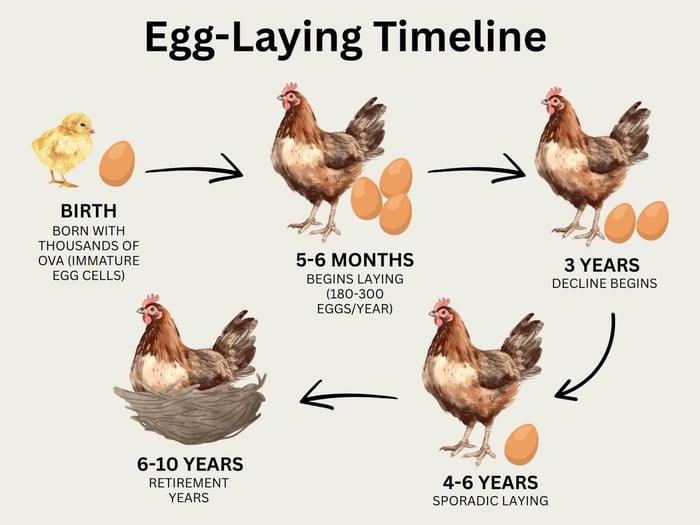
An average healthy layer lays eggs almost every day or at least 4 times a week. This means that, technically a layer is capable of producing another chicken twice in three days.
Production milestones:
- Within the first 20 weeks of age, about 5% of hens start laying eggs and can lay as many as 325 eggs in a year
- About 10% birds start laying at 21 weeks of age
- When they reach 26 to 30 weeks of age, they produce highly (although it may be different depending on their strain)
- After laying a maximum number of eggs, they usually stop laying for a few days
- After this period, their egg production might reduce slowly
- Egg laying rate and size of eggs increase gradually
- The hens grow till their 40 weeks of age
- Weight and size of eggs increase till their 50 weeks of age
Track production daily. Notice patterns. If production drops suddenly, investigate immediately.
A. Marketing
Marketing involves a range of prices, depending on the different sizes of egg, different brands, or other differences that attract particular buyers. In the home and shop situation, it’s best to store them at normal refrigerator temperature.
Build relationships with buyers before your hens start laying. Supermarkets, hotels, restaurants, and wholesalers all need reliable egg suppliers.
Related: The Ultimate Step-by-Step Guide to Vegetable Gardening
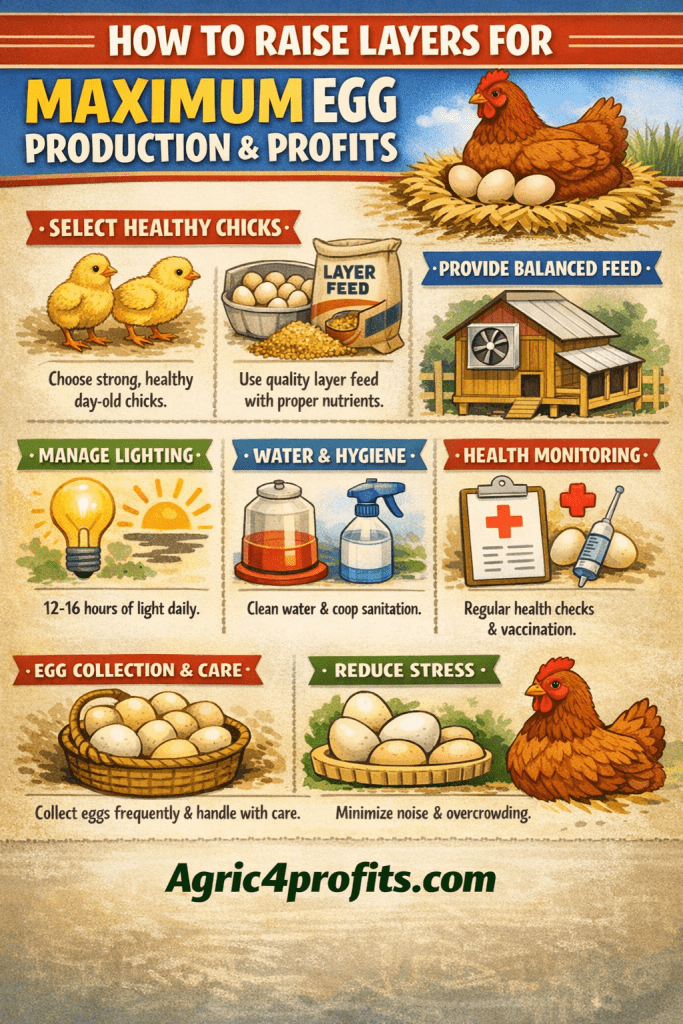
Summary on How to Raise Layers for Maximum Egg Production and Profits
| Aspect | Key Details |
|---|---|
| Layer Types | White egg layers (smaller, eat less) and Brown egg layers (larger, bigger eggs) |
| Common Breeds in Nigeria | Isa Brown, Arbor Acres, Marshall, Ross, Kuroilers, White Cockerel, Black Cockerel |
| Production Start Age | 18-19 weeks of age |
| Production Duration | 72-78 weeks (about 1 year of peak production) |
| Feed Conversion | About 2.25 kg of feed produces 1 kg of eggs |
| Location Requirements | Away from residential areas, accessible, compliant with regulations |
| Housing | Battery cages provide the best comfort and stability |
| Feeding Schedule | 2% calcium for 2 weeks; starter feed for 8 weeks; 2-3 times daily till 18 weeks; layer feed thereafter |
| Water Supply | Clean, adequate, cold in hot weather, lukewarm in cold weather |
| Vaccination | Marek’s, Gumboro, Salmonella, Newcastle, etc. Following strict schedule |
| Peak Production | 26-30 weeks of age |
| Production Rate | Almost daily or at least 4 times per week; up to 325 eggs per year |
| Marketing | Variable pricing by size, brand; store at refrigerator temperature |
Frequently Asked Questions About Raising Layers for Maximum Egg Production
1. What’s the difference between white and brown egg layers?
White egg layers are smaller, eat less food, and lay white eggs. Brown egg layers are larger, eat more, and lay brown eggs. Both types are equally nutritious.
2. When do layer chickens start laying eggs?
Most commercial layers start laying eggs at 18-19 weeks of age. About 5% start at 20 weeks, and 10% at 21 weeks.
3. How long do layers continue producing eggs?
Layers produce eggs continuously for 72-78 weeks. After this, production drops significantly and it’s usually more profitable to replace the flock.
4. What breeds of layers are best for Nigerian conditions?
Isa Brown, Arbor Acres, Marshall, Ross, Kuroiler, White Cockerel, and Black Cockerel are common breeds that perform well in Nigeria.
5. How much feed does a layer consume to produce eggs?
A layer consumes about 2.25 kg of feed to produce 1 kg of eggs. This ratio is important for calculating profitability.
6. What type of housing is best for layers?
Battery cages are the best option as they provide comfort and stability. Make sure the location is away from residential areas but accessible for operations.
7. What should I feed my layers at different ages?
Give 2% calcium for 2 weeks after birth, starter feed for 8 weeks, feed 2-3 times daily until 18 weeks, then switch to layer feed based on age and weight.
8. How important is vaccination for layers?
Very important. Vaccination prevents diseases and reduces mortality rates. Follow a strict vaccination schedule including Marek’s, Gumboro, Salmonella, and Newcastle.
9. When is peak egg production?
Peak production occurs at 26-30 weeks of age. Production rates and egg sizes increase gradually until about 50 weeks.
10. How should I market my eggs?
Build relationships with buyers early. Target supermarkets, hotels, restaurants, and wholesalers. Price varies by size and brand. Store eggs at refrigerator temperature.
Do you have any questions, suggestions, or contributions? If so, please feel free to use the comment box below to share your thoughts. We also encourage you to kindly share this information with others who might benefit from it. Since we can’t reach everyone at once, we truly appreciate your help in spreading the word. Thank you very much for your support and for sharing!
Read Also: 9 Impressive Health Benefits of Onions
Which farms do you recommebd for the purchase of POL.
Any reputable poultry farm within your location is alright to purchase your Point of Lay (POL) birds.
However, you need to ensure that the birds you intend to purchase are well vaccinated, with a good track record for maximum productivity potentials, and other relevant information you feel will be necessary to ensure that the birds are in a good state for your business.