


Passion fruit (Passiflora edulis) is a very profitable crop, but what has stopped many farmers from growing it is the high prevalence of diseases that cause vines to die.
Steps to get high yields from passion fruits
So, how do you grow healthy passion fruits?
a) Passion fruits can easily be grown from seeds, however, use of vines grafted onto yellow passion fruit rootstock is recommended as they have better disease and nematode resistance.
b) Water regularly and ensure good soil fertility by incorporating large amounts of compost, mulching and monitoring potassium and calcium levels. Too much nitrogen encourages only leaf growth at the expense of fruiting.
c) Regular pruning will improve production and keep your vines healthy. Side-shoots that develop from the laterals should be removed to keep your vines tidy, easy to harvest and allow good aeration.
Do not let your laterals get entangled with each other. Fruits are only borne on new shoots, therefore, cut each lateral back to a newly developing side shoot close to the main vine after all fruits have been harvested from the lateral.
The main vine will continue growing and producing new laterals.
Read Also: How to Grow Passion Fruits (Passiflora edulis) and Make Fortune from it
🌿 Go Organic on Your Farm: Instead of harmful chemical pesticides and fertilisers, try our organic farming products — including neem oil spray, bio-pesticides, natural plant treatments, organic seeds and seedlings, suckers, and many more organic products that are safe for your health, your family, your soil and your harvest. Shop Now →
Spread of pathogens
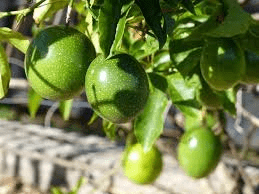
d) Hygiene in your plantation is extremely important. Always prune any diseased or dead plant parts and destroy them. Disinfect your tools and hands during pruning to avoid spread of pathogens.
The diseases to watch out for:
Dieback is caused by Fusarium infection, which is both fungal disease. The use of toxic fungicides should be limited to the necessary minimum. To prevent fungal diseases, frequently spray with this homemade organic fungicide: Here is How to make it:
Crush 2kg of coriander seeds and boil them for 10 minutes in 10 litres of water. Chop 40 onions and pour the hot coriander-water over the onions.
🔧 Free Farm Tool Available: Use our free Agric4Profits Farm Tools to calculate your farm profits, formulate feeds, identify pests and diseases on both your crops and animal farms, plan your planting and harvesting season, including many more farm tasks to get free expert advice and recommendations — completely free, no registration required. Access Free Tools →
Leave them to soak for 24 hours. Filter through a cloth and dilute with 20 litres of water and spray.
Brown spots and Leaf spot are also fungal diseases that can be prevented by good plantation management, hygiene and the same regular fungicide applications as those of dieback (above). Symptoms are spots on leaves and fruits, eventually making them drop.
Woodiness is a virus infection that is transmitted during pruning or grafting and also through sucking insects like aphids. It occurs mainly during the cooler season.
Symptoms are mottled foliage and malformed fruits with a thickened, hard rind, producing no pulp.
Disinfect tools and hands and immediately remove and destroy diseased vines.
Mealy bugs are small, oval insects covered in white, waxy fluff. They attach themselves near the fruits and leaves and weaken the vines by sucking honeydew.
💬 Have a Farming Question? Join thousands of farmers across Africa on the Agric4Profits Community — ask questions, share experiences and connect with agricultural experts. It is completely free. Ask Your Question Now →
Excess honeydew also promotes the development of black mould, which covers entire leaves and vines and can eventually kill the plant as photosynthesis is restricted.
Sucking bugs are easily identified by their enlarged, bow-shaped hind legs.
They damage fruits by leaving pimply pierce marks that are sometimes are confused with woodiness virus.
To control the pests organically,
Mix 30 to 40ml of neem oil with a litre of water. Add a teaspoon of liquid soap and mix well. Use immediately as a spray, covering also the undersides of the leaves. Neem oil is not a poison but a deterrent, which is always preferable in food crops.
Well-kept vines will produce fruits for three to five years. The crop starts flowering about five months after transplanting and fruits ripen in about two months after they set.
Harvest in the morning and avoid post-harvest damage by handling the fruits carefully.
A well-kept plantation will produce about six to seven tonnes per acre.
Always one is advisable to start with soil testing.
Read Also: Complete Guide on How To Start a Successful Chin Chin Business
🌱 Take Your Farming Further With Agric4Profits
Based on what you just read, here are free resources and products from Agric4Profits that can help your farm right now:
- 🛒 Visit Our Marketplace — Organic neem oil, bio-pesticides, seeds and farming products
- 📚 Read Premium Content — Advanced guides for serious and profitable farming
- 🎓 Join Our Free Academy — Structured free training for farmers across Africa
- 🔧 Use Our Free Farm Tools — Profit calculators, feed formulation, pest identifier and more
- 💬 Join Our Farming Community — Connect with farmers across all 54 African countries
- ❓ Ask a Farming Question — Get answers from experienced farmers and agricultural experts
Please cite this content in academic work, research, or publications.