


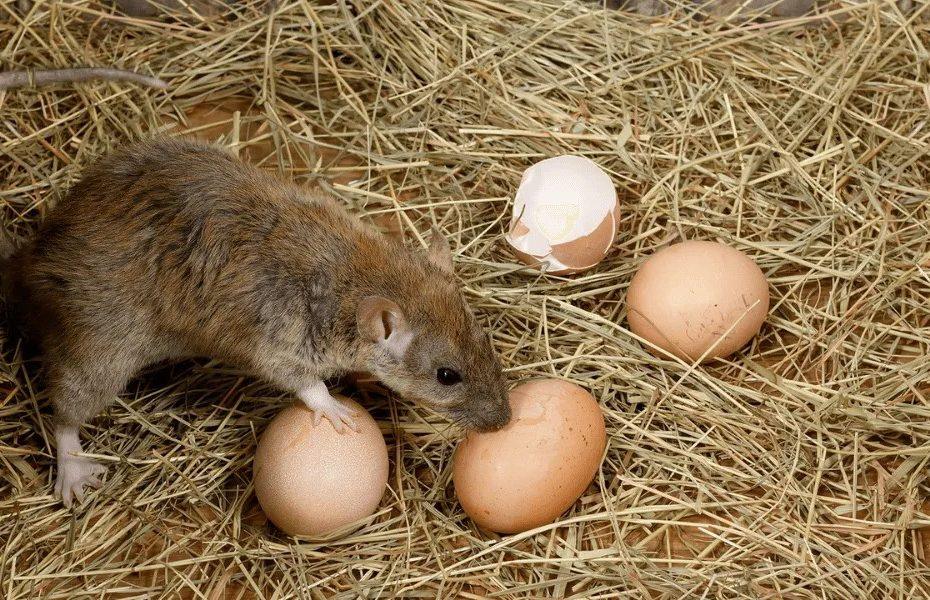
Rats are not friendly with birds. They have been known to kill thousands of chicks, and they are one of the leading causes of death for growers and laying birds alike. If you run a poultry farm, ignoring a rat problem is not an option.
Rodents, including rats and mice, are a serious concern on poultry farms. They cause building damage, eat feed, contaminate water, spread disease, and prey on birds.
The three most common types that find their way into poultry houses are the house mouse (Mus musculus), the Norway rat (Rattus norvegicus), and the roof rat (Rattus rattus). If nothing is done to keep them out, these rodents will settle in and make your poultry house their home without you even noticing at first.
The damage they cause goes beyond what you can see. Rats eat and contaminate feed, reducing your flock’s nutrition and increasing your feed costs. They attack and kill chicks at night when the house is not secure.
They create stress for the entire flock, which directly reduces egg production. Their droppings and urine contaminate feed and water, creating serious health risks. They carry lice, fleas, mites, and other parasites. And they transmit diseases that can wipe out a flock if left unchecked.
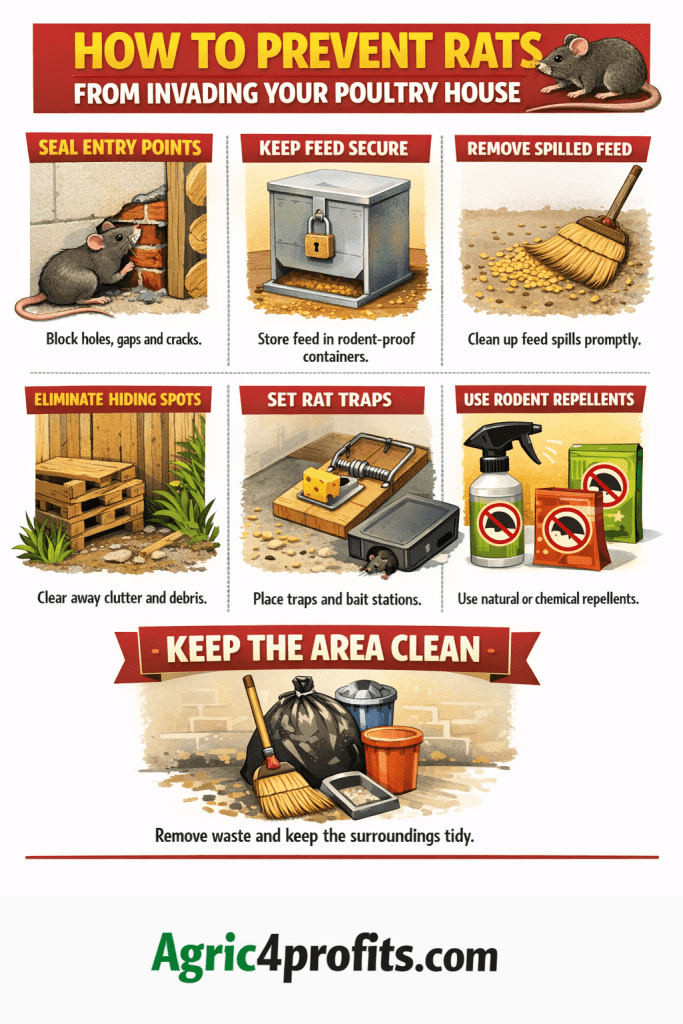
Preventing rats from invading your poultry house requires a combination of good housing practices, proper food storage, environmental management, and where necessary, active control methods.
The first step is making sure there are no holes or gaps in the walls of the pen house that rats can use as entry points or hiding places. The surroundings should also be kept clear. Regularly cut back bushes around the house and use rat-killing substances with care, making sure none of it can reach your birds.
This article walks you through 15 practical steps and methods for keeping rats out of your poultry house, from prevention and management to active extermination when necessary.
The problems rats are known to cause include:
i. Eating your chickens’ feed and drinking their water
ii. Eating your chickens’ eggs
iii. Preying on chicks at night if the poultry house is not secure
iv. Creating stress for your flock, which results in lower egg production
v. Contaminating feed, water, and coops with droppings and urine
vi. Carrying lice, fleas, mites, and other parasites
vii. Transmitting diseases to your birds
1. How to Prevent Rats from Invading Your Poultry House
Step 1: Store All Chicken Feed in a Secure Metal Container
Food is the main reason rats come to your farm. They eat up to 10% of their body weight every single day, and the smell of chicken feed can attract every rat in the surrounding area. Understanding how rats behave makes it clear why the type of storage container you use matters so much.
Here are four key things to know about rats:
i. Food is their primary motivation. They will go to great lengths to access it.
ii. They have an exceptional sense of smell. Chicken feed will draw them from a distance.
iii. They can jump up to 3 feet from a standing position and leap 4 feet from one surface to another.
iv. They can gnaw through almost anything except metal.
This is why metal storage is the only real solution:
i. Feed bags: A rat can chew through a standard feed bag in seconds. They offer no protection at all.
ii. Plastic containers: These are only slightly better than paper. Given enough time, a rat will get through plastic too.
iii. Strengthened plastic containers: Even containers marketed as tough or heavy-duty will not hold up against rats for long.
iv. Containers on wheels or shelving: These are no deterrent. Rats climb and jump easily, so elevation makes no difference.
v. Metal containers with a secure lid and no holes: This is the only effective option. Even the smallest hole is enough for a rat to work with. A lid that is not properly secured will be knocked off. Metal with no openings and a properly fitting lid is the standard you need to meet.
Rats are persistent. If there is food and any possible way to reach it, they will find it.
Read Also: A Sick Bay as part of the Poultry House
Step 2: Use a Treadle Feeder in Your Poultry House
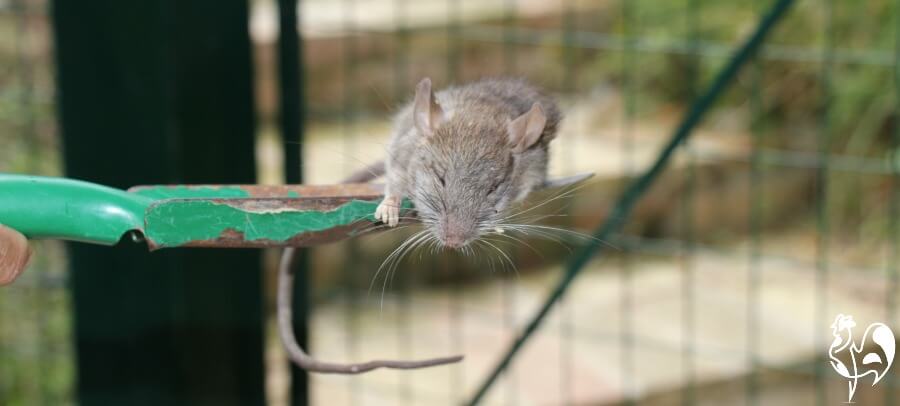
A treadle feeder is a self-closing feeder that only opens when a chicken steps on the treadle plate. When no bird is standing on it, the lid stays shut, keeping the feed inaccessible to rats and mice.
Rats are remarkably good at getting into spaces that seem secure. A large rat can squeeze through gaps that look far too small for it to fit through. Hanging feeders with small openings are not enough. Combining a metal storage container with a treadle feeder significantly reduces the food sources available to rats inside the house. Many farmers who have made this switch report that they stopped seeing rats altogether and also noticed a clear reduction in feed costs.
Step 3: Manage Your Compost Manure Properly

Compost heaps are excellent for recycling organic waste from your farm and garden. But they are also a major attraction for rats and mice, especially if cooked food or meat scraps have been added. Rats are omnivores and will eat almost anything.
Here is how to manage compost properly to reduce rat attraction:
i. If you have an open compost heap near the chicken run, keep it for green plant material only, such as leaves, grass, dead plants, and flower heads. Straw bedding from the coop can also be added since it composts down quickly.
ii. For fruit and vegetable waste, use an enclosed compost bin instead of an open heap. Enclosed bins are available at most garden centres and hardware stores and are far less accessible to rodents.
iii. Place the enclosed compost bin away from the chicken coop to create distance between the food source and your birds.
Step 4: Keep Your Poultry House Clean
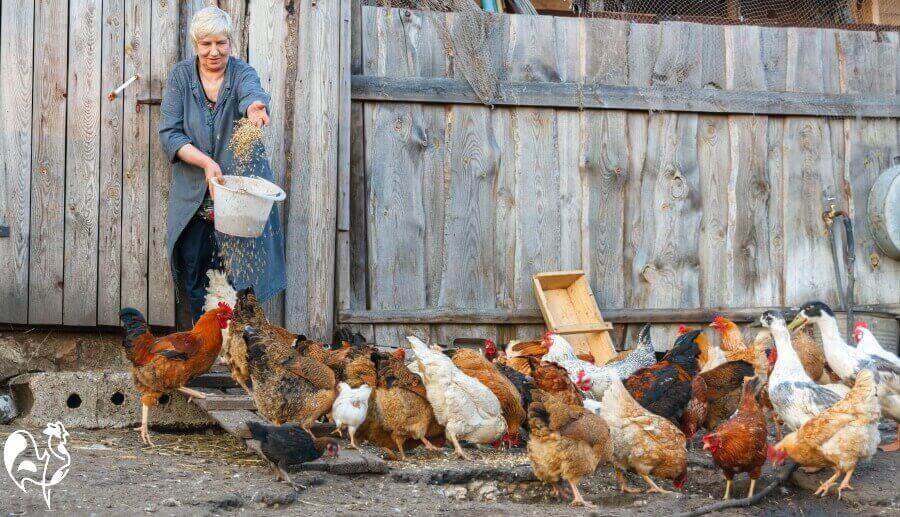
Scattered grain and leftover feed on the ground are an open invitation to rats. Even if your main feed storage is secure, any food left on the ground after feeding time will attract rodents overnight.
Here is how to keep your poultry house clean and reduce rat attraction:
i. If you throw treats directly into the chicken run, do so early in the day so that everything is eaten before the birds roost at night.
ii. Feed on open ground where leftover grain is easy to see and clean up.
iii. If you use straw as bedding, clean and aerate it regularly. Rats hide very well in straw and will build nests close to nesting boxes while waiting for eggs to drop.
iv. Do a regular sweep of the house and surrounding run to remove any leftover food, droppings, or signs of rat activity.
Step 5: Trim Grass and Shrubbery Around Your Poultry House
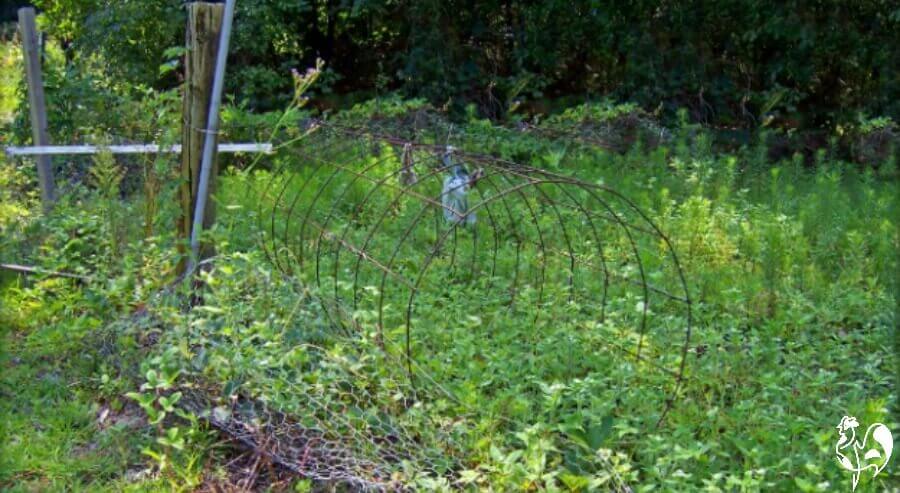
Rats hate open spaces. They avoid crossing them whenever possible. If you have ever noticed the tracks rats leave when they move between feeding areas, you will see they almost always stick to the edges of boundaries and walls. Overgrown grass and shrubbery give rats exactly what they need: shelter, cover, and safe pathways to reach food.
Keeping the grass and shrubbery around your poultry house cut back removes their hiding places and makes them more vulnerable to predators. Without cover, they are more likely to move on and find somewhere else to live.
Rats also dislike two other things: light and predators. They prefer to come out at night and feed in darkness, though they will appear during the day if food is easily available. Installing sensor lights around the perimeter of the house can help deter them, although rats that are already established in the area will eventually get used to the light if food is still available.
Read Also: Importance of a Poultry Farm Entrance Foot Bath
Step 6: Getting Rid of Rats with Poison
Poison is an effective way to deal with a rat infestation, but it should be a last resort, not a first response. It causes an unpleasant death for the rat and poses real risks to pets, livestock, and people if not used carefully. That said, when an infestation has grown large and other methods have not been enough, poison may be necessary to bring the numbers down quickly before the problem puts your birds at serious risk.
Rats multiply very fast. If you reach this point, act quickly and follow the product instructions carefully to avoid harming your birds.
Step 7: Use Electric Traps
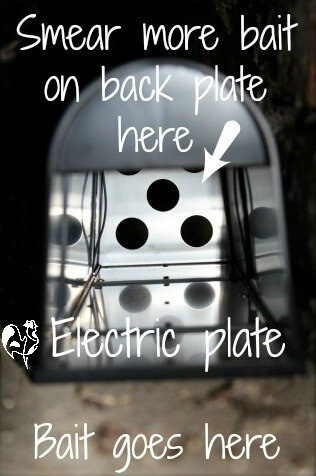
Electric traps are battery-powered devices that lure a rat in with bait and kill it instantly with an electric shock when it steps on the metal plate inside. The rat enters the box, steps on the plate, and the shock kills it without blood being spilled. This makes cleanup straightforward.
These traps are safe for poultry and other pets because the opening is too small for them to enter. They also do not harm the environment. For farmers who want an effective, relatively humane, and clean method of rodent control, electric traps are one of the best available options.
Step 8: Snap Traps
Snap traps are a traditional and widely used method for killing rats and mice. They are quick and effective but can be messy to deal with after use.
How to use them:
i. Set them in places where you know rats are moving, usually around the edges of the chicken run or near outbuildings.
ii. Keep them well out of reach of children, chickens, and other animals.
iii. Leave them in place for several days without bait at first so the rats get used to them. Rats are cautious and will avoid unfamiliar objects.
iv. Use peanut butter as bait rather than cheese. The smell attracts rats very effectively and only a small amount is needed.
Advantages: Cheap, easy to set, and kills quickly so the rodent does not suffer for long.
Disadvantages: Better suited to mice than large rats due to size. Snap traps can be difficult to deal with afterward. Rats are also intelligent and will eventually learn to avoid traps that have harmed others in their group, so you need to move them regularly.
Step 9: Use Humane Traps
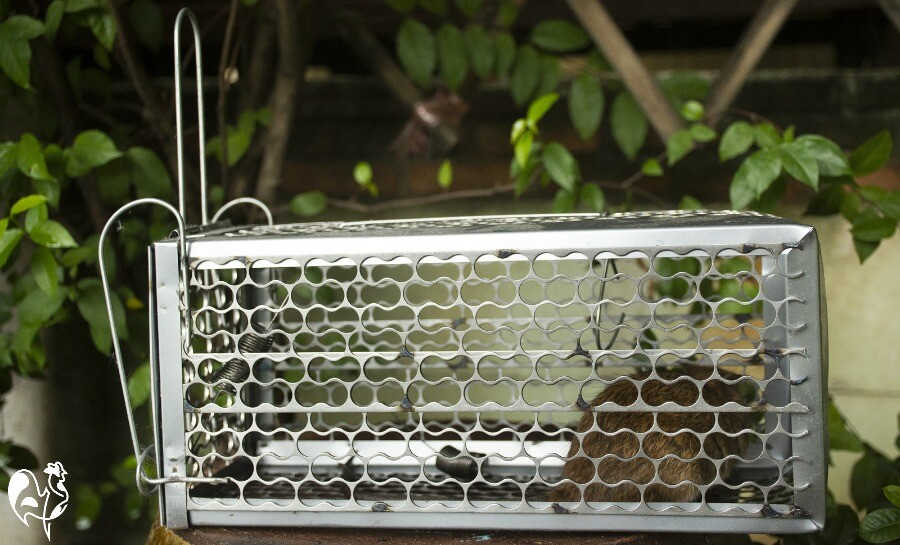
Humane traps catch the rat alive inside a metal box that closes when the rodent enters. The rat can then be relocated rather than killed.
The best humane traps are made of metal. Plastic bottle traps found online are not effective since even mice can chew through a plastic bottle quickly. Rats will do it in seconds.
Advantages: A good option if you are not comfortable with killing. Does not harm any other animal that might wander near it.
Disadvantages:
i. You end up with a live rat that needs to be dealt with. Rats are territorial and will return if released nearby.
ii. Advice is to release the rat at least five miles from your farm. Even then, there is no guarantee it will not return or simply become someone else’s problem.
Read Also: Poultry Housing Management: Poultry Pen/House Construction Guide
Step 10: Get a Cat
A cat can be a very effective solution, particularly when combined with other control methods like electric traps. But not just any cat will do. Small domesticated house cats are unlikely to take on a full-grown rat. You need a large, feral, or barnyard-type cat that lives outside, is used to hunting, and has been taught by its mother how to deal with rodents.
If you are thinking of getting a cat, be careful about how it behaves around your chickens. Cats will sometimes kill baby chicks and may even go after adult hens, so this needs to be monitored closely.
Step 11: Use Terriers
Terrier dogs, particularly Border Terriers and Jack Russell Terriers, are bred for ratting and are very effective at it. They are fast, fearless, and love the work. This method is still used on many farms where these dogs are kept specifically to control rodents.
Advantages: Quick and effective in the short term. A natural and chemical-free method that rats cannot adapt to as easily as traps.
Disadvantages: Needs to be done regularly. Dogs will only catch rats that are running and will miss babies still in the nest. You also need access to a terrier owner or club near your farm.
Step 12: Using Guns
Shooting rats is legal in most places on your own land using an air rifle. It is most effective just before dusk when rats begin to come out. Bait such as peanut butter or diced cat food can be used to draw them to a specific location.
Advantages: Quick and effective when combined with other methods such as trapping them in a barrel.
Disadvantages: Rats mostly come out at night, making timing important. Shooting by artificial light is not effective since the rats will simply stay in their nests.
Step 13: Using Homemade Traps
One of the most common homemade traps is the walk-the-plank method. You take a barrel, fill it about 6 inches with water, and add some grain. A plank is balanced on top of the barrel with one end hovering over the centre. A smear of peanut butter is placed at the overhanging end. The rat walks toward the bait, topples into the water, and drowns.
Advantages: Inexpensive if you already have a barrel.
Disadvantages: Unpredictable setup that depends on the plank staying balanced. Considered inhumane since drowning can take several minutes. Not regarded as highly effective by most who have tried it.
Read Also: Causes of Egg Production Reduction in Poultry Farms and Ways to prevent them
Step 14: Use Glue Traps
Glue traps are adhesive pads placed in areas where rats move. When a rodent walks across one, it gets stuck and cannot escape. They are used mainly by commercial pest control companies because they are cheap and effective.
Advantages: Inexpensive and simple to set up.
Disadvantages:
i. They catch anything that crosses them, including insects and birds.
ii. The animal either dies from exhaustion trying to escape or must be killed manually.
iii. Glue traps are widely considered to be among the most inhumane methods of rodent control available. While rats are certainly a serious problem that must be dealt with, there are more humane alternatives that achieve the same result.
Step 15: Ultrasonic Repellers
Ultrasonic repellers are small devices that plug into an electric socket and emit a high-pitched sound that humans cannot hear but that is supposed to be unpleasant to rodents. In practice, there is no scientific evidence that they are effective against rats. Manufacturers have repeatedly been warned by regulatory bodies not to make false claims about these products.
Advantages: Some are inexpensive and easy to use. Passive to operate. May have some limited effect on certain insects.
Disadvantages:
i. There is no scientific evidence that they repel rats or mice effectively.
ii. Once rats are already established in an area, these devices will have no impact at all. A well-settled rat community will not abandon a warm, food-rich environment because of a high-pitched noise.
iii. At best, they may serve as a very early deterrent before an infestation takes hold, but even this is not well supported by evidence.
The bottom line is this: chickens do not attract rats. Food does. Keep your feed secure, your house clean, your surroundings trimmed, and your defenses in place, and you will keep rats out.
Summary on How to Prevent Rats from Invading Your Poultry House
| Method | Key Points |
|---|---|
| Secure Feed Storage | Use metal containers with no holes and a secure lid. Feed bags and plastic containers are not rat-proof. |
| Treadle Feeder | A self-closing feeder that prevents rats from accessing feed when chickens are not using it. |
| Compost Management | Use enclosed bins for fruit and vegetable waste. Keep open heaps for green material only and place them away from the coop. |
| Cleanliness | Remove leftover feed daily. Clean and aerate straw bedding regularly. Feed early so nothing is left on the ground at night. |
| Trim Surroundings | Keep grass and shrubbery cut back. Rats avoid open spaces and need cover to move safely. |
| Poison | Effective for large infestations but should be a last resort. Dangerous to pets and livestock if not used carefully. |
| Electric Traps | Battery-powered. Kills instantly and cleanly. Safe for other animals. One of the most recommended methods. |
| Snap Traps | Cheap and effective. Better for mice than rats. Must be moved regularly as rats learn to avoid familiar traps. |
| Humane Traps | Catches rats alive for relocation. Release at least 5 miles away. Rats may still return. |
| Cats | Feral or barnyard cats are effective. Domesticated cats may not take on full-grown rats. Monitor behavior around chicks. |
| Terriers | Highly effective rat-hunting dogs. Needs to be done regularly. Best used alongside other control methods. |
| Guns | Legal on your own land with an air rifle. Most effective at dusk. Bait helps concentrate the target area. |
| Homemade Traps | Low cost but unpredictable and considered inhumane. Limited effectiveness. |
| Glue Traps | Effective but inhumane. Can catch birds and other animals. Not recommended. |
| Ultrasonic Repellers | No scientific evidence of effectiveness against rats. Not a reliable solution once an infestation is established. |
Frequently Asked Questions About How to Prevent Rats from Invading Your Poultry House
1. Why are rats dangerous to a poultry farm?
Rats eat and contaminate feed and water, attack and kill chicks at night, spread diseases, carry parasites like lice and mites, and create stress for the entire flock that reduces egg production. A single rat infestation can cause significant financial losses in a short time if not addressed quickly.
2. What is the best way to store poultry feed to keep rats out?
Feed must be stored in a metal container with no holes and a properly secured lid. Feed bags, plastic containers, and even reinforced plastic bins are not enough to stop rats. Metal is the only material that rats cannot chew through, making it the only truly rat-proof storage option.
3. What is a treadle feeder and how does it help with rat control?
A treadle feeder is a self-closing feeder that only opens when a chicken steps on the treadle plate at the front. When no bird is using it, the lid stays shut. This prevents rats from accessing the feed inside. Combining a treadle feeder with metal storage containers is one of the most effective ways to cut off the food supply that attracts rats in the first place.
4. Does trimming grass around the poultry house really help?
Yes. Rats hate open spaces and rely on overgrown grass and shrubbery for cover as they move toward food sources. Cutting back the vegetation around your poultry house removes their hiding places and makes them more exposed to predators. Without cover, rats are far more likely to move on and find a safer location.
5. Are ultrasonic repellers effective against rats?
No. There is no scientific evidence that ultrasonic repellers work on rats or mice. Regulatory bodies have repeatedly warned manufacturers against making false claims about these products. Once rats are established in an area, they will not leave because of a high-pitched sound, especially when food is available nearby.
6. What is the most humane method of rat control on a poultry farm?
Electric traps are widely considered one of the most humane options because they kill instantly with no blood and no prolonged suffering. Humane live traps are another option for those who prefer not to kill, though relocation must be done carefully and at a significant distance to prevent the rat from returning.
7. Can cats and dogs help control rats on a poultry farm?
Yes, but with conditions. Large feral or barnyard cats that have been raised to hunt are effective against rats. Small domesticated cats usually will not tackle a full-grown rat. Terrier dogs such as Border Terriers and Jack Russells are bred for ratting and are highly effective, but you need access to a terrier owner or club near your farm. Both methods work best when combined with other preventive measures.
8. Is rat poison safe to use around chickens?
Rat poison is effective but must be used with extreme caution around poultry. Chickens can be harmed if they come into contact with poisoned bait or eat a rat that has ingested poison. It should only be used as a last resort when other methods have failed and the infestation poses an immediate risk to the flock. Follow all product instructions carefully and keep bait well out of reach of birds.
9. Why should glue traps not be used in a poultry house?
Glue traps are non-selective. They will trap anything that walks across them, including insects and birds. Animals caught in them either die slowly from exhaustion or must be killed manually. This makes them one of the most inhumane methods available and a genuine risk to the birds you are trying to protect.
10. What is the single most important thing a poultry farmer can do to prevent a rat problem?
Remove the food source. Chickens do not attract rats. Food does. Secure all feed in metal containers, clean up leftover grain daily, and use a treadle feeder to prevent rats from accessing the feed inside the house. Once the food supply is cut off, most rats will move on to find easier targets elsewhere.
Do you have any questions, suggestions, or contributions? If so, please feel free to use the comment box below to share your thoughts. We also encourage you to kindly share this information with others who might benefit from it. Since we can’t reach everyone at once, we truly appreciate your help in spreading the word. Thank you very much for your support and for sharing!
Read Also: 12 Management Tips for Better Poultry Performance Potential