


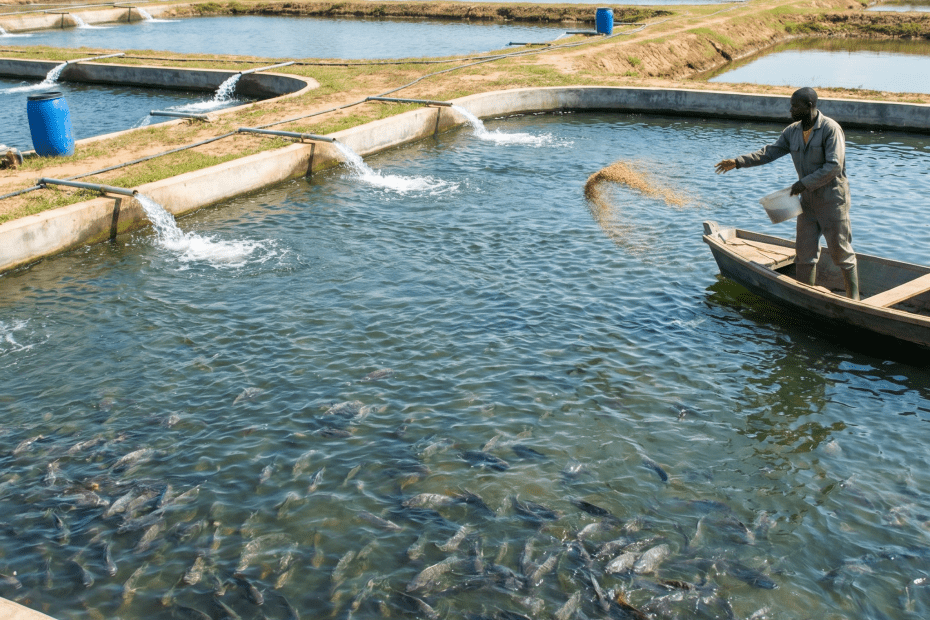
Starting tilapia fish farming is straightforward for beginners because the species grows quickly, tolerates varied conditions, and presents fewer disease challenges than many farmed fish. With planning, even a small operator can begin commercially.
Tilapia has become one of the most widely farmed fish in the world, with commercial production established in more than eighty-five countries. Most of the supply now comes from managed aquaculture rather than capture fisheries.
In the United States, a relatively small number of farms produce a large share of total output, which makes profitability a serious question for new investors. The answer depends on management, costs, and discipline.
Tilapia farming can be profitable when the farmer controls feed costs, water quality, and stock management without slowing fish growth or weakening fish health. Operational discipline usually matters more than farm size in this business.
If you are planning to start a tilapia farm, it helps to understand the full production chain before investing. Site choice, system design, stocking, feeding, health care, and marketing all shape success.
A. Select A Good Location
Choose land that is accessible, dry, and protected from pollution, because a convenient site saves transport time and lowers operating stress. site selection discipline also reduces mistakes during construction and stocking.
🌿 Go Organic on Your Farm: Instead of harmful chemical pesticides and fertilisers, try our organic farming products — including neem oil spray, bio-pesticides, natural plant treatments, organic seeds and seedlings, suckers, and many more organic products that are safe for your health, your family, your soil and your harvest. Shop Now →
Distance from residential buildings matters because noise, runoff, and odor can create conflict if the farm expands later. A quiet environment also makes it easier to monitor fish, feed deliveries, and security activities.
Reliable access to clean water should guide every location decision, because tilapia performance depends on stable water supply. water quality management becomes easier when the source is dependable and close.
Check soil texture, drainage, and elevation before clearing the land, because poorly drained sites raise construction costs and increase flooding risk. A slightly elevated plot often offers better control during heavy rainfall and harvest periods.
Road access is equally important because fingerlings, feed, ice, and harvested fish must move quickly and safely. Good access also improves emergency response when water problems, theft, or equipment failures appear unexpectedly.
🔧 Free Farm Tool Available: Use our free Agric4Profits Farm Tools to calculate your farm profits, formulate feeds, identify pests and diseases on both your crops and animal farms, plan your planting and harvesting season, including many more farm tasks to get free expert advice and recommendations — completely free, no registration required. Access Free Tools →
Security should never be treated as an afterthought, especially where ponds or tanks will hold expensive stock. Fencing, lighting, and controlled entry points protect the farm while supporting careful daily supervision by workers.
Choose a site that allows future expansion, because successful tilapia operations often need extra ponds, tanks, or holding spaces. Flexibility at the beginning helps you scale without relocating the entire business later.
Where possible, study the local climate and market route together, since both affect survival and profitability. starting-farm readiness improves when the site fits both biology and sales logistics.
B. Determine Production System
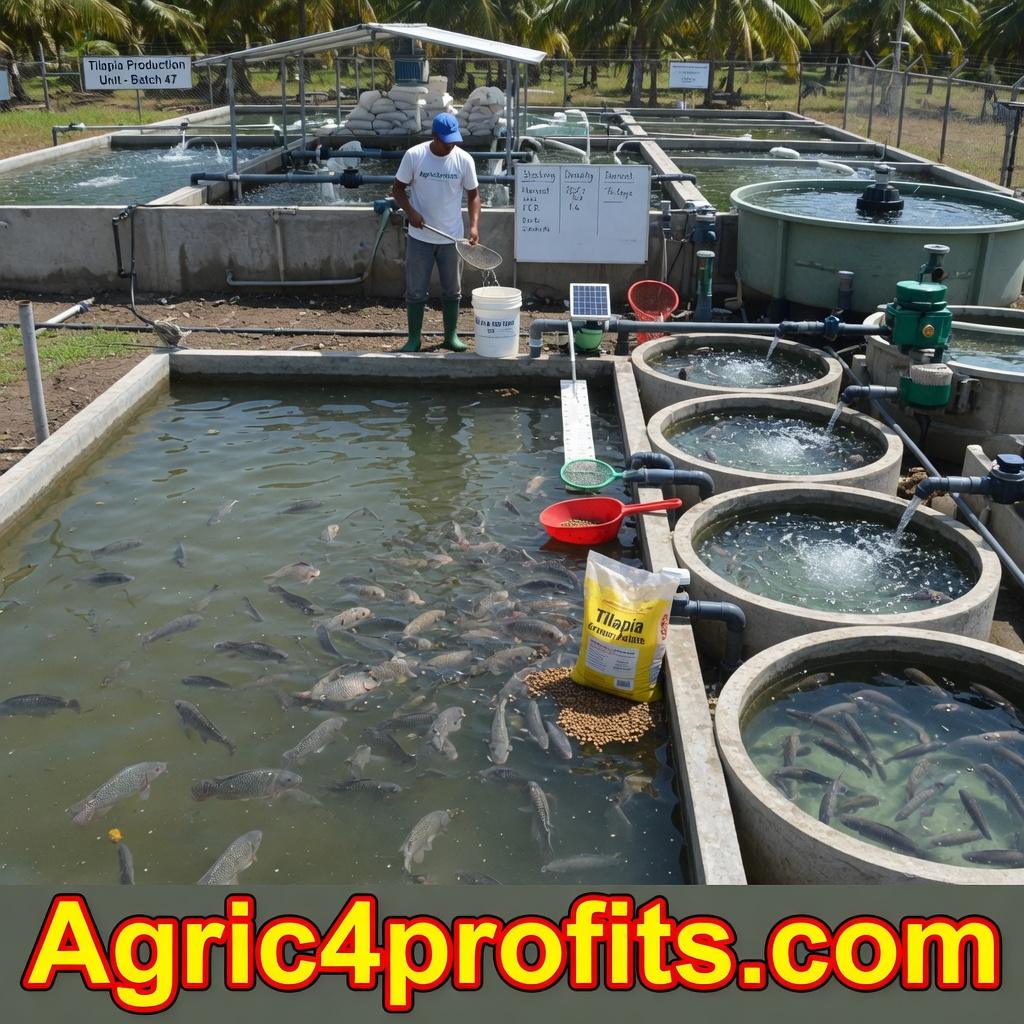
Once the site is ready, decide how you will produce tilapia, because the system determines cost, labor, and growth control. production systems can be extensive, semi-intensive, or intensive, depending on your budget and objectives.
Ponds work well where land is available and water can be managed economically. Tanks suit farmers who want tighter control, quicker observation, and easier harvesting, especially when land space is limited or expensive.
💬 Have a Farming Question? Join thousands of farmers across Africa on the Agric4Profits Community — ask questions, share experiences and connect with agricultural experts. It is completely free. Ask Your Question Now →
Cages and raceways may also work in suitable locations, but commercial beginners usually succeed faster with ponds or tanks. Those options simplify feeding, water testing, and routine inspection while keeping infrastructure easier to understand.
Think about your market before choosing the system, because different buyers may prefer live fish, processed fish, or regular volume. A well-matched system helps you produce the right size and quantity without wasting resources.
Budget matters because each system has different construction, pumping, feeding, and maintenance costs. pond design planning helps estimate volumes, capacity, and construction needs before money is committed.
If you want flexibility, start small and scale gradually after the first production cycle proves reliable. Careful expansion is safer than building too much infrastructure before you understand feed use, mortality, and market timing.
Production choice should also reflect labor availability, because tanks demand frequent checking while ponds may require more land preparation. Matching the design to available workers reduces stress and supports better daily management.
Whatever system you select, prioritize simplicity, water control, and easy harvesting, because complexity raises mistakes. aquaculture setup succeeds best when the operator can supervise every unit confidently.
C. Pond or Tanks
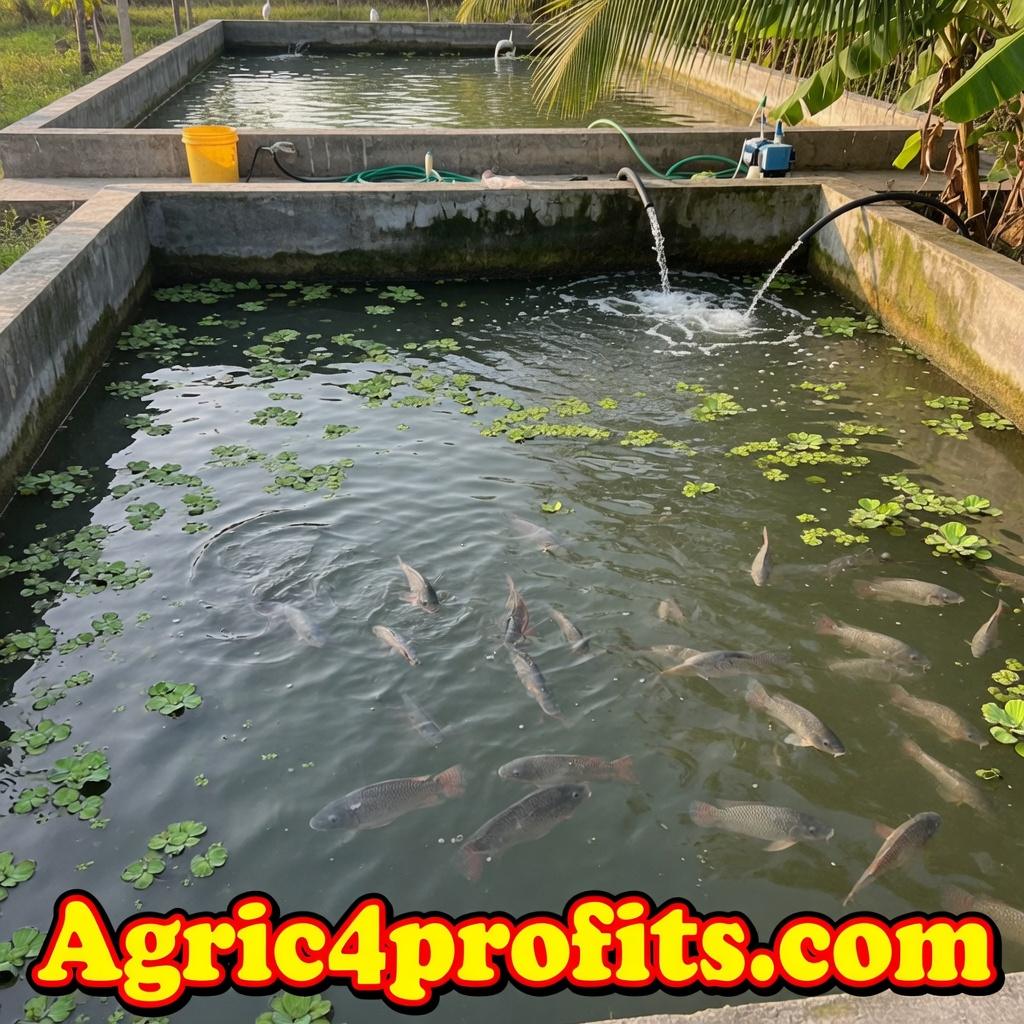
Ponds or tanks can both support profitable tilapia culture when their size, depth, and drainage match your budget. The basic farm requirements are usually water access, dependable feed, good stock, and daily supervision.
An earthen pond is often cheaper where soil holds water well and excavation costs stay manageable. It also allows a more natural environment, which can reduce stress and support steady feeding when managed properly.
Tanks are useful when you need faster monitoring, tighter biosecurity, and better control over waste. They often suit small urban farms or operators who prefer compact systems and predictable husbandry routines.
📖 Want to Go Deeper on This Topic?
Our expert agricultural ebooks cover poultry, fish farming, different crops production, snail farming, organic farming, mushrooms, sheep, cattle, flowers, pig farming, goat farming, agribusiness, etc. in practical step-by-step detail — written by agricultural professionals for African farmers.
Browse All Farming Ebooks →The right depth matters because shallow water heats too quickly and deep water can complicate management. In most tilapia systems, a practical depth range gives enough volume for fish while keeping routine handling simple.
Construct ponds or tanks with drains, inlets, and strong edges so water movement stays controlled throughout the cycle. Those features improve cleaning, harvesting, and emergency response when weather or water quality changes suddenly.
If you choose an earthen pond, compact the bottom well and make sure the sides are stable. Loose banks waste water, encourage erosion, and increase the chance of losing fish during heavy rainfall.
Tank farms need reliable plumbing, enough shade, and easy access for workers to observe stock. They also benefit from simple layouts that let farmers separate fish by size, health, or production stage.
Before building, compare construction cost, operating cost, and expected sales volume, because the cheapest structure is not always best. business feasibility should guide the final choice.
D. Ideal Conditions
Tilapia thrives in warm water, and most commercial production performs best when temperatures stay between twenty-five and thirty degrees Celsius. Stable conditions help fish eat more regularly, convert feed efficiently, and recover from handling stress faster.
Good water quality is essential even though tilapia can tolerate poorer conditions than many species. Farmers should still aim for clean, fresh water because healthy water conditions protect both fish welfare and product safety.
Low oxygen, toxic waste, and sudden pH shifts can reduce growth long before visible disease appears. Regular checking of temperature, dissolved oxygen, and waste buildup helps the operator correct problems before losses become serious.
Dirty water may not kill fish immediately, but it can encourage pathogens and weaken market quality. pond discipline keeps the environment productive while reducing the chance of invisible contamination that later harms buyers.
Tilapia can survive in many habitats, yet survival is not the same as profitable production. The best farms pursue stability, because consistent water exchange and sensible feeding produce healthier fish and more predictable growth.
Shade can be useful in hot climates because it moderates temperature spikes and reduces stress on stock. However, shade should never block inspection, circulation, or harvesting access, since those operations require clear visibility.
Monitor the farm after rain, heat, or pumping changes because water quality can shift quickly. Early correction is easier than rebuilding production after fish stop feeding or begin floating at the surface.
Farmers who maintain water discipline usually earn better feed conversion and higher survival rates. sustainable fish production depends on that consistency more than on short-term excitement or rushed stocking.
Read Also: Healing Powers and Health Benefits of Tilapia Fishes
Best Tilapia Species
Several tilapia strains perform better than others in commercial systems, so species choice should match climate, market demand, and production goal. Careful selection improves growth, feeding response, and final harvest consistency.
i. Abbassa & Akosomb: These are hybrids derived from Nile tilapia, and farmers value them for balanced growth, dependable performance, and suitability in managed systems that demand strong market output.
ii. Andersonii: This strain is known for good eating quality and a smaller head, which can improve dressing yield. Buyers often like its flesh texture, especially where taste drives sales.
iii. Blue Tilapia: It can reach about two to four pounds within a year under favorable management, making it attractive for farmers who want dependable growth in moderate production systems.
iv. Monosex Tilapia: Because it is a hybrid that grows quickly, many farms use it when fast turnover is more important than maintaining a mixed breeding population inside the pond or tank.
v. Mozambique Tilapia: This strain handles warm freshwater well but performs poorly in cold or salty conditions. When the climate fits, it can exceed two pounds in a year under good management.
vi. Nile Tilapia: This is the most familiar commercial species, and its growth rate remains strong in many warm regions. Fish often reach one to two pounds after five to seven months.
vii. Rendalli: It is largely herbivorous, so it appeals to farmers looking for a species that can use plant-based resources efficiently. Its market attractiveness also supports diversified production planning.
Before choosing fingerlings, compare local market preference, feed cost, and climatic tolerance, because the best strain on paper may not suit your exact farm conditions. species matching should always be practical.
F. Stocking Density
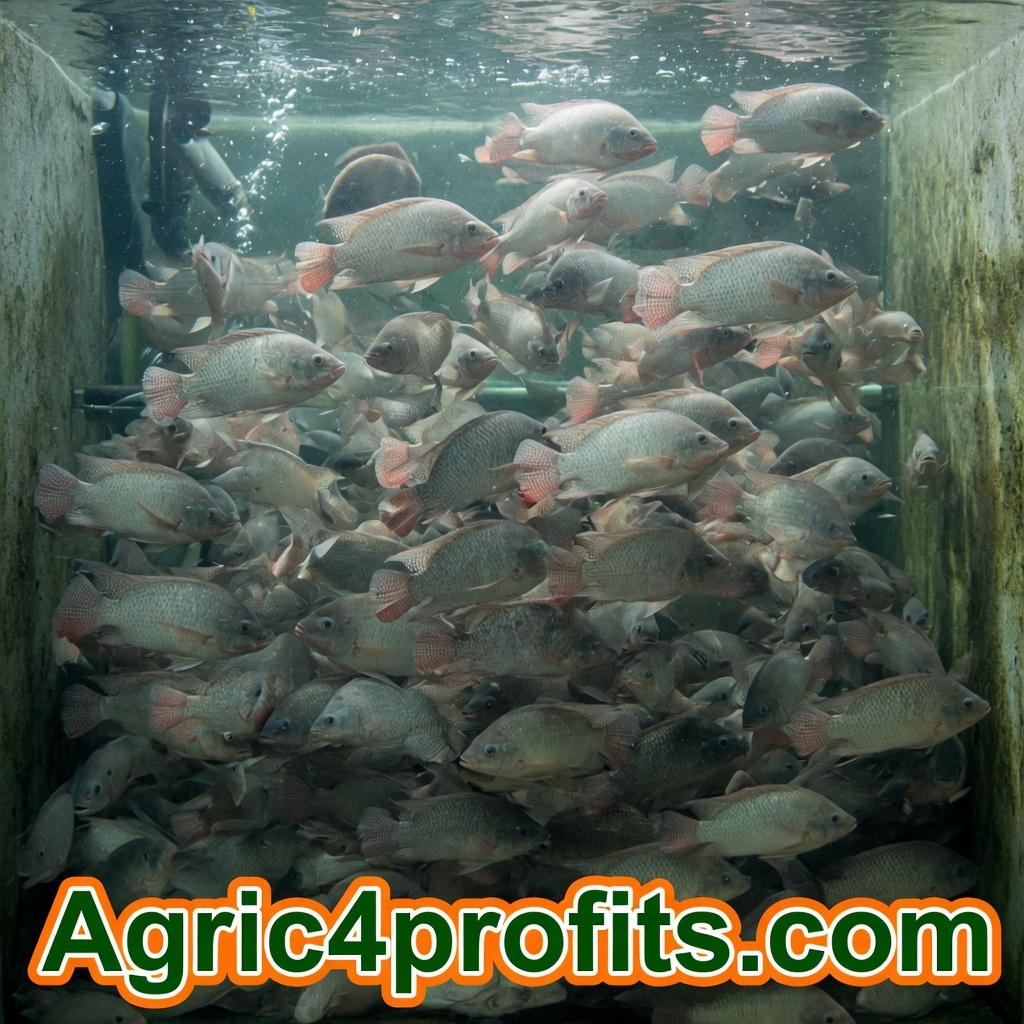
Stocking density determines how fast fish grow, how clean the water stays, and how much feed the farm can use efficiently. stocking calculation should always start with pond volume rather than guesswork.
Too many fish in a small space produce crowding, stress, and poor water quality. Too few fish may waste capacity and reduce revenue, so the right balance protects both growth and profit.
A pond that measures forty meters by twenty meters and has a depth of 1.2 meters can hold about 960 cubic meters of water. That volume gives a practical reference for stocking decisions.
Farmers often begin with around ten tilapia fish per cubic meter where water quality, feed, and management are strong. Local conditions may require adjustment, so a conservative start is safer for beginners.
Uniform fingerlings help the farm maintain consistent growth and reduce fighting between size groups. Grading fish during the cycle also improves feeding efficiency, because larger fish do not dominate smaller stock.
Stocking should be synchronized with feed availability and harvesting plans, because fish grow only when the farm can support them properly. grow-out planning keeps the cycle organized from day one.
Do not overcrowd the system simply because space looks empty at stocking time. Growth pressure appears later, and the cost of correcting poor density is usually higher than starting carefully.
Review performance every few weeks by measuring sample fish and monitoring water conditions. Those records help the farmer decide whether stocking is safe, profitable, and ready for the next production cycle.
G. Feeds and Feeding
Feeding quality is one of the strongest drivers of tilapia growth, because fish convert good diets into market weight faster. feed formulation should provide protein, energy, vitamins, and minerals in balanced proportions.
Commercial feeds are convenient because they are formulated for dependable performance and easy storage. They also reduce uncertainty for beginners who have not yet mastered home mixing or ingredient balancing.
Homemade pellets can lower expenses when ingredients are available and formulation is properly managed. Rice bran, oat groats, corn, canola meal, alfalfa meal, and linseed meal are useful ingredients in many regions.
Feed should be given in a way that the fish can consume it without leaving heavy leftovers in the water. feeding routines work best when they reflect fish size and weather conditions.
The conversion ratio matters because farmers must know how much feed is needed to produce each kilogram of fish. A commercial operation often needs about 1.7 kilograms of food for one kilogram of meat.
Uneaten feed rots and increases waste, while underfeeding slows growth and stretches the production cycle. Good feeding practice sits between those extremes and keeps both water quality and profitability under control.
Observe appetite carefully because fish usually reveal health problems through reduced feeding before other symptoms appear. That simple habit gives the farmer an early warning when something in the system is changing.
Feeding becomes more efficient when the pond environment, stocking density, and fish size are all monitored together. feeding efficiency improves when stock and feed decisions are aligned.
H. Breeding
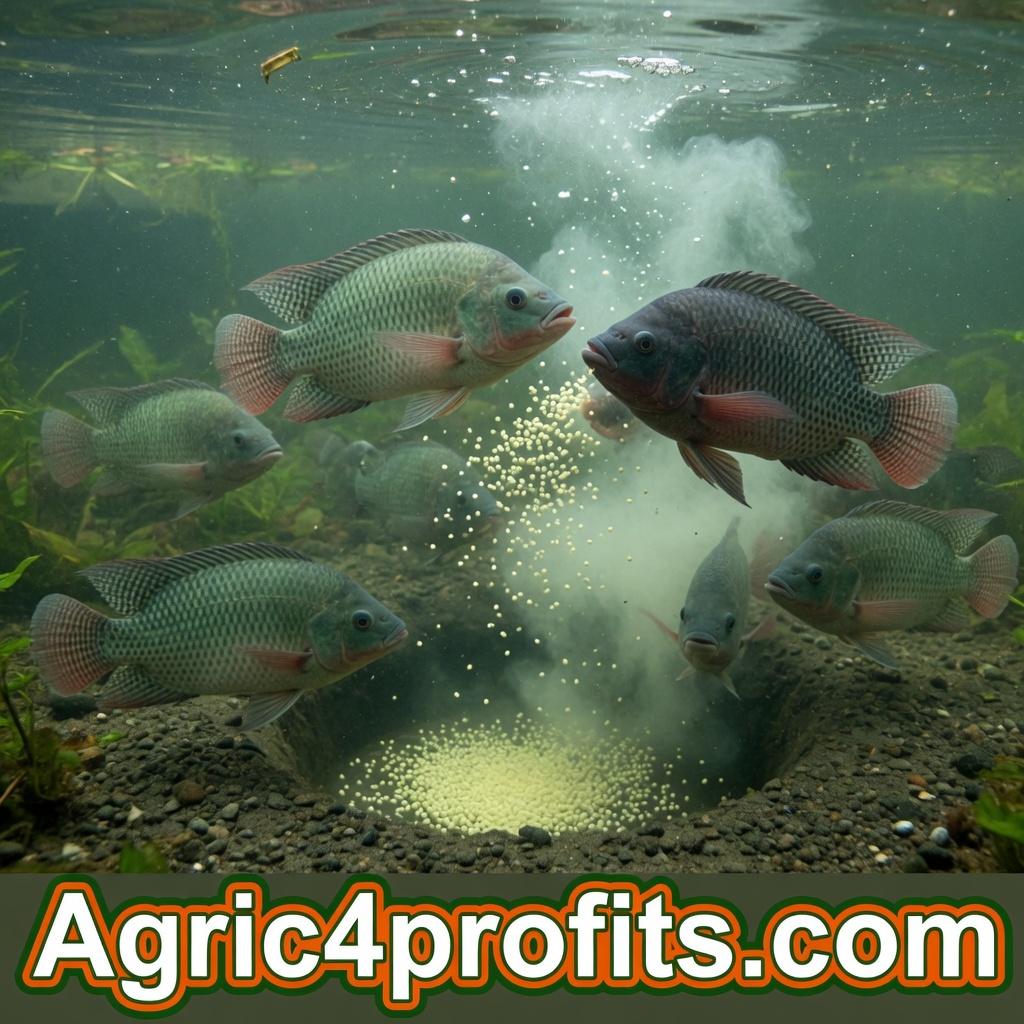
Tilapia are natural breeders, which is useful for producing fingerlings but dangerous when a farmer wants only table-size fish. Uncontrolled reproduction can overload ponds, reduce growth, and make grading more difficult.
If you need fingerlings, provide enough space, stable water, and good male-female ratios so breeding can occur predictably. Hatchery support can also improve uniformity when the farm requires planned stocking cycles.
Where mixed breeding creates too many small fish, monosex production is often a better choice because it focuses energy on growth rather than reproduction. That approach helps farmers keep harvest schedules more consistent.
Breeding ponds must be monitored closely because egg laying and fry survival can change quickly when conditions improve. hatchery management offers useful principles for controlling those early stages.
Smaller producers should decide whether breeding is part of the farm strategy or simply a side effect to control. The answer shapes stocking, feeding, grading, and the timing of harvest activities.
Good breeding management improves long-term sustainability because it reduces dependence on external fingerling purchases. It also gives the farmer more confidence when planning repeated production cycles across the year.
I. Caring
Consistent care is what turns a stocked pond into a productive business, because tilapia growth depends on daily attention. basic farming discipline protects fish, water, and equipment at the same time.
Monitor water conditions often so you can notice stress before it becomes disease or loss. Feed, oxygen, and waste levels all change with weather, biomass, and the stage of production.
Observe fish behavior during feeding because healthy tilapia usually swim actively and respond quickly to food. Slow movement, poor appetite, or surface crowding may signal trouble that needs immediate correction.
Remove dead or sick fish quickly to reduce contamination and preserve the environment. Sanitation is not a luxury in aquaculture; it is part of routine management that protects the entire harvest.
Workers should keep records of feed use, mortality, water tests, and growth measurements. management records make it easier to see what is working and what needs correction.
When care is consistent, the farm develops predictable growth patterns and lower mortality. That predictability helps the owner plan labor, purchase feed more efficiently, and schedule harvests with confidence.
J. Harvesting
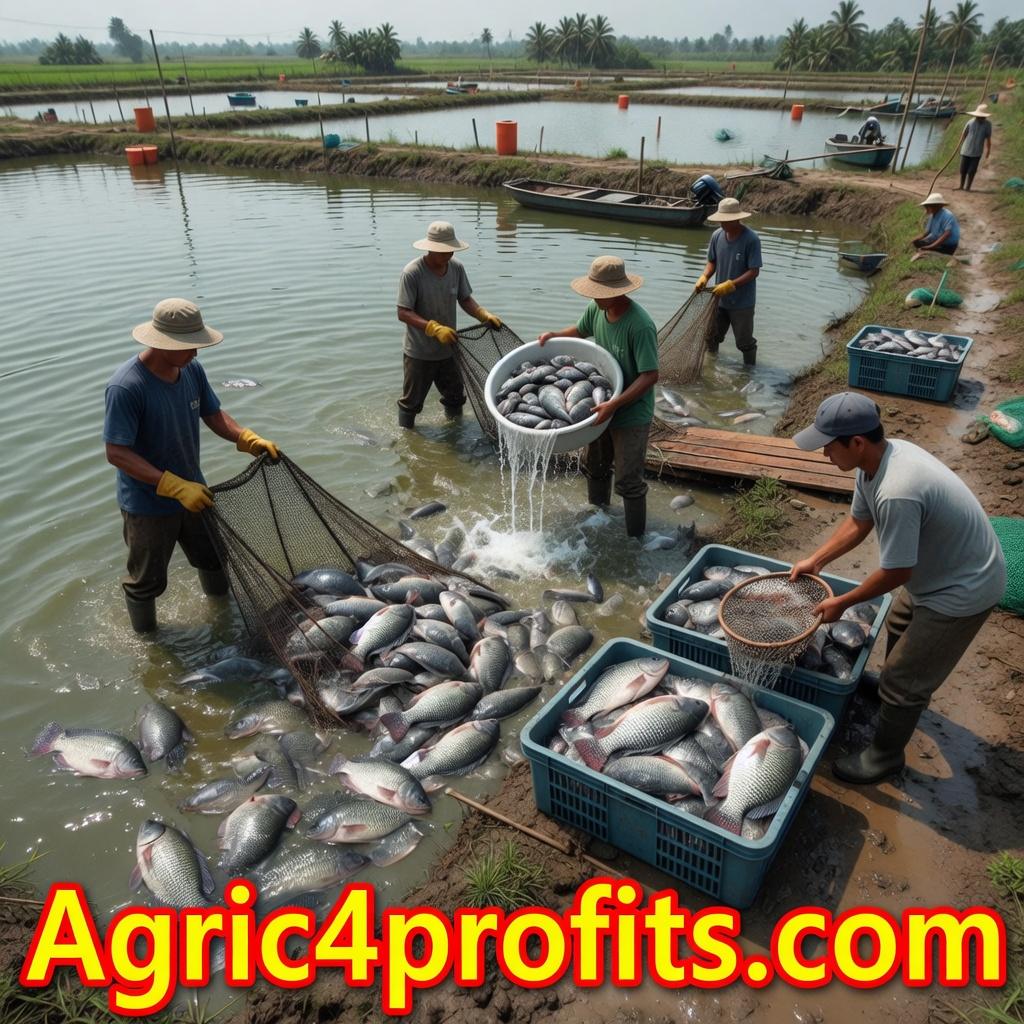
Harvesting should begin when the fish reach market size, because the ideal time depends on species, density, feed quality, and buyer preference. Delaying too long can increase feed cost and reduce overall margin.
Large tilapia are often ready once they approach about four hundred grams, although some markets prefer smaller or larger fish. Selling at the right size protects quality and supports stronger price negotiation.
Use harvesting methods that reduce injury because bruised fish lose value quickly after leaving the pond. Nets, traps, and drainage systems all work when they are handled carefully and timed properly.
Sort fish after harvest according to size so buyers can purchase lots that match their needs. Grading also helps the farmer price fish more accurately and avoid unnecessary waste during sales.
Live tilapia usually attracts strong demand, so quick handling after harvest is important for cash flow. market value rises when fish arrive fresh, uniform, and ready for immediate sale.
After harvest, clean the pond or tanks thoroughly so the next production cycle begins in better condition. Good post-harvest hygiene reduces disease pressure and prepares the farm for the next batch.
K. Marketing
Marketing tilapia is often easier than producing it because buyers already understand the fish and trust its taste. Reliable demand exists in local markets, restaurants, households, and processors that need regular supply.
Prices improve when fish are clean, properly sized, and delivered on time, because buyers reward consistency. fish business economics also favors farmers who can offer dependable volume rather than occasional lots.
Direct sales to neighbors, market women, hotels, and food vendors can be effective for small farms. Larger farms may need cold-chain arrangements, wholesaler relationships, or transport partnerships to move volume efficiently.
Marketing becomes easier when the farmer understands local preferences for size, freshness, and packaging. Good customer relationships also reduce price pressure and make repeated sales more predictable throughout the year.
Record prices, volumes, and buyer feedback after every sale because that information guides future production decisions. value awareness helps farmers choose the most profitable outlets and harvest sizes.
Strong marketing starts before harvest, not after it, because the farmer should know where the fish will go. Planning sales early reduces delays, spoilage, and unnecessary storage pressure on the farm.
Summary on How to Start Tilapia Fish Farming for High Performance
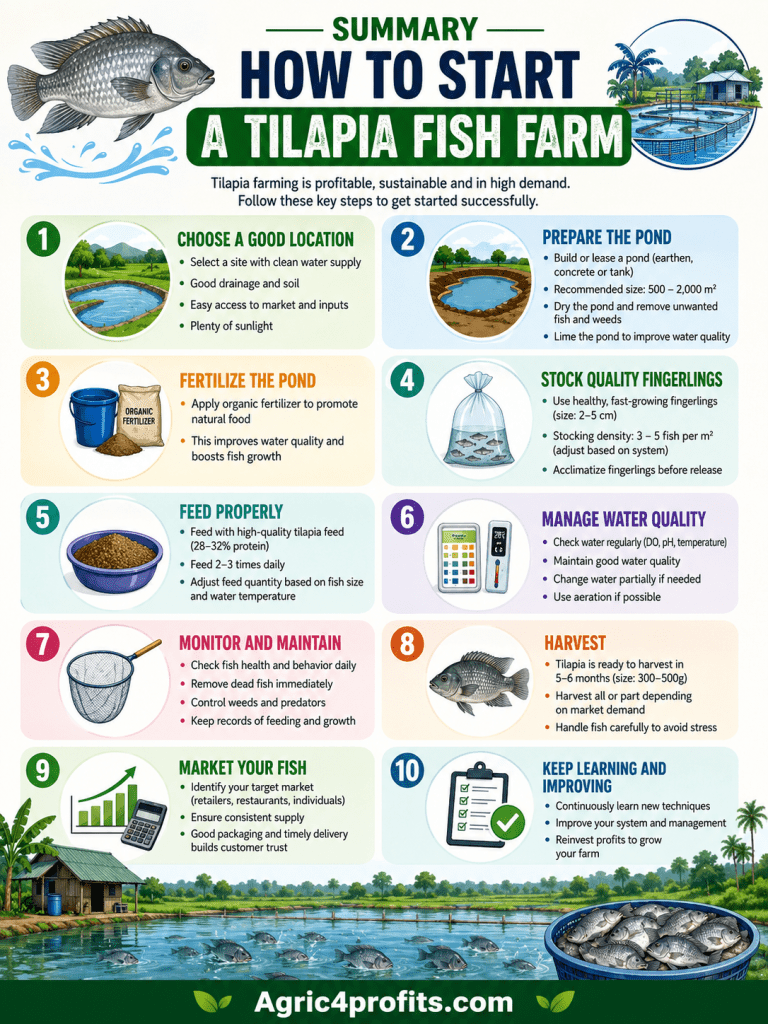
| Topic | Summary |
| Site selection | Choose accessible, secure land with clean water and room for future expansion. |
| Production system | Use ponds or tanks based on budget, labor, and the level of control you need. |
| Species choice | Select tilapia strains that match climate, market preference, and growth target. |
| Stocking and feeding | Set realistic density and feed with quality diets to sustain healthy growth. |
| Harvest and marketing | Harvest at market size, grade fish properly, and sell quickly through reliable channels. |
Frequently Asked Questions About How to Start Tilapia Fish Farming for High Performance
1. What makes tilapia suitable for beginner farmers who want a practical and manageable aquaculture business with steady growth potential?
Tilapia grows quickly, adapts to warm water, and generally tolerates management mistakes better than many fish species. That combination makes it attractive for beginners who want a simpler entry into commercial farming.
2. Which production system is usually easier for a first-time tilapia farmer to manage, ponds, tanks, cages, or raceways?
Ponds and tanks are usually easier for beginners because they are simpler to inspect, feed, drain, and harvest. The best choice depends on land, capital, water access, and the level of control you want.
3. How should a farmer decide the right stocking density for tilapia without overcrowding the system and slowing growth?
Start with pond volume, available feed, and water exchange capacity rather than guessing. Conservative stocking protects oxygen levels, reduces stress, and gives the farm a better chance of producing uniform, marketable fish.
4. What are the most important water conditions that affect tilapia performance in commercial farming systems?
Temperature, dissolved oxygen, waste buildup, and pH are especially important because they influence feeding, survival, and growth. Tilapia is hardy, but profitable farming still depends on stable and clean water conditions.
5. Why do many commercial farmers choose monosex or improved hybrid tilapia instead of relying only on local strains?
They often grow faster, reproduce less in grow-out systems, and produce more uniform harvests. Farmers choose them when they want better feed efficiency, predictable sizes, and stronger market performance.
6. What should a farmer feed tilapia if commercial pellets are expensive or temporarily unavailable in the local market?
Homemade pellets can be used when they are well formulated from local ingredients like rice bran, corn, meal cakes, and other safe feed materials. The diet should still deliver enough protein and energy for steady growth.
7. When is tilapia ready for harvest, and what signs tell the farmer that the fish should be sold soon?
Harvest usually begins when the fish reach the preferred market size, which varies by strain and buyer demand. Regular sampling, weight checks, and feed records help the farmer decide the right time.
8. How can a farmer improve marketing so that harvested tilapia sells quickly and at a better price?
Build buyer relationships early, maintain consistent size and freshness, and know which markets prefer live or processed fish. Good planning reduces spoilage, improves cash flow, and makes every harvest easier to sell.
Do you have any questions, suggestions, or contributions? If so, please feel free to use the comment box below to share your thoughts. We also encourage you to kindly share this information with others who might benefit from it. Since we can’t reach everyone at once, we truly appreciate your help in spreading the word. Thank you very much for your support and for sharing!
Read Also: How To Generate Money From Slag
🌱 Take Your Farming Further With Agric4Profits
Based on what you just read, here are free resources and products from Agric4Profits that can help your farm right now:
- 🛒 Visit Our Marketplace — Organic neem oil, bio-pesticides, seeds and farming products
- 📚 Read Premium Content — Advanced guides for serious and profitable farming
- 🎓 Join Our Free Academy — Structured free training for farmers across Africa
- 🔧 Use Our Free Farm Tools — Profit calculators, feed formulation, pest identifier and more
- 💬 Join Our Farming Community — Connect with farmers across all 54 African countries
- ❓ Ask a Farming Question — Get answers from experienced farmers and agricultural experts
Please cite this content in academic work, research, or publications.