


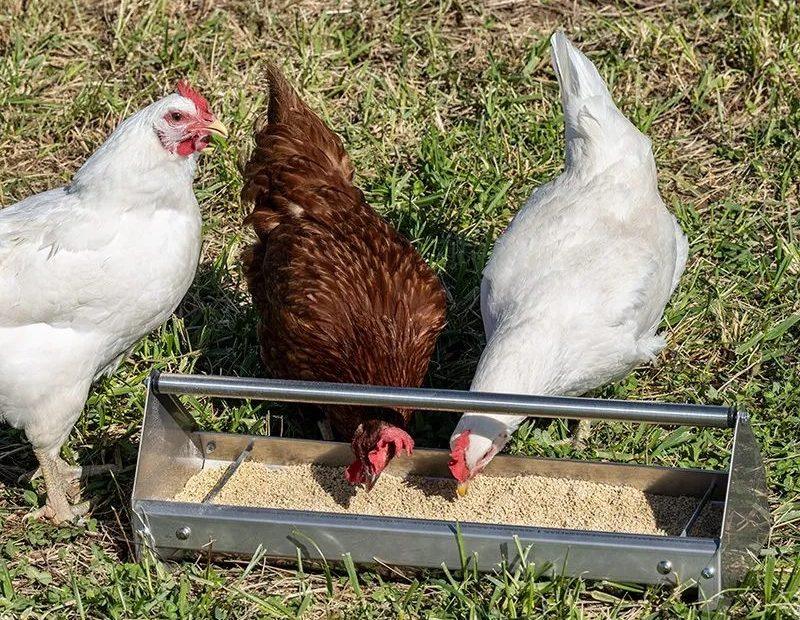
Choosing the right feeding troughs for your poultry can mean the difference between profitable farming and watching your feed budget drain away through waste. Many farmers buy whatever feeders look cheap without understanding how much money they lose daily through spilled feed.
Feed represents 60-70% of your total poultry production costs. When birds waste even 10-20% of their feed by scratching it onto the ground, you’re throwing away real money. The right feeding trough reduces this waste while ensuring all your birds can eat comfortably without fighting or getting injured.
But not all feeding troughs work for all birds. A day-old chick needs completely different equipment than a six-week-old broiler or a mature laying hen. Using the wrong feeder type for your birds’ age creates problems ranging from high mortality in young chicks to aggressive pecking and uneven growth in older birds.
The good news is that setting up proper feeding equipment doesn’t require expensive investments. Many effective feeders can be built locally from affordable materials. What matters most is understanding the basic requirements and matching feeder types to your birds’ specific needs.
This guide covers everything you need to know about poultry feeding troughs. You’ll learn which feeders work best at different bird ages, how many troughs you need for your flock size, essential design features that prevent waste and injury, and how to maintain feeders for maximum efficiency.
1. Age-Appropriate Feeding Troughs
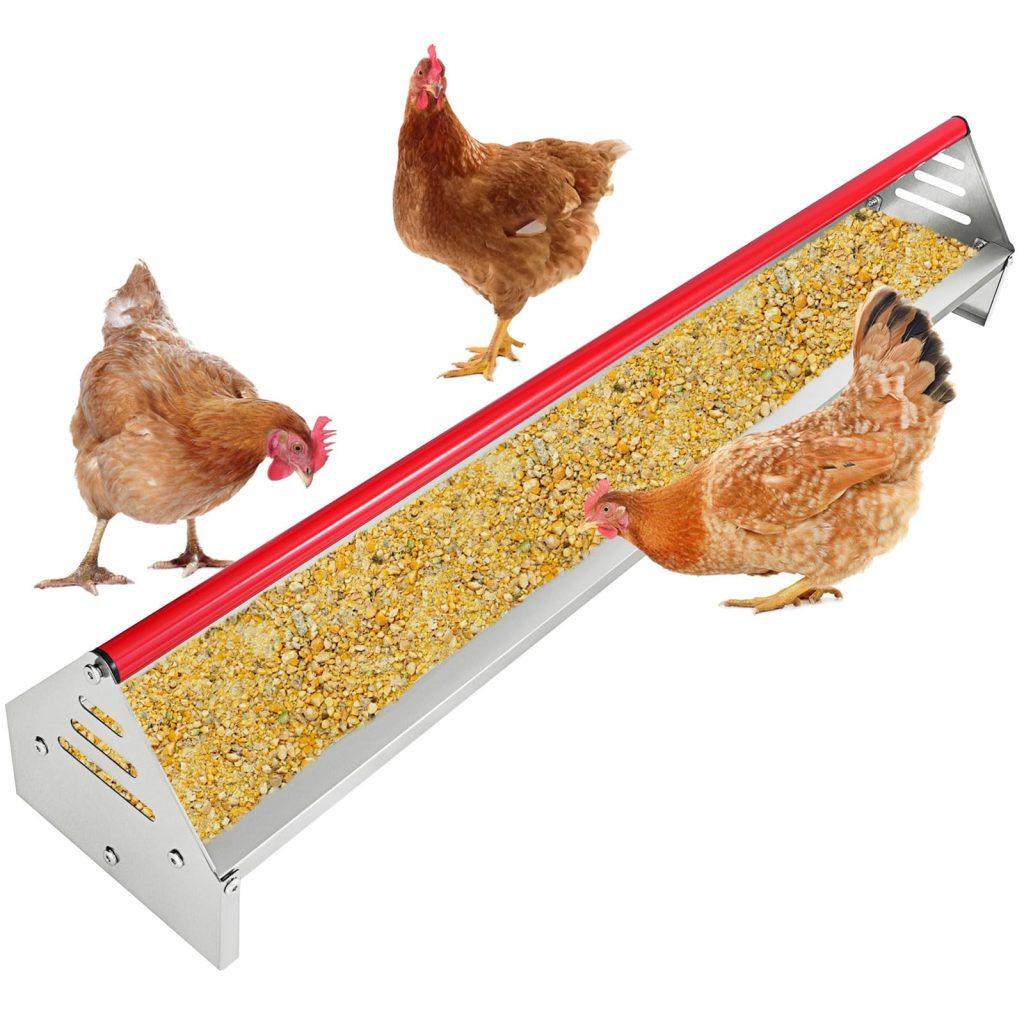
Bird age determines which feeder type works best. Using the wrong feeder wastes feed and can even kill young birds.
A. Day-Old to 4 Weeks – Flat Tray Feeders
Young chicks need flat tray feeders during their first 3-4 weeks of life.
Flat trays let chicks easily find and access feed. Baby chicks have poor eyesight initially and need feed spread out where they can see it. Deep feeders confuse them, and they may starve even with feed available.
Tray feeders also prevent chicks from getting trapped. Very young birds can fall into deeper feeders and drown or get trampled by other chicks.
Use shallow trays made from plastic, metal, or even cardboard for the first few days. Replace cardboard trays with more durable materials after the first week.
B. After 4 Weeks – Conical Steel Feeders
Once birds reach 4 weeks old, switch to conical steel feeders or tube feeders.
These feeders have a storage reservoir that holds feed and automatically dispenses it into a tray as birds eat. This design reduces labor because you don’t need to fill feeders as often.
Conical feeders also reduce waste. The design makes it harder for birds to scratch feed onto the ground. A properly adjusted tube feeder can cut feed wastage by 20% compared to open trough feeders.
The steel construction lasts for years and can handle the pecking and scratching of mature birds without breaking.
Read Also: Feeding Methods for Poultry Chicken
2. How Many Feeding Troughs You Need
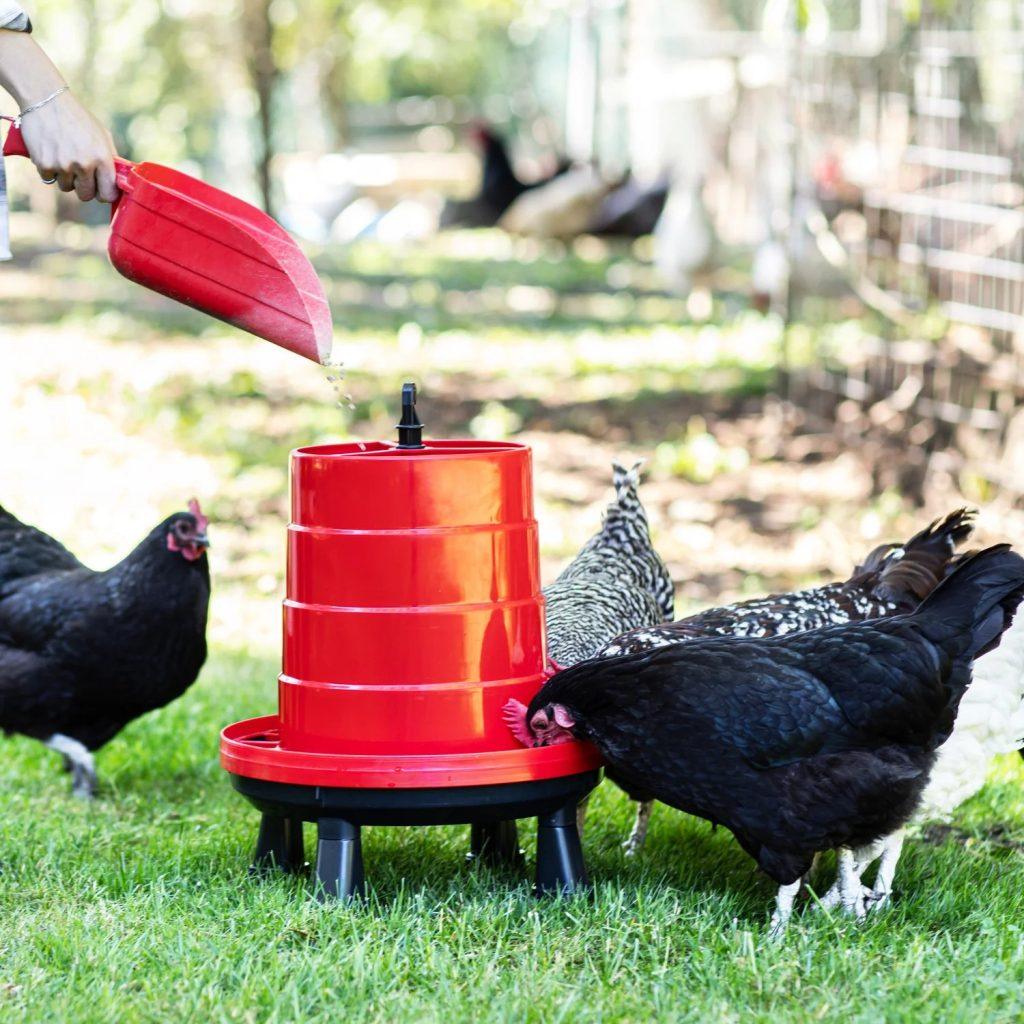
Insufficient feeder space causes serious problems. Birds fight for access, weaker birds don’t get enough food, and stress increases across the entire flock.
A. The 50-Bird Rule
The standard recommendation is one feeding trough for every 50 birds.
This ratio ensures all birds can access feed without excessive competition. If you have 500 birds, you need 10 feeding troughs minimum. For 1,000 birds, plan for 20 troughs.
Some farmers try to save money by providing fewer feeders. This creates aggressive behavior, uneven growth, and higher mortality. The birds you lose and the reduced production from stressed survivors cost far more than buying adequate feeders would have.
B. Preventing Feed Rushing
When birds don’t have enough feeder space, they rush and press on each other trying to eat. This crushing can kill smaller or weaker birds, especially in young flocks.
Adequate feeder space means all birds can eat simultaneously if they want to. In practice, they don’t all eat at once, but having the capacity available prevents panic and competition.
Watch your birds during feeding time. If they’re fighting aggressively or you see birds being pushed away from feeders, you need more feeding space.
3. Essential Requirements for Good Feeding Troughs
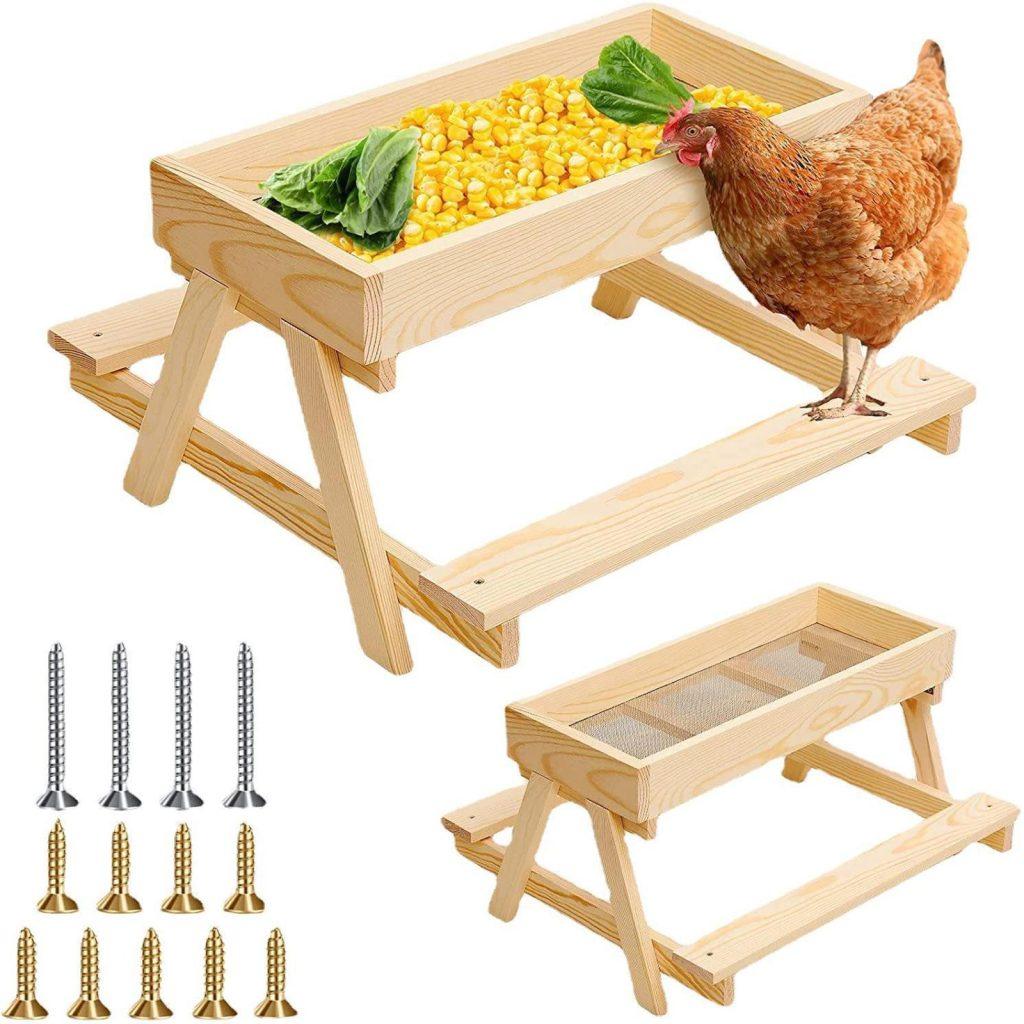
Not all feeding troughs are created equal. Good feeders share specific design features that reduce waste and keep birds healthy.
A. Stability – Impossible to Tip Over
Feeders must be stable enough that birds can’t tip them over.
Tipped feeders spill feed onto the ground where it gets contaminated with droppings and wasted. Young birds can also get trapped under overturned feeders and suffocate.
Choose heavy feeders or stake lightweight ones to the ground. Some feeders have wide bases that prevent tipping. Others can be hung from the ceiling at the proper height.
B. Adequate Size and Depth
Feeders need enough capacity to hold sufficient feed but not so deep that birds can’t reach it comfortably.
Very shallow feeders require constant refilling. Extremely deep feeders make it hard for birds to access feed at the bottom, and they may waste the top layer trying to reach lower feed.
For most chickens, feeders should be about the height of the birds’ backs. Adjust hanging feeders as birds grow to maintain this height.
C. Design That Discourages Scratching
Chickens naturally scratch at feed looking for preferred particles. This behavior wastes tremendous amounts of feed if feeders allow it.
Good feeders have lips or edges that prevent birds from easily scratching feed out. Some designs use rotating reels or other mechanical features that block excessive scratching.
The feed-saving lip design can reduce wastage by up to 20% compared to simple open troughs. Over a production cycle, this saves significant money.
D. Safe Design That Prevents Injury
Feeders should have no sharp edges or points that could cut or injure birds.
Check that any metal edges are rolled or smoothed. Avoid feeders with protruding wires or rough welds. Injured birds don’t grow well and are susceptible to infection.
Some tube feeders have an issue where small birds can get stuck inside. If you notice this happening, you may need to add a barrier or switch to a different design.
E. Cost-Effectiveness and Local Construction
Feeders should be affordable and ideally buildable from local materials.
Imported feeders from specialty suppliers cost more and may not be available when you need replacements. Many effective feeders can be constructed from bamboo, wood, metal drums, or PVC pipe.
Local materials reduce costs and let you repair or replace feeders quickly without waiting for shipments. Just ensure locally-made feeders still meet the other requirements for stability, size, and safety.
F. Full Bird Access Without Feed Restriction
Feeders must allow all birds full access and should not limit feed intake.
Narrow openings that only let a few birds eat at once create competition. Wide, open designs let multiple birds feed side-by-side peacefully.
The goal is ad libitum feeding for most poultry, meaning birds can eat whenever they want. The feeder design should support this, not restrict it.
Read Also: How Often to Wash Poultry Feeding Equipment
4. Proper Feeder Management Practices
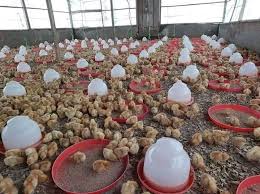
Having good feeders is only half the battle. You also need to manage them correctly.
A. Correct Fill Levels
Never overfill feeding troughs. This is one of the most common and expensive mistakes farmers make.
Fill trough feeders to only one-third of their total depth. This prevents birds from scratching feed out while still providing plenty to eat.
For tube feeders, don’t open the adjustment too wide. Feed should flow into the tray slowly as birds consume it, not pour out in large amounts.
Overfilled feeders lead to massive waste. Birds scratch through the feed, spilling excess onto the ground where it gets trampled and contaminated. You’re literally throwing money on the floor.
B. Regular Cleaning Schedule
Dirty feeders reduce feed consumption and spread disease.
Clean feeders daily before adding fresh feed. Never add new feed on top of old feed without cleaning first. Old feed gets stale and moldy, especially in humid conditions.
Use warm water and mild soap for thorough cleaning. Avoid harsh chemicals that might leave residues and harm birds. Rinse completely and dry feeders before refilling.
The cleaning frequency depends on your feeder material. Wooden feeders should not be washed with water frequently as this destroys them. Use dry cleaning methods for wood feeders. Metal and plastic can be wet-washed safely.
C. Floor Drinker and Feeder Placement
Position feeders and waterers strategically for best results.
Floor drinkers should be moved regularly because litter gets wet around them. Place them on raised platforms made from bamboo or timber to keep the area drier.
Don’t place feeders and waterers right next to each other. Birds will contaminate feed with water splashing from drinkers. Leave some space between them.
Ensure feeders and waterers are level. Unlevel equipment causes spills and uneven access for birds on different sides.
D. Feeder Height Adjustment
Feeders at the wrong height cause problems.
If feeders are too low, birds step in them and contaminate feed with droppings. If too high, birds can’t comfortably reach feed.
Hang or position feeders at the birds’ back height. As birds grow, raise the feeders accordingly. This is especially important with broilers that grow rapidly.
Some automatic systems have adjustable heights built in. For simple feeders, you may need to use blocks, chains, or other methods to adjust height as needed.
5. Types of Feeding Troughs and Their Uses

Different feeder designs suit different situations and farm sizes.
A. Bamboo or Wood Trough Feeders
These can be made locally from bamboo or wood planks.
Split bamboo lengthwise and remove the internal partitions to create long feeding channels. Wood troughs are built like boxes with one open side.
These work well for small farms with limited budgets. The main disadvantage is durability. Bamboo and wood don’t last as long as metal or plastic, especially in wet conditions.
Never wash wooden feeders with water frequently. This causes rot and warping. Use dry cleaning methods instead.
B. Tube Feeders Made from Drums
Old 20-liter drums can be converted into effective tube feeders.
Cut the drum and attach a feeding tray below. As birds eat from the tray, feed drops down from the drum to refill it automatically. This reduces labor and keeps feed cleaner.
Suspend these feeders from the ceiling with chains or rope. Adjust height as birds grow. The hanging design also prevents rats and other pests from accessing feed.
C. Commercial Conical Feeders
These are purpose-built feeders available from agricultural suppliers.
They typically feature galvanized steel construction, hinged feed fences to prevent waste, and large capacity for reduced filling frequency.
Available in various sizes like 50cm x 10cm, 75cm x 10cm, or 100cm x 10cm to match different flock sizes.
The higher initial cost is offset by durability and reduced feed waste over the feeder’s lifetime.
D. Trough Feeders with Feed-Saving Lips
Modern trough designs include knurled or rolled edges that prevent feed spillage.
The unique edge design makes it much harder for birds to beak or scratch feed onto the ground. Some also include spinning reels above the feed to prevent perching.
These feeders work especially well for broilers and meat birds that tend to waste more feed than layers.
Read Also: When to Feed Each Poultry Feed Types to Birds
6. Special Considerations for Different Housing Systems
Your housing type affects which feeders work best.
A. Deep Litter Systems
Birds living on litter floors need feeders raised slightly off the ground.
Elevate feeders on small platforms or use hanging feeders. This prevents litter from getting kicked into feed and keeps feed cleaner.
The height should still allow comfortable bird access but prevent them from stepping into feeders.
B. Cage Systems
Cage feeders attach directly to the cage front.
These are typically long troughs that run along the outside of cage rows. Birds stick their heads through the cage wires to eat.
Proper design prevents birds from pulling feed back into cages where it gets wasted. The trough edge should be the right distance from the cage front.
C. Free-Range Operations
Outdoor feeders need weather protection.
Rain and moisture ruin feed quickly. Use covered feeders or place them under shelters. Some farmers bring feeders inside at night to prevent wild birds and rodents from accessing them.
Free-range feeders also need to be heavy or staked down. Wind can blow over lightweight feeders in outdoor settings.
7. Feed Storage and Feeder Maintenance
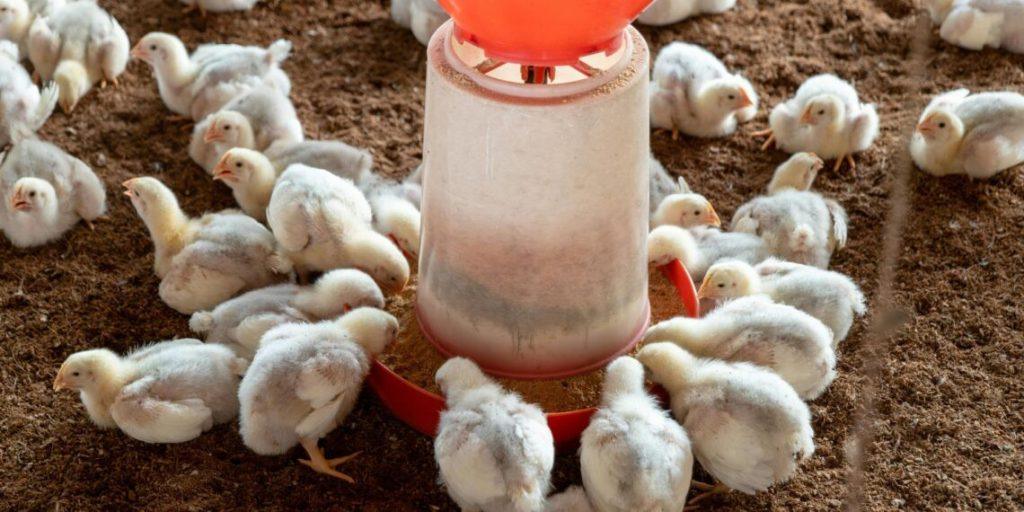
Proper storage and maintenance extend feeder life and maintain feed quality.
A. Feeder Storage When Not in Use
Clean and dry feeders completely before storing.
Store in dry, protected areas where they won’t rust or degrade. Stack carefully to prevent damage.
Check stored feeders periodically for rodent damage or rust. Replace or repair damaged units before putting them back into service.
B. Inspection and Repair Schedule
Inspect feeders weekly during use.
Look for cracks, sharp edges, rust spots, or unstable bases. Repair minor problems immediately before they worsen.
Replace feeders that can’t be safely repaired. A broken feeder that injures birds or wastes excessive feed costs more in the long run than buying a new one.
C. Disinfection Between Batches
Between flocks, thoroughly clean and disinfect all feeders.
Wash with soap and water, then apply approved disinfectant. Rinse and dry completely in direct sunlight. UV from sunshine provides additional sanitizing.
This prevents disease transmission between batches and starts each new flock with clean equipment.
Read Also: How Much to Spend on Feeding Your Poultry Birds
Summary on Ideal Poultry Feeding Troughs You Need

| Aspect | Details |
|---|---|
| Day-Old to 4 Weeks | Flat tray feeders |
| After 4 Weeks | Conical steel feeders or tube feeders |
| Feeder Ratio | 1 feeding trough per 50 birds |
| Fill Level | One-third depth for trough feeders |
| Stability Requirement | Must be impossible to tip over |
| Size Requirement | Adequate depth and capacity for bird age |
| Safety Feature | No sharp edges or injury-causing design |
| Waste Prevention | Design that discourages scratching |
| Cost Approach | Affordable and locally constructible when possible |
| Access Requirement | Allow full bird access without limiting intake |
| Feeder Height | At bird’s back height; adjust as birds grow |
| Cleaning Frequency | Daily before adding fresh feed |
| Feed Waste Reduction | Up to 20% with proper feeder design |
| Materials – Local | Bamboo, wood, converted drums |
| Materials – Commercial | Galvanized steel, plastic, stainless steel |
| Common Sizes | 50cm x 10cm, 75cm x 10cm, 100cm x 10cm |
| Tube Feeder Capacity | 20-liter drum conversions common |
| Placement Rule | Keep separate from waterers to prevent contamination |
| Platform Use | Raised platforms for floor drinkers to manage wet litter |
| Between-Batch Care | Clean, disinfect, dry in sunlight before reuse |
Frequently Asked Questions About Ideal Poultry Feeding Troughs You Need
1. What type of feeder should I use for day-old chicks?
Use flat tray feeders for day-old chicks through their first 3-4 weeks of life. Young chicks have poor eyesight initially and need feed spread out in shallow trays where they can easily find and access it. Deep feeders confuse baby chicks and they may starve even with feed available. Flat trays also prevent chicks from getting trapped or drowning in deeper feeders. You can use plastic, metal, or even cardboard trays for the first few days.
2. How many feeding troughs do I need for 500 birds?
You need one feeding trough for every 50 birds. For 500 birds, you should have 10 feeding troughs minimum. This ratio ensures all birds can access feed without excessive competition, fighting, or stress. Insufficient feeder space causes aggressive behavior, uneven growth, higher mortality, and crushing deaths among smaller birds. The cost of adequate feeders is far less than losses from inadequate feeding space.
3. How full should I fill my feeding troughs?
Fill trough feeders to only one-third of their total depth. Never overfill feeders as this leads to massive waste when birds scratch feed onto the ground. For tube feeders, adjust the opening so feed flows slowly into the tray as birds consume it, not pouring out in large amounts. Overfilling is one of the most common and expensive mistakes farmers make, literally throwing money on the floor through wasted feed.
4. Can I build feeding troughs from local materials?
Yes, effective feeders can be built from bamboo, wood, metal drums, or PVC pipe. Split bamboo lengthwise to create feeding channels, build wooden troughs like boxes with one open side, or convert old 20-liter drums into tube feeders. Local materials reduce costs and allow quick repairs or replacements. Just ensure locally-made feeders meet stability, size, and safety requirements including impossible to tip over, no sharp edges, and adequate capacity.
5. What’s the difference between trough feeders and tube feeders?
Trough feeders are open channels that you manually fill, typically twice daily. Tube feeders have a storage reservoir that automatically dispenses feed into a tray as birds eat. Tube feeders reduce labor because you fill them less frequently (every 2-3 days or weekly depending on size). They also reduce waste through better design. However, trough feeders cost less initially and work fine for small flocks if managed properly.
6. How often should I clean feeding troughs?
Clean feeders daily before adding fresh feed. Never add new feed on top of old feed without cleaning first. Old feed gets stale and moldy, especially in humid conditions, which reduces consumption and spreads disease. Use warm water and mild soap for thorough cleaning of metal and plastic feeders. For wooden feeders, use dry cleaning methods since frequent water washing destroys wood through rot and warping.
7. At what height should I position feeding troughs?
Position feeders at the birds’ back height. If feeders are too low, birds step in them and contaminate feed with droppings. If too high, birds can’t comfortably reach feed. Adjust feeder height as birds grow, especially important with rapidly growing broilers. Use blocks, chains, or hanging systems to maintain proper height throughout the growth period.
8. Why do some feeders have feed-saving lips?
Feed-saving lips have knurled or rolled edges that prevent birds from scratching or beaking feed onto the ground. This design feature can reduce feed wastage by up to 20% compared to simple open troughs. Since feed represents 60-70% of total production costs, and even 10-20% waste seriously hurts profitability, feed-saving design features pay for themselves quickly through reduced waste.
9. When should I switch from flat trays to tube feeders?
Switch from flat tray feeders to conical steel or tube feeders when birds reach 4 weeks of age. At this point, birds are large enough to use tube feeders effectively and benefit from the reduced waste and increased capacity these feeders provide. The tube feeder design makes it harder for maturing birds to scratch feed onto the ground and requires less frequent refilling.
10. What materials make the most durable feeding troughs?
Galvanized steel, stainless steel, and heavy-duty plastic offer the best durability. Steel feeders last for years and can handle pecking and scratching from mature birds without breaking. Stainless steel is ideal when prioritizing cleanliness and long-term durability. Heavy-duty plastic is lightweight, easy to clean, and safe for all ages. Bamboo and wood cost less but don’t last as long, especially in wet conditions, though they work well for small farms with limited budgets.
Do you have any questions, suggestions, or contributions? If so, please feel free to use the comment box below to share your thoughts. We also encourage you to kindly share this information with others who might benefit from it. Since we can’t reach everyone at once, we truly appreciate your help in spreading the word. Thank you very much for your support and for sharing!
Read Also: Complete List of Iron Rich Foods you Should Know About