



The impact of microorganisms in food products directly affects humans. Although some microorganisms are desirable for the production of bioprocessed food, many are unwanted as they cause food spoilage and foodborne diseases.
The activities of pathogenic microorganisms pose a health threat, thereby their activities must be regulated and controlled to avoid poisoning.
Controlling the growth and metabolic activities of microorganisms helps to stop food spoilage and foodborne diseases as well as preserve the quality of food by controlling access of the microorganisms in foods, physically removing the microorganisms present in foods, preventing or reducing the growth of microorganisms and germination of spores present in foods, and killing microbial cells and spores present in foods.
There are several methods of preserving food and controlling food poisoning, such as drying and salting, high temperature treatment, low temperature storage, and addition of antimicrobials. Some of the methods can be used individually or in combination to achieve the goals of stopping food spoilage.
Irrespective of the methods used, it is important to recognize that a control method is more effective when a food has fewer microbial cells and when the cells are in the exponential growth phase and are injured.
Temperature-Based Methods for Controlling Microorganisms
1. Pasteurization: This preservation method is a controlled condition which involves exposing the food to high temperature for a short period of time, enough to destroy the organisms and reduce the number of spoilage organisms.
Although this temperature is high enough to destroy the organisms, it isn’t enough to change the taste and flavour of the food.
2. Cooking: Cooking is the exposure of food material to heat enough to destroy non-spore-forming organisms. It is like pasteurization, only that heat distribution may be uneven, and this helps the survival of some organisms.
3. Canning: This is a very effective means of controlling food spoilage and poisoning. This method of food preservation process destroys all spoilage and pathogenic organisms which grow at normal temperature. Steam under pressure (autoclaving) is used to destroy the endospores of Clostridium botulinum. It is deployed mostly to preserve low-acid foods which do not require high temperature.
4. Refrigeration: The use of a refrigerator is an important preservation method of food to stop spoilage. This method involves the slowing down of the growth rate of microbes. This makes the pathogens unable to multiply at low temperatures.
5. Freezing: Like refrigeration, this involves the use of very low temperature to stop microbial growth because ice affects biological reactions. The presence of ice damages microbial cells and kills them since they can’t grow in the ice crystals.
6. Lowering the pH: Lowering the pH of foods either by adding acids or aiding fermentation helps to stop food spoilage and poisoning as some pathogenic organisms do not survive in low pH.
7. Drying: Drying foods inhibits microbial growth by decreasing the available moisture.
8. Addition of antimicrobial chemicals: The addition of antimicrobial chemicals such as organic acids helps to inhibit fungal growth.
9. Irradiation: Irradiation with Gamma rays destroys pathogenic microorganisms without significantly changing the flavour of the food.
Read Also: 7 Medicinal Health Benefits of Daffodils (Narcissus Plant)
Non-Temperature-Based Methods for Food Hygiene
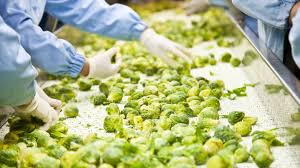
Food hygiene is the major means of controlling food poisoning, and attitude to the importance of food hygiene will depend upon awareness, education, and the standard of living that can be afforded.
Food hygiene regulations have been brought into force in many countries of the world to protect the public and reduce the number of outbreaks of food poisoning.
These regulations must be followed by anyone responsible for handling food in the food business. Food hygiene is divided into three main sections: personal hygiene, environmental hygiene, and food hygiene practice.
Personal Hygiene Practices for Food Safety
Prevention of food poisoning starts with personal hygiene as the food poisoning bacteria can be found on human skin, hair, and clothes, and in ears, noses, mouths, and faeces.
If people touch affected parts of their bodies during the preparation of food, they can transfer the bacteria to the food; hence, hands must always be washed before working with food, especially after visiting the toilet.
The bacterium Staphylococcus aureus is found in the human nose, infected wounds, and boils, so cuts and grazes must be covered to avoid food contamination. Clean and protective clothing such as aprons or overalls should also be worn during food preparation.
Food handlers should not work with food if they are suffering from or are carriers of food-poisoning infections as they can accidentally contaminate foods. Food handlers should not smoke, chew tobacco, cover their hair and beards with hats and nets, or spit around food preparation areas.
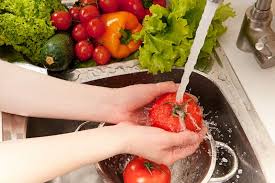
Always wash hands in hot soapy water before preparing each dish at home, after changing a diaper or wiping a child’s nose, or handling any animal. Wash fruits and vegetables in lukewarm water to get rid of insects and pesticide residue. Skinning, peeling, and boiling are the best ways to cleanse foodstuff.
Environmental Hygiene Standards for Food Safety
Environments where food is stored and prepared must be kept clean and free from pests and pets. Dirt, soil, and food residues can harbour bacteria and pests. Hot water with detergent solution should be used to wipe down and clean surfaces, equipment, floors, and walls.
All utensils cutting boards and countertops should be washed with hot soapy water after preparing each item. Food waste should be regularly removed from the food preparation area. The danger zone is anywhere between 5°C and 63°C, and bacteria grow very well at 37°C.
Temperature control is important; cold food must be stored correctly then cooked at a temperature high enough to kill bacteria. Although the refrigerator can inhibit the growth of dangerous bacteria, the temperature of the refrigerator and freezer should not be greater than 4°C and –17°C, respectively.
Read Also: Bacterial Canker (Stone fruit trees): Description, Damages Caused, Control and Preventive Measures
Food Hygiene Practices to Prevent Contamination
The most serious cross-contamination occurs between raw foods and cooked foods, so they should not be stored together or prepared using the same equipment. Keep raw meat, poultry, or seafood separate from other food at all times.
Never put cooked food onto a dish that formerly held raw meat, fish, or poultry, unless that dish has been washed thoroughly with hot soapy water. Cook all food items thoroughly because if the internal heat of food exceeds 70°C, even briefly, almost all bacteria, viruses, and parasites will be killed.
Poultry should be cooked even more than that, up to 80°C. Reheated foods should be brought to a temperature of 75°C or it should be hot and steaming.
Avoid eating poultry that is still pink inside, eggs with runny yolks or whites, or fish that is not yet opaque and that cannot be readily flaked apart with a fork. When dining out, make sure the restaurant visited satisfies the health standards required by law.
Take-away meals should be eaten within 2 hours from the time of purchase, and if time elapses, reheat the food to a temperature not less than 75°C.
Health Education Programs for Food Safety
Health education programmes are concerned with turning knowledge into the following actions:
1. Changing food habits to incorporate: boiling of drinking water, cooking all food, and avoiding raw meat and fish.
2. Taking specific precautions including: adequate cooking of food and the avoidance of foods and food preparation methods that have caused outbreaks in the past.
3. Avoiding long delays in consuming prepared food and following approved food sanitation methods and procedures.
4. Giving positive support to community activities such as improvement of water supply and the construction and use of latrines.
5. Accepting expert advice on food hygiene and control of enteric diseases.
Health education methods include both person-to-person contacts and the use of mass information media. The methods must be carefully chosen to match the educational level of the target group, and effective use should be made of community leaders in the educational effort.
The educational programme should be designed specifically for the community. The health education programme is difficult since a number of anti-health factors exist. These anti-health factors include ignorance, superstition, lethargy, poverty, and opposition from vested interests.
Frequently Asked Questions
1. What is the impact of microorganisms on food safety?
Microorganisms in food can cause spoilage and foodborne diseases, posing health threats, though some are desirable for producing bioprocessed foods.
2. How does pasteurization help control food poisoning?
Pasteurization exposes food to high temperatures for a short period, destroying pathogens and reducing spoilage organisms without altering taste or flavour.
3. Why is refrigeration important for food preservation?
Refrigeration slows down microbial growth, preventing pathogens from multiplying at low temperatures, thus preserving food quality.
4. How does lowering the pH prevent food spoilage?
Lowering the pH of foods by adding acids or aiding fermentation creates an environment where some pathogenic organisms cannot survive.
5. What role does personal hygiene play in preventing food poisoning?
Personal hygiene, such as washing hands and covering cuts, prevents the transfer of bacteria like Staphylococcus aureus from the body to food during preparation.
6. Why is temperature control critical in food hygiene?
Temperature control prevents bacterial growth in the danger zone (5°C to 63°C), with refrigeration at 4°C or below and cooking at 70°C or higher to kill pathogens.
7. How can cross-contamination between raw and cooked foods be avoided?
Cross-contamination is avoided by storing raw and cooked foods separately, using different equipment, and thoroughly washing dishes that held raw meat, fish, or poultry.
8. What are the goals of health education programs for food safety?
Health education programs aim to change food habits, promote adequate cooking, avoid risky foods, support community sanitation, and accept expert advice on hygiene.
Do you have any questions, suggestions, or contributions? If so, please feel free to use the comment box below to share your thoughts. We also encourage you to kindly share this information with others who might benefit from it. Since we can’t reach everyone at once, we truly appreciate your help in spreading the word. Thank you so much for your support and for sharing!