


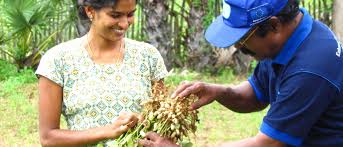
Women tend to concentrate their agricultural activities around the homestead, primarily because of their domestic and reproductive roles; they play a critical role in food production, post-harvest activities, livestock care, and increasingly in cash cropping.
Gender Roles in the Farming System
Women and men have distinct roles within the farming system. Gender differences in rural farming households vary widely across cultures, but certain features are common. Women tend to concentrate their agricultural activities around the homestead, primarily because of their domestic and reproductive roles; they play a critical role in food production, post-harvest activities, livestock care, and increasingly in cash cropping.
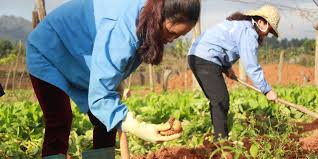
Certain tasks, activities, or enterprises are regarded as "male" or "female." In some settings, a rigid division of labour exists between men and women: household members have separate incomes and expenditures, along with reciprocal or skewed rights and obligations.
In other settings, the division of labour and specialisation of tasks is less rigid and not as skewed. In general, however, women tend to have a wider range of activities and enterprises than men.
On the one hand, they participate in productive activities in agriculture and livestock management; on the other, they have chief responsibility for reproductive activities that is, the bearing and rearing of children and maintenance of the household.
🌿 Go Organic on Your Farm: Instead of harmful chemical pesticides and fertilisers, try our organic farming products — including neem oil spray, bio-pesticides, natural plant treatments, organic seeds and seedlings, suckers, and many more organic products that are safe for your health, your family, your soil and your harvest. Shop Now →
Although the gender-based division of labour in the farming system varies widely, it still affects responses to agricultural innovation everywhere.
Read Also: The Importance and Uses of Hay
Collecting Information on Gender
🔧 Free Farm Tool Available: Use our free Agric4Profits Farm Tools to calculate your farm profits, formulate feeds, identify pests and diseases on both your crops and animal farms, plan your planting and harvesting season, including many more farm tasks to get free expert advice and recommendations — completely free, no registration required. Access Free Tools →
Appropriate strategies to achieve desired country, sector, or agricultural project objectives can only be identified when good baseline information and gender-disaggregated data are available.
Data are needed, on the one hand, to identify issues and, on the other, to determine prevalence and practice in the population within the intended project area. Data are also needed during implementation so that improvements can be identified and interventions monitored and evaluated from a gender perspective.
Incorporating Gender Issues in Agriculture Sector Work
This article outlines key gender issues in economic and sector work in agriculture, poverty and gender-focused assessments, and country assistance strategies. Impact analyses of both project and structural adjustment programs have shown that actions to address the main national sector constraints may have different implications by gender.
When men and women are affected differently by an intervention, they constitute separate categories of stakeholders and need to be accounted for as such in policy and project design. In addition, not all women are affected in the same way; like men, their responses vary depending on age, class, ethnicity, and agricultural production system.
💬 Have a Farming Question? Join thousands of farmers across Africa on the Agric4Profits Community — ask questions, share experiences and connect with agricultural experts. It is completely free. Ask Your Question Now →
Agricultural policymaking will, therefore, benefit from an analysis of the gender aspects of major economic indicators and key economic issues, both for the economy as a whole and the agricultural sector. Policymakers need to identify gender-based differences in the ability to respond to proposed policies and modify subsequent actions or include compensatory measures to liberalise markets and allow both men and women to benefit.
Read Also: Grasshoppers: Description, Damages Caused, Control and Preventive Measures
Gender Issues in Agriculture Projects
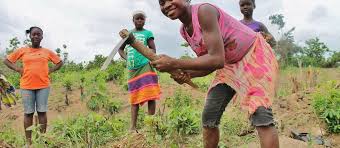
Programs and projects that ignore gender-specific barriers to resources, opportunities, and benefits risk excluding a large proportion of farmers and the broader farming community. For example, studies of structural adjustment have found that gender differences have hindered women from responding to incentives.
It is never too early to include a gender perspective. The earlier a gender perspective is incorporated, the greater the benefits. For instance, in the Asia and Africa regions, the World Bank systematically reviews initial executive project summaries to identify projects that would benefit from gender analysis.
Projects with good potential, serious risk, or a need for support from gender specialists are monitored throughout preparation and guidance, and technical inputs are offered as needed. Moreover, no point exists in the project cycle when it is too late to consider gender issues. Even at project completion, gender analysis can help explain success or failure and draw useful lessons for future interventions.
Do you have any questions, suggestions, or contributions? If so, please feel free to use the comment box below to share your thoughts. We also encourage you to kindly share this information with others who might benefit from it. Since we can’t reach everyone at once, we truly appreciate your help in spreading the word. Thank you so much for your support and for sharing!
Read Also: Sedimentation Processes in Waste-water Treatment
📖 Want to Go Deeper on This Topic?
Our expert agricultural ebooks cover poultry, fish farming, different crops production, snail farming, organic farming, mushrooms, sheep, cattle, flowers, pig farming, goat farming, agribusiness, etc. in practical step-by-step detail — written by agricultural professionals for African farmers.
Browse All Farming Ebooks →Frequently Asked Questions
We will update this section soon.
🌱 Take Your Farming Further With Agric4Profits
Based on what you just read, here are free resources and products from Agric4Profits that can help your farm right now:
- 🛒 Visit Our Marketplace — Organic neem oil, bio-pesticides, seeds and farming products
- 📚 Read Premium Content — Advanced guides for serious and profitable farming
- 🎓 Join Our Free Academy — Structured free training for farmers across Africa
- 🔧 Use Our Free Farm Tools — Profit calculators, feed formulation, pest identifier and more
- 💬 Join Our Farming Community — Connect with farmers across all 54 African countries
- ❓ Ask a Farming Question — Get answers from experienced farmers and agricultural experts
Please cite this content in academic work, research, or publications.