


Below is the edited and corrected version of the article, with the unit changed to "article," headings clarified and bolded, and grammar improved while maintaining the originality of the content. Following the edited article, 6 to 8 frequently asked questions (FAQs) and their answers are provided based on the article's content.
Importance of Fruits and Vegetables in Diet
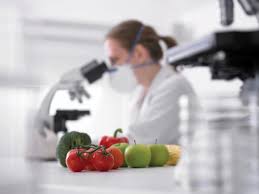
Vegetables and fresh fruits are vital components of a nutritious and healthy diet, promoting physical and mental well-being. Due to their dietary value, fruits and vegetables can harbor a variety of elevated microbial contaminants.
Toxins produced by various microorganisms play a major role in contaminating food products. Disease-causing microorganisms, such as E. coli, Rhizopus, Staphylococcus aureus, Salmonella, Clostridium botulinum, Bacillus cereus, Pseudomonas aeruginosa, Mucor species, Aspergillus, and Candida species, can contaminate fresh produce.
Isolation of Microorganisms
Eosin Methylene Blue agar, Salmonella-Shigella (SS) agar, and MacConkey agar are used for the isolation of microbes. These agars are prepared and autoclaved for sterilization at 121°C for 15 minutes. All agars are plated using the pour plate method and kept at room temperature for solidification.
After solidification, the media is inoculated with 1 ml of sample from dilutions 10⁻² and 10⁻⁶, followed by incubation at 37°C for 24 hours. Isolated and distinct colonies are selected and further streaked on separate plates to form pure isolated colonies for identification.
Total Plate Count for Microbial Load
For microbial load determination, serial dilutions of each homogenized mixture are prepared up to 10⁻⁶, and dilutions 10⁻² and 10⁻⁴ are used for inoculation on nutrient agar media. The inoculated plates are incubated at 37°C for 24 hours.
🌿 Go Organic on Your Farm: Instead of harmful chemical pesticides and fertilisers, try our organic farming products — including neem oil spray, bio-pesticides, natural plant treatments, organic seeds and seedlings, suckers, and many more organic products that are safe for your health, your family, your soil and your harvest. Shop Now →
Duplicate plates with 25 to 250 colonies are selected for total count. The number of colonies is multiplied by the dilution factor (reciprocal of the dilution) to determine the microbial load.
Read Also: Health Benefits and Uses of Lobster
Counts for Lactic Acid Bacteria

Lactic acid bacteria, such as Lactobacillus mesenteroides, are primary organisms responsible for the spoilage of some fresh-cut produce. In packaged mixed vegetables, the development of lactic acid bacteria is related to temperature increases, with high counts observed in shredded carrots.
Their density can be estimated on DeMan, Rogosa, Sharpe (MRS) agar adjusted to pH 5.6 and incubated under anaerobic conditions at 30°C for 48 hours. Although an anaerobic system provides an oxygen-free work chamber, a simple and effective method to achieve anaerobic conditions is to use GasPak™ gas-generating systems.
🔧 Free Farm Tool Available: Use our free Agric4Profits Farm Tools to calculate your farm profits, formulate feeds, identify pests and diseases on both your crops and animal farms, plan your planting and harvesting season, including many more farm tasks to get free expert advice and recommendations — completely free, no registration required. Access Free Tools →
These multi-use systems produce atmospheres suitable for isolating and cultivating anaerobic and microaerophilic bacteria by using gas-generating sachets. Anaerobic conditions for incubation may also be achieved by using sterile butyl rubber stoppers on test tubes to retain an anaerobic gas headspace.
Enumeration of Yeasts and Molds
A large population of yeasts and molds can be found on raw or fresh-cut fruits and vegetables prior to harvest, during storage, and on the shelf. These form the predominant microorganisms associated with the spoilage of fresh-cut fruit products.
Some yeasts and molds cause spoilage, and some pose public health concerns due to mycotoxin production. Selective media and lower incubation temperatures are used to slow or inhibit bacterial growth, thereby selecting for the outgrowth of yeasts and molds.
Selective bacterial inhibition can be achieved using antibiotics, such as chloramphenicol at 100 μg/mL, or through acidification of media, such as potato dextrose agar (PDA), with tartaric acid to pH 3.5. Incubation is conducted at 22–25°C for up to 5 days. Sabouraud Dextrose Agar, incubated at 28°C for 2 days, is used for yeasts, while Malt Extract Agar (MEA), incubated at 25°C for 4 days, is used for molds. Dichloran rose bengal chloramphenicol agar (DRBC), incubated at 25°C for 5 days, is used to recover and enumerate yeasts and molds.
Read Also: Health Benefits and Uses of Oysters
💬 Have a Farming Question? Join thousands of farmers across Africa on the Agric4Profits Community — ask questions, share experiences and connect with agricultural experts. It is completely free. Ask Your Question Now →
Quantification of Coliform Bacteria
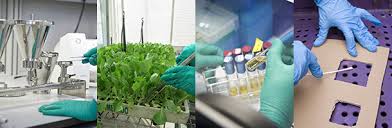
In conducting microbiological analysis of food to assess health risks associated with consumption, indicator organisms are often utilized. These are typically present in higher numbers than true pathogens and are easier to detect. The growth and survival characteristics of these organisms are similar to those of pathogens.
Coliform bacteria are the most commonly used indicator organisms. Coliforms are a group of Gram-negative, non-spore-forming, aerobic or facultatively anaerobic rods that ferment lactose, producing acid and gas within 48 hours at 35°C. E. coli is a member of the coliform group.
Most coliforms belong to the Enterobacteriaceae family. The presence of high numbers of coliforms in foods is often assumed to indicate the co-presence of intestinal pathogens, which are usually more difficult to detect and quantify.
Additionally, their presence indicates inadequate sanitation. When enumerating coliforms, E. coli may be present among the mixed population measured. Selective or differential media can be used to estimate E. coli levels under these circumstances. The most probable number (MPN) method is among these techniques.
Frequently Asked Questions (FAQs)
- Why are fruits and vegetables prone to microbial contamination?
Fruits and vegetables harbor elevated microbial contaminants due to their high dietary value, which provides a suitable environment for microorganisms like E. coli, Salmonella, and Aspergillus to grow, producing toxins that contaminate food products. - What media are used to isolate microorganisms from fruits and vegetables?
Eosin Methylene Blue agar, Salmonella-Shigella (SS) agar, and MacConkey agar are used for microbial isolation. These are prepared, autoclaved at 121°C for 15 minutes, and inoculated using the pour plate method. - How is the total plate count determined for microbial load?
Serial dilutions up to 10⁻⁶ are prepared, and dilutions 10⁻² and 10⁻⁴ are inoculated on nutrient agar. After incubation at 37°C for 24 hours, duplicate plates with 25–250 colonies are counted, and the number is multiplied by the dilution factor. - What role do lactic acid bacteria play in produce spoilage?
Lactic acid bacteria, such as Lactobacillus mesenteroides, are primary spoilage organisms in fresh-cut produce, particularly in packaged mixed vegetables like shredded carrots, where their growth is linked to temperature increases. - How are yeasts and molds enumerated in fruits and vegetables?
Yeasts and molds are enumerated using selective media like Sabouraud Dextrose Agar (for yeasts, incubated at 28°C for 2 days), Malt Extract Agar (for molds, incubated at 25°C for 4 days), and Dichloran rose bengal chloramphenicol agar (DRBC, incubated at 25°C for 5 days). - Why are coliform bacteria used as indicator organisms?
Coliforms, including E. coli, are used as indicator organisms because they are present in higher numbers than pathogens, are easier to detect, and have similar growth characteristics. Their presence may indicate intestinal pathogens or poor sanitation. - What methods ensure anaerobic conditions for lactic acid bacteria counts?
Anaerobic conditions are achieved using GasPak™ gas-generating systems or sterile butyl rubber stoppers on test tubes to retain an anaerobic gas headspace, with incubation on MRS agar at 30°C for 48 hours. - How do selective media help in enumerating yeasts and molds?
Selective media, such as potato dextrose agar acidified to pH 3.5 or supplemented with chloramphenicol, inhibit bacterial growth, allowing yeasts and molds to grow. Lower incubation temperatures (22–25°C) further favor their outgrowth.
Do you have any questions, suggestions, or contributions? If so, please feel free to use the comment box below to share your thoughts. We also encourage you to kindly share this information with others who might benefit from it. Since we can’t reach everyone at once, we truly appreciate your help in spreading the word. Thank you so much for your support and for sharing!
🌱 Take Your Farming Further With Agric4Profits
Based on what you just read, here are free resources and products from Agric4Profits that can help your farm right now:
- 🛒 Visit Our Marketplace — Organic neem oil, bio-pesticides, seeds and farming products
- 📚 Read Premium Content — Advanced guides for serious and profitable farming
- 🎓 Join Our Free Academy — Structured free training for farmers across Africa
- 🔧 Use Our Free Farm Tools — Profit calculators, feed formulation, pest identifier and more
- 💬 Join Our Farming Community — Connect with farmers across all 54 African countries
- ❓ Ask a Farming Question — Get answers from experienced farmers and agricultural experts
Please cite this content in academic work, research, or publications.