


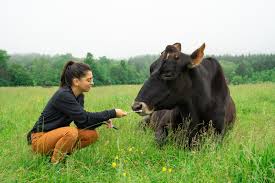
Through learning, farm animals can adjust quickly to changes in their environment. Learning is adaptive for animals in settings where changes are not predictable. Learning produces changes in the behavior of an individual that are due to experience. Once an animal learns something, its behavioral choices increase.
An animal’s ability to learn may correlate with the predictability of certain characteristics of its environment. Where certain changes in the habitat occur regularly and are predictable, the animal may rapidly respond to a stimulus with an unmodified instinctive behavior.
In such cases, the animal would not necessarily benefit from learning. However, where environmental changes are unpredictable and cannot be anticipated, an animal may modify its behavioral responses through learning or experience.
This modification is adaptive because it allows the animal to not only change its response to fit a given situation but also to improve its response to subsequent, similar environmental changes.
There are five categories of learning: habituation, classical conditioning, instrumental conditioning, latent learning, and insight learning.
Read Also: 12 Poultry Eggs Fascinating Facts you must know about
Habituation in Farm Animals
Habituation is the simplest and perhaps most common type of behavior observed in many farm animals. It involves a decrease in response to repeated or continuous stimulation. Essentially, an animal learns not to respond to stimuli in its environment that are constant and relatively unimportant, thereby saving time and conserving energy.
For example, over time, chickens may learn to ignore harmless noises that initially caused them to flee. Similarly, cows in a pasture may adjust to the presence of farm machinery or human activity.
Habituation is believed to be controlled through the central nervous system and should be distinguished from sensory adaptation. Sensory adaptation involves repeated stimulation of receptors until they stop responding. For instance, if a pig enters a barn with a strong odor, its olfactory sense organs may soon stop responding to the smell.
Classical Conditioning in Farm Animals
Classical conditioning is a type of learning famously documented by Russian physiologist Ivan Pavlov (1849–1936). In his classic experiment on the salivary reflex in dogs, Pavlov presented food immediately after the sound of a bell.
After repeated pairings, the dogs associated the sound of the bell with food and began to salivate at the sound alone. The food served as a positive reinforcement for the salivating behavior, but responses could also be conditioned using negative reinforcement.
Classical conditioning is common among farm animals. For example, sheep may learn to associate the sound of a feed truck with feeding time and begin to gather at the feeding area. Similarly, horses may learn to respond to specific vocal cues from their handlers.
Instrumental Conditioning in Farm Animals
Instrumental conditioning, also known as trial-and-error learning, occurs when an animal learns while carrying out certain actions, such as exploring its environment.
For example, if a pig finds food while rooting in the soil, the food reinforces the behavior, and the animal associates the reward with the action. If this association is repeated, the animal learns that the behavior leads to reinforcement and tends to repeat it.
Instrumental conditioning is widely observed in farm animals. For instance, dairy cows may learn to operate automated feeding systems by pressing levers to access feed.
Similarly, chickens may learn to peck at specific buttons to release water or food. This type of learning is the basis for much of the training conducted by farmers, where desired behaviors are reinforced with rewards.
Read Also: Poultry Farming and Adverse Season as a Stressor
Latent Learning in Farm Animals
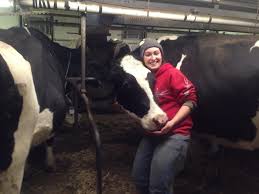
Latent learning, sometimes called exploratory learning, involves making associations without immediate reinforcement. The reward is not obvious, but the animal is motivated to learn about its surroundings.
For example, if a goat is placed in a new enclosure, it may explore the area thoroughly, even without an immediate reward. If food is later introduced, the goat can quickly navigate to the food source, demonstrating that it had previously learned the layout of the enclosure.
Latent learning allows farm animals to familiarize themselves with their environment, which can be crucial for survival. For instance, knowledge of escape routes or safe hiding spots can help animals avoid predators or stressful situations.
Insight Learning in Farm Animals
Insight learning refers to the ability to perform a correct or appropriate behavior on the first attempt in a novel situation. This type of learning is often associated with higher cognitive abilities.
For example, if a horse is presented with a gate mechanism it has never encountered before, it may figure out how to open the gate by manipulating it with its muzzle.
While insight learning is most developed in primates and other mammals, some farm animals, such as pigs and horses, also demonstrate this ability. However, the level of insight varies among species and individuals.
In conclusion, learning is an essential aspect of farm animal behavior, enabling animals to adapt to their environments and improve their chances of survival and reproductive success.
The types of learning observed in farm animals habituation, classical conditioning, instrumental conditioning, latent learning, and insight learning highlight the diverse ways in which animals acquire and apply knowledge.
Do you have any questions, suggestions, or contributions? If so, please feel free to use the comment box below to share your thoughts. We also encourage you to kindly share this information with others who might benefit from it. Since we can’t reach everyone at once, we truly appreciate your help in spreading the word. Thank you so much for your support and for sharing!