


Newcastle disease has for several years been recognized as a leading cause of loss to poultry farmers, it’s deadly to birds. In laying birds, Newcastle disease may cause a temporary stoppage of egg production lasting 4-6weeks.
It is one of the major diseases of poultry, present in almost every country in the world and causing economic losses because of high levels of mortality, decreased production and trading embargos.
Newcastle Disease is a highly contagious viral infection that affects many species of domestic and wild birds to varying degrees. Domestic fowl, turkeys, pigeons and parrots are most susceptible while a mild form of the disease affects ducks, geese, pheasants, quail and guinea fowl.
The disease can result in digestive, respiratory and/or nervous clinical signs, which range from a mild, almost inapparent respiratory disease to very severe depression, drop in egg production, increased respiration, profuse diarrhoea followed by collapse, or long-term nervous signs (such as twisted necks), if the birds survive. Severe forms of the disease are highly fatal.
Newcastle disease is a highly contagious disease of birds caused by a para-myxo virus. Birds affected by this disease are fowls, turkeys, geese, ducks, pheasants, partridges, guinea fowl and other wild and captive birds, including ratites such ostriches, emus and rhea.
Humans aren’t normally affected, but people in direct contact with infected birds may develop a very short-term eye infection, which passes without treatment.
1. Causes of Newcastle Disease
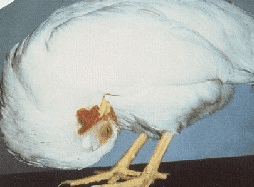
Newcastle Disease is caused by a paramyxovirus that can vary in pathogenicity from mild to highly pathogenic. Spread is usually by direct physical contact with infected or diseased birds. The virus is present in manure and is breathed out into the air.
Other sources of infection are contaminated equipment, carcasses, water, food and clothing. People can easily carry the virus from one shed or farm to another. Newcastle Disease virus does not affect humans in the same way that it does birds but it can cause conjunctivitis in humans.
2. Mode of transmission
It is airborne and spread by inhalation or ingestion of virus. Free-flying birds maybe infected with lentogenic viruses and can spread them readily. Exotic birds and backyard birds from tropical areas are also commonly infected with velogenic viruses.
The disease is transmitted through infected birds’ droppings and secretions from the nose, mouth and eyes. The disease is spread primarily through direct contact between healthy birds and the bodily discharges of infected birds. Virus-bearing material can also be picked up on shoes and clothing and carried from an infected flock to a healthy one.
Possible routes of transmission therefore include contact between poultry and also through movements of contaminated vehicles, equipment, manure, feed and water.
The virus can survive for several weeks in a warm and humid environment on birds’ feathers, manure, and other materials. The disease is spread by direct contact with bodily fluids of infected birds, especially their faeces and aerosol contact.
3. Symptoms of Newcastle Disease
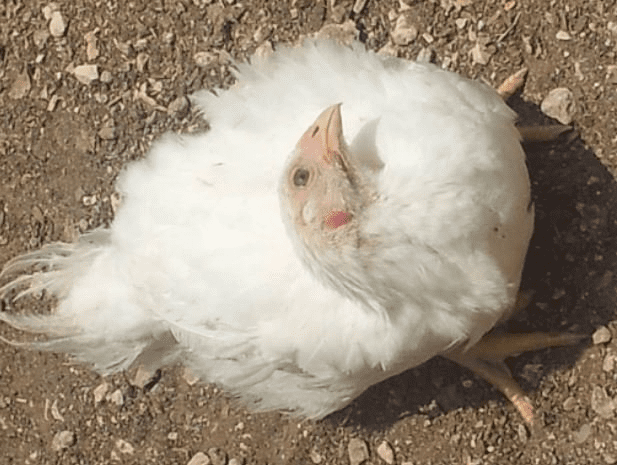
These symptoms are usual in chicks and adult birds for instance: gasping, coughing and rattling in the windpipe, followed in 1 or 2days by characteristic nervous symptoms such as paralysis of legs or wings, twisting of head and neck.
On post mortem examination, there is nothing to differentiate Newcastle disease form other respiratory disease because the windpipe may contain excessive mucus, except the presence of hemorrhage in the proventriculus and cecal tonsils.
The three forms of Newcastle disease are categorized on the basis of the severity of their clinical signs.
- The lentogenic form is mildly pathogenic.
- The mesogenic form is moderately pathogenic.
- The velogenic form, or VVND, is highly pathogenic.
Mortality can range from 10% to 80% depending on the virus strain.
Newcastle disease is characterized by a sudden onset of symptoms, which include hoarse chirps (in chicks), watery discharge from the nostrils, labored breathing (gasping), facial swelling, paralysis, trembling, and twisting of the neck.
The twisting of the neck, or torticollis, is a sign that the central nervous system is affected. In adult laying birds, symptoms also include decreased feed and water consumption and a dramatic drop in egg production.
4. Clinical Signs
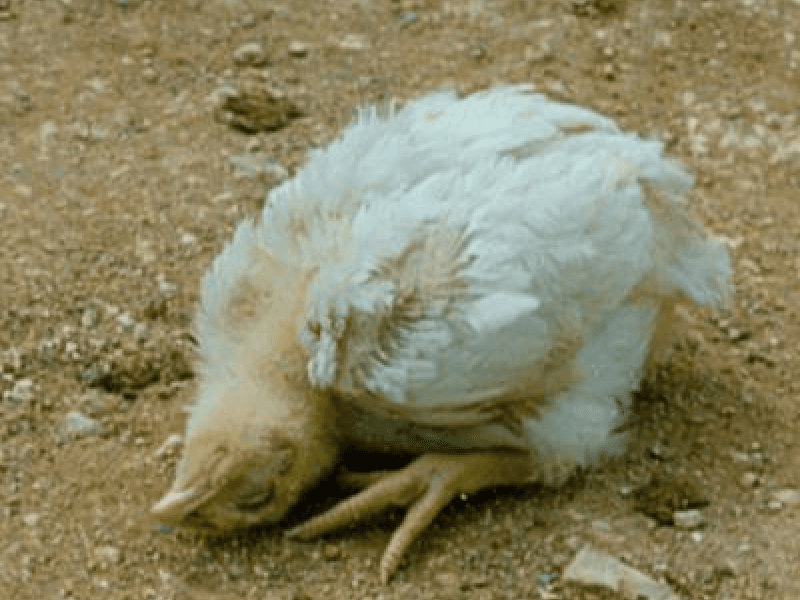
The clinical signs in affected birds can vary. The disease can be present in a very acute form with sudden onset and high mortality or as a mild disease with respiratory distress or a drop in egg production as the only detectable clinical signs.
A sub-clinical (asymptomatic) form of Newcastle disease and many intermediate forms of the disease can also occur. The main signs are:
- Sneezing
- Nasal discharge
- Coughing
- Greenish, watery diarrhoea
- Depression
- Muscular tremors
- Drooping wings
- Complete paralysis
- Swelling of the tissues around the eyes and in the neck
- Sudden death
- Increased death loss in a flock
- In laying birds there can be partial to complete drop in egg production; and production of thin-shelled eggs
Read Also: Gumboro Disease: Symptoms and Prevention
5. Prevention Measures of Newcastle Disease
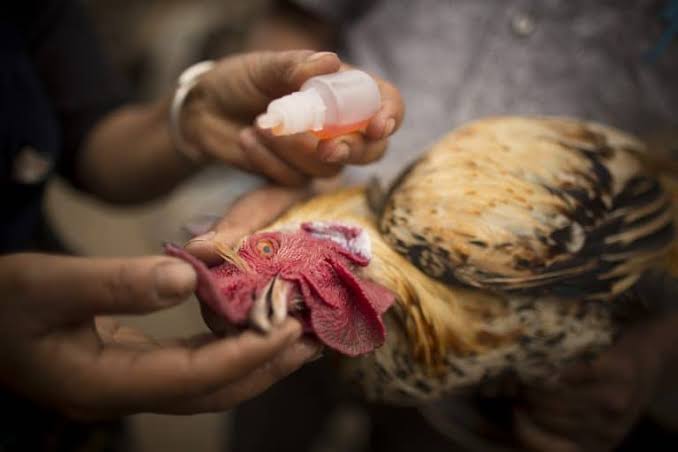
Poultry farmers should give their baby chicks “Intra Ocular: (i/o) vaccines between Day Old to 10 days, before taking them into the farm and must increase sanitary procedures.
There is no treatment for Newcastle Disease, although treatment with antibiotics to control secondary infections may assist. The virus can remain alive in manure for up to 2 months and in dead carcasses for up to 12 months, however it is easily killed by disinfectants, fumigants and direct sunlight. Prevention relies on good quarantine and biosecurity procedures and vaccination.
Newcastle disease is a contagious bird disease affecting many domestic and wild avian species. It is a zoonotic disease with widespread distribution. It is caused by avian Paramyxovirus serotype 1 virus which, with viruses of the other eight serotypes (avian paramyxovirus1-9), has been placed in the genus Avulavirus, sub-family Paramyxovirinae, family Paramyxoviridae.
Virulent ND virus strains are endemic in poultry in most of Asia, Africa, and some countries of North and South America. Other countries, including the United States of America and Canada, are free of those strains in poultry.
The strain of Newcastle pathogenicity can be classified into five pathotype: Asymptomatic enteric strain; Lentogenic strain; Mesogenic strain; Viscerotropic velogenic strain and Neurotropic velogenic strain.
Clinical signs are extremely variable depending on the strain of virus, species and age of bird, management, concurrent disease, and pre-existing immunity caused by Paramixovirus with worldwide distribution affecting chickens of all age groups.
The transmission of ND occurs through respiratory aerosols, exposure to fecal and other excretions from infected birds, through newly introduced birds, selling and giving away sick birds and contacts with contaminated feed, water, equipment, cannibalism and clothing.
Gasping, coughing, sneezing, rales, tremors, paralyzed wings and legs, twisted necks, circling; colonic spasms and complete paralysis are the clinical pictures of the disease. Newcastle disease may cause conjunctivitis in humans, when a person has been exposed to large quantities of the virus.
The objective of this review is, therefore, to understand the epidemiology, clinical signs, diagnosis, prevent and control of Newcastle disease in poultry.
Read Also: Vaccination Program for Poultry Chickens
The Newcastle virus is a member of the family Paramyxoviridae, genus Avulavirus. There are ten serotypes, but only serotype 1 causes Newcastle disease (APMV-1). Below is a representation of the virus.
Live vaccines are very important for the control and prevention of Newcastle disease, to provide local protection and prime for the inactivated vaccine. When choosing the live vaccine strain, we face a dilemma, reaction versus protection.
Normally the best protection comes with undesirable post-vaccine reactions, whilst the vaccines with a reduced post-vaccine reaction provide more limited protection.
To analyse the protection of the vaccine and the reaction, it is important to understand a few points:
- The method of vaccination: Ideally, the best method of vaccination for Newcastle vaccines are spray or eye drop. It is very important to check the size of the droplets, as fine drops can cause reactions. The ideal droplet size is between 160 – 180 μ
- The performance of the vaccination: Regardless of the method of vaccination chosen, it is important to carry it out correctly. In the case of poor performance of the vaccination, it is possible for a “rolling effect” to occur: if the vaccination does not reach all the birds at the same time, some of the birds will have contact with the vaccine virus later on, causing a reaction.
- Maternal antibodies: In the case of Newcastle vaccination, maternal antibodies are important in order to minimise any vaccine reaction and to give the birds humoral protection until the inactivated vaccine takes effect.
- Choice of strain: As mentioned before, the less reactive strains will confer limited protection and strains that are more reactive will provide better protection. The process of choosing will have to take account of the pressure of infection in the region. Normally the LaSota strain is one of the most popular, as it provides good protection.
- The vaccine titre: The titre will influence control of the disease and the shedding of the virus, 10 being the minimum titre for control of clinical signs (Cornax et al., 2012), however control of clinical signs is not enough, it is important to reduce the shedding of the virus.
Summary on Newcastle Disease: Symptoms and Prevention

| Aspect | Details |
|---|---|
| Disease Name | Newcastle Disease (ND) |
| Also Known As | Avian Pneumoencephalitis, Ranikhet Disease, Pseudo-fowl Pest, Exotic Newcastle Disease (END), Viscerotropic Velogenic Newcastle Disease (VVND) |
| Causative Agent | Virulent strains of Avian Paramyxovirus Serotype 1 (APMV-1), recently renamed Avian avulavirus 1; family Paramyxoviridae, genus Avulavirus |
| First Identified | Indonesia (1926); named after Newcastle upon Tyne, England (1927) |
| Pathotypes | Asymptomatic Enteric (no signs), Lentogenic (mild), Mesogenic (moderate), Neurotropic Velogenic (severe nervous signs), Viscerotropic Velogenic/VVND (most severe, attacks internal organs and highly fatal) |
| Hosts Affected | All bird species; chickens most severely affected; turkeys, quail, pheasants, pigeons, and exotic pet birds also susceptible; waterfowl (ducks, geese) are commonly asymptomatic carriers |
| Distribution | Worldwide; endemic in most of Asia, Africa, and parts of Latin America; controlled but not eliminated in USA, Canada, and Western Europe; OIE/WOAH notifiable disease |
| Wild Bird Risk | Wild birds can carry and shed virulent NDV without showing signs, making outbreaks possible anywhere poultry are raised |
| Transmission | Aerosol and respiratory droplets (primary); direct contact with infected birds; fecal contamination of feed and water; contaminated fomites (shoes, clothing, crates, egg trays, equipment, feed bags, vehicles); some strains transmitted through the egg (infected embryos usually die before hatching) |
| Virus Persistence | Survives weeks to months in feces, litter, and environment at low temperatures; inactivated at 56°C for 3 hours or 60°C for 30 minutes; destroyed by common disinfectants, formalin, and phenolics |
| Incubation Period | 2-15 days (average 5-6 days); OIE recognizes up to 21 days |
| Morbidity Rate | Up to 100% in unvaccinated susceptible flocks with velogenic strains |
| Mortality Rate | Lentogenic: minimal; Mesogenic: moderate; VVND/Velogenic: can approach 100% within 24-48 hours |
| Respiratory Signs | Coughing, sneezing, gasping, nasal and ocular discharge, tracheal rales, labored breathing; characteristic hoarse chirps in young chicks |
| Digestive Signs | Greenish, watery diarrhea; reduced feed and water intake; depression and lethargy |
| Neurological Signs | Muscle tremors, drooping wings, torticollis (twisting of the head and neck), circling, paralysis, sudden death; nervous signs indicate CNS involvement |
| Reproductive Signs (Layers) | Sudden sharp drop in egg production; thin-shelled, soft-shelled, shell-less, or abnormally shaped/colored eggs; watery albumen (egg white) |
| Facial Signs | Swelling of the eyes and neck; facial edema in severe cases |
| Post-mortem Lesions | Hemorrhagic and necrotic lesions in trachea, proventriculus, intestines, and cecal tonsils (VVND); congestion and mucoid exudates in respiratory tract (lentogenic strains); egg yolk peritonitis and atrophied follicles in layers |
| Zoonotic Risk | Low; transient conjunctivitis and mild flu-like symptoms possible in farm workers, laboratory personnel, or vaccination teams exposed to large quantities of virus; no cases reported from eating poultry products |
| Differential Diagnosis | Avian Influenza (most critical), Infectious Bronchitis, Infectious Laryngotracheitis, Mycoplasmosis, Infectious Coryza, Avian Metapneumovirus; laboratory confirmation always required |
| Diagnosis | Real-time RT-PCR (test of choice); virus isolation from tracheal/cloacal swabs; ELISA; Hemagglutination Inhibition (HI) test; immunofluorescence; immunohistochemistry; serology for monitoring vaccine effectiveness |
| Treatment | No specific treatment for virulent ND; antibiotics (3-5 days) for secondary bacterial infections; supportive care with vitamins, electrolytes, and improved biosecurity; all-in/all-out system during outbreaks |
| Vaccination Schedule | Day 7 (depending on chick source) → 10-12 weeks (Lasota, Hitchner B1, F strain) → 21 weeks → every 6 months thereafter; breeders revaccinated every 2 months; turkeys vaccinated at 3 weeks and again at 8 weeks |
| Vaccine Types | Live attenuated lentogenic vaccines (Lasota, B1, F strain; administered via eye drops, drinking water, spray, or aerosol); killed/inactivated oil-emulsion vaccines (boosters for layers and breeders); recombinant vectored vaccines (HVT-NDV, fowlpox-NDV); thermotolerant vaccines for areas with limited cold chain |
| Vaccine Limitation | Vaccines prevent clinical disease but do NOT prevent infection or virus shedding; immunity takes 3-4 weeks to develop, creating a critical window of susceptibility where biosecurity is paramount |
| Vaccination Administration | Aerosol method provides the best immune response; drinking water and eye drops also effective; proper equipment and technique critical for uniform coverage |
| Biosecurity Measures | Restrict farm access (one entry point, footbaths, vehicle dips); quarantine new stock for minimum 2-4 weeks; keep visitors away from birds; stop egg/bird buyers at the farm gate; use new feed bags; thoroughly clean and disinfect crates, egg trays, and equipment before returning to farm; install screens on poultry houses to exclude wild birds; institute pest control for rodents and wild birds; isolate dead bird disposal and manure management areas |
| Outbreak Control | Immediate reporting to animal health authorities; movement restrictions; depopulation and controlled culling of infected and susceptible birds in the affected zone; thorough cleaning and disinfection before restocking |
| Reporting Status | OIE/WOAH notifiable disease; must be immediately reported to federal/state animal health authorities upon suspicion; classified as a reportable disease in the USA (USDA and state level) |
| Economic Impact | One of the most economically devastating poultry diseases globally; losses from mortality, production decline, trade restrictions, mass culling, and costs of vaccination and biosecurity programs; particularly severe in low- and middle-income countries where ND remains endemic |
Frequently Asked Questions About Newcastle Disease: Symptoms and Prevention
1. What makes Newcastle Disease so dangerous to poultry flocks?
Newcastle Disease is considered one of the most dangerous poultry diseases globally because of its extreme contagiousness, wide host range, and the devastating speed at which virulent strains can destroy a flock. The velogenic form (VVND) can kill up to 100% of an unvaccinated flock within 24-48 hours. The virus spreads rapidly through the air, contaminated equipment, personnel, and wild birds, making containment extremely difficult once an outbreak begins. Its OIE notifiable status reflects the severe economic and trade consequences that follow any confirmed outbreak.
2. How can I tell if my birds have Newcastle Disease and not another respiratory illness?
Newcastle Disease shares many signs with other respiratory diseases, particularly Avian Influenza, Infectious Bronchitis, and Infectious Laryngotracheitis. The combination of respiratory distress, greenish watery diarrhea, and neurological signs (head twisting, circling, paralysis) in the same flock is strongly suggestive of Newcastle Disease. However, because the signs are not pathognomonic (exclusively unique to ND), laboratory confirmation by RT-PCR or virus isolation is always required before a definitive diagnosis can be made. Suspected cases must be reported to animal health authorities immediately.
3. Is Newcastle Disease a risk to humans and is poultry meat safe to eat?
The risk to humans is very low. Mild transient conjunctivitis (eye inflammation) and occasionally mild flu-like symptoms can occur in people exposed to large quantities of the virus, such as farm workers, laboratory staff, and vaccination teams. No human cases of Newcastle Disease have ever resulted from eating poultry meat or eggs. Proper cooking eliminates any residual virus. The virus is not considered a significant public health threat, and it does not transmit efficiently between people.
4. Why do vaccinated flocks sometimes still get Newcastle Disease?
Vaccine breakthrough can occur for several reasons. Current live and inactivated ND vaccines prevent clinical disease but do not completely prevent infection or virus shedding when birds are exposed to virulent field strains. A critical immunity gap of 3-4 weeks exists after vaccination before protective immunity is fully established. Other factors include vaccine mishandling (improper storage breaking the cold chain), incorrect administration technique (poor aerosol coverage), immunosuppressive concurrent infections (IBD, Marek’s Disease), or exposure to a virulent strain of a different genotype than the vaccine strain, which can reduce vaccine efficacy.
5. What is the difference between the lentogenic, mesogenic, and velogenic forms of Newcastle Disease?
These three pathotypes represent a spectrum of virulence. Lentogenic strains are mildly pathogenic, causing minimal or subclinical disease; the vaccine strains Lasota, Hitchner B1, and F belong to this group. Mesogenic strains are moderately pathogenic, causing noticeable respiratory and sometimes neurological signs with moderate mortality. Velogenic strains are the most dangerous, subdivided into neurotropic velogenic (primarily attacks the nervous system) and viscerotropic velogenic (VVND, attacks internal organs and causes near-total flock mortality). Understanding the pathotype is critical for appropriate response, as VVND triggers mandatory reporting and controlled culling.
6. How does Newcastle Disease spread from farm to farm?
The virus spreads through multiple pathways. Contaminated clothing, boots, and hands of farm workers are among the most common vehicles. Infected equipment, feed bags, crates, egg trays, and vehicles that move between farms carry the virus on their surfaces. Wild birds, particularly waterfowl and wild passerines such as the Great-tailed Grackle and Barn Swallow, can harbor and shed virulent NDV without showing signs and deposit it near poultry houses. Live bird markets and backyard flocks in close proximity to commercial operations are recognized as high-risk sources of ongoing virus circulation in endemic regions.
7. What should I do immediately if I suspect Newcastle Disease in my flock?
Do not wait for laboratory confirmation before acting. Immediately isolate the affected birds from the rest of the flock. Stop all movement of birds, equipment, personnel, and vehicles on and off the farm. Contact your local veterinarian and report the suspected outbreak to the relevant federal or state animal health authority as soon as possible. Newcastle Disease is a notifiable disease and early reporting is both a legal obligation and a critical measure for preventing wider spread. While awaiting investigation, disinfect all footwear and equipment used around the affected birds.
8. How long should I quarantine new birds before introducing them to my existing flock?
A minimum quarantine period of 2-4 weeks is recommended for any new birds, regardless of their apparent health status. During this period, keep the new birds in a completely separate house or facility, ideally with a dedicated set of equipment, feeders, and water sources. Monitor them daily for any signs of respiratory illness, neurological signs, or changes in feed and water intake. Ensure that any required vaccinations are administered and that immunity has had time to develop before the birds join the main flock.
9. Can Newcastle Disease be eradicated from a farm once it occurs?
Complete eradication from a farm following an outbreak of velogenic ND requires a comprehensive and systematic approach. All infected and susceptible birds in the affected zone must be humanely depopulated. The farm must then undergo thorough cleaning, removal of all litter and organic material, and rigorous disinfection of all surfaces, equipment, and vehicles. A mandatory downtime period (typically several weeks to months, depending on regulatory requirements) must be observed before restocking. Even with all these measures, the virus can persist in the environment, and restocked birds must be vaccinated and closely monitored for reoccurrence.
10. What are the best long-term strategies for preventing Newcastle Disease on a poultry farm?
The most effective long-term prevention strategy combines three pillars working simultaneously. First, maintain a properly designed and consistently implemented vaccination program using the correct vaccine strains for your region, administered by the correct route, at the right intervals, with proper cold chain management. Second, enforce strict, non-negotiable biosecurity protocols covering personnel movement, visitor restrictions, vehicle disinfection, equipment management, wild bird exclusion, and quarantine of new stock. Third, invest in regular serological monitoring to confirm that your vaccination program is producing adequate antibody levels in your flock, identify gaps in immunity early, and adjust your program if field virus pressure changes. In endemic regions, genotype-matched vaccines that better reflect circulating field virus strains offer improved protection and reduced virus shedding.
Read Also: How to Control Pests in the Garden