


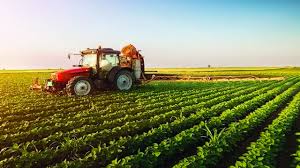
The primary purpose of evaluating agricultural projects is to determine whether they are profitable. Evaluation aids decision-makers in refining their judgment on investment decisions. Two critical decisions must be addressed:
i. The decision on whether to invest in an agricultural project.
ii. The decision on necessary arrangements for management, financial, and technical aspects.
When the decision to invest in an agricultural project is made, data on expected costs and returns are essential.
Read Also: Angelica Flowers – All you need to know
Costs on Agricultural Projects
🌿 Go Organic on Your Farm: Instead of harmful chemical pesticides and fertilisers, try our organic farming products — including neem oil spray, bio-pesticides, natural plant treatments, organic seeds and seedlings, suckers, and many more organic products that are safe for your health, your family, your soil and your harvest. Shop Now →
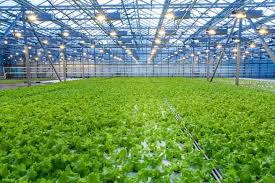
These are the expenditures incurred during the implementation of a project, and they fall into two categories: fixed and variable costs.
1. Fixed Cost: This refers to expenditures on durable assets such as vehicles, foundation stock, buildings, generating plants, lanterns, hoes, and cutlasses.
2. Variable Cost: These costs fluctuate with output levels and include labor, raw materials, fertilizer, feed, depreciation, maintenance, repair costs, selling, administration, taxes, and interest payments on borrowed funds.
🔧 Free Farm Tool Available: Use our free Agric4Profits Farm Tools to calculate your farm profits, formulate feeds, identify pests and diseases on both your crops and animal farms, plan your planting and harvesting season, including many more farm tasks to get free expert advice and recommendations — completely free, no registration required. Access Free Tools →
3. Total Cost: This is the sum of fixed and variable costs, including depreciation.
Depreciation
Depreciation accounts for the wear and tear of any fixed asset over its useful life. Once the useful life ends, the remaining value is termed as salvage value or junk value.
Depreciation largely depends on the intensity of asset usage. The straight-line method of depreciation is one common approach in project evaluation. For instance, if the useful life of an asset is five years and the purchase cost is N5,000.00, the annual depreciation is N5,000.00 ÷ 5 = N1,000/year.
Returns from the Agricultural Project
💬 Have a Farming Question? Join thousands of farmers across Africa on the Agric4Profits Community — ask questions, share experiences and connect with agricultural experts. It is completely free. Ask Your Question Now →
Returns are the benefits expected from the project, mainly products that the project yields. To maximize returns, several factors need to be considered:
1. Types of production undertaken, such as livestock, crop production, or fishery.
2. Quality of the products, for example, size categories such as small, medium, or large.
3. Quantity available for sale.
4. Quantity available for personal or home consumption.
5. Timing of marketing, especially during festive periods.
6. Price of the product.
Read Also: Proper Business Decision Making Process Guide
Key Evaluation Concepts in Agricultural Projects
📖 Want to Go Deeper on This Topic?
Our expert agricultural ebooks cover poultry, fish farming, different crops production, snail farming, organic farming, mushrooms, sheep, cattle, flowers, pig farming, goat farming, agribusiness, etc. in practical step-by-step detail — written by agricultural professionals for African farmers.
Browse All Farming Ebooks →1. Market Survey: This involves surveying the local, national, or international markets to compare the prices of inputs used in the agricultural project. It also helps in understanding labor wages and product prices. The cost of labor is referred to as wages.
2. Concept of Man-day: This is the number of hours an average person works per day, typically considered to be eight hours. Various factors influence this, such as age, physical stress, and alcohol consumption. In wage payments, the output of women and children is generally lower than that of adult males.
Therefore, one hour of a woman's work is considered to be 0.66 of an adult male’s output, while children's work is rated at 0.50 of an adult male’s output. However, it is worth noting that women may perform certain farm operations faster than men.
3. Price Rate: Workers are paid according to their capacity. For example, if 200 heaps cost N100.00 and a worker makes 600 heaps in a day, they will earn N100.00 x 3, which equals N300.00.
4. Stock: Unused stock should be valued at the prevailing market price, which is determined by multiplying the quantity by the unit price.
5. Point of First Sale: In agricultural projects, the ideal point for valuing output is at the farm gate, where the farmer sells the produce. The farm gate price reflects the price before any value-adding activities such as marketing or processing. These value-added costs are attributed to labor and capital involved in processing and selling the product.
6. Farm Gate Price: This is the price the farmer receives when selling produce at the boundary of the farm. Value is added during marketing and processing, which is shared between labor and capital engaged in these processes. The farm gate price is also used for valuing home-consumed production.
However, it may be skewed when part of the price is deducted for development purposes. During the era of marketing boards, the farm gate price was often significantly lower than international market prices for commodities like cocoa, coffee, and groundnuts. In such cases, evaluators may use the shadow price or opportunity cost.
7. Seasonal Fluctuation: Agricultural product and input prices fluctuate based on seasonal changes. The most suitable time for price analysis is during peak harvest periods. Grades must be considered, and the best price is the average price of various expected grades.
8. Inflation: It is advisable to make a contingency allowance for inflation, typically set at 10% of the total project cost.
Do you have any questions, suggestions, or contributions? If so, please feel free to use the comment box below to share your thoughts. We also encourage you to kindly share this information with others who might benefit from it. Since we can’t reach everyone at once, we truly appreciate your help in spreading the word. Thank you so much for your support and for sharing!
Read Also: Angelica Flowers – All you need to know
Frequently Asked Questions
We will update this section soon.
🌱 Take Your Farming Further With Agric4Profits
Based on what you just read, here are free resources and products from Agric4Profits that can help your farm right now:
- 🛒 Visit Our Marketplace — Organic neem oil, bio-pesticides, seeds and farming products
- 📚 Read Premium Content — Advanced guides for serious and profitable farming
- 🎓 Join Our Free Academy — Structured free training for farmers across Africa
- 🔧 Use Our Free Farm Tools — Profit calculators, feed formulation, pest identifier and more
- 💬 Join Our Farming Community — Connect with farmers across all 54 African countries
- ❓ Ask a Farming Question — Get answers from experienced farmers and agricultural experts
Please cite this content in academic work, research, or publications.