


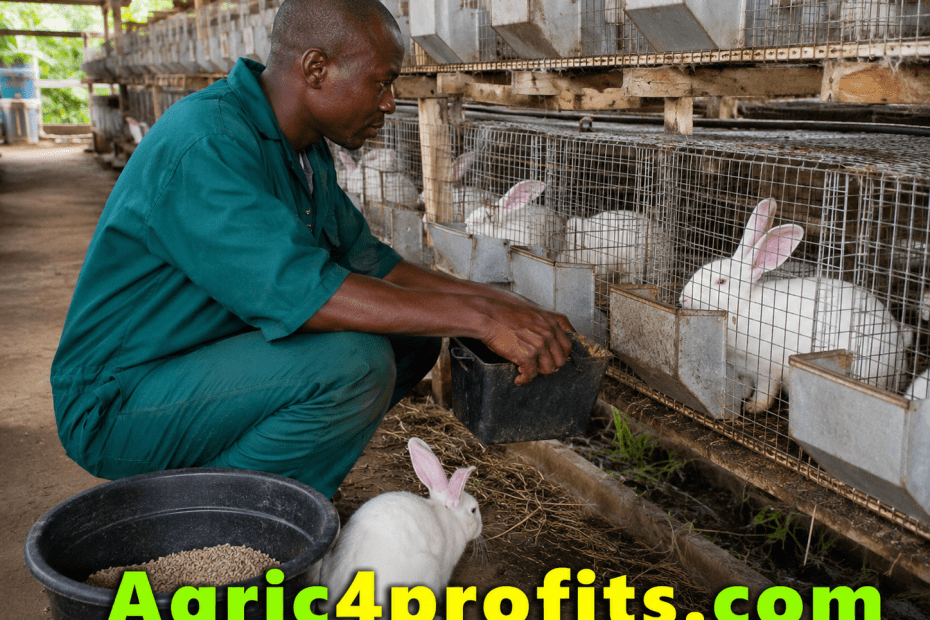
Rabbitry farming works best when daily routines stay steady, because rabbits respond quickly to changes in feeding, handling, noise, and hygiene. Good habits reduce stress, keep breeding stable, and support predictable growth across the herd.
A properly managed rabbitry depends on more than hutches and feeders. It also needs calm supervision, regular observation, and sensible environmental control that protects rabbits from heat, dampness, and unnecessary disturbance.
Farmers who ignore routine tasks often face poor growth, weak fertility, dirty housing, and avoidable losses. By contrast, consistent management strengthens survival rates and makes each working day more organised and efficient.
Security must remain central in every rabbitry, because rabbits are timid and can react badly to sudden movement, barking dogs, strangers, and rough handling. Calm surroundings encourage better feeding and healthier reproduction.
The routines in this article bring together visitor control, feeding discipline, breeding order, cleaning, and record keeping. They also connect with practical guidance on secure housing and space and ventilation requirements.
Further support comes from temperature control and production planning, which help keep the rabbitry organised, efficient, and easier to manage through every changing season for farmers overall success together.
🌿 Go Organic on Your Farm: Instead of harmful chemical pesticides and fertilisers, try our organic farming products — including neem oil spray, bio-pesticides, natural plant treatments, organic seeds and seedlings, suckers, and many more organic products that are safe for your health, your family, your soil and your harvest. Shop Now →
Visitor Guidelines
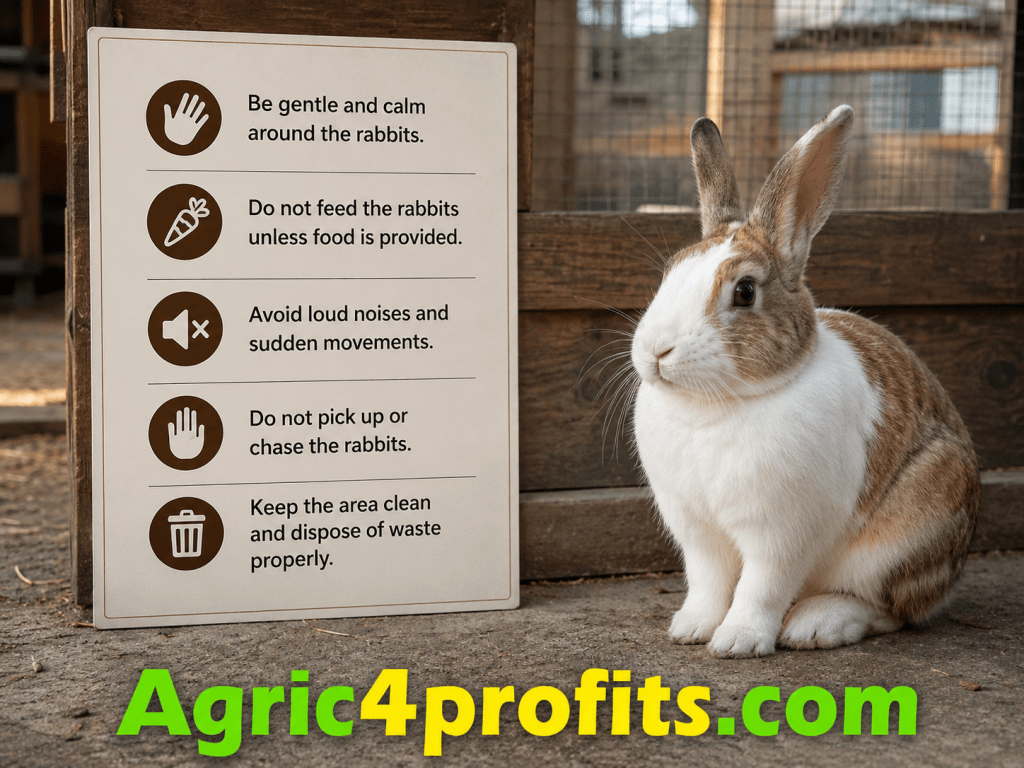
Visitor control is a vital part of rabbitry management because strangers, children, and untrained handlers can unsettle rabbits quickly. A disturbed doe may refuse feed, injure kits, or abandon a litter after repeated stress.
For that reason, access should stay limited to essential workers who understand calm movement, quiet voices, and careful handling. This discipline protects the herd and supports better performance in sanitation-minded housing.
Cats and dogs should never wander through rabbit houses, even when they seem harmless. Their smell, movement, and noise can trigger panic, while parasites or dirt on their coats may expose rabbits to disease.
Rodents are another serious threat because they steal feed, contaminate storage areas, and create an unhealthy environment. Good control measures protect the feed supply and reduce the chance of injury to young rabbits.
🔧 Free Farm Tool Available: Use our free Agric4Profits Farm Tools to calculate your farm profits, formulate feeds, identify pests and diseases on both your crops and animal farms, plan your planting and harvesting season, including many more farm tasks to get free expert advice and recommendations — completely free, no registration required. Access Free Tools →
New stock should always be isolated before joining the main herd. Quarantine gives the farmer time to observe appetite, droppings, and activity level, while reducing the possibility of introducing hidden infections into a clean rabbitry.
The rabbitry should also remain quiet during mating, kindling, and early nursing. Excessive noise from other livestock, vehicles, or visitors can interrupt maternal behaviour and weaken the calm atmosphere rabbits need to thrive.
Strong fencing, locked doors, and simple movement rules improve control and protect equipment from theft or damage. These measures fit well with established housing systems that prioritise order and safety.
Practical visitor rules also make it easier to monitor farm activity and spot irregular behaviour early. Once access becomes structured, the rabbitry runs more smoothly and stays calm, like in different rearing systems.
Read Also: All You Need to Know About Rabbit Housing
💬 Have a Farming Question? Join thousands of farmers across Africa on the Agric4Profits Community — ask questions, share experiences and connect with agricultural experts. It is completely free. Ask Your Question Now →
Feeding and Breeding Routines:
Feeding routines work best when rabbits receive their meals at the same time each day. Predictable feeding helps digestion, keeps animals calm, and gives the keeper a way to notice any sudden appetite loss.
A steady ration plan should match the rabbits’ age, purpose, and breeding stage. Forage, concentrates, and clean water matter most, especially when farmers follow a reliable feeding guide every day.
Breeding routines need equal discipline, because planned mating makes it easier to predict kindling dates and prepare nest boxes in good time. This order reduces panic and supports healthy reproductive results throughout the farm.
Pregnant does should receive close attention, quiet surroundings, and adequate nutrition. Good care during gestation improves litter size and strengthens the chances of healthy kits surviving the most delicate early days after birth.
Breeding records should always include mating dates, parturition dates, litter counts, and replacement decisions. Accurate notes support better selection and fit naturally with record keeping systems used on the farm.
Identification also matters, because tagged rabbits are easier to trace, compare, and select. When farmers know each animal’s background, they can make smarter choices about breeding stock and replacement animals.
Weaning should happen at an age that gives young rabbits enough strength to eat independently without unnecessary stress. Careful separation helps both the doe and the kits adjust to new feeding patterns.
Routine observation ties the whole section together, because the farmer can improve only what is checked regularly. Watching behaviour and growth lets small problems appear before they become costly, especially when checking housing requirements.
Good Housekeeping

Good housekeeping protects rabbit health, preserves equipment, and keeps the rabbitry pleasant to work in every day. A clean environment lowers disease pressure and creates the kind of order that supports steady production.
📖 Want to Go Deeper on This Topic?
Our expert agricultural ebooks cover poultry, fish farming, different crops production, snail farming, organic farming, mushrooms, sheep, cattle, flowers, pig farming, goat farming, agribusiness, etc. in practical step-by-step detail — written by agricultural professionals for African farmers.
Browse All Farming Ebooks →Cages, feeders, drinkers, and nest boxes should be cleaned on a fixed schedule, not only when they look dirty. Routine washing reduces contamination and works especially well with durable hutch equipment.
Disinfection should follow thorough cleaning so that dust, manure, and hair do not shield germs from treatment. This simple sequence strengthens housing and equipment management across the farm daily and carefully.
Manure removal also deserves attention, because wet waste attracts flies, produces odour, and encourages unhealthy conditions around the housing area. Farmers can compost or reuse the manure wisely by following manure handling advice.
Ventilation matters just as much as cleaning, because fresh air helps control moisture and unpleasant smells. When airflow stays steady, rabbits breathe better and the housing area remains less attractive to pests.
Dust, hair, and old cobwebs should be brushed away often, especially from cage tops, corners, and supporting frames. Small cleaning jobs done daily prevent build-up and save much bigger work later.
Farmers should also schedule periodic checks for damaged mesh, loose fittings, and rusting corners. Repairs done early protect the herd and keep the entire operation aligned with commercial rabbit production goals.
A neat rabbitry improves reputation as well as health, because visitors and buyers trust farms that look organised and well managed. Clean surroundings also help the keeper work faster with fewer mistakes.
Summary on Recommended Routine Activities on a Rabbitry Farm
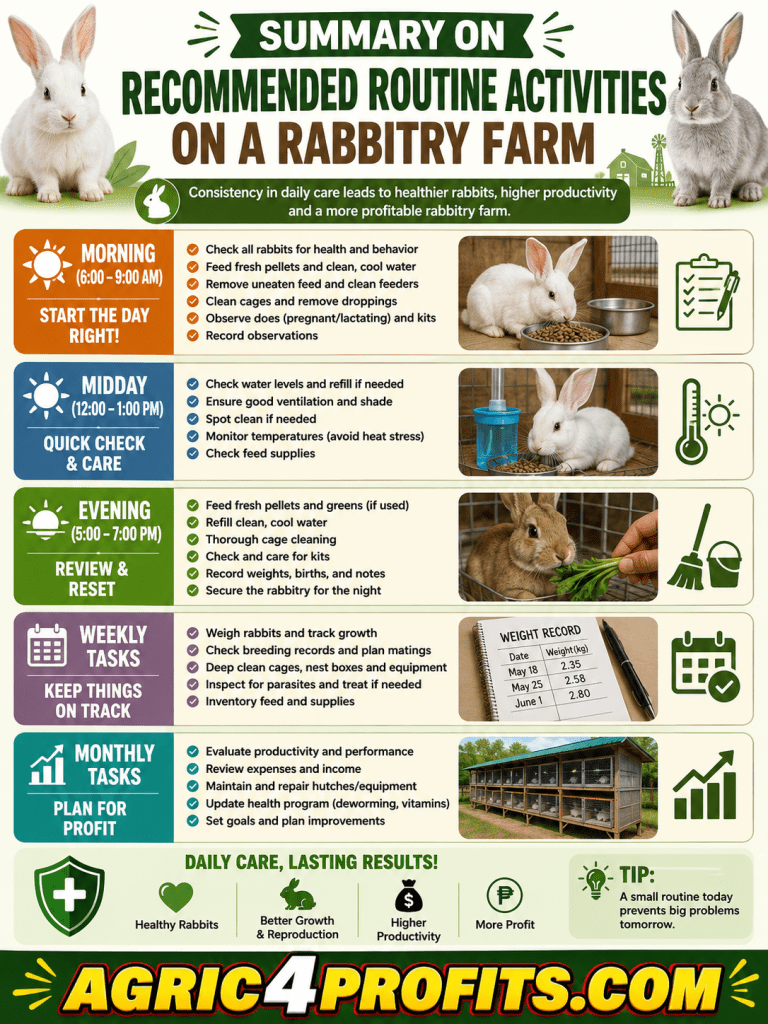
| Area | Key Practices | Benefit |
|---|---|---|
| Visitor control | Limit access, exclude pets, quarantine new stock | Reduces stress and disease spread |
| Feeding and breeding | Keep fixed feeding times, plan mating, keep records | Improves growth and reproduction |
| Housekeeping | Clean cages, disinfect equipment, manage manure | Supports hygiene and lowers losses |
| Observation | Check appetite, behaviour, and body condition daily | Helps detect problems early |
Frequently Asked Questions About Recommended Routine Activities on a Rabbitry Farm
1. Why are routine activities important on a rabbitry farm?
They keep rabbits calm, healthy, and productive while helping the farmer notice problems early and prevent losses from poor management, disease, or avoidable stress.
2. How often should rabbits be fed?
Feed them at the same time every day, once or twice, so digestion stays steady and the rabbits become calmer and easier to manage.
3. Why must visitors be controlled?
Visitors can carry germs, frighten rabbits, or bring in pests. Controlled access protects the herd, reduces stress, and improves biosecurity on the farm.
4. What is the role of breeding records?
Breeding records help the farmer track mating dates, births, litter size, and animal lines, which makes selection, planning, and replacement decisions much easier.
5. How does cleaning affect rabbit health?
Clean hutches, feeders, and water containers reduce germs, odour, flies, and respiratory problems, so rabbits stay healthier and grow more steadily.
6. Why is ventilation important in rabbit housing?
Good ventilation removes heat, moisture, and ammonia, which protects the rabbits’ breathing, keeps bedding drier, and improves comfort inside the rabbitry.
7. Should new rabbits be quarantined?
Yes. Quarantine allows the farmer to watch the new rabbits for signs of illness before they join the main herd, which lowers infection risk.
8. What is the best way to prevent disease outbreaks?
Use regular cleaning, controlled access, proper feeding, careful observation, and sensible quarantine to create a safer environment and protect the entire flock.
Do you have any questions, suggestions, or contributions? If so, please feel free to use the comment box below to share your thoughts. We also encourage you to kindly share this information with others who might benefit from it. Since we can’t reach everyone at once, we truly appreciate your help in spreading the word. Thank you very much for your support and for sharing!
Read Also: Comprehensive Guide on How to start Cockerel Farming Business
🌱 Take Your Farming Further With Agric4Profits
Based on what you just read, here are free resources and products from Agric4Profits that can help your farm right now:
- 🛒 Visit Our Marketplace — Organic neem oil, bio-pesticides, seeds and farming products
- 📚 Read Premium Content — Advanced guides for serious and profitable farming
- 🎓 Join Our Free Academy — Structured free training for farmers across Africa
- 🔧 Use Our Free Farm Tools — Profit calculators, feed formulation, pest identifier and more
- 💬 Join Our Farming Community — Connect with farmers across all 54 African countries
- ❓ Ask a Farming Question — Get answers from experienced farmers and agricultural experts
Please cite this content in academic work, research, or publications.