


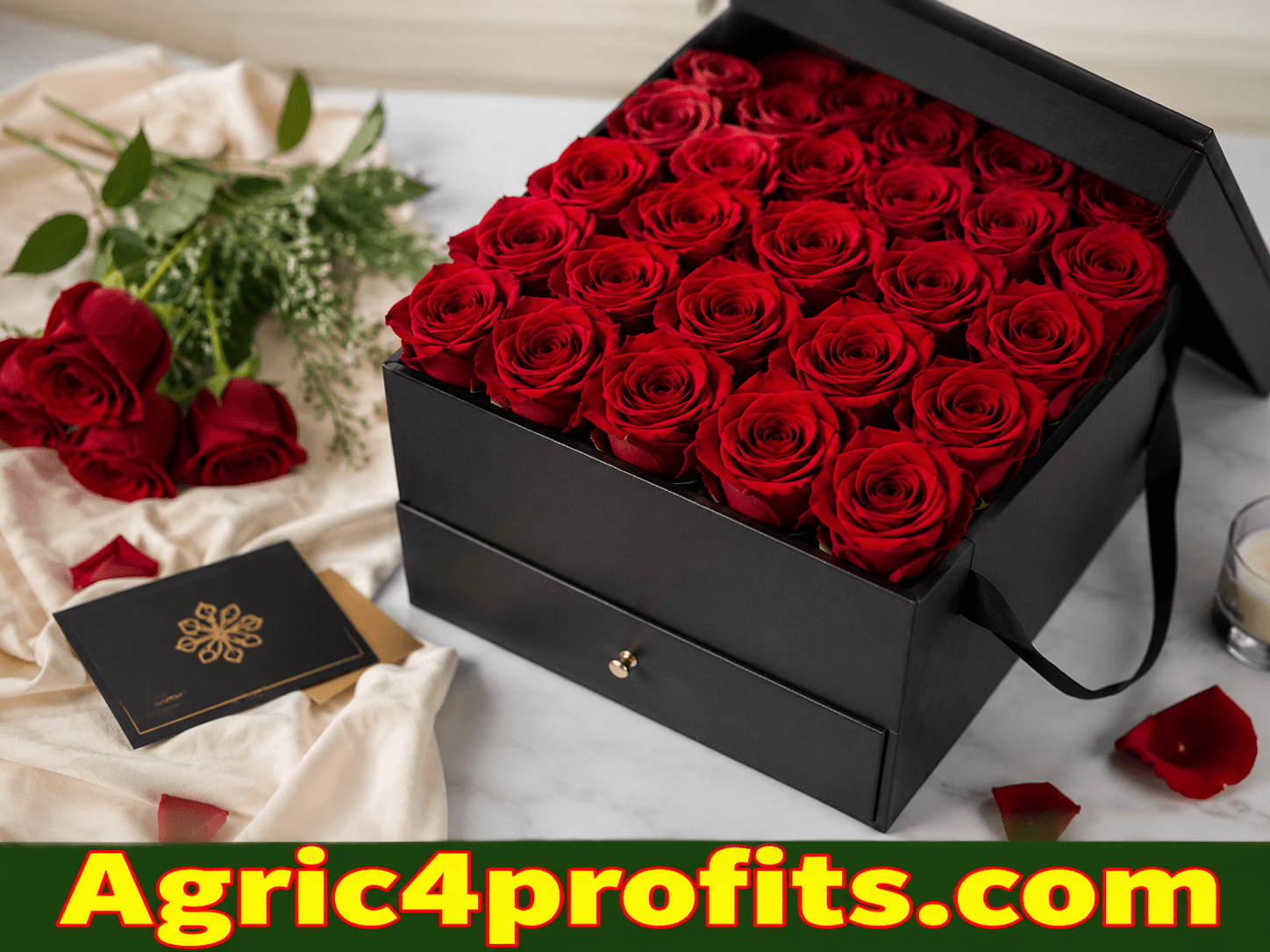
The rose box is an elegant floral arrangement that combines the timeless beauty of roses with modern presentation and preservation techniques, creating a memorable decorative gift for various occasions.
Roses have long represented love, admiration, affection, beauty, gratitude, and celebration across many cultures. A rose box transforms these familiar flowers into an arrangement designed for lasting visual appeal.
Unlike ordinary bouquets that gradually lose freshness after cutting, preserved roses can retain their attractive appearance considerably longer when processed and stored under suitable environmental conditions.
A rose box typically contains carefully selected roses arranged inside a decorative container. Depending on the design, the arrangement may feature fresh, dried, preserved, artificial, or specially treated roses.
The craftsmanship behind these arrangements involves selecting suitable flowers, arranging them carefully, choosing attractive colors, and protecting the finished display from excessive moisture, sunlight, dust, and physical damage.
Rose boxes are available in different shapes, colors, sizes, materials, and designs, allowing buyers to choose arrangements suitable for romantic celebrations, birthdays, anniversaries, weddings, memorials, business occasions, and personal decoration.
🌿 Go Organic on Your Farm: Instead of harmful chemical pesticides and fertilisers, try our organic farming products — including neem oil spray, bio-pesticides, natural plant treatments, organic seeds and seedlings, suckers, and many more organic products that are safe for your health, your family, your soil and your harvest. Shop Now →
For anyone interested in the flowers themselves, understanding rose cultivation and care provides useful background about the plants that supply many decorative rose arrangements.
The popularity of rose boxes also reflects the wider importance of flowers in horticulture, decoration, gifting, landscaping, and commerce. Roses remain particularly valuable because of their beauty and symbolism.
This article examines the history, significance, types, uses, presentation, preservation, and practical considerations associated with rose boxes, helping readers understand why these floral arrangements remain popular among consumers.
Whether purchased as a romantic gift or selected as an elegant decorative feature, a well-designed rose box combines floral artistry with presentation, creating an attractive keepsake that can carry sentimental meaning.
🔧 Free Farm Tool Available: Use our free Agric4Profits Farm Tools to calculate your farm profits, formulate feeds, identify pests and diseases on both your crops and animal farms, plan your planting and harvesting season, including many more farm tasks to get free expert advice and recommendations — completely free, no registration required. Access Free Tools →
History And Significance of Rose Box
The history of the rose box is closely connected with the long cultural history of roses, which have been cultivated, exchanged, displayed, and valued for beauty and symbolism for centuries.
Roses have appeared in gardens, ceremonies, literature, artwork, celebrations, and traditional practices across different societies. Their enduring popularity created a strong foundation for innovative floral presentation and gifting.
Traditional preservation methods included drying, pressing, and other techniques intended to extend floral usefulness. Modern preservation has introduced additional methods that can maintain selected characteristics of roses for longer periods.
Some commercially preserved roses undergo specialized treatments designed to reduce moisture and maintain their structure. The exact preservation process differs among producers, varieties, and intended products.
A rose box therefore represents both traditional floral appreciation and contemporary presentation. The container protects the arrangement while providing an attractive structure that complements the roses and enhances their visual impact.
💬 Have a Farming Question? Join thousands of farmers across Africa on the Agric4Profits Community — ask questions, share experiences and connect with agricultural experts. It is completely free. Ask Your Question Now →
The symbolism associated with rose boxes largely comes from the roses themselves. Different colors may communicate different sentiments, although interpretations vary according to culture, personal preference, and the occasion.
Red roses are especially associated with romantic love and passion, making them popular choices for anniversaries, proposals, Valentine's celebrations, and other occasions involving affection and emotional expression.
Readers interested in understanding this symbolism can explore the significance of individual roses to compare how a single bloom communicates meaning within floral gifting traditions.
Rose boxes may also communicate appreciation, friendship, sympathy, congratulations, or remembrance when appropriate colors and arrangements are selected. Their enclosed presentation can make the gift feel deliberate and carefully considered.
Beyond personal gifting, rose boxes have become part of modern event styling. Their structured presentation makes them suitable for tables, reception areas, wedding displays, hotel interiors, and carefully designed photographs.
The commercial significance of roses is also substantial within floriculture, where growers produce flowers for markets, florists, events, decoration, and other value-added applications that depend on consistent quality.
Those exploring this wider industry can read about commercial floriculture and its major flower types to understand the agricultural sector supporting floral businesses.
Rose boxes ultimately combine symbolism, horticultural products, craftsmanship, design, and commerce. Their appeal comes from transforming familiar roses into carefully arranged displays that preserve beauty and communicate meaningful emotions.
Read Also: Economic Importance, Uses, and By-Products of Grape Skin
📖 Want to Go Deeper on This Topic?
Our expert agricultural ebooks cover poultry, fish farming, different crops production, snail farming, organic farming, mushrooms, sheep, cattle, flowers, pig farming, goat farming, agribusiness, etc. in practical step-by-step detail — written by agricultural professionals for African farmers.
Browse All Farming Ebooks →Types of Rose Box
Rose boxes vary considerably in appearance, construction, flower arrangement, and intended purpose. Selecting a suitable type depends on personal taste, occasion, budget, available space, and desired presentation.
1. Classic Rose Box: This design usually features roses arranged neatly inside a square or rectangular container, creating a traditional appearance suitable for anniversaries, birthdays, gifts, and formal occasions.
2. Heart-Shaped Rose Box: Heart-shaped designs emphasize romantic symbolism by arranging roses within a recognizable heart form, making them especially suitable for proposals, anniversaries, Valentine's celebrations, and romantic surprises.
3. Round Rose Box: Round boxes provide a softer contemporary presentation, with roses arranged around the container to produce a balanced circular display suitable for celebrations, decoration, and thoughtful gifting.
4. Personalized Rose Box: Personalized arrangements may include names, initials, dates, photographs, messages, or decorative details, allowing the sender to create a gift connected closely with the recipient.
5. Mixed Flower Rose Box: This arrangement combines roses with complementary flowers, foliage, or decorative elements, creating additional texture, color variation, and visual complexity within the finished floral display.
6. Signature Collection Rose Box: Florists and floral designers may create signature collections featuring distinctive arrangements, specialized packaging, unusual color combinations, premium flowers, or recognizable design styles associated with their business.
7. Custom Rose Box: Custom designs allow customers to select preferred colors, flower quantities, box shapes, messages, decorations, and presentation styles, resulting in arrangements created for individual preferences.
8. Preserved Rose Box: Preserved rose boxes use specially treated roses designed to retain attractive characteristics longer than ordinary fresh bouquets when kept under suitable storage and environmental conditions.
9. Fresh Rose Box: Fresh rose boxes use recently harvested roses arranged inside decorative containers. Because the flowers remain perishable, they require appropriate hydration, temperature management, and timely enjoyment.
10. Luxury Rose Box: Luxury designs generally emphasize premium packaging, carefully selected flowers, sophisticated arrangements, decorative accessories, and personalized presentation intended for important celebrations or high-value gifting.
The diversity of rose arrangements reflects the broader range found throughout ornamental horticulture. Information about red rose characteristics and cultivation can help readers understand one particularly popular rose category.
Rose boxes may also be compared with other flower arrangements to understand differences in shape, symbolism, color, longevity, and decorative purpose. Different flowers create distinctive effects depending on their characteristics.
For example, readers can explore tulip bouquet arrangements when comparing how different flowers can be presented attractively for gifts, events, and decorative displays.
The choice of rose box should therefore consider the recipient, intended message, expected display period, environmental conditions, and practical handling requirements rather than appearance alone.
Read Also: German Shepherd Dogs Description and Complete Care Guide
Uses of Rose Box
Rose boxes have numerous decorative, social, commercial, and gifting applications. Their structured presentation makes them suitable for situations where flowers are intended to create a memorable visual and emotional impression.
1. Romantic Gifts: Rose boxes are commonly used to communicate love, affection, appreciation, and romantic interest. Red arrangements are particularly suitable for anniversaries, proposals, Valentine's celebrations, and intimate occasions.
2. Birthday Celebrations: A carefully selected rose box can become a memorable birthday gift, especially when personalized colors, messages, photographs, or decorative elements are incorporated into the arrangement.
3. Weddings: Rose boxes can contribute to wedding decoration by serving as table centerpieces, reception displays, entrance decorations, gift arrangements, or coordinated floral features throughout the venue.
4. Anniversaries: Because roses commonly represent affection and lasting emotional connections, rose boxes can provide anniversary gifts that combine attractive presentation with sentimental value.
5. Sympathy Gifts: Carefully chosen rose arrangements may communicate compassion, remembrance, and emotional support during difficult moments, particularly when their colors and presentation suit the occasion.
6. Home Decoration: Rose boxes can add color, texture, elegance, and visual interest to living rooms, bedrooms, offices, reception areas, dining spaces, shelves, tables, and carefully styled interiors.
7. Event Styling: Event planners can incorporate rose boxes into celebrations, launches, dinners, exhibitions, parties, receptions, photographs, and branded decorative installations where flowers contribute to the desired atmosphere.
8. Corporate Gifts: Businesses may use premium floral arrangements to recognize clients, appreciate employees, celebrate partnerships, commemorate achievements, welcome guests, or strengthen relationships during important corporate occasions.
9. Proposals: A heart-shaped or personalized rose box can support a marriage proposal by creating an attractive presentation around the symbolic moment and making the experience highly memorable.
10. Photography: Rose boxes can serve as attractive props for wedding photographs, product photography, social media content, portraits, promotional campaigns, and other visual projects requiring recognizable floral decoration.
The uses of rose boxes are connected with broader flower production and presentation systems. Readers can learn more through practical flower cultivation techniques and production considerations.
Proper flower production influences the quality of materials available to florists, decorators, and retailers. Selection, harvesting, handling, packaging, and storage can all influence the appearance of finished floral products.
For commercial operations, understanding cut-flower production principles can provide useful context about the agricultural processes supporting floral markets and arrangements.
Rose boxes can also form part of value-added floral businesses where growers, florists, designers, retailers, and event professionals transform flowers into higher-value products for specific consumer markets.
Readers interested in Nigerian opportunities may explore Nigeria's floriculture industry and its opportunities to understand the wider economic potential surrounding ornamental flower production.
Beyond roses, other flowers can provide alternative arrangements, color combinations, and decorative textures. Exploring orchid flowers and their growing requirements demonstrates the diversity available within ornamental horticulture.
Dahlias provide another example of ornamental diversity, especially because their flower forms and colors vary widely. Their cultivation information is available through this practical dahlia guide for comparison.
Chrysanthemums are also important ornamental flowers used in gardens, floral displays, and decorative arrangements. Readers can compare them with roses through this chrysanthemum growing and care resource available on Agric4Profits.
Flower growers and decorators can further strengthen their knowledge by studying flower care for household and commercial production, particularly when managing different species and production objectives.
The continued popularity of rose boxes demonstrates how horticultural products can gain additional value through preservation, presentation, branding, personalization, and thoughtful design for consumers seeking meaningful floral experiences.
Summary on Rose Box: All You Need To Know About
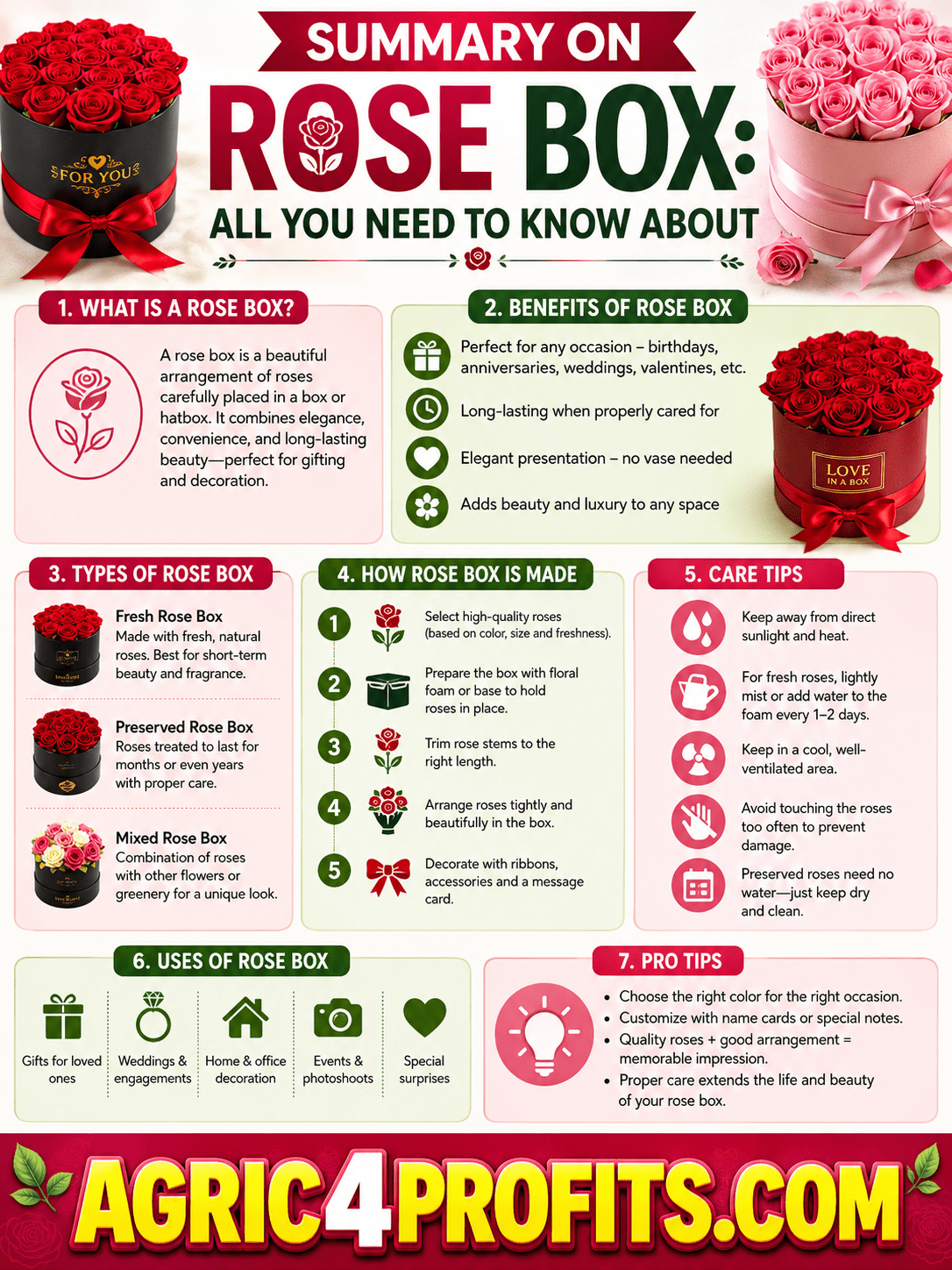
| Topic | Summary |
|---|---|
| Meaning | A rose box is a decorative floral arrangement presented inside a box or container. |
| Main Flowers | Roses are the primary flowers, although some designs incorporate complementary flowers and foliage. |
| Preservation | Some rose boxes contain specially preserved roses designed to retain their appearance longer than ordinary fresh bouquets. |
| Common Shapes | Popular designs include square, rectangular, round, heart-shaped, personalized, and custom arrangements. |
| Main Symbolism | Rose boxes can communicate love, romance, appreciation, sympathy, remembrance, beauty, and celebration. |
| Romantic Uses | They are commonly used for proposals, anniversaries, Valentine's celebrations, and other romantic occasions. |
| Decorative Uses | Rose boxes can decorate homes, offices, weddings, reception areas, events, photography sets, and commercial spaces. |
| Commercial Importance | Rose boxes provide opportunities for florists, growers, retailers, designers, event planners, and floral businesses. |
| Care Considerations | Preserved arrangements should generally be protected from excessive moisture, strong sunlight, dust, and physical damage. |
| Selection Factors | Buyers should consider the occasion, flower type, color, design, preservation method, budget, and recipient preferences. |
Frequently Asked Questions About Rose Box: All You Need To Know About
1. What is a rose box?
A rose box is a floral arrangement featuring roses carefully displayed inside a decorative container, with designs ranging from simple fresh arrangements to elaborate preserved floral presentations.
2. How long can a rose box last?
The lifespan depends on whether the roses are fresh, dried, artificial, or preserved, as well as preservation quality and storage conditions. Properly preserved arrangements can remain attractive substantially longer.
3. What occasions are suitable for giving a rose box?
Rose boxes are suitable for anniversaries, birthdays, weddings, proposals, Valentine's celebrations, graduations, sympathy occasions, corporate recognition, housewarmings, and many other meaningful events.
4. What color roses are best for a romantic rose box?
Red roses are traditionally associated with romantic love and passion, while pink, white, yellow, and other colors can communicate affection, appreciation, friendship, purity, or celebration.
5. Can rose boxes be used for home decoration?
Yes. Rose boxes can provide attractive decorative features for tables, shelves, bedrooms, living rooms, offices, reception areas, and other spaces where floral displays are appropriate.
6. Are preserved roses better than fresh roses for a rose box?
Neither option is universally better because the choice depends on the purpose. Fresh roses provide natural freshness, while preserved roses offer longer-lasting decorative appeal under appropriate conditions.
7. How should a preserved rose box be maintained?
Keep preserved rose boxes away from excessive moisture, direct sunlight, dust, high humidity, and rough handling. Follow the supplier's care instructions because preservation treatments differ among products.
8. Can rose boxes contain flowers other than roses?
Yes. Some designs combine roses with complementary flowers, foliage, ribbons, decorative materials, or other elements to create additional texture, color variation, and visual interest.
9. Can rose boxes be personalized?
Yes. Personalization may include names, initials, photographs, dates, messages, preferred colors, specific rose quantities, distinctive containers, and decorative elements selected for the intended recipient.
10. Can rose boxes become a profitable floral business?
Yes. Rose boxes can support value-added floral businesses when entrepreneurs combine reliable flower sourcing, attractive designs, preservation knowledge, quality packaging, effective marketing, pricing, and dependable customer service.
Do you have any questions, suggestions, or contributions? If so, please feel free to use the comment box below to share your thoughts. We also encourage you to kindly share this information with others who might benefit from it. Since we can’t reach everyone at once, we truly appreciate your help in spreading the word. Thank you very much for your support and for sharing!
Read Also: The Power of Incineration
🌱 Take Your Farming Further With Agric4Profits
Based on what you just read, here are free resources and products from Agric4Profits that can help your farm right now:
- 🛒 Visit Our Marketplace — Organic neem oil, bio-pesticides, seeds and farming products
- 📚 Read Premium Content — Advanced guides for serious and profitable farming
- 🎓 Join Our Free Academy — Structured free training for farmers across Africa
- 🔧 Use Our Free Farm Tools — Profit calculators, feed formulation, pest identifier and more
- 💬 Join Our Farming Community — Connect with farmers across all 54 African countries
- ❓ Ask a Farming Question — Get answers from experienced farmers and agricultural experts
Please cite this content in academic work, research, or publications.