


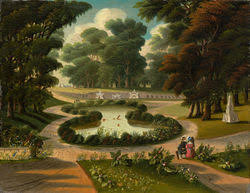
A landscape is the visible features of an area of land, its landforms, and how they integrate with natural or man-made features.
Landscaping is the art and science of developing the outdoor environment using soft landscaping (e.g. ornamental plants) and hardscapes (e.g. non-plant objects) components to serve the needs and desires of people.It serves a number of purposes, such as aesthetic and functional purposes.
The outdoor surroundings could be designed with natural or man-made components/materials/objects (i.e. it could be natural or artificial). Landscaping involves design, construction and maintenance of landscapes.
Nowadays, landscaping business is fashionable and there is an influx of all sorts of people into the profession, having seen it as an avenue to make quick money.
There is, generally, limited concern for landscape planning and management in Nigeria, most importantly from government with the exception of few state governments, who recently seem to brace up to the challenges of creating a beautiful and welcoming environment.
Horticulture is a dynamic industry with a great economic global track record. McCaffrey (2012), stated that “horticulturalists provide food to feed the world, beautify our neighbourhoods, decorate our gardens, and give ambience and wellbeing by combining the energy of the sun with soil, seeds, water and ingenuity”.
🌿 Go Organic on Your Farm: Instead of harmful chemical pesticides and fertilisers, try our organic farming products — including neem oil spray, bio-pesticides, natural plant treatments, organic seeds and seedlings, suckers, and many more organic products that are safe for your health, your family, your soil and your harvest. Shop Now →
Horticulture has many components which include vegetables, flowers, fruits, spices and essential oils, turf grasses, edible fungi, nutraceutical plants, landscape and green spaces.
Scope of Landscaping in Agriculture
Landscape, by its very nature, encompasses all other specialist sections of amenity horticulture in one form or the other.
It includes the design, construction, maintenance and management of landscape features. Knowledge of floriculture, landscape architecture, and engineering are usually important.
🔧 Free Farm Tool Available: Use our free Agric4Profits Farm Tools to calculate your farm profits, formulate feeds, identify pests and diseases on both your crops and animal farms, plan your planting and harvesting season, including many more farm tasks to get free expert advice and recommendations — completely free, no registration required. Access Free Tools →
Read Also: 16 Medicinal Health Benefits Of Scleromitrion diffusum (Spreading Diamond Flower)
Historical Sketches of Landscaping Development in Nigeria
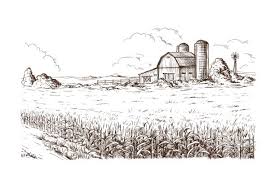
Landscaping is an important sector which has expanded and still expanding in recent years in Nigeria. Despite this development, it is by no means comparable to what is obtainable in the developed countries in terms of development, quality, patronage and boom experienced in the landscape horticulture industry.
People have designed gardens throughout the recorded history. Thousands of years ago in Egypt and Babylon, there were planted architectural structures.
💬 Have a Farming Question? Join thousands of farmers across Africa on the Agric4Profits Community — ask questions, share experiences and connect with agricultural experts. It is completely free. Ask Your Question Now →
The roots of renaissance garden extend back to the tradition of antiquity, especially those of ancient Rome. To the self-conscious revival of the idea of Vitruvius and Pliny, there was added the influence of Islamic world and medieval theory and practice.
The use of water and fountains and organization of garden into geometric quarters were part of wider inheritance.
In Nigeria, from time immemorial, people consciously or unconsciously add physiographic and environmental characteristics to the land around them either for aesthetic gratification and or environmental enrichment and protection.
Traditionally, people keep garden and trees around their buildings. Though, the experience of the colonial era did little to influence creation and preservation of beauty in the surroundings as it was in Francophone countries.
Nevertheless, the inception of colonialism changed the trends of events as concerted efforts were made to formally landscape some public buildings, government reservation areas (GRAs), institutions of higher learning, and sport fields which marked the beginning of organized/formal landscaping in Nigeria.
Missionaries (Christian) also established plants in churches and schools. Some individuals copied this idea and planted some ornamental plants in their surroundings.
Reasons for Landscaping in Agricultural Environment
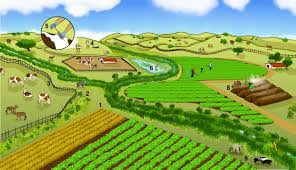
Basically, if human beings had never altered the natural world, there would be no need for designers. Nature is such a perfect designer that left unchanged by human beings, the earth’s beauty and natural system would never have required improvement.
📖 Want to Go Deeper on This Topic?
Our expert agricultural ebooks cover poultry, fish farming, different crops production, snail farming, organic farming, mushrooms, sheep, cattle, flowers, pig farming, goat farming, agribusiness, etc. in practical step-by-step detail — written by agricultural professionals for African farmers.
Browse All Farming Ebooks →This idea is, however, not realistic in the modern world. Therefore, some of the reasons why landscaping is important are:
1. Aesthetic/Beautification of environment: which is the primary purpose of landscaping;
2. Engineering purpose: e.g. protection of structures against environmental hazards such as rain storms etc.
3. Architectural purpose: e.g. re-integration of structures into the natural environment
4. Biological purpose: e.g. improves the micro-climate (environment), absorbs dust, noise, pollutants and assists in air purification.
5. Ecological purpose: e.g. some ornamental plants can be used to solve ecological problems such as flooding, to control erosion and absorb chemical from soil (oil spillage).
6. Economic purpose: e.g. creation of job opportunities, add value to property, creates wealth for plant growers and government (taxes, foreign exchange), beautiful environment also attracts tourists and investors.
7. Social purpose: e.g. landscaped areas are useful as recreation and relaxation venues (parks), sporting arenas (polo, football fields), and symbols of affluence/wealth.
8. Nutritional/Medicinal purpose: e.g. some plants used primarily for landscaping could also be used for food (fruits and vegetables) and medicines, plants have therapeutic effect on patients etc.
9. Environmental control: in prevention of hazards such as windbreaks, shade trees for guide against sun glares, etc.
10. Urban forestry: in the integration of forest resources into urban areas by town planners and foresters, provision of shelter belts, and firewood, etc.
Read Also: 12 Medicinal Health Benefits Of Renealmia alpinia (Pink cone ginger)
Natural Versus Man-Made (Artificial) Landscaping in Agriculture
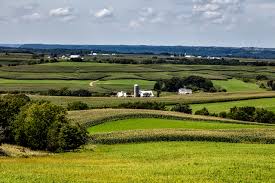
The outdoor surrounding of landscaping could be designed with natural or man-made components or materials i.e. it could be natural or artificial.
1. Natural Landscape in Agricultural Setting
A natural landscape is a landscape that is unaffected by human activities. It may contain components that are living or non-living or both. Natural landscape remains intact if the living and non-living of the natural environment are free to move and change.
A natural landscape is made up of a collection of landforms, such as mountains, hills, plains, and plateaus. Lakes, streams, soils (such as sand or clay), and natural vegetation are other features of natural landscapes. A desert landscape, for instance, usually indicates sandy soil and few deciduous trees.
Today no place on earth is unaffected by human activities. Thus landscapes tend to vary in their degree of naturalness. Therefore, classifications have been made into four types:
1. Natural landscape: a natural landscape is one that is unaffected by human activity;
2. Sub-natural landscape: a sub-natural landscape is one where if human activity was removed it would go back to a normal state;
3. Semi-natural landscape: a semi-natural landscape is one that has been drastically modified by human activity but has some natural elements left intact;
4. Agricultural landscape: an agricultural landscape is one that has been totally altered and arranged by human activity - very little if any naturalness is left.
Examples of natural landscape in Nigeria are; natural surrounding such as forest or desert, rocks (e.g. Olumo rock, Zuma rock), Erin Ijesa waterfalls, Ikogusi warm/cold spring, plateau in Jos, Mambila etc.
2. Artificial Landscape in Agricultural Environment
Nowadays, it is common to see large quantities of artificial plants (trees, palms, lawns) being used for landscaping. Though, it will not and cannot replace the natural plants in their effects and functions on the landscape, but could also add to the beauty of the environment.
It has the advantage of low maintenance in terms of watering, fertilizer application, mowing in case of lawns and turfs, trimming/pruning and so on. Other items in artificial designs include the use of art works, concrete benches and tables, water bodies such as water fountains, artificial springs, etc.
A man-made landscape once created, needs constant care and maintenance. Some landscape elements get worn out and destroyed over a period of time, and need to be replaced.
Weeds should be periodically removed. Proper watering of plants should be done. Cutting and pruning must be carried out periodically. All this involves cost and skill.
Landscaping is an important sector which has expanded and is still expanding in recent years in Nigeria. It involves design, construction and maintenance of landscapes and requires expertise in horticulture and artistic design.
Horticulturalists provide food to feed the world, beautify our neighbourhoods, decorate our gardens, and give ambience and wellbeing by combining the energy of the sun with soil, seeds, water and ingenuity.
Do you have any questions, suggestions, or contributions? If so, please feel free to use the comment box below to share your thoughts. We also encourage you to kindly share this information with others who might benefit from it. Since we can’t reach everyone at once, we truly appreciate your help in spreading the word. Thank you so much for your support and for sharing!
Frequently Asked Questions
We will update this section soon.
🌱 Take Your Farming Further With Agric4Profits
Based on what you just read, here are free resources and products from Agric4Profits that can help your farm right now:
- 🛒 Visit Our Marketplace — Organic neem oil, bio-pesticides, seeds and farming products
- 📚 Read Premium Content — Advanced guides for serious and profitable farming
- 🎓 Join Our Free Academy — Structured free training for farmers across Africa
- 🔧 Use Our Free Farm Tools — Profit calculators, feed formulation, pest identifier and more
- 💬 Join Our Farming Community — Connect with farmers across all 54 African countries
- ❓ Ask a Farming Question — Get answers from experienced farmers and agricultural experts
Please cite this content in academic work, research, or publications.