


In this article, an attempt is made to explain some basic concepts in soil chemistry. These are important soil chemical processes that take place in the soil. They determine soil properties and also affect the performance of crops.
Buffering Capacity in Soil pH Regulation
A buffer solution is defined as that which resists a change in pH on addition of acid or alkali. Buffer solutions contain compounds that react with both acid and base so that the H⁺ ion concentration in the solution remains constant.
In soil, clay and humic fractions act as a buffer system. The potential acidity is in equilibrium with active acidity. If the active acidity is neutralized by the addition of lime, the potential acidity will release exchangeable H⁺ ions into solution to restore equilibrium. Buffering capacity is greater in clay soils than in sandy soils.
Soil Alkalinity and Its Impact on Crop Growth
The degree or intensity of alkalinity in a soil is expressed by a value >7.0 for the soil pH. A soil is described as alkali if (i) it has a pH of 8.5 or higher or an exchangeable sodium percentage greater than 0.15 (ESP>15), (ii) it contains sufficient sodium to interfere with the growth of most crop plants.
Read Also: Poultry External Parasites and Control Measures
Characteristics of Alkaline Soils
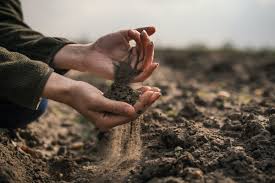
These soils contain high exchangeable Na. If sodium is more than 15% of ions retained on the clay complex, the soil is then considered alkaline soil or sodic soil. Such soils are very hard and cloddy when dry.
🌿 Go Organic on Your Farm: Instead of harmful chemical pesticides and fertilisers, try our organic farming products — including neem oil spray, bio-pesticides, natural plant treatments, organic seeds and seedlings, suckers, and many more organic products that are safe for your health, your family, your soil and your harvest. Shop Now →
In these soils, water intake is severely restricted. The soil pH is often above 9, and sometimes plant imbalance occurs. The problem is solved by adding gypsum or CaCl₂ (faster but expensive).
Saline Soils and Their Effects on Crop Performance
These soils have excessive amounts of water-soluble salts that adversely affect seed germination and plant growth. These salts are usually white in color, chemically neutral, and include Cl⁻, SO₄²⁻, and sometimes NO₃⁻ of Ca, Mg, Na, and K.
No chemical amendments, conditioners, or fertilizers will ameliorate this condition. The only remedy is leaching the salts beyond the root zone of crops.
A non-sodic soil with high soluble salts adversely affects the growth of most crop plants. Salinity is measured in terms of electrical conductivity of soil extract.
🔧 Free Farm Tool Available: Use our free Agric4Profits Farm Tools to calculate your farm profits, formulate feeds, identify pests and diseases on both your crops and animal farms, plan your planting and harvesting season, including many more farm tasks to get free expert advice and recommendations — completely free, no registration required. Access Free Tools →
The lower limit of saturation extract electrical conductivity of such soils is conventionally set at 4 dS m⁻¹ (at 25°C).
Read Also: Poultry External Parasites and Control Measures
Sodic Soils and Their Impact on Soil Structure
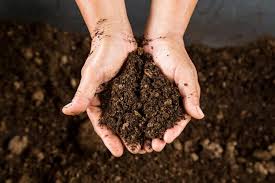
A non-saline soil that contains such a high level of exchangeable sodium as to adversely affect crop production and soil structure under most conditions of soil and plant type. The exchangeable sodium percentage (ESP) is at least 15.
Saline-Sodic Soils and Management Challenges
A soil containing sufficient exchangeable sodium to interfere with the growth of most crop plants and containing appreciable quantities of soluble salts.
The exchangeable sodium ratio is greater than 0.15, conductivity of the soil solution, at saturated water content, is >4 dS m⁻¹ (at 25°C), and the pH is usually 8.5 or less in the saturated soil.
💬 Have a Farming Question? Join thousands of farmers across Africa on the Agric4Profits Community — ask questions, share experiences and connect with agricultural experts. It is completely free. Ask Your Question Now →
Saline-Alkali Soils and Remediation Strategies
These contain high amounts of soluble salts as well as more than 15% Na. They have the characteristics of the two sets discussed above. The problem is solved by leaching the soil with good quality water and adding gypsum or CaCl₂.
Measurement of Soil Salinity in Agriculture
This is achieved by making a saturated paste of the soil and measuring the electrical conductivity. This is expressed in terms of decisiemens per meter (dS/m), formerly millimhos per centimeter (1 dS/m = 1 mmho/cm).
Causes of Soil Salinity in Agricultural Systems
- Natural causes due to salty groundwater and poor soil drainage.
- Man-made causes due to usage of salty irrigation water and poor management of the soil.
The larger the buffer capacity, the larger the amount of lime needed to raise the soil pH to the desired level. Soil buffering capacity can also be the ability of the soil to act as a filter for dissolved and colloidal contaminants.
Buffering capacity, soil salinity, alkalinity, and sodicity are important soil chemical processes that take place in the soil, influencing soil properties and crop performance.
Do you have any questions, suggestions, or contributions? If so, please feel free to use the comment box below to share your thoughts. We also encourage you to kindly share this information with others who might benefit from it. Since we can’t reach everyone at once, we truly appreciate your help in spreading the word. Thank you so much for your support and for sharing!
🌱 Take Your Farming Further With Agric4Profits
Based on what you just read, here are free resources and products from Agric4Profits that can help your farm right now:
- 🛒 Visit Our Marketplace — Organic neem oil, bio-pesticides, seeds and farming products
- 📚 Read Premium Content — Advanced guides for serious and profitable farming
- 🎓 Join Our Free Academy — Structured free training for farmers across Africa
- 🔧 Use Our Free Farm Tools — Profit calculators, feed formulation, pest identifier and more
- 💬 Join Our Farming Community — Connect with farmers across all 54 African countries
- ❓ Ask a Farming Question — Get answers from experienced farmers and agricultural experts
Please cite this content in academic work, research, or publications.