


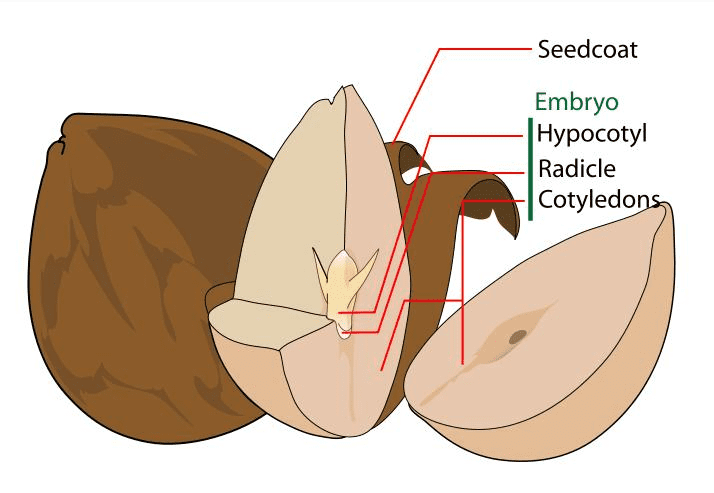
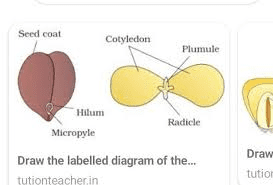
Almond cotyledons are oval-shaped and flattened, with a length of 2-3 centimeters and a width of 1-2 centimeters. They are light beige in color and have a smooth, slightly shiny surface. The cotyledons are separated by a thin, papery layer called the hilum. On one end of the cotyledons, there is a small, round scar called the micropyle, which was the point of entry for the pollen tube during fertilization.
The cotyledons are composed of several layers of cells, including the epidermis, mesophyll, and endosperm. The epidermis is the outermost layer of cells, which protects the cotyledons from external damage and water loss.
The mesophyll is the main tissue of the cotyledons, which contains numerous chloroplasts and is responsible for photosynthesis. The endosperm is a nutrient-rich tissue that surrounds the embryo and provides it with the necessary nutrients for germination.
Almond cotyledons are a rich source of nutrients, including protein, carbohydrates, fiber, and healthy fats. They are also a good source of vitamins and minerals, such as vitamin E, magnesium, and potassium. The protein content of almond cotyledons is around 20-25%, making them a popular source of plant-based protein.
Almond cotyledons also contain several bioactive compounds, such as polyphenols, flavonoids, and phytosterols, which have been shown to have antioxidant, anti-inflammatory, and cholesterol-lowering properties. These compounds are mainly concentrated in the outer layer of the cotyledons, which is why blanched almonds have a lower antioxidant content compared to unblanched almonds.
Almond cotyledons are a versatile ingredient used in many culinary applications, such as baking, snacking, and cooking. They can be eaten raw or roasted, and are commonly used to make almond butter, almond milk, and almond flour. Almond cotyledons are also used in the confectionery industry to make marzipan and nougat.
🌿 Go Organic on Your Farm: Instead of harmful chemical pesticides and fertilisers, try our organic farming products — including neem oil spray, bio-pesticides, natural plant treatments, organic seeds and seedlings, suckers, and many more organic products that are safe for your health, your family, your soil and your harvest. Shop Now →
Apart from their culinary uses, almond cotyledons are also used in the cosmetic and pharmaceutical industries. Almond oil, which is extracted from the cotyledons, is a popular ingredient in skincare products, due to its emollient and moisturizing properties. Almond oil is also used in massage therapy and aromatherapy, due to its pleasant aroma and therapeutic effects.
Almond cotyledons are an important part of the almond fruit, which is valued for its taste, nutrition, and health benefits. The scientific description of almond cotyledons provides valuable insights into their morphology, anatomy, chemical composition, and uses.
Whether you enjoy them as a snack, use them in your favorite recipes, or use them in your skincare routine, almond cotyledons are a versatile and nutritious ingredient that can bring many benefits to your life.
The Economic Importance and Uses of Almond Cotyledons
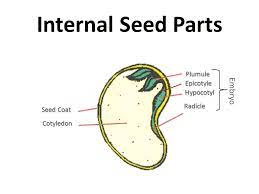
Almond cotyledons are the embryonic leaves of the almond tree, which is native to the Mediterranean region and is now widely grown in many parts of the world. The cotyledons are used in various industries due to their economic importance and multiple uses. Here are 18 ways in which almond cotyledons are used:
🔧 Free Farm Tool Available: Use our free Agric4Profits Farm Tools to calculate your farm profits, formulate feeds, identify pests and diseases on both your crops and animal farms, plan your planting and harvesting season, including many more farm tasks to get free expert advice and recommendations — completely free, no registration required. Access Free Tools →
1. Food Industry: Almond cotyledons are used in food products such as almond milk, almond butter, and almond flour.
2. Cosmetics: Almond cotyledons are used in the production of cosmetics such as lotions, creams, soaps, and shampoos.
3. Pharmaceutical Industry: Almond cotyledons are used to make medicines for various ailments, including digestive problems, constipation, coughs, and colds.
4. Animal Feed: Almond cotyledons are used as a source of protein and energy in animal feed.
5. Biofuels: Almond cotyledons can be used to produce biofuels such as biodiesel.
💬 Have a Farming Question? Join thousands of farmers across Africa on the Agric4Profits Community — ask questions, share experiences and connect with agricultural experts. It is completely free. Ask Your Question Now →
6. Fertilizers: Almond cotyledons are used in the production of fertilizers.
7. Textile Industry: Almond cotyledons are used for dyeing textiles, as the natural dyes produced from the cotyledons are non-toxic and eco-friendly.
8. Paper Industry: Almond cotyledons are used in the paper industry to produce high-quality paper.
9. Soap Production: Almond cotyledons are used in soap production to add texture and moisture.
10. Flavoring Agents: Almond cotyledons are used as a flavoring agent in various food products, including desserts, cakes, and cookies.
11. Aromatherapy: Almond cotyledons are used in aromatherapy, as the essential oil derived from the cotyledons is known to have a calming effect.
12. Insecticides: Almond cotyledons can be used as a natural insecticide to control pests in gardens and farms.
13. Water Treatment: Almond cotyledons can be used to treat water, as the cotyledons have the ability to absorb impurities and purify water.
14. Gardening: Almond cotyledons are used in gardening as a natural soil conditioner and fertilizer.
📖 Want to Go Deeper on This Topic?
Our expert agricultural ebooks cover poultry, fish farming, different crops production, snail farming, organic farming, mushrooms, sheep, cattle, flowers, pig farming, goat farming, agribusiness, etc. in practical step-by-step detail — written by agricultural professionals for African farmers.
Browse All Farming Ebooks →15. Wine Industry: Almond cotyledons are used in the wine industry to add flavor and aroma to wines.
16. Fuel Additives: Almond cotyledons can be used as a fuel additive to improve engine performance.
17. Construction Industry: Almond cotyledons are used in the construction industry to produce eco-friendly building materials.
18. Heating Fuel: Almond cotyledons can be used as a heating fuel in biomass boilers.
Read Also: 10 Medicinal Health Benefits Of Convolvulus prostratus (Bindweed)
The Products and By-products That Can Be Derived From Almond Cotyledons
The almond cotyledons are a valuable source of various products and by-products. The cotyledons are processed to obtain different products, and the by-products are used in various industries. Here are 17 products and by-products that can be derived from almond cotyledons:
1. Almond Milk: Almond cotyledons are used to make almond milk, which is a popular plant-based milk.
2. Almond Flour: Almond cotyledons are ground to make almond flour, which is a gluten-free alternative to wheat flour.
3. Almond Butter: Almond cotyledons are used to make almond butter, which is a healthy alternative to peanut butter.
4. Almond Oil: Almond cotyledons are used to produce almond oil, which is rich in vitamins and minerals.
5. Almond Meal: Almond cotyledons are ground to make almond meal, which is used in baking and cooking.
6. Almond Extract: Almond cotyledons are used to produce almond extract, which is used as a flavoring agent in various food products.
7. Almond Paste: Almond cotyledons are used to make almond paste, which is used in baking and confectionery.
8. Almond Protein Powder: Almond cotyledons are used to produce almond protein powder, which is a vegan protein source.
9. Almond Pulp: Almond cotyledons are processed to obtain almond pulp, which is used as a natural fiber supplement.
10. Almond Husks: Almond cotyledons are removed from the husks, which are used as a source of fuel and fertilizer.
11. Almond Shell: Almond cotyledons are removed from the shells, which are used as a source of fuel and as a soil conditioner.
12. Almond Pellets: Almond cotyledons are processed to obtain almond pellets, which are used as a heating fuel.
13. Almond Cake: Almond cotyledons are processed to obtain almond cake, which is used as a source of protein and energy in animal feed.
14. Almond Husk Ash: Almond husk ash is used as a source of potassium and phosphorus in fertilizers.
15. Almond Shell Charcoal: Almond shell charcoal is used as a source of activated carbon in water treatment.
16. Almond Shell Grit: Almond shell grit is used as a natural abrasive in cleaning products.
17. Almond Shell Mulch: Almond shell mulch is used as a natural mulch in gardening.
Read Also: 18 Medicinal Health Benefits Of Ground Elder (Aegopodium podagraria)
Frequently Asked Questions (FAQ’s) About Almond Cotyledons
Here are 10 frequently asked questions about almond cotyledons:
1. What are almond cotyledons?
Almond cotyledons are the embryonic leaves of the almond tree.
2. What are the economic uses of almond cotyledons?
Almond cotyledons are used in various industries, including food, cosmetics, pharmaceuticals, animal feed, biofuels, fertilizers, and textiles.
3. What products can be derived from almond cotyledons?
Almond cotyledons can be used to produce various products, including almond milk, almond flour, almond butter, almond oil, almond meal, and almond extract.
4. What are the by-products of almond cotyledons?
The by-products of almond cotyledons include almond husks, almond shells, almond pulp, almond cake, almond husk ash, almond shell charcoal, almond shell grit, and almond shell mulch.
5. How are almond cotyledons processed to obtain products?
Almond cotyledons are processed by grinding, pressing, and extracting to obtain different products.
6. Are almond cotyledons safe to consume?
Yes, almond cotyledons are safe to consume and are a rich source of nutrients.
7. Can almond cotyledons be used as a natural insecticide?
Yes, almond cotyledons can be used as a natural insecticide to control pests in gardens and farms.
8. How are almond cotyledons used in the paper industry?
Almond cotyledons are used in the paper industry to produce high-quality paper.
9. What are the benefits of using almond cotyledons in gardening?
Almond cotyledons are used in gardening as a natural soil conditioner and fertilizer, which improves soil structure and plant growth.
10. What are the benefits of using almond milk as a dairy alternative?
Almond milk is a dairy-free alternative to cow's milk, which is lower in calories, fat, and cholesterol and is rich in nutrients such as vitamin E and calcium.
Read Also: Everything You Need to Know About Moen Garbage Disposal
🌱 Take Your Farming Further With Agric4Profits
Based on what you just read, here are free resources and products from Agric4Profits that can help your farm right now:
- 🛒 Visit Our Marketplace — Organic neem oil, bio-pesticides, seeds and farming products
- 📚 Read Premium Content — Advanced guides for serious and profitable farming
- 🎓 Join Our Free Academy — Structured free training for farmers across Africa
- 🔧 Use Our Free Farm Tools — Profit calculators, feed formulation, pest identifier and more
- 💬 Join Our Farming Community — Connect with farmers across all 54 African countries
- ❓ Ask a Farming Question — Get answers from experienced farmers and agricultural experts
Please cite this content in academic work, research, or publications.