


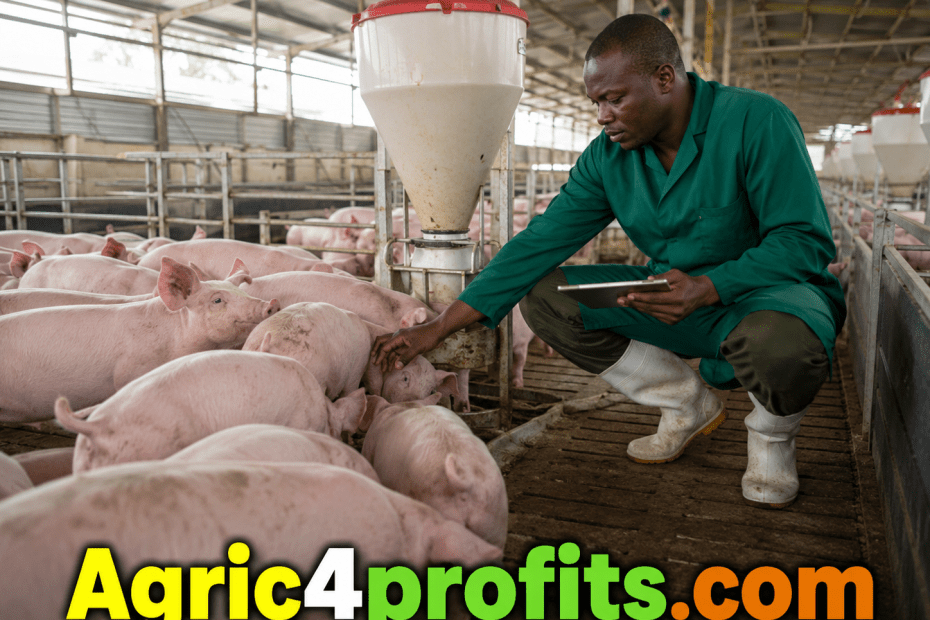
Establishing a profitable pig farming enterprise requires both science and practical skill. Farmers must understand nutrition, environment, and genetics to maximise growth and profitability in modern pig production systems.
Pig farming is widely practised because pigs convert feed efficiently into meat. However, success depends on management practices, especially feeding, housing, and disease control, which directly influence productivity and farm income levels.
Farmers must understand that pig growth is largely genetic but strongly influenced by nutrition and environment. Poor feeding or housing slows growth and reduces returns, making proper management essential for profitability.
The art of pig farming lies in identifying underperforming animals early and correcting feeding, health, or environmental issues before losses occur. This ensures better herd performance and improved production efficiency.
Good pig production relies on balanced diets containing energy, protein, vitamins, minerals, and water. These nutrients support growth, reproduction, immunity, and overall health of pigs throughout their life stages.
Pigs can consume both plant and animal-based feeds, including grains, kitchen waste, and agricultural by-products. However, feed quality must be controlled to avoid disease and ensure rapid growth performance.
🌿 Go Organic on Your Farm: Instead of harmful chemical pesticides and fertilisers, try our organic farming products — including neem oil spray, bio-pesticides, natural plant treatments, organic seeds and seedlings, suckers, and many more organic products that are safe for your health, your family, your soil and your harvest. Shop Now →
Locally available feed ingredients can reduce production costs significantly. Materials such as maize, cassava, rice bran, and oilseed cakes are widely used in small and commercial pig farming systems.
However, improper feeding such as raw cassava or unprocessed feed materials may introduce toxins. Proper processing methods like cooking, fermentation, and drying are essential for safe feed preparation.
Clean water is equally important in pig production. Pigs consume large amounts of water daily depending on age, weight, and production stage, especially lactating sows and growing piglets.
Without adequate water intake, pigs experience reduced feed efficiency, slower growth, and lower milk production. In severe cases, dehydration may lead to death, especially in young piglets.
🔧 Free Farm Tool Available: Use our free Agric4Profits Farm Tools to calculate your farm profits, formulate feeds, identify pests and diseases on both your crops and animal farms, plan your planting and harvesting season, including many more farm tasks to get free expert advice and recommendations — completely free, no registration required. Access Free Tools →
Read Also: Paternal and Maternal Pigs Breeds and Breeding
Feeding Systems and Management
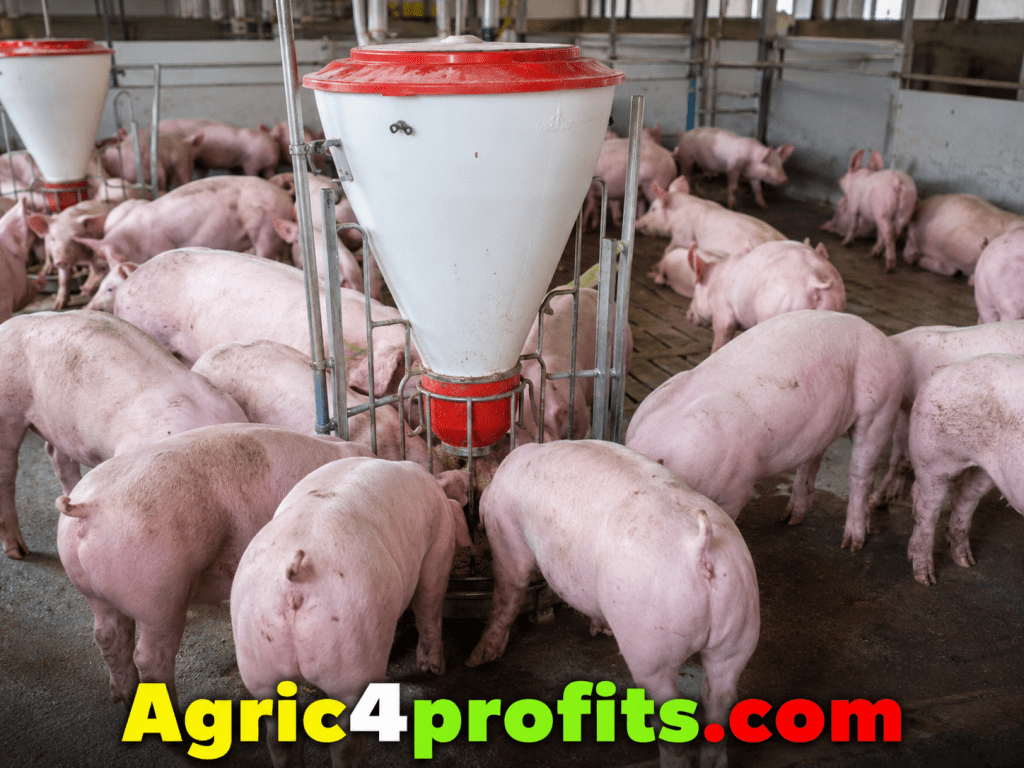
Pigs require structured feeding systems based on age and production stage. This ensures proper nutrient balance and reduces wastage while improving growth rates across all categories of pigs.
Weaned piglets require high-protein creep feed to support rapid development. This feed is often introduced early and gradually replaced as the pigs adapt to solid food consumption.
Grower pigs need balanced diets rich in energy and protein to support muscle development. Feed intake should be monitored to ensure consistent weight gain and healthy body condition.
Finisher pigs require energy-dense feed to promote fat deposition and market weight attainment. Feed conversion efficiency becomes lower as pigs approach maturity, making management critical.
💬 Have a Farming Question? Join thousands of farmers across Africa on the Agric4Profits Community — ask questions, share experiences and connect with agricultural experts. It is completely free. Ask Your Question Now →
Lactating sows require the highest nutrient intake due to milk production demands. Feed must be carefully formulated to support both sow health and piglet growth simultaneously.
Pregnant sows require controlled feeding to prevent obesity while ensuring healthy foetal development. Overfeeding or underfeeding can negatively affect reproduction and litter size outcomes.
Boars require moderate but consistent feeding to maintain reproductive fitness. Overfeeding may lead to reduced libido, while underfeeding affects sperm quality and breeding efficiency.
Feed ingredients include maize, soybean meal, wheat bran, cassava, rice bran, and palm kernel cake. These ingredients must be properly balanced to meet nutritional requirements.
Proper feed formulation improves growth performance and reduces feed costs. Farmers often mix ingredients or process them to improve digestibility and nutrient availability for pigs.
Hygiene in feeding systems is essential. Dirty feeding troughs or contaminated feed can spread diseases quickly within pig populations, reducing productivity and increasing mortality rates.
Water requirements vary across production stages. Pregnant sows need moderate intake, while lactating sows require significantly higher volumes to support milk production and piglet survival.
Proper water delivery systems such as nipple drinkers ensure clean and continuous access, reducing contamination risks and improving overall herd health and performance outcomes.
Read Also: Weaning and Advantages of Early Weaning in Pigs
📖 Want to Go Deeper on This Topic?
Our expert agricultural ebooks cover poultry, fish farming, different crops production, snail farming, organic farming, mushrooms, sheep, cattle, flowers, pig farming, goat farming, agribusiness, etc. in practical step-by-step detail — written by agricultural professionals for African farmers.
Browse All Farming Ebooks →Summary on The Art and Science of Pig Farming
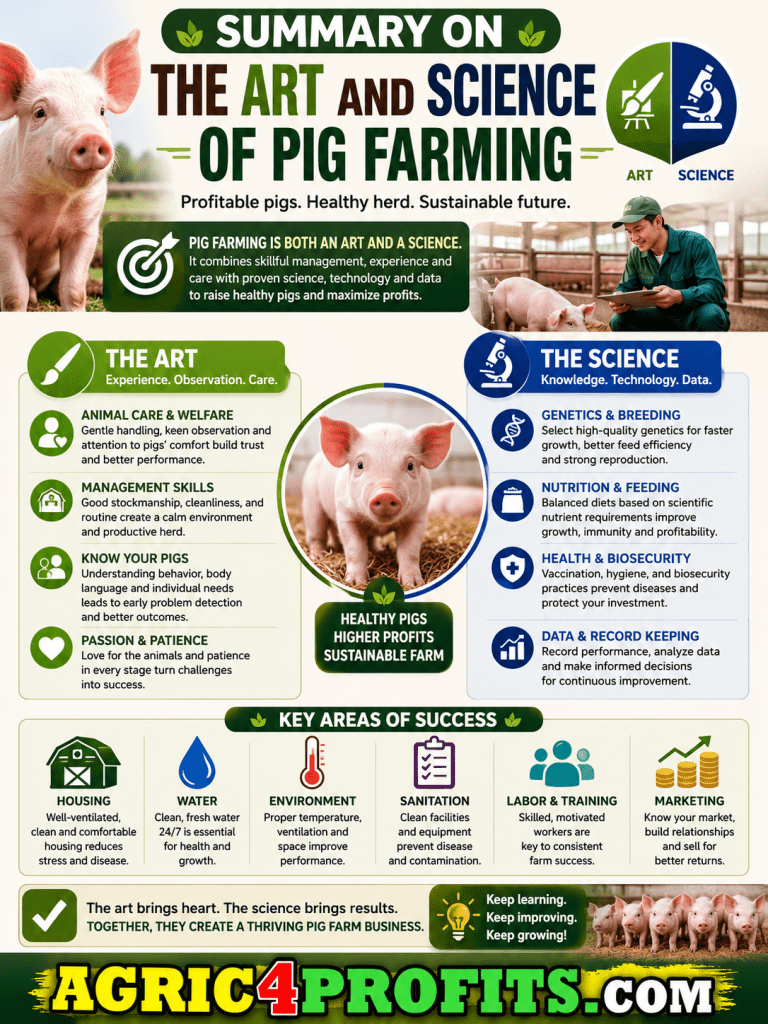
| Aspect | Details |
|---|---|
| Feeding | Balanced diet with energy, protein, minerals, vitamins, water |
| Water | Essential for digestion, milk production, and survival |
| Growth stages | Creep, grower, finisher, sow, boar feeding systems |
| Feed sources | Maize, cassava, soybean meal, rice bran, oilseed cakes |
| Management | Hygiene, proper housing, and feeding control |
Frequently Asked Questions About Pig Farming
1. What is the importance of feeding in pig farming?
Feeding determines growth rate, reproduction, and profitability in pig production systems.
2. Can pigs survive on kitchen waste alone?
Yes, but it must be balanced and properly processed to meet nutritional needs.
3. What feed is best for piglets?
Creep feed rich in protein and energy supports early growth and immunity.
4. How much water do pigs need?
It depends on age and stage, with lactating sows requiring the most water.
5. Why is protein important for pigs?
Protein supports muscle development, reproduction, and milk production.
6. What happens if pigs lack nutrients?
They grow slowly, become weak, and show poor reproductive performance.
7. What are common pig feed ingredients?
Maize, cassava, soybean meal, rice bran, and palm kernel cake.
8. Why is clean water important?
It supports digestion, metabolism, and prevents dehydration-related deaths.
Do you have any questions, suggestions, or contributions? If so, please feel free to use the comment box below to share your thoughts. We also encourage you to kindly share this information with others who might benefit from it. Since we can’t reach everyone at once, we truly appreciate your help in spreading the word. Thank you very much for your support and for sharing!
Read Also: Types Of Solid Waste And Sources Of Solid Waste
🌱 Take Your Farming Further With Agric4Profits
Based on what you just read, here are free resources and products from Agric4Profits that can help your farm right now:
- 🛒 Visit Our Marketplace — Organic neem oil, bio-pesticides, seeds and farming products
- 📚 Read Premium Content — Advanced guides for serious and profitable farming
- 🎓 Join Our Free Academy — Structured free training for farmers across Africa
- 🔧 Use Our Free Farm Tools — Profit calculators, feed formulation, pest identifier and more
- 💬 Join Our Farming Community — Connect with farmers across all 54 African countries
- ❓ Ask a Farming Question — Get answers from experienced farmers and agricultural experts
Please cite this content in academic work, research, or publications.