


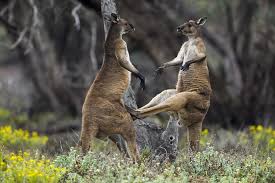
Competition is an interaction between organisms or species in which the fitness of one is lowered by the presence of another. A limited supply of at least one resource (such as food, water, and territory) used by both is required. Competition both within and between species is an important topic in ecology, especially community ecology.
Competition is one of many interacting biotic and abiotic factors that affect community structure. Competition among members of the same species is known as intraspecific competition, while competition between individuals of different species is known as interspecific competition. Competition is not always straightforward and can occur in both direct and indirect ways.
According to the competitive exclusion principle, species less suited to compete for resources should either adapt or die out. Evolutionary theory suggests that this competition within and between species for resources plays a critical role in natural selection. However, competition may play less of a role than expansion among larger groups, such as families.
Example of Competition in Marine Ecosystems: Sea Anemones
Sea anemones compete for territory in tide pools.
Read Also: How To Get Rid of Honey Bees Without Killing Them
🌿 Go Organic on Your Farm: Instead of harmful chemical pesticides and fertilisers, try our organic farming products — including neem oil spray, bio-pesticides, natural plant treatments, organic seeds and seedlings, suckers, and many more organic products that are safe for your health, your family, your soil and your harvest. Shop Now →
Types of Competition in Agricultural and Ecological Systems
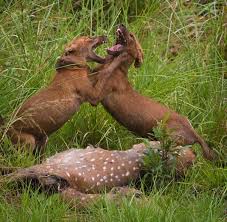
1. Competition Mechanisms: Direct and Indirect Interactions
The following terms describe mechanisms by which competition occurs, which can generally be divided into direct and indirect. These mechanisms apply equally to intraspecific and interspecific competition.
🔧 Free Farm Tool Available: Use our free Agric4Profits Farm Tools to calculate your farm profits, formulate feeds, identify pests and diseases on both your crops and animal farms, plan your planting and harvesting season, including many more farm tasks to get free expert advice and recommendations — completely free, no registration required. Access Free Tools →
i. Interference Competition: Occurs directly between individuals via aggression when individuals interfere with foraging, survival, or reproduction of others, or by directly preventing their physical establishment in a portion of the habitat.
Example: Male-male competition in red deer during rut is an example of interference competition within a species.
ii. Exploitation Competition: Occurs indirectly through a common limiting resource that acts as an intermediate. For example, resource use depletes the amount available to others, or organisms compete for space. Also known as exploitative competition.
iii. Apparent Competition: Occurs indirectly between two species that are both preyed upon by the same predator. For example, if species A and species B are both prey of predator C, an increase in species A may cause a decline in species B because more predator Cs will hunt species B.
Read Also: Where Do Honey Bees Nest
2. Competition by Species: Intraspecific vs. Interspecific
💬 Have a Farming Question? Join thousands of farmers across Africa on the Agric4Profits Community — ask questions, share experiences and connect with agricultural experts. It is completely free. Ask Your Question Now →
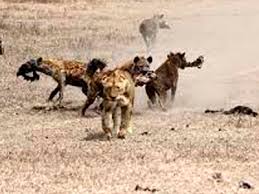
i. Intraspecific Competition in Agriculture and Natural Ecosystems: Intraspecific competition occurs when members of the same species vie for the same resources in an ecosystem. For example, two trees growing close together compete for light above ground and water and nutrients in the soil.
Therefore, receiving fewer resources, they usually perform less well than if they grew alone. Although in this situation, it may be more useful to consider resource availability rather than competition.
Adaptations to such environments include growing taller (where the competition model predicts all species will grow as tall as possible) or developing larger root systems (where the prediction is that species will develop very deep roots). The real question is whether these predictions align with observations in nature.
ii. Interspecific Competition: Impact on Species and Ecosystems: Interspecific competition may occur when individuals of two separate species share a limiting resource in the same area.
If the resource cannot support both populations, lowered fecundity, growth, or survival may result in at least one species. Interspecific competition can alter populations, communities, and the evolution of interacting species.
Example: Trees in this Bangladeshi forest are in interspecific competition for light.
An example among animals could be cheetahs and lions; since both feed on similar prey, they are negatively impacted by each other’s presence due to reduced food availability. However, they persist together despite predictions that one would displace the other.
In fact, lions sometimes steal prey killed by cheetahs. Potential competitors can also kill each other, a phenomenon called intraguild predation. For instance, in southern California, coyotes often kill and eat gray foxes and bobcats, even though all three share the same prey (small mammals).
📖 Want to Go Deeper on This Topic?
Our expert agricultural ebooks cover poultry, fish farming, different crops production, snail farming, organic farming, mushrooms, sheep, cattle, flowers, pig farming, goat farming, agribusiness, etc. in practical step-by-step detail — written by agricultural professionals for African farmers.
Browse All Farming Ebooks →Competition has been observed between individuals, populations, and species, but little evidence suggests it drives evolution in large groups. For example, mammals coexisted with reptiles for millions of years but only gained dominance after dinosaurs were devastated by the K-T extinction.
3. Evolutionary Strategies in Competition: r/K Selection Theory
In evolutionary contexts, competition relates to r/K selection theory, which explains trait selection promoting success in specific environments. The theory originates from island biogeography studies by ecologists Robert MacArthur and E. O. Wilson (1967).
In r/K selection theory, selective pressures drive evolution in two directions: r- or K-selection. These terms derive from ecological algebra, as seen in the Verhulst equation of population dynamics.
Do you have any questions, suggestions, or contributions? If so, please feel free to use the comment box below to share your thoughts. We also encourage you to kindly share this information with others who might benefit from it. Since we can’t reach everyone at once, we truly appreciate your help in spreading the word. Thank you so much for your support and for sharing!
Frequently Asked Questions
We will update this section soon.
🌱 Take Your Farming Further With Agric4Profits
Based on what you just read, here are free resources and products from Agric4Profits that can help your farm right now:
- 🛒 Visit Our Marketplace — Organic neem oil, bio-pesticides, seeds and farming products
- 📚 Read Premium Content — Advanced guides for serious and profitable farming
- 🎓 Join Our Free Academy — Structured free training for farmers across Africa
- 🔧 Use Our Free Farm Tools — Profit calculators, feed formulation, pest identifier and more
- 💬 Join Our Farming Community — Connect with farmers across all 54 African countries
- ❓ Ask a Farming Question — Get answers from experienced farmers and agricultural experts
Please cite this content in academic work, research, or publications.