


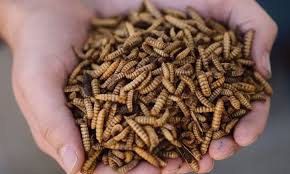
In choosing the best specie of fish to raise for profit, the source of your fingerlings matters greatly. A reliable hatchery and guidance from farmers can save early losses and improve success.
Do not rush to buy fish from just anywhere, because weak breeds grow slowly, waste feed, and suffer losses. Expert advice before purchase helps you choose strong stock with better survival at the juvenile stage.
The species you select should match your climate, available space, and budget. A fish that thrives in your environment will feed better, resist stress, and reach harvest size faster on a well-chosen site.
If you farm in a cold region, pond depth matters because shallow water freezes during winter. Deeper ponds, heating support, and cold-tolerant species like trout or koi may perform better with proper pond design.
For warmer areas, fish such as tilapia, catfish, and barramundi can be strong choices because they tolerate heat and grow quickly. Your final choice should still reflect water quality and market demand.
Before stocking any pond or tank, think beyond appearance and ask practical questions about feeding, space, growth rate, and sales. The best species is the one that fits your conditions and gives consistent profit.
🌿 Go Organic on Your Farm: Instead of harmful chemical pesticides and fertilisers, try our organic farming products — including neem oil spray, bio-pesticides, natural plant treatments, organic seeds and seedlings, suckers, and many more organic products that are safe for your health, your family, your soil and your harvest. Shop Now →
1. Choosing the Best Fish Species for Profit
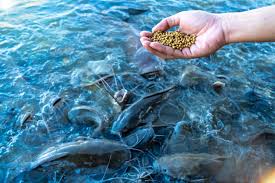
Choosing species for profit is easier when you match fish behavior with your system. In small ponds, beginners benefit from hardy stock, while larger systems allow specialized fish and faster expansion using aquaponic systems.
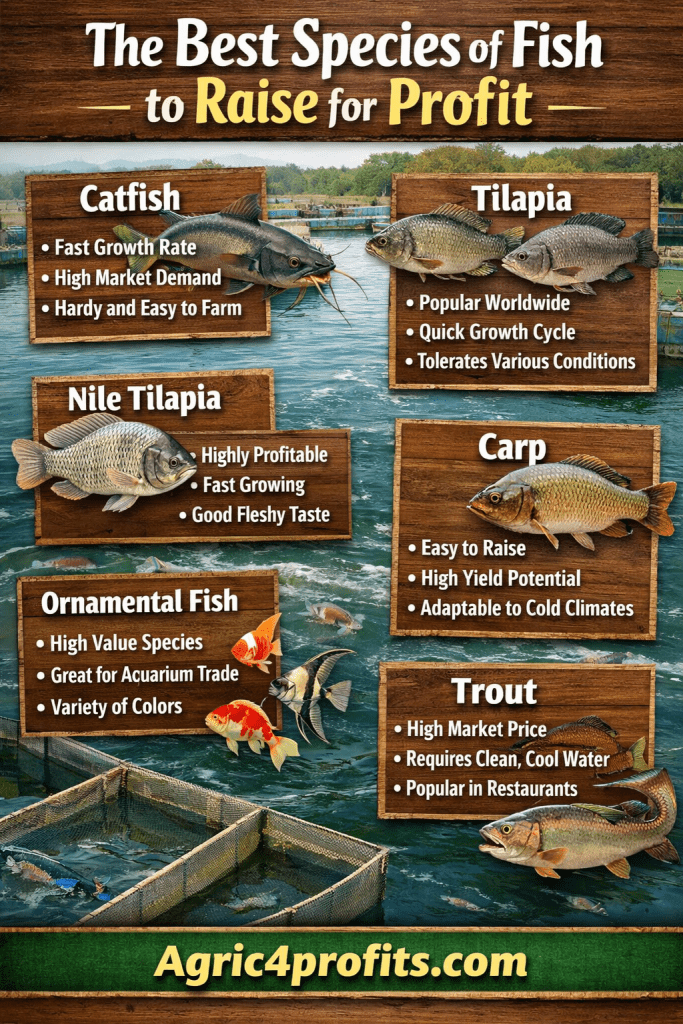
i. Barramundi: This fish suits warm climates and grows well in summer when temperatures stay stable. Farmers with a prepared backyard pond can use barramundi for a premium harvest and clean-tasting meat.
ii. Catfish: Catfish are adaptable, fast-growing, and efficient feeders, which makes them attractive for backyard ponds and tanks. Their strong market demand also makes them a dependable choice for commercial farming.
iii. Carp: Carp are widely farmed because they tolerate many conditions and can serve food or ornamental markets. Their variety makes them useful for farmers who want flexible production options and steady returns.
🔧 Free Farm Tool Available: Use our free Agric4Profits Farm Tools to calculate your farm profits, formulate feeds, identify pests and diseases on both your crops and animal farms, plan your planting and harvesting season, including many more farm tasks to get free expert advice and recommendations — completely free, no registration required. Access Free Tools →
iv. Goldfish: Goldfish are mainly ornamental, but they remain useful in aquaponic and aquarium systems. As a carp-family fish, they fit setups where beauty, movement, and plant support matter as much as food production.
v. Tilapia: Tilapia grows quickly, breeds readily, and tolerates poor water better than many species. For many farmers, especially beginners, it remains one of the easiest fish to manage and market profitably.
vi. Trout: Trout prefer cooler water and are best suited to winter or highland conditions. They grow quickly, offer excellent flavor, and can reward careful farmers with a strong premium market.
Whatever species you choose, build around climate, feed supply, and market access. You can also study the most suitable fish for recirculating systems in your farm before making a final stocking decision.
To decide what to grow, first ask what you want from your system. If your goal is food, choose edible fish that grow well in your local climate and produce consistent harvests.
💬 Have a Farming Question? Join thousands of farmers across Africa on the Agric4Profits Community — ask questions, share experiences and connect with agricultural experts. It is completely free. Ask Your Question Now →
If your goal is beauty, goldfish or koi can serve well in an indoor tank or decorative pond. The species you stock should always match your purpose, your budget, and your water conditions.
You should also choose fish that are available locally, because sourcing healthy stock becomes easier and cheaper. Even tilapia, though hardy and fast breeding, still needs quality hatchery fish to start farming well.
Secondary species can also help balance a farm. Perch, for example, can provide fry for bigger fish and offer more variety, but they must be supervised because they breed aggressively.
At the end, the right species is the one that fits your climate, market, and experience. You can improve your planning further by studying mixed stocking choices and tilapia systems before deciding.
A profitable farmer thinks about growth rate, feed use, sales value, and management difficulty before stocking. This broader view protects your investment and makes the farm easier to manage over time.
Read Also: The Most Lucrative between Production of Fish Fingerlings or Raising them to Table Size
2. Fish Feed Consumption Chart

A feed consumption chart helps you estimate how much feed your fish may need each month. It supports cash flow, reduces waste, and prevents shortages when production reaches the grow-out stage in managed systems.
Farmers often choose between 45 bags, 50 bags, or 67 bags of feed for every 1,000 fish stocked. The best rate depends on budget, strain, management style, and expected output from the pond.
At the beginning, fish may not consume all the feed assigned for the first two months. From the third month onward, appetite rises sharply, especially when fish adjust to the pond or tank environment.
📖 Want to Go Deeper on This Topic?
Our expert agricultural ebooks cover poultry, fish farming, different crops production, snail farming, organic farming, mushrooms, sheep, cattle, flowers, pig farming, goat farming, agribusiness, etc. in practical step-by-step detail — written by agricultural professionals for African farmers.
Browse All Farming Ebooks →By the fourth month, many stock batches will consume more feed and may even exceed earlier estimates. A realistic schedule should reflect live growth, not fixed assumptions made before stocking, and it should stay practical.
Use the table below as a planning tool, not as a rigid law. When production is supported by good water management and a sound feeding strategy, the numbers become easier to handle.
Table Showing Monthly Feed Consumption Chart Per 1,000 Fishes Stocked at Different Recommended Feeding Rate of 45bags, 50bags, and 67bags. Use it as a working guide for feed purchases and monthly allocation.
For farmers who want tighter control, a balanced feed formula helps improve growth, protect water quality, and support predictable harvest results throughout the full production cycle and harvest season successfully.
| MONTHS | NO. OF BAGS | ||
| 1ST | 2 | 2 | 2 |
| 2ND | 4 | 4 | 4 |
| 3RD | 6 | 7 | 8 |
| 4TH | 9 | 10 | 13 |
| 5TH | 11 | 12 | 17 |
| 6TH | 13 | 15 | 23 |
| TOTAL | 45 | 50 | 67 |
This table explains the feed allocation for every 1,000 catfish stocked based on a recommended feeding rate of 45 bags, 50 bags, and 67 bags of feed.
For example, if you use floating feed and follow the recommended stocking rate, you should expect about 675 kg of fish from 1,000 stocked fish after harvest.
Please note that the average feed conversion ratio for many floating feeds is close to 1 kg feed for 900 g of fish weight, so careful management matters.
You can use this as a basis for judging performance. It is wrong to judge your fish only by the number stocked; feed weight and recordkeeping matter more.
Read Also: The Best Stage to Start Raising your Catfishes (Fingerlings or Juveniles)
3. Application of the Fish Feed Consumption Chart
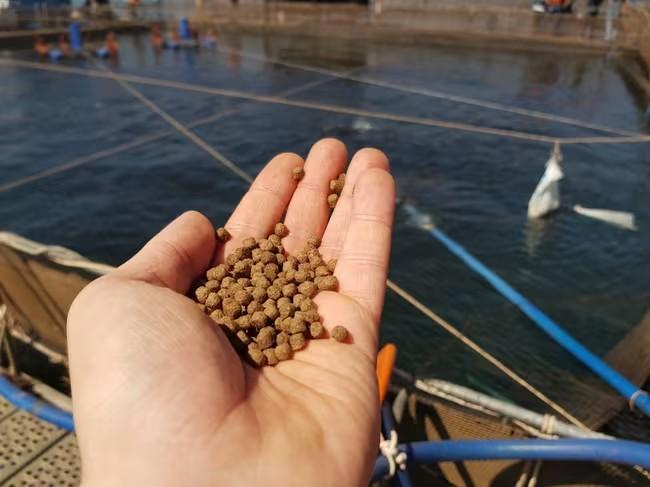
Applying a feed chart starts with honest planning and a start-up plan. Know how many fish you intend to stock, the species you chose, and the duration from stocking to harvest before buying feed.
i. Stock realistically: Start with a number that matches your water source, pond size, and capital. A plan like the one used in stocking guides reduces pressure and keeps losses manageable.
ii. Match the environment: Choose a system that supports your fish from the start. Good pond construction, such as the advice in proper pond design, makes feeding and water management easier.
iii. Feed in portions: Do not dump all feed at once. Offer small portions until the fish stop rushing the feed, then move on. This habit helps you observe appetite and reduce wastage.
iv. Record everything: Keep a simple log of feed bought, feed used, mortality, and monthly growth. Recordkeeping also supports lessons from farm feasibility planning, budgeting, and careful review properly and well.
v. Watch appetite changes: If fish suddenly eat less, inspect water quality, disease signs, and stocking stress immediately. A drop in appetite is often the first warning that something is wrong.
vi. Link feed to harvest: Your harvest estimate should follow the quantity of feed used, not only the number stocked. That approach aligns with smarter fish sales planning overall and directly.
With discipline, the chart becomes a budgeting tool, a growth guide, and a management signal. It is one of the easiest ways to predict production and prepare for a more profitable harvest.
Summary on The Best Species of Fish to Raise for Profit
| Section | Main idea | Practical lesson |
| Species selection | Match fish to climate, space, and market demand. | Choose hardy stock from a trusted source. |
| Feed chart | Estimate monthly feed use before stocking. | Plan cash flow and prevent shortages. |
| Farm management | Feed in portions and watch fish behavior. | Use records to improve growth and reduce waste. |
| Harvest planning | Judge output by feed used, not only fish count. | Compare feed input with expected harvest weight. |
Frequently Asked Questions About The Best Specie of Fish to Raise for Profit
1. Which fish is best for beginners?
Tilapia and catfish are often the easiest choices because they grow quickly, tolerate stress, and respond well to basic management.
2. Why does climate matter so much?
Fish species have different temperature needs. A good climate match improves feeding, growth, survival, and harvest quality.
3. Is a bigger pond always better?
Not always. Pond size should match your budget, water supply, species, and management ability to avoid unnecessary losses.
4. How should I use a feed chart?
Use it as a planning guide, then adjust based on appetite, growth stage, water condition, and your actual stocking level.
5. Why should I keep records?
Records help you track feed use, growth, mortality, and profit, making it easier to correct mistakes and improve future cycles.
6. Can aquaponics work for profit?
Yes. With the right species, good system design, and careful feeding, aquaponics can produce fish and plants efficiently.
Do you have any questions, suggestions, or contributions? If so, please feel free to use the comment box below to share your thoughts. We also encourage you to kindly share this information with others who might benefit from it. Since we can’t reach everyone at once, we truly appreciate your help in spreading the word. Thank you very much for your support and for sharing!
Read Also: What to Know About Kokedama
🌱 Take Your Farming Further With Agric4Profits
Based on what you just read, here are free resources and products from Agric4Profits that can help your farm right now:
- 🛒 Visit Our Marketplace — Organic neem oil, bio-pesticides, seeds and farming products
- 📚 Read Premium Content — Advanced guides for serious and profitable farming
- 🎓 Join Our Free Academy — Structured free training for farmers across Africa
- 🔧 Use Our Free Farm Tools — Profit calculators, feed formulation, pest identifier and more
- 💬 Join Our Farming Community — Connect with farmers across all 54 African countries
- ❓ Ask a Farming Question — Get answers from experienced farmers and agricultural experts
Please cite this content in academic work, research, or publications.