


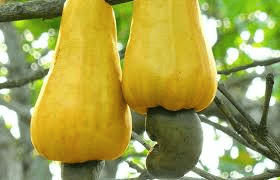
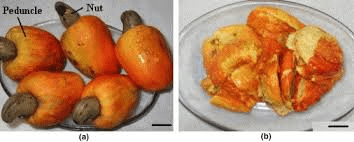
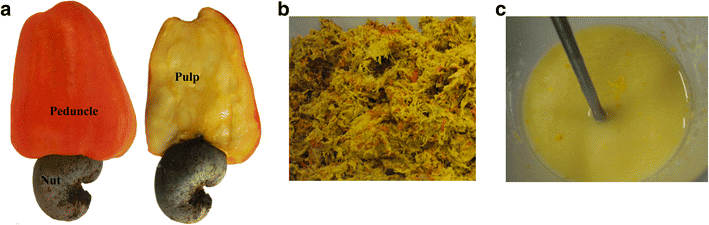
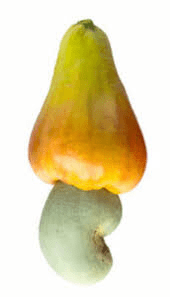
The cashew peduncle is the stalk-like structure that connects the cashew nut (seed) to the cashew apple. It serves as the attachment point for the nut on the fruit produced by the cashew tree (Anacardium occidentale).
The peduncle is a fleshy and fibrous structure that emerges from the base of the cashew apple, extending downward to support the cashew nut. It plays a vital role in the development and maturation of the cashew fruit.
During the growth of the cashew fruit, the peduncle provides nutrients and water to the developing nut, facilitating its growth and development. As the fruit matures, the peduncle helps support the weight of the cashew nut, ensuring that it remains attached to the fruit until harvest.
After the cashew fruit is harvested, the peduncle typically remains attached to the nut during processing. It is usually removed along with the cashew shell before the nuts are packaged for sale.
While the cashew peduncle itself is not consumed or utilized in any significant way, it is an essential anatomical feature of the cashew fruit, playing a crucial role in the development and attachment of the cashew nut.
The Economic Importance and Uses of Cashew Peduncle
1. Timber Production: Cashew peduncles can be utilized for timber production, providing a renewable source of wood for construction, furniture making, and crafts.
🌿 Go Organic on Your Farm: Instead of harmful chemical pesticides and fertilisers, try our organic farming products — including neem oil spray, bio-pesticides, natural plant treatments, organic seeds and seedlings, suckers, and many more organic products that are safe for your health, your family, your soil and your harvest. Shop Now →
2. Fuelwood: Cashew peduncles serve as a source of fuelwood for cooking and heating in rural areas, reducing dependency on non-renewable energy sources and alleviating energy poverty.
3. Handicrafts: Artisans use cashew peduncles to create various handicrafts such as baskets, mats, and decorative items, generating income and preserving traditional craftsmanship.
4. Soil Erosion Control: Cashew peduncles are used in soil erosion control measures such as mulching and slope stabilization, preventing soil degradation and promoting sustainable land management.
5. Animal Feed: Cashew peduncles can be utilized as feed for livestock, providing dietary fiber and nutrients, particularly in regions where alternative feed sources are limited.
🔧 Free Farm Tool Available: Use our free Agric4Profits Farm Tools to calculate your farm profits, formulate feeds, identify pests and diseases on both your crops and animal farms, plan your planting and harvesting season, including many more farm tasks to get free expert advice and recommendations — completely free, no registration required. Access Free Tools →
6. Biochar Production: Cashew peduncles can be converted into biochar through pyrolysis, a process that produces a carbon-rich material used for soil amendment, carbon sequestration, and pollution remediation.
7. Paper and Pulp Industry: Cashew peduncles are used in the paper and pulp industry as a fiber source for producing paper products such as packaging materials, tissue papers, and cardboard.
8. Medicinal Uses: Traditional medicine practices utilize extracts from cashew peduncles for various medicinal purposes, including treating inflammation, digestive disorders, and skin ailments.
9. Composting: Cashew peduncles are composted to produce organic fertilizer, enriching soil fertility and promoting sustainable agricultural practices.
10. Construction Material: Crushed or ground cashew peduncles can be mixed with adhesives or binders to produce composite materials for construction purposes, such as boards, panels, and insulation.
💬 Have a Farming Question? Join thousands of farmers across Africa on the Agric4Profits Community — ask questions, share experiences and connect with agricultural experts. It is completely free. Ask Your Question Now →
11. Art and Sculpture: Artists incorporate cashew peduncles into sculptures, installations, and artworks, adding texture and visual interest to their creations.
12. Biofuel Production: Cashew peduncles can be processed into biofuels such as ethanol or biogas, offering renewable alternatives to fossil fuels and reducing greenhouse gas emissions.
13. Water Filtration: Cashew peduncles are used in water filtration systems as a natural filter medium to remove impurities and contaminants from drinking water sources.
14. Horticultural Purposes: Cashew peduncles are utilized in horticulture for mulching, soil conditioning, and moisture retention in gardens, nurseries, and agricultural fields.
15. Aesthetic Purposes: Landscapers and gardeners use cashew peduncles for aesthetic purposes in landscaping projects, creating natural borders, pathways, and decorative features.
16. Renewable Energy: Cashew peduncles contribute to renewable energy production through biomass gasification, providing electricity and heat for industrial and residential applications.
17. Carbon Sequestration: Cashew trees, which produce cashew peduncles, contribute to carbon sequestration by absorbing and storing carbon dioxide from the atmosphere, mitigating climate change impacts.
Read Also: Cabbage Aphid: Description, Damages Caused, Control and Preventive Measures
The Products and By-products That Can Be Derived From Cashew Peduncle
1. Timber: Cashew peduncles can be sawn into timber for construction, furniture making, and woodworking projects, providing a sustainable source of wood material.
📖 Want to Go Deeper on This Topic?
Our expert agricultural ebooks cover poultry, fish farming, different crops production, snail farming, organic farming, mushrooms, sheep, cattle, flowers, pig farming, goat farming, agribusiness, etc. in practical step-by-step detail — written by agricultural professionals for African farmers.
Browse All Farming Ebooks →2. Fuelwood: Cashew peduncles are dried and used as fuelwood for cooking, heating, and industrial processes, reducing reliance on non-renewable energy sources such as fossil fuels.
3. Handicrafts: Artisans use cashew peduncles to create a variety of handicrafts such as baskets, trays, coasters, and ornaments, showcasing traditional craftsmanship and supporting local economies.
4. Biochar: Cashew peduncles are converted into biochar through pyrolysis, a process that produces a carbon-rich material used for soil improvement, carbon sequestration, and environmental remediation.
5. Animal Feed: Cashew peduncles are utilized as feed for livestock, providing dietary fiber, vitamins, and minerals, particularly in regions where alternative feed sources are scarce or expensive.
6. Paper Pulp: Cashew peduncles are processed into pulp for papermaking, producing paper products such as packaging materials, tissue papers, and cardboard, contributing to the paper industry's sustainability efforts.
7. Organic Fertilizer: Composted cashew peduncles are used as organic fertilizer in agriculture, enriching soil fertility, improving crop yields, and promoting sustainable farming practices.
8. Art and Sculpture: Artists use cashew peduncles as sculptural materials for creating artworks, sculptures, and installations, incorporating natural elements into their creative expressions.
9. Horticultural Mulch: Cashew peduncles are used as mulch in horticulture and gardening to suppress weeds, retain soil moisture, and improve soil structure, promoting plant health and productivity.
10. Biofuel: Cashew peduncles can be processed into biofuels such as ethanol or biogas through fermentation or anaerobic digestion, providing renewable energy sources and reducing greenhouse gas emissions.
Read Also: How to Grow Fodder in 6 Days and Feed your Animals on the 7th Day
Frequently Asked Questions (FAQ’s) About Cashew Peduncle
1. Can cashew peduncles be used for woodworking?
Yes, cashew peduncles can be sawn into timber for woodworking projects such as furniture making, cabinetry, and construction, offering a sustainable source of wood material.
2. Are cashew peduncles suitable for fuelwood?
Yes, cashew peduncles are dried and used as fuelwood for cooking, heating, and industrial processes, providing a renewable energy source and reducing reliance on fossil fuels.
3. How are cashew peduncles utilized in handicrafts?
Artisans use cashew peduncles to create a variety of handicrafts such as baskets, trays, coasters, and ornaments, showcasing traditional craftsmanship and supporting local economies.
4. Can cashew peduncles be composted for fertilizer?
Yes, cashew peduncles can be composted to produce organic fertilizer, enriching soil fertility, improving crop yields, and promoting sustainable agricultural practices.
5. Are there any medicinal uses for cashew peduncles?
Traditional medicine practices utilize extracts from cashew peduncles for various medicinal purposes, including treating inflammation, digestive disorders, and skin ailments.
6. How do cashew peduncles contribute to soil erosion control?
Cashew peduncles are used in soil erosion control measures such as mulching and slope stabilization, preventing soil degradation and promoting sustainable land management practices.
7. Can cashew peduncles be used as animal feed?
Yes, cashew peduncles are utilized as feed for livestock, providing dietary fiber, vitamins, and minerals, particularly in regions where alternative feed sources are limited.
8. Are cashew peduncles suitable for papermaking?
Yes, cashew peduncles are processed into pulp for papermaking, producing paper products such as packaging materials, tissue papers, and cardboard, contributing to the paper industry's sustainability efforts.
9. How can cashew peduncles be used in gardening?
Cashew peduncles are used as mulch in horticulture and gardening to suppress weeds, retain soil moisture, and improve soil structure, promoting plant health and productivity.
10. Can cashewpeduncles be converted into biofuel?
Yes, cashew peduncles can be processed into biofuels such as ethanol or biogas through fermentation or anaerobic digestion, providing renewable energy sources and reducing greenhouse gas emissions.
Read Also: Practical Steps to Convert Printer Cartridges Wastes into New Printer Cartridges
🌱 Take Your Farming Further With Agric4Profits
Based on what you just read, here are free resources and products from Agric4Profits that can help your farm right now:
- 🛒 Visit Our Marketplace — Organic neem oil, bio-pesticides, seeds and farming products
- 📚 Read Premium Content — Advanced guides for serious and profitable farming
- 🎓 Join Our Free Academy — Structured free training for farmers across Africa
- 🔧 Use Our Free Farm Tools — Profit calculators, feed formulation, pest identifier and more
- 💬 Join Our Farming Community — Connect with farmers across all 54 African countries
- ❓ Ask a Farming Question — Get answers from experienced farmers and agricultural experts
Please cite this content in academic work, research, or publications.