


The cowpea (Vigna unguiculata), a vital legume crop across Africa and Asia, holds its reproductive potential within the delicate structure of the stigma.
This seemingly simple floral component plays a critical role in the plant's sexual life cycle, acting as the landing pad for pollen grains, initiating fertilization, and ultimately leading to seed production. But beneath its seemingly unremarkable exterior lies a world of intricate adaptations and fascinating biological processes.
The cowpea stigma resides at the tip of the carpel, which forms the female reproductive organ within the flower. Typically, the stigma appears as a small, trumpet-shaped structure positioned directly above the stamen, the male organ that produces pollen. Its surface area can vary depending on the cowpea variety, but generally, it's a miniature platform designed to maximize pollen capture.
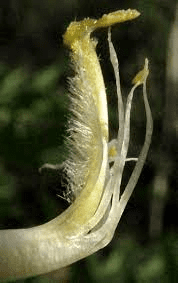
Upon closer inspection, the cowpea stigma reveals a remarkable surface topography. It's often covered in microscopic papillae, tiny finger-like projections that increase the receptive area for pollen grains. These papillae can be densely packed or sparsely distributed, depending on the variety.
Additionally, the stigma may be adorned with a sticky film, a secretion rich in carbohydrates and proteins. This film not only serves to trap pollen grains but also provides a nurturing environment for compatible pollen to germinate.
The cowpea stigma isn't a passive pollen collector. It possesses a remarkable ability to differentiate between compatible and incompatible pollen. This selective process is mediated by complex molecular interactions on the stigma's surface. Compatible pollen grains, originating from the same cowpea variety or a closely related one, are recognized by specific molecules on the stigma.
🌿 Go Organic on Your Farm: Instead of harmful chemical pesticides and fertilisers, try our organic farming products — including neem oil spray, bio-pesticides, natural plant treatments, organic seeds and seedlings, suckers, and many more organic products that are safe for your health, your family, your soil and your harvest. Shop Now →
This recognition triggers a cascade of signaling events within the stigma cells, leading to the formation of a pollen tube. The pollen tube, a thread-like extension of the pollen grain, burrows down through the stigma tissue, eventually reaching the ovules within the ovary, where fertilization occurs.
Cowpea varieties exhibit a fascinating phenomenon known as self-incompatibility. This mechanism prevents self-pollination, where pollen from the same flower fertilizes the ovules.
Self-incompatibility promotes genetic diversity by encouraging outcrossing, where pollen from a different cowpea plant fertilizes the ovules. This ensures a wider gene pool for the next generation, potentially leading to offspring with improved traits for survival and reproduction.
The cowpea stigma's receptivity and function can be significantly influenced by environmental factors. Temperature and humidity play a crucial role. Extreme temperatures can disrupt the stigma's delicate biochemistry, hindering pollen germination and reducing seed set. Similarly, excessively low or high humidity can affect the stickiness of the stigma's surface, impacting pollen capture and viability.
🔧 Free Farm Tool Available: Use our free Agric4Profits Farm Tools to calculate your farm profits, formulate feeds, identify pests and diseases on both your crops and animal farms, plan your planting and harvesting season, including many more farm tasks to get free expert advice and recommendations — completely free, no registration required. Access Free Tools →
Studying the cowpea stigma offers valuable insights for plant breeders. By understanding the stigma's morphology, surface characteristics, and molecular recognition mechanisms, breeders can develop strategies to improve cowpea productivity.
For example, identifying varieties with self-compatibility traits could be beneficial in areas with limited pollinator activity. Alternatively, understanding the stigma's response to environmental factors could guide planting practices to optimize seed production.
The cowpea stigma, though seemingly a simple floral structure, unveils a world of intricate adaptations and fascinating biological processes. Its role in promoting outcrossing, its responsiveness to environmental cues, and its potential for breeding advancements highlight the significance of this tiny yet vital component in the life cycle of this crucial legume crop. As research delves deeper into the intricacies of the cowpea stigma, we gain a greater appreciation for the complex dance of reproduction in the plant kingdom.
The cowpea (Vigna unguiculata), a vital food and forage crop across Africa and Asia, relies on a seemingly simple yet crucial structure for its reproductive success: the stigma.
This tiny trumpet-shaped structure perched atop the carpel, the female reproductive organ, plays a central role in the plant's sexual life cycle. Understanding the cowpea stigma delves into a fascinating realm of intricate adaptations and intricate biological processes.
💬 Have a Farming Question? Join thousands of farmers across Africa on the Agric4Profits Community — ask questions, share experiences and connect with agricultural experts. It is completely free. Ask Your Question Now →
Economic Importance and Uses of Cowpea Stigmas
1. Seed Production: The primary function of the stigma is to capture compatible pollen grains, enabling fertilization and seed production. Cowpeas are a vital source of protein, vitamins, and minerals for millions, particularly in developing countries.
2. Improved Nutritional Profile: Successful fertilization mediated by the stigma leads to the development of cowpea seeds rich in protein, dietary fiber, and essential vitamins and minerals. This translates to improved dietary diversity and nutritional security for populations reliant on cowpeas.
3. Forage Production: Cowpea plants are also a valuable source of animal feed. The stigma's role in seed production ensures the continuation of cowpea plants for grazing and hay production, supporting livestock health and contributing to the overall agricultural economy.
4. Food Security: Cowpea's ability to thrive in diverse environments and its relatively short growing season make it a critical crop for food security. The stigma's role in ensuring successful pollination and seed set contributes to cowpea' resilience and reliability as a food source.
5. Soil Fertility Enhancement: Cowpeas are nitrogen-fixing legumes, meaning they harbor beneficial bacteria that convert atmospheric nitrogen into a usable form for plants. Successful pollination and seed production, facilitated by the stigma, lead to the establishment of cowpea plants that enrich the soil with nitrogen, benefiting subsequent crops.
6. Drought Tolerance: Cowpeas are known for their drought tolerance. The stigma's ability to function effectively even under dry conditions is crucial for seed production in arid and semi-arid regions, where reliable rainfall can be scarce.
7. Pest and Disease Resistance: Certain cowpea varieties exhibit resistance to pests and diseases. The stigma's role in facilitating reproduction ensures the continuation of these resistant lines, contributing to reduced crop losses and improved yields.
8. Multiple Cropping Systems: Cowpeas can be integrated effectively into multiple cropping systems due to their short growing season. The stigma's role in seed production allows cowpeas to be used as a cover crop or intercrop, improving soil fertility and overall agricultural productivity.
9. Green Manure: Cowpea residues can be incorporated into the soil as green manure. The stigma plays an indirect role in this process by facilitating seed production and plant growth. Cowpea residues enrich the soil with organic matter, improve soil structure, and suppress weeds.
📖 Want to Go Deeper on This Topic?
Our expert agricultural ebooks cover poultry, fish farming, different crops production, snail farming, organic farming, mushrooms, sheep, cattle, flowers, pig farming, goat farming, agribusiness, etc. in practical step-by-step detail — written by agricultural professionals for African farmers.
Browse All Farming Ebooks →10. Alleviation of Malnutrition: Cowpeas are a rich source of plant-based protein, particularly valuable in regions facing malnutrition. The stigma's role in seed production contributes to increased availability of cowpeas, offering a readily accessible source of essential nutrients.
11. Climate Change Adaptation: Cowpeas are relatively resilient to climate change impacts like drought and heat stress. The stigma's role in ensuring seed production allows cowpeas to contribute to food security even under changing climatic conditions.
12. Income Generation: Cowpea production can be a source of income for smallholder farmers. The stigma's role in seed set translates to increased cowpea yields, allowing farmers to sell their produce and improve their livelihoods.
13. Biofuel Production: Cowpea research is exploring the potential for using cowpea biomass for biofuel production. The stigma, although not directly involved, plays a role in facilitating plant growth, contributing to the overall biomass available for biofuel exploration.
14. Sustainable Agriculture: Cowpeas promote sustainable agricultural practices due to their nitrogen-fixing capabilities and ability to thrive in low-input conditions. The stigma plays a role in this by enabling seed production and plant establishment.
15. Research and Development: Cowpea research plays a crucial role in developing improved varieties and cultivation practices. The stigma is a key area of study for understanding pollination mechanisms and breeding for enhanced seed set.
16. Educational Tool: Studying the cowpea stigma can be a valuable educational tool in plant biology and agriculture. The stigma's intricate structure and function provide a tangible example of plant reproduction and adaptation.
17. Food Diversification: Cowpeas offer culinary diversity, being consumed fresh, dried, or processed into various products. The stigma, although not directly consumed, plays a vital role in ensuring cowpea availability for diverse food applications.
Read Also Feeding Materials for Ruminant Animals
The Products and By-products That Can Be Derived From Cowpea Stigmas
1. Cowpea Seeds: The primary product derived from cowpea reproduction is the seed itself. These seeds are a rich source of protein, dietary fiber, essential vitamins, and minerals. They can be consumed directly (fresh or dried), processed into various food products (flour, snacks), or used as planting material for the next generation of cowpeas.
2. Cowpea Fodder: Cowpea plants, including leaves, stems, and pods, can be used as a valuable source of animal feed, particularly for ruminants like cattle, sheep, and goats. The stigma's role in seed production ensures the continuation of cowpea plants, providing a source of nutritious forage for livestock.
3. Cowpea Hay: Cowpea plants can be harvested and dried to produce hay, a form of dry fodder for livestock. The stigma plays an indirect role here by facilitating seed production and plant growth, leading to the biomass used for hay production.
4. Green Manure: Cowpea residues left after harvest can be incorporated back into the soil as green manure. This practice enriches the soil with organic matter, improves soil structure, and suppresses weeds. While the stigma isn't directly utilized, it plays a crucial role by facilitating seed production and plant growth, leading to the biomass used for green manure.
5. Cover Crops: Cowpeas can be planted as cover crops to suppress weeds, improve soil moisture retention, and prevent soil erosion. The stigma, by enabling seed production, allows cowpeas to establish themselves effectively as a cover crop, offering various soil health benefits.
6. Improved Varieties: Research on cowpea stigmas can lead to the development of improved cowpea varieties with enhanced pollination efficiency, leading to higher seed yields and improved stress tolerance.
7. Breeding Lines: Understanding stigma function and compatibility mechanisms is crucial for developing breeding lines with desired traits like self-compatibility or improved outcrossing potential, depending on the breeding goals.
8. Pollination Management Strategies: Studies on cowpea stigma receptivity and response to environmental factors can inform pollination management strategies, particularly in areas with limited pollinator activity. This could involve planting companion crops that attract pollinators or implementing supplemental pollination techniques.
9. Seed Production Protocols: Understanding the stigma's role in fertilization can help optimize seed production protocols. This includes factors like planting density, timing of pollination, and potential manipulation of environmental conditions to enhance stigma receptivity.
10. Germplasm Conservation: Research on cowpea stigmas contributes to germplasm conservation efforts by understanding the reproductive biology of diverse cowpea varieties and ensuring their continued propagation.
11. Educational Tools: Isolated cowpea stigmas can be used as educational tools for students and researchers to study plant anatomy, pollination mechanisms, and stigma-pollen interactions.
12. Model Systems: Cowpea stigmas can serve as model systems for studying fundamental aspects of plant reproduction, particularly in legumes. This research can have broader applications for improving pollination and seed set in other legume crops.
13. Transgenic Modifications: While not a current practice, future research might explore potential transgenic modifications of cowpea stigmas to enhance their receptivity to compatible pollen or improve self-compatibility for specific breeding objectives.
14. Robotics and Automation: With advancements in robotics and automation, understanding cowpea stigma morphology and function could pave the way for the development of automated pollination techniques in controlled environments.
15. Gene Editing Technologies: Emerging gene editing technologies like CRISPR might be used in the future to manipulate cowpea stigma characteristics, potentially enhancing pollination efficiency or resistance to pollen-borne pathogens. However, ethical considerations and regulations would need to be carefully addressed.
16. Metabolomic Analysis: Studying the metabolic profile of cowpea stigmas could reveal unique compounds involved in pollen recognition and signaling pathways. This knowledge could be used to develop novel biocontrol agents or breeding strategies.
17. Biomimetic Materials: The intricate surface structures of cowpea stigmas with their papillae and sticky secretions could inspire the development of biomimetic materials with specific adhesion or self-cleaning properties.
Read Also General Features of Ruminant Animals
Frequently Asked Questions (FAQs) About Cowpea Stigmas
1. What is the function of the cowpea stigma?
The cowpea stigma acts as a landing pad for pollen grains. It captures compatible pollen, initiates pollen germination, and facilitates pollen tube growth towards the ovules for fertilization.
2. How does the cowpea stigma differentiate between compatible and incompatible pollen?
The cowpea stigma possesses a complex recognition system on its surface mediated by specific molecules. These molecules interact with complementary molecules on compatible pollen grains, triggering a signaling cascade within the stigma cells. Incompatible pollen, lacking the complementary molecules, fails to trigger this response and is either not captured or degenerates on the stigma's surface.
3. What are the advantages of self-incompatibility in cowpeas?
Self-incompatibility in cowpeas promotes outcrossing, where pollen from a different cowpea plant fertilizes the ovules. This encourages genetic diversity in the offspring, potentially leading to plants with improved traits for survival and reproduction in their specific environment.
4. How do environmental factors affect cowpea stigma receptivity?
Environmental factors like temperature and humidity can significantly influence cowpea stigma receptivity. Extreme temperatures can disrupt the delicate biochemical processes within the stigma, hindering pollen germination and reducing seed set. Similarly, excessively low or high humidity can affect the stickiness of the stigma's surface, impacting pollen capture and viability.
5. How can studying cowpea stigmas benefit cowpea breeding?
Understanding the morphology, surface characteristics, and molecular recognition mechanisms of cowpea stigmas equips breeders with valuable tools. They can identify varieties with self-compatibility traits beneficial in areas with limited pollinator activity. Additionally, understanding stigma response to environmental factors can guide planting practices to optimize seed production under specific conditions.
6. Are there any negative consequences of self-pollination in cowpeas?
Frequent self-pollination in cowpeas can lead to inbreeding depression, a phenomenon where offspring exhibit reduced fitness compared to those resulting from outcrossing. This can manifest as lower yields, decreased disease resistance, and overall weaker plants.
7. How can we improve pollination success in cowpeas?
Several strategies can be employed to improve pollination success in cowpeas. Planting companion crops that attract pollinators like bees and butterflies can significantly enhance natural pollination. Additionally, in controlled environments, supplemental pollination techniques like hand pollination or vibration can be implemented.
8. What are the future research directions for cowpea stigmas?
Future research on cowpea stigmas could delve deeper into the specific genes and signaling pathways involved in pollen recognition and stigma receptivity. This knowledge could pave the way for developing molecular markers for breeding or manipulating stigma function for improved pollination efficiency. Additionally, research on the microbiome of the cowpea stigma, the community of microorganisms residing on its surface, could reveal potential interactions influencing pollen germination and fertilization success.
9. Are cowpea stigmas ever used directly in any applications?
Currently, cowpea stigmas themselves are not directly used in any commercial applications. However, research is exploring the potential of using isolated cowpea stigmas as a tool for in vitro (outside of the living organism) pollen compatibility testing in cowpea breeding programs.
10. Is there a connection between cowpea stigma health and overall cowpea plant health?
Absolutely! A healthy cowpea plant with proper nutrition and good growing conditions will generally produce healthier stigmas with optimal receptivity and functionality. Conversely, stressed or diseased plants may have compromised stigmas with reduced pollen capture or germination efficiency, impacting seed production.
Read Also Low-Maintenance Plants for Beginners
🌱 Take Your Farming Further With Agric4Profits
Based on what you just read, here are free resources and products from Agric4Profits that can help your farm right now:
- 🛒 Visit Our Marketplace — Organic neem oil, bio-pesticides, seeds and farming products
- 📚 Read Premium Content — Advanced guides for serious and profitable farming
- 🎓 Join Our Free Academy — Structured free training for farmers across Africa
- 🔧 Use Our Free Farm Tools — Profit calculators, feed formulation, pest identifier and more
- 💬 Join Our Farming Community — Connect with farmers across all 54 African countries
- ❓ Ask a Farming Question — Get answers from experienced farmers and agricultural experts
Please cite this content in academic work, research, or publications.