


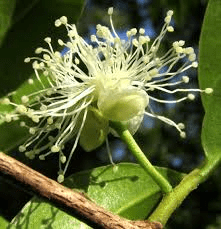
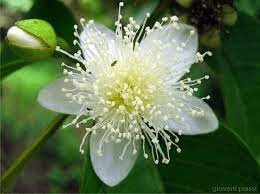
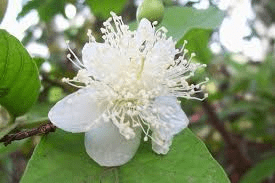
The Guava Pistil is the female reproductive part of the guava flower, belonging to the genus Psidium in the Myrtaceae family. It is centrally located within the flower and plays a crucial role in the fertilization process, which leads to fruit development. The pistil consists of three main parts: the stigma, the style, and the ovary.
The stigma is the topmost part of the pistil and serves as the pollen-receptive surface. It is typically sticky or feathery, designed to effectively capture and hold pollen grains that are transferred from the anthers of either the same flower or another flower. The structure and surface texture of the stigma are crucial for ensuring that the pollen remains in place and can germinate successfully.
Beneath the stigma is the style, a slender, elongated stalk that connects the stigma to the ovary. The style serves as a conduit for pollen tubes to grow from the stigma down to the ovary. When a pollen grain lands on the stigma and germinates, it forms a pollen tube that extends through the style, allowing sperm cells to travel to the ovary for fertilization. The length and structure of the style can vary among different guava varieties, but it generally provides the necessary pathway for successful fertilization.
At the base of the pistil is the ovary, which contains the ovules. The ovary is the enlarged part of the pistil and is typically embedded within the flower’s receptacle. It houses one or more ovules, each of which has the potential to develop into a seed upon fertilization. The ovary is usually green and can become larger as the flower matures and fertilization occurs. Once the ovules are fertilized, the ovary begins to develop into the fruit, with the ovules maturing into seeds.
The process of fertilization in guava flowers involves the transfer of pollen from the anthers to the stigma, followed by the growth of pollen tubes through the style to the ovary. This process can be facilitated by various pollinators, including insects such as bees and butterflies, which are attracted to the flowers by their color and fragrance. Successful fertilization leads to the development of seeds and fruit, essential for the propagation of the guava plant.
Environmental factors play a significant role in the health and function of the pistil. Adequate water, nutrients, and favorable weather conditions are crucial for the proper development of the pistil and the entire flower. Stress conditions such as drought, nutrient deficiency, or extreme temperatures can adversely affect the pistil's development and function, thereby impacting the plant's reproductive success and fruit yield.
🌿 Go Organic on Your Farm: Instead of harmful chemical pesticides and fertilisers, try our organic farming products — including neem oil spray, bio-pesticides, natural plant treatments, organic seeds and seedlings, suckers, and many more organic products that are safe for your health, your family, your soil and your harvest. Shop Now →
The guava pistil is a vital reproductive structure that consists of the stigma, style, and ovary. The stigma captures pollen, the style serves as a pathway for pollen tubes, and the ovary houses the ovules that develop into seeds after fertilization. The health and development of the pistil are influenced by environmental conditions, which play a crucial role in the plant's reproductive success and fruit production. Understanding the structure and function of the guava pistil can provide valuable insights into improving guava cultivation and maximizing fruit yield.
The Economic Importance and Uses of Guava Pistil
1. Herbal Medicine: Guava pistils are used in traditional medicine for their potential health benefits, including treating infections and inflammation.
2. Natural Dyes: Pigments extracted from guava pistils can be used as natural dyes for textiles and crafts.
3. Composting Material: Guava pistils can be composted to create organic fertilizer, enriching the soil.
🔧 Free Farm Tool Available: Use our free Agric4Profits Farm Tools to calculate your farm profits, formulate feeds, identify pests and diseases on both your crops and animal farms, plan your planting and harvesting season, including many more farm tasks to get free expert advice and recommendations — completely free, no registration required. Access Free Tools →
4. Mulch: Shredded guava pistils are used as mulch to retain soil moisture and suppress weed growth.
5. Potpourri: Dried guava pistils are used in potpourri for their natural fragrance and aesthetic appeal.
6. Skincare Products: Extracts from guava pistils are incorporated into skincare products for their beneficial properties.
7. Animal Feed: Guava pistils can be used as a supplementary feed for livestock.
8. Biofertilizer: Compost made from guava pistils can be used as a biofertilizer to enhance soil health.
💬 Have a Farming Question? Join thousands of farmers across Africa on the Agric4Profits Community — ask questions, share experiences and connect with agricultural experts. It is completely free. Ask Your Question Now →
9. Natural Pest Repellent: Extracts from guava pistils can be used to create natural pest repellents for crops.
10. Charcoal Production: Guava pistils can be processed into charcoal, which is used as a fuel and in various industrial applications.
11. Craft Materials: The pistils are used in crafting to create decorative items and art.
12. Eco-friendly Packaging: Guava pistils can be processed into biodegradable packaging materials.
13. Soil Erosion Control: Guava pistils can be used in projects to control soil erosion and stabilize land.
14. Biomass Energy: They can be used as biomass for generating renewable energy.
15. Fertilizer Additive: Guava pistils can be added to fertilizers to enhance their nutrient content.
16. Animal Bedding: Dried pistils can be used as bedding material for livestock.
17. Environmental Conservation: Guava pistils contribute to environmental conservation by improving soil health and preventing erosion.
📖 Want to Go Deeper on This Topic?
Our expert agricultural ebooks cover poultry, fish farming, different crops production, snail farming, organic farming, mushrooms, sheep, cattle, flowers, pig farming, goat farming, agribusiness, etc. in practical step-by-step detail — written by agricultural professionals for African farmers.
Browse All Farming Ebooks →18. Artistic Uses: Guava pistils are used in artistic projects and crafts for their unique appearance.
Read Also: Reasons why Catfish becomes Restless inside the pond: Signs, Causes and Control
The Products and By-products That Can Be Derived From Guava Pistils
1. Natural Dyes: Pigments from guava pistils are extracted for use as natural dyes.
2. Compost: Guava pistils are composted to produce nutrient-rich compost for soil improvement.
3. Mulch: Shredded pistils are used as mulch to conserve soil moisture and control weeds.
4. Potpourri: Dried pistils are used in potpourri mixes for their fragrance.
5. Skincare Products: Extracts from guava pistils are incorporated into creams and lotions for their skin benefits.
6. Animal Feed: Pistils are used in feed mixtures for livestock.
7. Biofertilizer: Compost made from guava pistils is used as a biofertilizer.
8. Natural Pest Repellents: Extracts are used to make natural pest repellents.
9. Charcoal: Pistils can be carbonized to produce charcoal for fuel.
10. Craft Materials: Guava pistils are used in crafting and decorative projects.
11. Eco-friendly Packaging: Processed pistils are used in biodegradable packaging.
12. Soil Erosion Control: Guava pistils are used to prevent soil erosion and stabilize land.
13. Biomass Energy: Pistils are used as biomass for renewable energy generation.
14. Fertilizer Additive: Guava pistils are added to fertilizers to enhance their nutrient content.
15. Animal Bedding: Dried pistils are used as bedding for livestock.
16. Environmental Projects: Pistils contribute to environmental conservation efforts.
17. Artistic Projects: Guava pistils are used in art and craft projects for their aesthetic qualities.
18. Soil Conditioner: Guava pistils are used as soil conditioners to improve soil structure and fertility.
Read Also: Methods of Livestock Breeding in the Tropical Environment
Frequently Asked Questions (FAQ’s) About Guava Pistils
1. What are the uses of guava pistils in traditional medicine?
Guava pistils are used for their anti-inflammatory and antibacterial properties in traditional medicine.
2. How can guava pistils be used as natural dyes?
Pigments from guava pistils are extracted and used to dye textiles and crafts.
3. Can guava pistils be used in composting?
Yes, guava pistils can be composted to enrich soil with organic matter and nutrients.
4. How are guava pistils used in skincare products?
Extracts from guava pistils are incorporated into skincare products for their beneficial properties.
5. Are guava pistils effective as a natural pest repellent?
Yes, extracts from guava pistils can be used to create natural pest repellents for crops.
6. Can guava pistils be used for energy production?
Yes, they can be used as biomass for generating renewable energy or processed into charcoal.
7. How are guava pistils used in crafting?
Guava pistils are used to create decorative items and art due to their unique appearance.
8. What is the role of guava pistils in soil erosion control?
They are used in projects to stabilize soil and prevent erosion.
9. How can guava pistils be used in eco-friendly packaging?
Processed guava pistils are used to create biodegradable packaging materials.
10. Can guava pistils be used as animal feed?
Yes, guava pistils can be used as supplementary feed for livestock.
Read Also: Potato Farming Guide – 7 Tips to Grow Sacks Full of Potatoes
🌱 Take Your Farming Further With Agric4Profits
Based on what you just read, here are free resources and products from Agric4Profits that can help your farm right now:
- 🛒 Visit Our Marketplace — Organic neem oil, bio-pesticides, seeds and farming products
- 📚 Read Premium Content — Advanced guides for serious and profitable farming
- 🎓 Join Our Free Academy — Structured free training for farmers across Africa
- 🔧 Use Our Free Farm Tools — Profit calculators, feed formulation, pest identifier and more
- 💬 Join Our Farming Community — Connect with farmers across all 54 African countries
- ❓ Ask a Farming Question — Get answers from experienced farmers and agricultural experts
Please cite this content in academic work, research, or publications.