


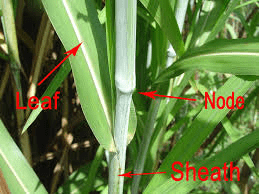
Guinea corn nodes are critical structural components of the sorghum plant (Sorghum bicolor), situated along the main stem and branches. Nodes are the points where leaves, branches, and inflorescences (flowering parts) attach to the stem. Understanding the role and characteristics of nodes is important for grasping the overall growth and development of sorghum.
Each node serves as a junction where various plant structures emerge. These include the leaves, which are crucial for photosynthesis, and branches or tillers, which contribute to the plant's overall growth and productivity. In the case of sorghum, nodes are spaced at regular intervals along the stem, and their arrangement influences the plant's height, branching pattern, and overall architecture.
The primary functions of nodes in sorghum include:
1. Support and Structure: Nodes provide structural support to the plant, anchoring leaves and branches securely to the main stem. This support is essential for maintaining the plant’s stability, especially as it grows taller and bears the weight of the panicles (flowering heads).
2. Growth and Development: Nodes are key growth points where new shoots, branches, and inflorescences originate. They play a role in determining the plant’s branching pattern, which can affect the number of panicles and overall grain yield. Proper node development is crucial for achieving optimal plant architecture and maximizing productivity.
3. Nutrient and Water Transport: The nodes contain vascular tissue that is involved in transporting nutrients and water between the roots and the leaves. This transport system is vital for the plant’s overall health and growth. The efficient functioning of nodes helps ensure that all parts of the plant receive the necessary resources for development.
🌿 Go Organic on Your Farm: Instead of harmful chemical pesticides and fertilisers, try our organic farming products — including neem oil spray, bio-pesticides, natural plant treatments, organic seeds and seedlings, suckers, and many more organic products that are safe for your health, your family, your soil and your harvest. Shop Now →
4. Reproduction: In sorghum, the nodes are involved in the formation of branches that bear the inflorescences. Each node can potentially produce a branch that supports a panicle, which is the reproductive part of the plant where seeds develop. The number and placement of nodes can influence the number of panicles produced and thus the overall seed yield.
5. Leaf Arrangement: The nodes determine the arrangement of leaves along the stem. This arrangement affects the plant's ability to capture sunlight for photosynthesis and can influence the overall efficiency of the plant’s growth. Proper leaf arrangement ensures that each leaf has adequate exposure to light, optimizing photosynthesis and growth.
In agricultural practices, the study of nodes is important for breeding and crop management. Researchers and farmers look at node characteristics, such as spacing and branching patterns, to select and develop sorghum varieties with desirable traits. For example, varieties with optimal node spacing and branching may have better yields and resistance to lodging (falling over).
After harvest, nodes, along with other plant residues, can be used in various ways. They can be included in animal feed, composted to improve soil fertility, or used as mulch to help retain soil moisture and reduce erosion. This utilization of plant residues supports sustainable agricultural practices by minimizing waste and enhancing soil health.
🔧 Free Farm Tool Available: Use our free Agric4Profits Farm Tools to calculate your farm profits, formulate feeds, identify pests and diseases on both your crops and animal farms, plan your planting and harvesting season, including many more farm tasks to get free expert advice and recommendations — completely free, no registration required. Access Free Tools →
In summary, guinea corn nodes are essential for the growth and development of the sorghum plant. They provide structural support, facilitate nutrient and water transport, and play a role in reproduction and leaf arrangement. Understanding the function and characteristics of nodes is crucial for optimizing sorghum cultivation and improving crop management practices.
The Economic Importance and Uses of Guinea Corn Nodes

1. Agricultural Research: Nodes are key in studying plant growth and development, helping researchers improve crop yields and resilience.
2. Plant Propagation: Nodes can be used in vegetative propagation, where new plants are grown from segments of the original plant.
3. Animal Feed: The residues from nodes can be used as feed for livestock, adding to the nutrition of animal diets.
4. Composting: Nodes, along with other plant residues, are composted to create organic matter that enriches soil.
💬 Have a Farming Question? Join thousands of farmers across Africa on the Agric4Profits Community — ask questions, share experiences and connect with agricultural experts. It is completely free. Ask Your Question Now →
5. Biofuel Production: Nodes can be processed into biofuels, such as biogas, through anaerobic digestion.
6. Crafts and Decorations: The structure of nodes makes them suitable for creating decorative crafts and items.
7. Soil Erosion Control: Node residues can be used to help stabilize soil and prevent erosion.
8. Organic Pesticides: Extracts from nodes may be used in the preparation of organic pesticides.
9. Bedding Material: Chopped nodes can be used as bedding for animals, providing a natural and absorbent material.
10. Fertilizer: Decomposed nodes are used as natural fertilizer to enhance soil fertility.
11. Bio-composites: Nodes are used in making bio-composites, which are materials derived from natural fibers.
12. Traditional Medicine: In some cultures, nodes are used in traditional medicine for their health benefits.
13. Paper Production: Fibers from nodes can be processed into paper, including craft paper.
📖 Want to Go Deeper on This Topic?
Our expert agricultural ebooks cover poultry, fish farming, different crops production, snail farming, organic farming, mushrooms, sheep, cattle, flowers, pig farming, goat farming, agribusiness, etc. in practical step-by-step detail — written by agricultural professionals for African farmers.
Browse All Farming Ebooks →14. Mushroom Substrate: Nodes can be used as a substrate for growing mushrooms.
15. Erosion Barriers: Nodes are used to create barriers that help control soil erosion.
16. Animal Bedding: Nodes provide an absorbent material for livestock bedding.
17. Bio-plastics: Nodes can be processed into biodegradable plastics.
18. Research Material: Nodes are used in research to explore new agricultural practices and products.
Read Also: Prevention and Methods of Controlling Coccidiosis Among Chickens
The Products and By-products That Can Be Derived From Guinea Corn Nodes

1. Animal Feed: Chopped nodes are used as feed for livestock.
2. Compost: Nodes are composted to produce organic fertilizer.
3. Biogas: Nodes can be processed into biogas through anaerobic digestion.
4. Mulch: Nodes are used as mulch to retain soil moisture and suppress weeds.
5. Craft Items: Nodes are used in creating decorative crafts and items.
6. Packaging Material: Nodes are used as traditional packaging material.
7. Soil Erosion Control: Nodes are used in creating barriers to prevent soil erosion.
8. Organic Pesticides: Extracts from nodes are used to make organic pesticides.
9. Bedding: Chopped nodes are used as bedding for animals.
10. Fertilizer: Decomposed nodes are used as a natural fertilizer.
11. Bio-composites: Nodes are used in making bio-composites for various applications.
12. Craft Paper: Fibers from nodes are processed into craft paper.
13. Mushroom Substrate: Nodes are used as a substrate for growing mushrooms.
14. Erosion Barriers: Nodes are used to create barriers to prevent soil erosion.
15. Bio-plastics: Nodes are processed into biodegradable plastics.
16. Traditional Medicines: Extracts from nodes are used in traditional medicinal preparations.
17. Research Materials: Nodes are used in agricultural research for developing new practices and products.
Read Also: Measurement and Definition of the term water yield
Frequently Asked Questions (FAQ’s) About Guinea Corn Nodes

1. What are guinea corn nodes?
Guinea corn nodes are the segments on the plant stem where leaves, branches, and flowers emerge.
2. How are guinea corn nodes used in agriculture?
They are used in research for improving crop yields and can be utilized in plant propagation.
3. Can guinea corn nodes be used for biofuel?
Yes, nodes can be processed into biogas through anaerobic digestion.
4. What products can be made from guinea corn nodes?
Products include animal feed, compost, mulch, crafts, and biodegradable plastics.
5. Are guinea corn nodes used in traditional medicine?
Yes, in some cultures, nodes are used in traditional medicinal practices.
6. How do guinea corn nodes contribute to soil health?
They are composted and used as mulch to improve soil fertility and moisture.
7. Can guinea corn nodes be used in mushroom cultivation?
Yes, nodes can be used as a substrate for growing mushrooms.
8. What is the economic importance of guinea corn nodes?
They contribute to various industries, including agriculture, crafts, and biofuel production.
9. How are guinea corn nodes used in erosion control?
Nodes are used to create barriers that help prevent soil erosion.
10. Are guinea corn nodes biodegradable?
Yes, nodes are biodegradable and used in composting and other applications.
Read Also: Time and Methods of Fertilizer Application on Crops
🌱 Take Your Farming Further With Agric4Profits
Based on what you just read, here are free resources and products from Agric4Profits that can help your farm right now:
- 🛒 Visit Our Marketplace — Organic neem oil, bio-pesticides, seeds and farming products
- 📚 Read Premium Content — Advanced guides for serious and profitable farming
- 🎓 Join Our Free Academy — Structured free training for farmers across Africa
- 🔧 Use Our Free Farm Tools — Profit calculators, feed formulation, pest identifier and more
- 💬 Join Our Farming Community — Connect with farmers across all 54 African countries
- ❓ Ask a Farming Question — Get answers from experienced farmers and agricultural experts
Please cite this content in academic work, research, or publications.