


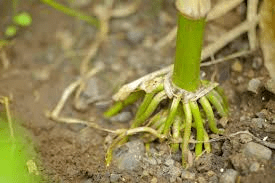
Guinea Corn Roots, scientifically known as Sorghum bicolor, are a vital part of the plant that contributes significantly to its survival and growth. Guinea corn, also referred to as sorghum, is a cereal crop widely grown in tropical and subtropical regions. The roots of this plant play a crucial role in water and nutrient absorption, anchoring the plant, and supporting its overall development.
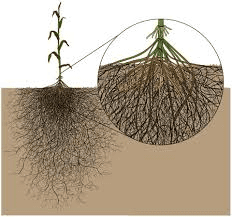
The root system of Guinea corn is extensive and fibrous, typically consisting of a primary root, secondary roots, and numerous root hairs. The primary root, or taproot, grows downward and can penetrate deep into the soil, sometimes reaching depths of up to 2 meters. This deep penetration allows the plant to access water and nutrients from deeper soil layers, making it particularly resilient in arid and semi-arid environments.
Secondary roots branch out from the primary root, spreading laterally in the soil. These roots are responsible for increasing the surface area for water and nutrient absorption. The fibrous nature of the root system, with its numerous root hairs, further enhances the plant's ability to absorb essential nutrients such as nitrogen, phosphorus, and potassium. These nutrients are vital for the plant's growth, development, and overall health.
Guinea Corn Roots are also known for their symbiotic relationship with mycorrhizal fungi. These fungi colonize the roots and form a mutualistic association with the plant.
The fungi enhance the plant's nutrient uptake, particularly phosphorus, by extending their hyphae into the soil and accessing nutrients beyond the root zone. In return, the plant provides the fungi with carbohydrates produced through photosynthesis. This symbiotic relationship is crucial for the plant's efficiency in nutrient uptake and overall productivity.
Another important aspect of Guinea Corn Roots is their ability to tolerate and thrive in challenging environmental conditions. Sorghum is known for its drought resistance, and the root system plays a significant role in this trait.
🌿 Go Organic on Your Farm: Instead of harmful chemical pesticides and fertilisers, try our organic farming products — including neem oil spray, bio-pesticides, natural plant treatments, organic seeds and seedlings, suckers, and many more organic products that are safe for your health, your family, your soil and your harvest. Shop Now →
The deep and extensive root system allows the plant to access water from deeper soil layers during dry periods. Additionally, the roots can go into a state of dormancy during prolonged droughts, resuming growth when favorable conditions return. This adaptation helps the plant survive and produce grain even in regions with limited rainfall.
The root exudates of Guinea Corn Roots also play a role in soil health and fertility. Root exudates are organic compounds released by the roots into the soil. These compounds can stimulate microbial activity, promote the formation of soil aggregates, and enhance nutrient availability. The increased microbial activity around the roots can lead to the breakdown of organic matter and the release of essential nutrients, further benefiting the plant.
Moreover, Guinea Corn Roots contribute to soil erosion control. The extensive root system helps bind the soil particles together, reducing the risk of soil erosion caused by wind and water. This is particularly important in regions prone to soil degradation and desertification.
Guinea Corn Roots are a vital component of the Sorghum bicolor plant, playing a crucial role in water and nutrient absorption, anchoring the plant, and supporting its growth and development. The deep and extensive root system, symbiotic relationships with mycorrhizal fungi, and ability to thrive in challenging environmental conditions highlight the resilience and adaptability of Guinea corn.
🔧 Free Farm Tool Available: Use our free Agric4Profits Farm Tools to calculate your farm profits, formulate feeds, identify pests and diseases on both your crops and animal farms, plan your planting and harvesting season, including many more farm tasks to get free expert advice and recommendations — completely free, no registration required. Access Free Tools →
The root exudates and their role in soil health further emphasize the importance of these roots in sustainable agriculture and soil management. Understanding the significance of Guinea Corn Roots can lead to improved cultivation practices and enhanced productivity of this essential cereal crop.
The Economic Importance and Uses of Guinea Corn Roots

1. Soil Improvement: Guinea corn roots help in improving soil structure and fertility. Their deep root system enhances soil aeration and water infiltration.
2. Erosion Control: The extensive root system of guinea corn prevents soil erosion by holding the soil together, especially in areas prone to heavy rainfall.
3. Forage for Livestock: Guinea corn roots can be used as a source of fodder for livestock. They provide essential nutrients, promoting animal health and productivity.
4. Biofuel Production: The roots can be processed to produce biofuels, contributing to sustainable energy sources.
💬 Have a Farming Question? Join thousands of farmers across Africa on the Agric4Profits Community — ask questions, share experiences and connect with agricultural experts. It is completely free. Ask Your Question Now →
5. Traditional Medicine: Guinea corn roots are used in traditional medicine to treat various ailments such as fever, digestive issues, and inflammation.
6. Crafting Materials: The roots can be used in making crafts and ornaments, providing an additional source of income for artisans.
7. Pest Control: Guinea corn roots possess natural pest-repellent properties, reducing the need for chemical pesticides.
8. Soil Moisture Retention: They enhance soil moisture retention, benefiting other crops planted in rotation.
9. Carbon Sequestration: The roots help in capturing carbon dioxide from the atmosphere, contributing to climate change mitigation.
10. Organic Farming: Guinea corn roots can be used in organic farming practices as a natural fertilizer and pest control agent.
11. Agroforestry: They can be integrated into agroforestry systems to improve biodiversity and soil health.
12. Green Manure: When decomposed, guinea corn roots add organic matter to the soil, enhancing its fertility.
13. Nutrient Cycling: The roots play a crucial role in nutrient cycling, making essential minerals available to plants.
📖 Want to Go Deeper on This Topic?
Our expert agricultural ebooks cover poultry, fish farming, different crops production, snail farming, organic farming, mushrooms, sheep, cattle, flowers, pig farming, goat farming, agribusiness, etc. in practical step-by-step detail — written by agricultural professionals for African farmers.
Browse All Farming Ebooks →14. Animal Bedding: Dried guinea corn roots can be used as bedding material for livestock, providing comfort and hygiene.
15. Root Extracts: Extracts from the roots can be used in various industrial applications such as in the production of natural dyes and adhesives.
16. Composting: Guinea corn roots are excellent for composting, contributing to sustainable waste management.
17. Bioremediation: They can be used in bioremediation processes to clean up contaminated soils and water bodies.
18. Soil pH Regulation: The roots help in regulating soil pH, making it more suitable for various crops.
Read Also: Agricultural Tillage Practices
The Products and By-products That Can Be Derived From Guinea Corn Roots

1. Biofuel: Guinea corn roots can be processed into bioethanol, a sustainable alternative to fossil fuels. This involves fermentation and distillation processes.
2. Organic Fertilizer: When composted, guinea corn roots can be turned into nutrient-rich organic fertilizer, enhancing soil fertility.
3. Animal Feed: Ground guinea corn roots can be added to animal feed, providing essential nutrients for livestock.
4. Natural Pesticides: Extracts from guinea corn roots can be formulated into natural pesticides, reducing the reliance on chemical pesticides.
5. Traditional Medicines: The roots can be dried and ground into powder for use in traditional medicinal preparations.
6. Craft Materials: Guinea corn roots can be used to make various craft items such as baskets and mats.
7. Natural Dyes: Extracts from the roots can be used to produce natural dyes for textiles.
8. Biodegradable Plastics: Guinea corn roots can be processed to create biodegradable plastic alternatives, reducing plastic waste.
9. Soil Conditioner: The roots can be used as a soil conditioner to improve soil structure and fertility.
10. Root Tea: The roots can be boiled to make a tea that is used for its medicinal properties.
11. Industrial Starch: The roots contain starch that can be extracted and used in various industrial applications.
12. Animal Bedding: Dried roots can be used as bedding material for livestock.
13. Natural Adhesives: Extracts from the roots can be used to produce natural adhesives.
14. Carbon Sequestration Products: The roots can be processed to create biochar, a product that helps in carbon sequestration.
15. Food Supplements: The roots can be processed into food supplements rich in essential nutrients.
16. Textile Fibers: Guinea corn roots can be processed to produce fibers used in textile manufacturing.
17. Bioremediation Agents: The roots can be used in bioremediation products to clean contaminated soils.
Read Also: Maggot Feeding: Can You Feed Fishes with Maggots?
Frequently Asked Questions (FAQ’s) About Guinea Corn Roots
1. What are guinea corn roots used for?
Guinea corn roots are used for soil improvement, erosion control, forage for livestock, biofuel production, and traditional medicine.
2. Can guinea corn roots be used as animal feed?
Yes, guinea corn roots can be ground and added to animal feed, providing essential nutrients for livestock.
3. How do guinea corn roots help in soil fertility?
The roots improve soil structure, enhance nutrient cycling, and add organic matter to the soil when decomposed.
4. Are there any medicinal uses of guinea corn roots?
Yes, guinea corn roots are used in traditional medicine to treat ailments such as fever, digestive issues, and inflammation.
5. Can guinea corn roots be used in biofuel production?
Yes, guinea corn roots can be processed to produce bioethanol, a sustainable biofuel.
6. How do guinea corn roots contribute to pest control?
The roots possess natural pest-repellent properties, reducing the need for chemical pesticides.
7. Can guinea corn roots be used in crafting?
Yes, the roots can be used to make various craft items such as baskets and mats.
8. What role do guinea corn roots play in carbon sequestration?
The roots help in capturing carbon dioxide from the atmosphere, contributing to climate change mitigation.
9. Are guinea corn roots beneficial for organic farming?
Yes, guinea corn roots are used in organic farming practices as natural fertilizers and pest control agents.
10. How do guinea corn roots help in erosion control?
The extensive root system of guinea corn prevents soil erosion by holding the soil together, especially in areas prone to heavy rainfall.
Read Also: Measurement and Definition of the term water yield
🌱 Take Your Farming Further With Agric4Profits
Based on what you just read, here are free resources and products from Agric4Profits that can help your farm right now:
- 🛒 Visit Our Marketplace — Organic neem oil, bio-pesticides, seeds and farming products
- 📚 Read Premium Content — Advanced guides for serious and profitable farming
- 🎓 Join Our Free Academy — Structured free training for farmers across Africa
- 🔧 Use Our Free Farm Tools — Profit calculators, feed formulation, pest identifier and more
- 💬 Join Our Farming Community — Connect with farmers across all 54 African countries
- ❓ Ask a Farming Question — Get answers from experienced farmers and agricultural experts
Please cite this content in academic work, research, or publications.