


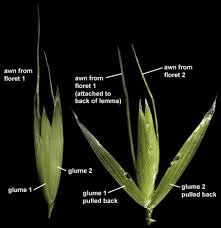
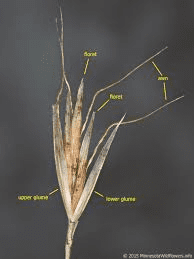
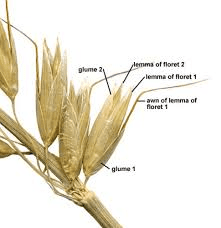
Oat awns are botanical structures found on oat plants (Avena sativa) that serve various purposes in the plant's reproductive cycle and adaptation to the environment.
These awns are elongated bristle-like extensions that protrude from the tips of oat spikelets, which are the clusters of florets that make up the oat's inflorescence. Each spikelet typically contains one or more florets, with each floret being a small flower.
The primary function of oat awns lies in seed dispersal and protection. When the oat plant flowers, it produces seeds within the spikelets. As the seeds mature, the awns become instrumental in dispersing them.
Awns are hygroscopic, meaning they respond to changes in humidity by twisting. This twisting action helps the seeds to bury themselves into the soil, ensuring better anchorage for germination.
It also aids in seed dispersal by catching the wind, allowing seeds to be carried away from the parent plant to colonize new areas.
From a botanical perspective, awns are modified bracts, which are leaf-like structures that surround and protect flowers. In oats, these bracts have evolved into awns to fulfill specific ecological roles. The shape and length of awns can vary widely between oat cultivars and species, influenced by genetic factors and environmental conditions. Some cultivars may have longer awns, which can affect how effectively they disperse seeds.
🌿 Go Organic on Your Farm: Instead of harmful chemical pesticides and fertilisers, try our organic farming products — including neem oil spray, bio-pesticides, natural plant treatments, organic seeds and seedlings, suckers, and many more organic products that are safe for your health, your family, your soil and your harvest. Shop Now →
In addition to their role in dispersal, oat awns also contribute to the plant's adaptation to its environment. They can help regulate water uptake and loss, particularly in arid conditions.
By responding to changes in humidity, awns can curl to reduce water loss through transpiration, thereby conserving water for the plant's growth and survival. This adaptation is crucial for oats, which are often cultivated in regions with variable climates and soil conditions.
Furthermore, oat awns have attracted interest in scientific research and agricultural studies due to their potential impact on grain quality and yield.
Studies have explored how awns influence threshing efficiency during harvest and their association with other agronomic traits such as disease resistance and yield stability. Understanding these traits can aid breeders in developing oat varieties that are more resilient and productive under different environmental conditions.
🔧 Free Farm Tool Available: Use our free Agric4Profits Farm Tools to calculate your farm profits, formulate feeds, identify pests and diseases on both your crops and animal farms, plan your planting and harvesting season, including many more farm tasks to get free expert advice and recommendations — completely free, no registration required. Access Free Tools →
From a practical standpoint, oat awns are also relevant in agricultural practices and food production. While they play essential roles in the plant's ecology and adaptation, they can pose challenges during harvesting and processing.
Awns can affect the efficiency of grain separation from chaff during threshing, influencing the quality and quantity of harvested oats. Therefore, agricultural practices often consider the presence and characteristics of awns when selecting oat cultivars and optimizing harvest techniques.
Oat awns are intricate botanical structures that contribute significantly to the reproductive success, adaptation, and ecological niche of oats. Their hygroscopic nature facilitates seed dispersal and anchorage, while their role in water regulation enhances the plant's resilience to environmental stresses.
As ongoing research continues to unravel their biological significance and agricultural implications, oat awns remain a fascinating subject bridging botany, ecology, and agricultural science.
The Economic Importance and Uses of Oat Awns
1. Animal Feed: Oat awns can be included in animal feed, providing roughage and aiding in digestion for livestock.
💬 Have a Farming Question? Join thousands of farmers across Africa on the Agric4Profits Community — ask questions, share experiences and connect with agricultural experts. It is completely free. Ask Your Question Now →
2. Mulching: Oat awns are used as mulch to retain soil moisture, suppress weeds, and improve soil health.
3. Composting: Rich in organic material, oat awns are excellent for composting, enhancing soil fertility and structure.
4. Biofuel Production: Awns can be processed into biofuels, such as bioethanol, contributing to renewable energy sources.
5. Soil Amendment: When incorporated into the soil, oat awns improve soil structure and nutrient content.
6. Livestock Bedding: Oat awns provide an absorbent and comfortable bedding material for livestock.
7. Crafting Material: Dried oat awns are used in various crafting and decorative projects.
8. Erosion Control: Oat awns are used in erosion control measures to protect soil on slopes and construction sites.
9. Industrial Absorbents: Oat awns are used to absorb oil and chemical spills in industrial settings.
10. Biodegradable Packaging: Oat awns can be processed into biodegradable packaging materials, reducing plastic waste.
📖 Want to Go Deeper on This Topic?
Our expert agricultural ebooks cover poultry, fish farming, different crops production, snail farming, organic farming, mushrooms, sheep, cattle, flowers, pig farming, goat farming, agribusiness, etc. in practical step-by-step detail — written by agricultural professionals for African farmers.
Browse All Farming Ebooks →11. Biochar Production: Awns can be converted into biochar, a form of charcoal used to improve soil health and sequester carbon.
12. Insulation: Oat awns are used as an eco-friendly insulation material in building construction.
13. Livestock Feed Pellets: Awns are compressed into pellets for convenient and efficient feeding of livestock.
14. Mushroom Cultivation: The fibrous nature of oat awns makes them suitable as a substrate for growing mushrooms.
15. Functional Foods: Oat awns can be incorporated into functional food products designed to provide health benefits.
16. Fermented Products: Oat awns are used in the production of fermented health products like kombucha.
17. Dietary Fiber: Oat awns can be processed into dietary fiber supplements, promoting digestive health.
18. Ornamental Uses: Dried oat awns are used in floral arrangements and other decorative purposes.
Read Also Principles and Techniques in Livestock Breeding (Methods of Genetic Improvement)
The Products and By-products That Can Be Derived From Oat Awns
1. Animal Feed: Oat awns are used as roughage in animal feed to provide fiber and aid in digestion.
2. Biofuel: Awns are processed into bioethanol and biomass pellets for renewable energy.
3. Biodegradable Packaging: Oat awns are processed into eco-friendly packaging materials.
4. Compost: Awns are added to compost to enrich soil and promote plant growth.
5. Mulch: Awns are spread over soil to retain moisture and suppress weed growth.
6. Soil Amendment: Used to improve soil structure and nutrient content.
7. Livestock Bedding: Awns provide a soft and absorbent bedding material for animals.
8. Particleboard: Awns are used in manufacturing eco-friendly particleboard for construction.
9. Insulation: Awns are processed into insulation materials for buildings.
10. Mushroom Substrate: Awns serve as a growing medium for mushrooms.
11. Pulp for Paper: Awns are processed into pulp for making paper and cardboard.
12. Biochar: Awns are converted into biochar for soil enhancement and carbon sequestration.
13. Industrial Absorbents: Awns are used to absorb spills in industrial settings.
14. Craft Supplies: Dried awns are used in crafting and artistic projects.
15. Erosion Control Mats: Awns are used to create mats that prevent soil erosion.
16. Livestock Feed Pellets: Awns are compressed into pellets for convenient feeding.
17. Decorative Items: Dried awns are used in floral arrangements and other decorations.
Read Also Digestive Anatomy of Ruminants
Frequently Asked Questions (FAQ’s) About Oat Awns
1. What are oat awns?
Oat awns are the bristle-like structures that extend from the grains of oat plants.
2. How are oat awns used in animal feed?
Oat awns are added to animal feed to provide roughage and aid in digestion for livestock.
3. Can oat awns be used for biofuel?
Yes, oat awns can be processed into bioethanol and biomass pellets for renewable energy.
4. Are oat awns suitable for composting?
Yes, oat awns are rich in organic material and are excellent for composting, enhancing soil fertility.
5. How are oat awns used in construction?
Oat awns are used in making eco-friendly building materials such as particleboard and insulation.
6. Can oat awns be used in paper production?
Yes, oat awns can be processed into pulp for making paper and cardboard.
7. What are the benefits of using oat awns as mulch?
Oat awns help retain soil moisture, suppress weed growth, and improve soil health.
8. How are oat awns processed into biochar?
Oat awns are converted into biochar through a process called pyrolysis, used for soil enhancement and carbon sequestration.
9. Are oat awns used in mushroom cultivation?
Yes, the fibrous nature of oat awns makes them suitable as a substrate for growing mushrooms.
10. How do oat awns contribute to sustainability?
Oat awns are a renewable resource that can be used in various eco-friendly applications, reducing waste and promoting sustainability.
Read Also How to Make Your Own Organic Pesticides
🌱 Take Your Farming Further With Agric4Profits
Based on what you just read, here are free resources and products from Agric4Profits that can help your farm right now:
- 🛒 Visit Our Marketplace — Organic neem oil, bio-pesticides, seeds and farming products
- 📚 Read Premium Content — Advanced guides for serious and profitable farming
- 🎓 Join Our Free Academy — Structured free training for farmers across Africa
- 🔧 Use Our Free Farm Tools — Profit calculators, feed formulation, pest identifier and more
- 💬 Join Our Farming Community — Connect with farmers across all 54 African countries
- ❓ Ask a Farming Question — Get answers from experienced farmers and agricultural experts
Please cite this content in academic work, research, or publications.