


Sorghum leaves are a critical part of the sorghum plant, contributing significantly to its growth and productivity. Sorghum, known scientifically as Sorghum bicolor, is a versatile cereal crop, and its leaves play vital roles in photosynthesis, water regulation, and overall plant health.
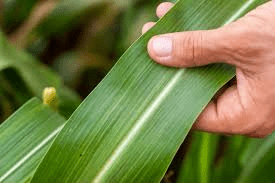
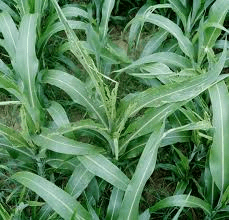
Sorghum leaves are typically long and narrow, resembling those of other grass species. They emerge alternately along the stem, or stalk, in a spiral arrangement. Each leaf consists of two main parts: the blade and the sheath.
The blade is the broad, flat portion of the leaf that extends outward and is where most of the photosynthesis occurs. The sheath is the tubular part that wraps around the stalk, securing the leaf in place and facilitating nutrient and water transport between the leaf and the plant’s vascular system.
The surface of the sorghum leaf blade is covered with a layer of fine, waxy cuticle. This waxy coating helps reduce water loss through evaporation and protects the leaf from environmental stressors such as excessive sunlight and high temperatures.
The underside of the leaf often has tiny structures called stomata, which are openings that allow for the exchange of gases—mainly carbon dioxide and oxygen—between the leaf and the atmosphere. These stomata are essential for photosynthesis, the process by which the plant converts sunlight into energy.
The color of sorghum leaves can vary depending on the plant’s growth stage and environmental conditions. Young leaves are typically green and vibrant, indicating healthy photosynthesis. As the plant matures, the leaves may change color, sometimes turning yellow or red, particularly in response to nutrient deficiencies or stress. This color change can be an indicator of the plant’s overall health and nutritional status.
Sorghum leaves are adapted to withstand a range of environmental conditions. In regions with high temperatures and limited water, sorghum leaves often exhibit features such as a reduced leaf area or increased leaf thickness to minimize water loss. Some varieties of sorghum have narrow, elongated leaves that help reduce the surface area exposed to the sun, thus conserving water and reducing heat stress.
Photosynthesis in sorghum leaves is crucial for the plant’s growth. The process involves capturing sunlight and using it to convert carbon dioxide and water into glucose, a type of sugar that provides energy for the plant. This energy supports various physiological processes, including the development of the plant’s seeds and the growth of new leaves and stems. Healthy, efficient photosynthesis results in better growth and higher yields of sorghum grain.
In addition to their role in photosynthesis, sorghum leaves also play a part in the plant’s defense mechanisms. Some sorghum varieties have leaves with natural resistance to pests and diseases, which helps reduce the need for chemical treatments and promotes sustainable farming practices.
Sorghum leaves are essential for the plant’s health and productivity. Their structure and function enable the plant to effectively capture sunlight, conserve water, and adapt to various environmental conditions. Understanding the role of sorghum leaves is crucial for optimizing crop management and improving yields, making them a key focus in both agricultural research and practical farming.
The Economic Importance and Uses of Sorghum Leaves
1. Animal Feed: Sorghum leaves are used as forage for livestock, providing essential nutrients and roughage.
2. Biofuel Production: The leaves can be processed into biomass for bioethanol or biogas production, contributing to renewable energy sources.
3. Soil Improvement: When decomposed, sorghum leaves add organic matter to the soil, enhancing its fertility and structure.
4. Erosion Control: The root systems and decomposed leaves help stabilize the soil and prevent erosion.
5. Organic Mulch: Sorghum leaves can be used as mulch in gardens and farms to retain soil moisture and suppress weeds.
6. Composting: Leaves are excellent for composting, contributing to the production of nutrient-rich compost.
7. Traditional Medicine: In some cultures, sorghum leaves are used in traditional medicine for their purported health benefits.
8. Crafting Materials: Dried leaves can be used in making crafts such as baskets, mats, and other decorative items.
9. Animal Bedding: The leaves can be used as bedding material for livestock, providing comfort and hygiene.
10. Biodegradable Products: Processed leaves can be used to create biodegradable materials and packaging products.
11. Green Manure: Plant residues, including leaves, can be plowed back into the soil as green manure to improve fertility.
12. Carbon Sequestration: Sorghum leaves contribute to carbon sequestration by capturing carbon dioxide from the atmosphere.
13. Pest Management: Extracts from sorghum leaves can be used to create natural pest repellents.
14. Nutrient Cycling: Leaves play a role in nutrient cycling, making essential minerals available to plants.
15. Agroforestry Systems: Sorghum leaves can be integrated into agroforestry systems to enhance biodiversity and support sustainable land management.
16. Natural Adhesives: Extracts from leaves can be used to produce natural adhesives for various applications.
17. Green Building Materials: Processed leaves can be used in the production of eco-friendly building materials.
18. Water Filtration: The leaves can be used in natural water filtration systems to remove impurities.
Read Also: Recommended Number of Ruminant Animals per Housing Unit for Fattening
The Products and By-products That Can Be Derived From Sorghum Leaves
1. Animal Feed: Sorghum leaves can be used as high-fiber feed for livestock.
2. Bioethanol: Leaves can be processed into bioethanol through fermentation.
3. Compost: Decomposed leaves contribute to nutrient-rich compost for gardening and farming.
4. Mulch: Leaves can be used as mulch to retain soil moisture and suppress weeds.
5. Craft Materials: Dried leaves are used to make crafts such as baskets, mats, and decorative items.
6. Biodegradable Packaging: Leaves can be processed into biodegradable packaging materials.
7. Natural Pest Repellents: Extracts from leaves are used to create natural pest repellents.
8. Renewable Energy: Leaves can be used to produce heat energy through direct combustion.
9. Green Manure: Leaves can be plowed back into the soil to improve fertility as green manure.
10. Natural Adhesives: Extracts from leaves can be processed into natural adhesives.
11. Water Filtration Systems: Leaves can be used in natural water filtration to remove impurities.
12. Green Building Materials: Processed leaves can be used to create eco-friendly construction materials.
13. Textile Fibers: Fibers from leaves can be used in textile manufacturing.
14. Nutrient Additives: Processed leaves can be added to animal feed as a source of additional nutrients.
15. Bioremediation Agents: Leaves can be used in bioremediation products to clean contaminated soils.
16. Soil Conditioner: Decomposed leaves improve soil health and structure.
17. Natural Dyes: Extracts from leaves can be used to produce natural dyes for textiles.
Read Also: Gray Leaf Spot (Stemphylium spp) – Symptoms and Damage Control
Frequently Asked Questions (FAQ’s) About Sorghum Leaves
1. What are sorghum leaves used for?
Sorghum leaves are used for animal feed, biofuel production, soil improvement, composting, and crafting.
2. Can sorghum leaves be used as animal feed?
Yes, sorghum leaves are used as high-fiber forage for various livestock.
3. How do sorghum leaves contribute to soil health?
When decomposed, sorghum leaves add organic matter to the soil, enhancing its fertility and structure.
4. Can sorghum leaves be used in biofuel production?
Yes, leaves can be processed into biomass for bioethanol or biogas production.
5. Are sorghum leaves suitable for composting?
Yes, leaves are excellent for composting, contributing to the production of nutrient-rich compost.
6. How do sorghum leaves help with erosion control?
Sorghum leaves and their root systems help stabilize the soil and prevent erosion.
7. Can sorghum leaves be used for renewable energy?
Yes, leaves can be used to produce heat energy through direct combustion.
8. Are sorghum leaves beneficial for organic farming?
Yes, leaves can be used as mulch and green manure in organic farming to enhance soil fertility.
9. How do sorghum leaves contribute to carbon sequestration?
Sorghum leaves help capture carbon dioxide from the atmosphere, aiding in climate change mitigation.
10. Can sorghum leaves be used in natural pest control?
Yes, extracts from sorghum leaves can be used to create natural pest repellents.
Read Also: 4 Steps to help an Orange Tree Produce Sweet Oranges