



The hospitality industry employs various food and beverage service methods tailored to factors like establishment type, customer expectations, and operational goals.
This article explores the diverse approaches to dining room service, emphasizing the customer process and service sequence. It highlights how modern foodservice operations prioritize customer experience alongside efficient delivery.
Understanding these methods is crucial for anyone in the foodservice industry. Each approach, from table service to specialized in-situ service, caters to specific needs and settings. By examining these methods, you can better appreciate how foodservice operations balance customer satisfaction with operational efficiency.
Food and Beverage Service as a Process
Food and beverage service has evolved from a simple delivery mechanism to a customer-centric process. Traditionally, foodservice operations focused on food production, beverage provision, and service delivery. Today, the customer is an active participant, influencing how services are designed, planned, and executed.
This shift emphasizes the customer’s experience as central to business success. Modern foodservice operations consist of two sub-systems: the service sequence, which delivers food and beverages, and the customer process, which focuses on the customer’s journey from ordering to consumption.
A. Evolution of Foodservice Operations
The traditional view of foodservice operations included three components: food production, beverage provision, and service delivery. These were managed with little regard for customer involvement. Operations were designed around internal requirements, treating customers as passive recipients.
Now, the customer’s role is pivotal. Their active participation shapes the service process. Understanding their expectations and experiences drives the success of foodservice businesses. This shift has redefined how operations are planned and controlled.
B. Sub-Systems in Food and Beverage Service
Modern foodservice operations manage two sub-systems simultaneously. The service sequence focuses on delivering food and beverages to customers. It acts as a bridge between production, beverage provision, and the customer experience.
The customer process involves the customer’s journey through ordering, receiving, consuming, and clearing. Both sub-systems must work seamlessly to ensure a positive experience. This dual approach enhances efficiency and customer satisfaction.
C. Simple Model of Foodservice Operations
A model illustrates the relationship between food production, beverage provision, and service. It highlights key stages for customers, service staff, and production teams. This model, as shown in Figure 1, emphasizes the integration of the service sequence and customer process.
This approach ensures that all aspects of the operation align to meet customer needs. By visualizing these interactions, foodservice operators can better manage their processes to deliver consistent quality.
Read Also: Poultry Management during Winter Cold
The Service Sequence
The service sequence is the operational backbone of food and beverage delivery. It connects food production and beverage provision to the customer process. This sequence includes multiple stages, each critical to ensuring a smooth dining experience.
Each stage can be executed in various ways, depending on the establishment’s goals and resources. From preparation to clearing, the service sequence ensures that food and beverages reach the customer efficiently and effectively.
A. Stages of the Service Sequence
1. Preparation and Booking: Staff prepare the dining area and take bookings to manage customer flow.
2. Greeting and Ordering: Customers are greeted, seated, and their orders are taken promptly.
3. Serving and Clearing: Food and beverages are served, with clearing done during and after service.
4. Billing and Dishwashing: Payments are processed, and dishes are cleaned for future use.
B. Flexibility in Execution
Each stage of the service sequence can be adapted to suit the establishment’s needs. For example, some restaurants use digital systems for bookings, while others rely on manual processes. The choice of method impacts efficiency and customer experience.
The flexibility in executing these stages allows establishments to cater to diverse customer preferences. Whether in fine dining or fast food, the service sequence is tailored to meet operational demands.
C. Importance of Coordination
Effective coordination between stages ensures a seamless dining experience. Missteps in any stage, such as delays in serving or billing, can disrupt the customer process. Staff training and clear protocols are essential for success.
This coordination also bridges the gap between production and service. By aligning all stages, foodservice operations maintain consistency and enhance customer satisfaction.
The Customer Process
The customer process focuses on the journey a customer undertakes in a foodservice setting. It begins when they enter, select or order their meal, consume it, and ends when the area is cleared. This process varies across service methods.
Customers are active participants, making choices that influence their experience. Understanding this process helps establishments design services that meet customer expectations while maintaining operational efficiency.
A. Key Steps in the Customer Process
1. Entry and Selection: Customers enter and choose from a menu or display.
2. Service and Consumption: They receive their order and consume it in a dining area or elsewhere.
3. Payment and Clearing: Payment is made, and the area is cleared by staff or customers.
B. Customer Involvement
Customers play an active role in the process. They may select items from a buffet, order at a counter, or request specialized service. Their choices shape the service method and overall experience.
This involvement requires establishments to anticipate customer needs. Clear signage, intuitive menus, and attentive staff enhance the customer’s ability to navigate the process effectively.
C. Impact on Experience
The customer process directly affects satisfaction. A smooth process, with minimal delays and clear communication, leads to positive experiences. Conversely, confusion or inefficiencies can detract from the dining experience.
Establishments must balance operational efficiency with customer comfort. By prioritizing the customer process, they create memorable experiences that encourage repeat visits.
Categorizing Service Methods
Food and beverage service methods are categorized into five customer processes: table service, assisted service, self-service, single point service, and specialized service. Each method addresses different customer needs and operational contexts.
These categories, summarized in Table 2, highlight how customers interact with the service area, order, consume, and clear. Understanding these distinctions helps operators choose the most suitable method for their establishment.
A. Table Service
Table service involves serving customers at a laid table. It includes methods like silver service, plated service, and guéridon. This method is common in restaurants, cafés, and banqueting settings.
Customers are seated, order from a menu, and are served by staff. The dining area is cleared by staff, ensuring a formal and attentive experience.
B. Assisted Service
Assisted service combines table service and self-service. Customers are usually seated but may collect part of their meal from a buffet or tray. This method is used in carveries and hotel breakfast services.
It offers flexibility, allowing customers to personalize their meals while receiving staff assistance. Clearing is typically handled by staff.
C. Self-Service
In self-service, customers select and carry their food from a buffet or counter. Found in cafeterias and canteens, this method emphasizes customer independence and speed.
Customers choose items, load them onto trays, and consume them in a dining area or take them away. Clearing varies by establishment.
D. Single Point Service
Single point service involves ordering, paying, and receiving food at one location, such as a counter or vending machine. It is common in fast food outlets and takeaways.
Customers carry their food to a dining area or take it away. This method prioritizes speed and convenience.
E. Specialized Service
Specialized service delivers food and beverages to the customer’s location, such as a hospital bed or hotel room. It includes tray service, trolley service, and home delivery.
This method is used in non-dining areas, ensuring convenience for customers in unique settings. Clearing may involve staff or customers.
Read Also: Poultry Management during Winter (Cold)
Detailed Service Methods

These methods range from complex waiter service to simple vending, each with distinct tasks and skill levels.
Understanding these methods helps operators select the most appropriate approach for their establishment. The complexity of service decreases from Group A (table service) to Group D (single point service), with Group E offering specialized solutions.
A. Group A: Table Service
1. Silver/English Service: Staff present and serve food using a spoon and fork onto the customer’s plate.
2. Family Service: Main courses are plated, with vegetables in multi-portion dishes for customers to serve themselves.
3. Plate/American Service: Pre-plated foods are served directly to customers, common in banqueting.
4. Butler/French Service: Food is presented for customers to serve themselves, emphasizing interaction.
5. Russian Service: Customers help themselves from a laid table, a modern interpretation of traditional methods.
6. Guéridon Service: Food is prepared or carved at a side table, adding a theatrical element.
7. Bar Counter Service: Customers are served at a bar counter, often on stools.
B. Group B: Assisted Service
1. Carvery: Part of the meal is served to seated customers, with others collected from a buffet.
2. Buffets: Customers select from displays or trays, consuming at tables or in lounge areas.
C. Group C: Self-Service
1. Counter: Customers queue past a service counter, selecting items onto a tray.
2. Free-Flow: Customers move freely to service points in a foodservice area.
3. Echelon: Counters are angled to save space in a free-flow setup.
4. Supermarket: Island service points allow flexible customer movement.
D. Group D: Single Point Service
1. Takeaway: Customers order and receive food at a counter, often consuming off-premises.
2. Drive-Thru: Customers order and collect food from a vehicle.
3. Fast Food: Quick service with a limited menu, offering dining or takeaway options.
4. Vending: Automated food and beverage service via machines.
5. Kiosks: Temporary stations for peak demand or specific locations.
6. Food Court: Multiple counters for ordering, with shared or takeaway dining areas.
7. Bar: Order, service, and payment occur at a licensed premises counter.
E. Group E: Specialized Service
1. Tray Service: Meals are delivered on trays to customers in situ, such as hospitals or aircraft.
2. Trolley Service: Food and beverages are served from a trolley in non-dining areas.
3. Home Delivery: Food is delivered to customers’ homes or workplaces.
4. Lounge Service: Food and beverages are served in lounge areas, like hotels.
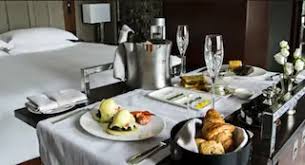
5. Room Service: Meals are delivered to guest bedrooms or meeting rooms.
6. Drive-In Service: Customers are served food at their parked vehicles.
Frequently Asked Questions
1. What is the main difference between table service and self-service?
Table service involves staff serving food at a laid table, while self-service requires customers to select and carry their food from a buffet or counter.
2. How does assisted service work in a carvery?
In a carvery, staff serve part of the meal to seated customers, while customers collect other items, like vegetables, from a buffet.
3. What is guéridon service in table service?
Guéridon service involves preparing or carving food at a side table or trolley, enhancing the dining experience with a theatrical element.
4. What is single point service, and where is it used?
Single point service involves ordering, paying, and receiving food at one location, like a counter or vending machine, common in fast food and takeaways.
5. How does specialized service differ from other methods?
Specialized service delivers food to non-dining areas, like hospital beds or hotel rooms, focusing on convenience for the customer’s location.
6. Why is the customer process important in foodservice?
The customer process focuses on the customer’s journey, from ordering to consumption, ensuring their experience aligns with expectations for satisfaction.
7. What role does the service sequence play in dining?
The service sequence manages the delivery of food and beverages, coordinating stages like preparation, serving, and clearing for efficiency.
8. How do foodservice operations balance customer and operational needs?
They integrate the customer process and service sequence, using tailored methods to meet customer expectations while maintaining operational efficiency.
Do you have any questions, suggestions, or contributions? If so, please feel free to use the comment box below to share your thoughts. We also encourage you to kindly share this information with others who might benefit from it. Since we can’t reach everyone at once, we truly appreciate your help in spreading the word. Thank you so much for your support and for sharing!