


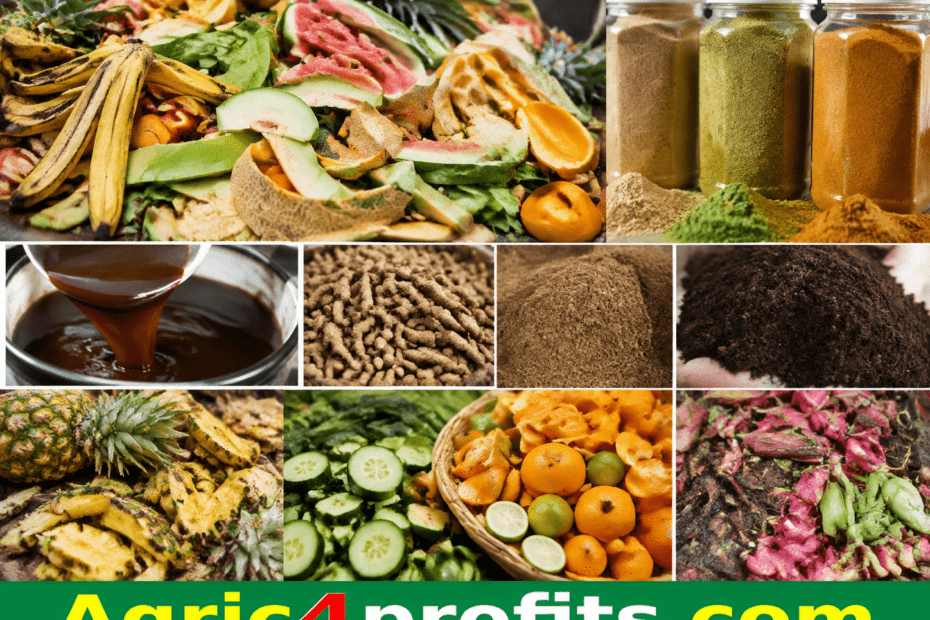
Fruits and vegetables are processed into many foods and beverages because consumers seek convenient products with longer shelf life and consistent quality. These activities also generate substantial processing residues. on an expanding scale
Peels, seeds, stems, cores, pulp, leaves, and pomace are often treated as waste even though they contain useful carbohydrates, dietary fiber, pigments, oils, enzymes, minerals, and other compounds. for possible recovery and further processing
Proper utilization of these materials can reduce disposal problems while creating additional products and income opportunities for processors, farmers, entrepreneurs, and other participants throughout the agricultural value chain. within processing enterprises and rural businesses
Fruit and vegetable by-products may support food production, animal feeding, fermentation, ingredient extraction, environmental applications, and other value-added activities when they are collected, handled, processed, and stored appropriately. when appropriate processing standards are maintained
This article examines practical utilization options for pineapple, mango, citrus, banana, potato, and carrot processing residues, while showing how these materials can contribute to resource efficiency and value addition. for processors and agricultural entrepreneurs
Read Also: Heat Detection Methods and Signs in Farm Animals
🌿 Go Organic on Your Farm: Instead of harmful chemical pesticides and fertilisers, try our organic farming products — including neem oil spray, bio-pesticides, natural plant treatments, organic seeds and seedlings, suckers, and many more organic products that are safe for your health, your family, your soil and your harvest. Shop Now →
Utilization of By-Products from Pineapple Processing

Pineapple processing generates several residues, including peels, cores, stems, leaves, pulp, and bagasse. These materials contain carbohydrates, fiber, enzymes, and other components that can support different value-added applications. in commercial processing operations
Among these residues, the peel is one of the major wastes produced during processing. Instead of being discarded, it can serve as a substrate for fermentation, extraction, feed preparation, and environmental applications.
Pineapple processors can therefore view these residues as secondary raw materials rather than useless waste. Such an approach can improve resource efficiency, reduce disposal burdens, and create additional streams of economic value.
1. Biofuel Production: Pineapple peels contain fermentable sugars that can support microbial processes for producing biofuels. Depending on processing conditions, these residues may serve as substrates for methane, ethanol, or hydrogen generation.
🔧 Free Farm Tool Available: Use our free Agric4Profits Farm Tools to calculate your farm profits, formulate feeds, identify pests and diseases on both your crops and animal farms, plan your planting and harvesting season, including many more farm tasks to get free expert advice and recommendations — completely free, no registration required. Access Free Tools →
2. Beverage Production: Pineapple cores and other suitable residues can be processed into juice concentrates, fermented beverages, vinegar, or flavoring materials. Proper sanitation and controlled processing are necessary for safe commercial products.
3. Enzyme Extraction: Pineapple stems are important sources of bromelain, a proteolytic enzyme used in several industrial applications. The enzyme can support meat tenderizing, food processing, brewing, biotechnology, cosmetics, and related activities.
4. Dietary Fiber Ingredients: Pineapple residues contain substantial dietary fiber, particularly insoluble fiber. After suitable cleaning and processing, recovered fiber can be incorporated into selected food products designed to increase fiber content.
5. Fermented Special Products: Pineapple residues can serve as raw materials for fermentation processes producing organic acids and other specialized compounds. Research has also examined their usefulness in producing natural flavoring substances.
6. Water Treatment Materials: Pineapple peel biomass has potential as a low-cost adsorbent material for wastewater treatment. Its suitability depends on preparation methods, contaminant type, operating conditions, and the required treatment performance.
💬 Have a Farming Question? Join thousands of farmers across Africa on the Agric4Profits Community — ask questions, share experiences and connect with agricultural experts. It is completely free. Ask Your Question Now →
Overall, pineapple by-product utilization can transform processing residues into useful materials for food, biotechnology, energy, and environmental applications. This reduces waste while encouraging processors to recover additional value from harvested crops.
Utilization of By-Products from Mango Processing
Mango processing produces peels, seeds, kernels, pulp residues, and other materials that can contain valuable nutrients and functional compounds. These residues can be investigated for food, ingredient, cosmetic, and industrial applications.
Mango peel is a useful source of dietary fiber, with both soluble and insoluble fractions. Properly processed peel material can therefore contribute functional properties when incorporated into suitable food formulations.
The fiber fraction may support products requiring additional bulk or dietary fiber. However, processing must control moisture, contamination, flavor, and particle size so that the resulting ingredient remains acceptable. for food manufacturers
Mango seeds also contain kernels that can be separated during processing. The kernels contain oil and other constituents that may be explored for food, cosmetic, pharmaceutical, and industrial applications after appropriate processing.
Mango kernel oil can provide fatty acids useful for ingredient development. Its composition and stability determine the most appropriate application, while refining or other processing may be required before specific uses.
5. Functional Ingredients: Mango residues can be converted into powders, extracts, or concentrated ingredients for selected food applications. Such materials may contribute fiber, color, flavor, or other functional characteristics depending on processing.
6. Cosmetic Applications: Mango kernel materials can contribute to products such as skin creams, lotions, and hair preparations. Proper extraction, purification, quality control, and formulation are necessary before commercial cosmetic use.
Mango by-product utilization therefore offers processors opportunities to reduce discard volumes and develop additional products. The greatest benefits occur when residue collection, hygienic handling, processing technology, and market demand are considered together.
📖 Want to Go Deeper on This Topic?
Our expert agricultural ebooks cover poultry, fish farming, different crops production, snail farming, organic farming, mushrooms, sheep, cattle, flowers, pig farming, goat farming, agribusiness, etc. in practical step-by-step detail — written by agricultural professionals for African farmers.
Browse All Farming Ebooks →Read Also: Worm infection among Poultry Birds: Types, Causes and Treatment
Utilization of By-Products from Citrus Fruit Processing
Citrus processing generates peels, seeds, pulp residues, membranes, and bagasse. Oranges, lemons, limes, tangerines, and grapefruits can all produce residues containing valuable compounds suitable for several utilization pathways. in both large and small processing enterprises
Citrus peel contains bioactive substances, including flavonoids and phenolic compounds, that can be recovered for applications requiring antioxidant activity. Extraction methods should be selected according to the intended product. for selected commercial uses
The peel contains two important layers, the outer flavedo and inner albedo. These layers differ in composition and physical characteristics, which can influence extraction, drying, ingredient development, and other processing operations.
1. Antioxidant Compounds: Citrus residues can provide compounds with antioxidant properties for food, pharmaceutical, and biotechnology applications. Recovery processes may include drying, milling, extraction, concentration, and purification before final use.
2. Flavor Enhancers: Lemon and lime peel oils contain aromatic compounds used for flavoring and fragrance purposes. They can contribute distinctive citrus notes to beverages, foods, pharmaceutical preparations, perfumes, and related products.
3. Antimicrobial Applications: Citrus extracts have been investigated for antimicrobial activity and potential food preservation uses. Their effectiveness depends on the extract composition, target microorganisms, concentration, food matrix, and processing conditions.
4. Pectin Extraction: Citrus peels are important sources of pectin, a hydrocolloid widely used as a gelling, thickening, stabilizing, and texturizing ingredient. Pectin is especially valuable in jams and related products.
Citrus by-product recovery can therefore combine food ingredient production with waste reduction. Efficient utilization requires suitable collection systems, preservation methods, extraction technology, quality assurance, and clear markets for recovered compounds.
Utilization of By-Products from Banana Processing
Banana processing and consumption generate large quantities of peel and other plant residues. Banana peel is especially important because it represents a substantial portion of the whole fruit. across many producing areas
Banana peels contain phenolic compounds, pigments, sterols, and other phytochemicals that may provide useful functional properties. Their composition makes them potential raw materials for ingredient development and selected industrial applications.
1. Antioxidant Ingredients: Banana peels contain several phytochemical compounds associated with antioxidant capacity. After suitable processing, peel materials or extracts may be incorporated into selected products where these characteristics are desirable.
2. Dietary Fiber: Banana peel can be processed into flour or powdered material for incorporation into bread, biscuits, noodles, pasta, and similar foods. It may increase the dietary fiber content of formulations.
3. Water Treatment: Processed banana peel biomass has been investigated for its ability to adsorb certain contaminants from water. Its effectiveness depends on preparation, surface properties, contaminant concentration, and operating conditions.
4. Animal Feed: Selected banana residues can be processed into feed ingredients for livestock when safety, nutrient composition, moisture, and inclusion levels are properly controlled for the intended animal species.
5. Compost and Soil Amendment: Banana peels can also be composted or otherwise processed into organic materials. This pathway returns nutrients and organic matter to agricultural systems while reducing disposal pressure.
Banana by-products therefore provide several opportunities for value addition. Producers should select utilization methods according to residue availability, processing facilities, food safety requirements, technical skills, market demand, and expected returns.
Utilization of By-Products from Potato and Carrot Processing
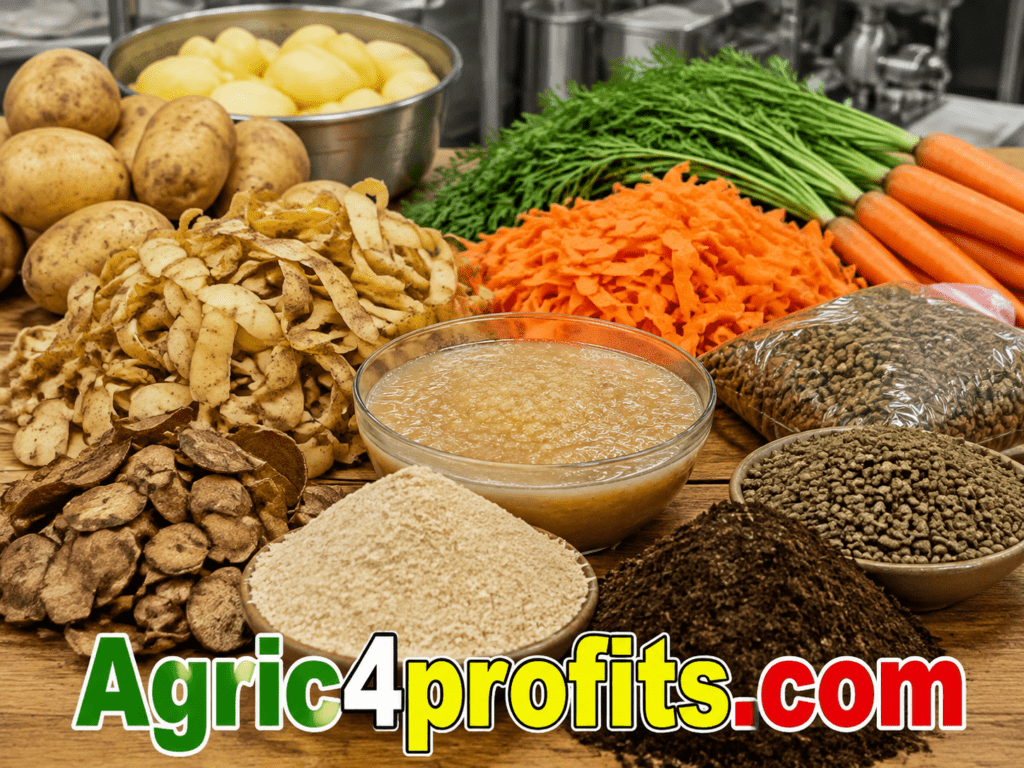
1. Utilization of By-Products from Potato Processing
Potato processing produces peel and trimming residues that can accumulate quickly in food processing operations. Because potatoes are widely consumed, these residues can represent a significant resource when properly recovered.
Potato peel contains dietary fiber and other compounds that can contribute useful functional properties. Processing residues should be collected cleanly and handled promptly to reduce deterioration and contamination. when recovery systems are carefully managed
1. Vegetable Oil Preservation: Potato peel extracts have been investigated for their antioxidant effects in vegetable oils. Suitable extracts may help slow deterioration and improve stability when applied under controlled processing conditions.
2. Functional Food Ingredients: Dried or processed potato peel materials can be incorporated into cookies, bread, and other bakery products. They may increase fiber content and alter nutritional or functional characteristics.
Potato peel flour can therefore support food diversification while reducing waste. Formulation trials are important because high inclusion levels may affect color, taste, texture, dough behavior, and consumer acceptance. during product development trials
Processing conditions also influence the quality of recovered potato materials. Drying temperature, particle size, storage conditions, and contamination control can determine whether the resulting ingredient remains stable and suitable. throughout the processing operation
Beyond food applications, potato residues may also be considered for composting, animal feeding, or other resource recovery options when appropriate. The selected pathway should reflect safety and practical economic feasibility.
Effective potato by-product utilization links waste management with value addition. Processors can evaluate residue quantity, available equipment, product specifications, operating costs, and market opportunities before choosing suitable recovery strategies. for the enterprise
2. Utilization of By-Products from Carrot Processing
Carrot juice production can generate considerable quantities of pomace, particularly when pressing leaves a large fraction of the original material behind. This pomace contains fiber, carotenoids, and phenolic compounds. during commercial juice processing operations
Carrot pomace can therefore serve as a valuable ingredient rather than an unavoidable disposal material. Its composition makes it suitable for food formulation, ingredient production, and other value-added opportunities. for processors seeking additional revenue
1. Value-Added Foods: Carrot pomace can be incorporated into bread, cakes, biscuits, dressings, pickles, and other products. It can contribute fiber, color, and characteristic vegetable components to selected formulations. while improving product variety
2. Functional Beverage Ingredients: Properly processed carrot residues may contribute ingredients for functional drinks and related formulations. Processing should address moisture, microbial quality, flavor, stability, and consumer acceptance. for suitable food applications
3. Dietary Fiber Production: Carrot pomace can be dried and milled into powder for use as a fiber-rich ingredient. Vacuum drying and other suitable methods may help preserve desirable qualities.
4. Condensed Food Products: Carrot pomace has been explored in the preparation of condensed products and similar foods. Its application depends on formulation, processing conditions, texture, flavor, and nutritional requirements.
5. Animal Feeding: Suitable carrot residues may be considered as supplementary feed materials where appropriate. Safe inclusion depends on residue quality, nutrient composition, moisture, storage, and the requirements of livestock.
Carrot by-product recovery can improve material efficiency while creating additional products. Processors should match each residue to a technically suitable pathway and maintain hygiene, quality control, storage, and market considerations.
Summary on Utilization of By-Products from Fruit and Vegetable Processing
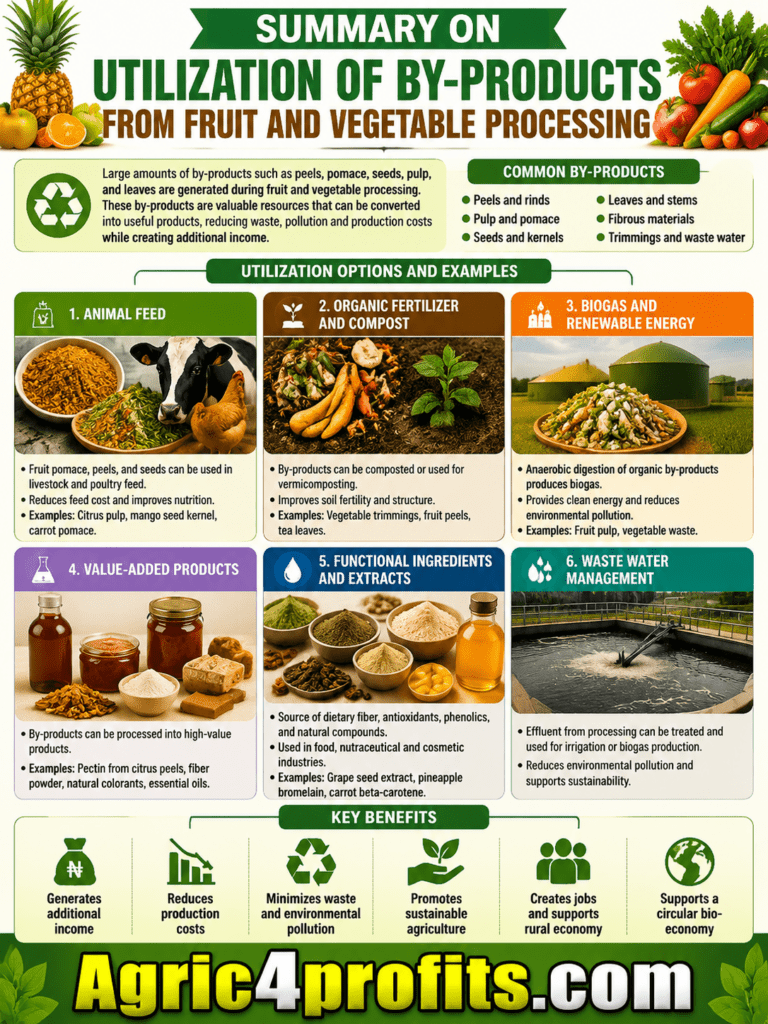
| Fruit or vegetable | Main by-products | Important utilization options |
|---|---|---|
| Pineapple | Peel, core, stem, leaves, pulp, bagasse | Biofuel, beverages, bromelain, dietary fiber, fermentation, water treatment |
| Mango | Peel, seed, kernel, pulp residues | Dietary fiber, kernel oil, functional ingredients, cosmetic materials |
| Citrus | Peel, seeds, pulp, membranes, bagasse | Antioxidants, flavoring, antimicrobial extracts, pectin |
| Banana | Peel and other plant residues | Antioxidant ingredients, dietary fiber, water treatment, feed, compost |
| Potato | Peel and trimmings | Oil stabilization, functional bakery ingredients, compost, feed |
| Carrot | Pomace and processing residues | Value-added foods, fiber powder, beverages, condensed products, feed |
Frequently Asked Questions About Utilization of By-Products from Fruit and Vegetable Processing
1. What are fruit and vegetable by-products?
Fruit and vegetable by-products are residual materials generated during processing, including peels, seeds, stems, cores, pulp, leaves, pomace, and other plant materials that remain after primary product recovery. within agricultural and food processing systems.
2. Why should food processing by-products be utilized?
Utilizing processing by-products can reduce waste disposal, recover useful nutrients and compounds, support additional products, improve resource efficiency, and create opportunities for processors and agricultural entrepreneurs. while supporting better resource management.
3. What are the major pineapple processing by-products?
Major pineapple residues include peels, cores, stems, leaves, residual pulp, and bagasse. These materials can support fermentation, enzyme extraction, fiber recovery, beverage production, animal feeding, and environmental applications. when appropriate handling standards are maintained.
4. How can citrus peels be utilized?
Citrus peels can provide antioxidant compounds, flavoring materials, antimicrobial extracts, and pectin. They may therefore serve food, pharmaceutical, biotechnology, fragrance, and other industrial applications after suitable processing. according to the required product specifications.
5. Can banana peels be used in food products?
Yes. Properly processed banana peel can be converted into flour or powder and incorporated into selected foods such as bread, biscuits, noodles, and pasta to increase dietary fiber. when the ingredient meets safety requirements.
6. What is carrot pomace?
Carrot pomace is the solid residue remaining after juice extraction. It can contain fiber, carotenoids, and phenolic compounds, making it useful for food ingredients, powders, beverages, and other applications. after proper drying and storage.
7. How can potato peels be utilized?
Potato peels can be processed for antioxidant extracts, functional food ingredients, compost, animal feeding, and other recovery pathways. Their suitability depends on hygiene, processing conditions, safety requirements, and market demand.
8. What factors should processors consider before utilizing by-products?
Processors should consider residue quantity, composition, contamination risks, storage stability, available equipment, processing costs, regulatory requirements, technical skills, product quality, and the availability of reliable markets for recovered materials. before selecting a practical utilization option.
Do you have any questions, suggestions, or contributions? If so, please feel free to use the comment box below to share your thoughts. We also encourage you to kindly share this information with others who might benefit from it. Since we can’t reach everyone at once, we truly appreciate your help in spreading the word. Thank you very much for your support and for sharing!
Read Also: Interview Tips for Agriculture-Related Positions
🌱 Take Your Farming Further With Agric4Profits
Based on what you just read, here are free resources and products from Agric4Profits that can help your farm right now:
- 🛒 Visit Our Marketplace — Organic neem oil, bio-pesticides, seeds and farming products
- 📚 Read Premium Content — Advanced guides for serious and profitable farming
- 🎓 Join Our Free Academy — Structured free training for farmers across Africa
- 🔧 Use Our Free Farm Tools — Profit calculators, feed formulation, pest identifier and more
- 💬 Join Our Farming Community — Connect with farmers across all 54 African countries
- ❓ Ask a Farming Question — Get answers from experienced farmers and agricultural experts
Please cite this content in academic work, research, or publications.