


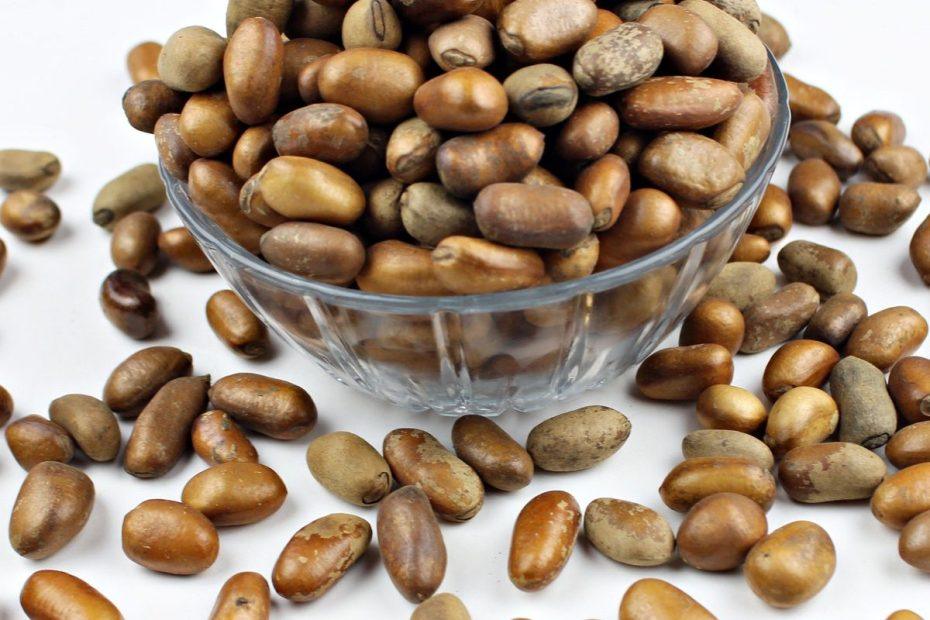
The African calabash nutmeg popularly known as Ehuru is another local spice and a very popular flavour in some parts of the world. It is used to add spice and flavors to a meal, giving it a great and distinct taste. However, as a local spice, it is also called Calabash nutmeg, African Nutmeg, Jamaican Nutmeg, and Ghana seed.
Most people use ehuru as a spice for almost every dish they prepare. Some of the popular dishes where ehuru can be used are:
1. Pepper soup
2. Abacha, mostly consumed by the Igbos
3. Nkwobi
4. Groundnut soup
5. Black soup, you can make your research on this soup.
6. Ofe akwu
7. Ugba/ukpaka
8. Ose-Oji
9. Egusi
10. Ogbono
11. Banga soup
12. Garden egg sauce
13. Goat meat stew
14. Ukwa
15. Isi-ewu, e.t.c
All the above dishes are what can be prepared with ‘Ehuru’.
Read Also: How to Grow Herbs and Spices in Urban Areas
And if you’ve not used ehuru in your meal before, then you’ve been missing a whole lot on the benefits. As you continue to read this article, you will be enlightened on the facts and benefits that African nutmeg (Ehuru), has to offer.
🌿 Go Organic on Your Farm: Instead of harmful chemical pesticides and fertilisers, try our organic farming products — including neem oil spray, bio-pesticides, natural plant treatments, organic seeds and seedlings, suckers, and many more organic products that are safe for your health, your family, your soil and your harvest. Shop Now →
If you’ve tasted Abacha before in a restaurant you will discover that the taste is quite different from the one you prepare yourself at home, the reason is that the African nutmeg (Ehuru), is being used in the preparation of Abacha(African Salad) to remove its former taste and give it a distinct and delicious taste.
If you’re thinking of buying the ‘Ehuru’, probably to use as a spice in your meal, you can find it with people selling local spices in the market.
However, African nutmeg has other local names associated with it.
It is called gyeda Mai kamshi or gyadan Miya by the hausa’s, Ariwo by the Yorubas, Iribuotor/ere by the Urhobos, Ikposa by the Benin people, Arigogo by the Ijaws, Kposa by the Ilaje people in Ondo State, Nigeria, Ewaka in yakurr dialect.
🔧 Free Farm Tool Available: Use our free Agric4Profits Farm Tools to calculate your farm profits, formulate feeds, identify pests and diseases on both your crops and animal farms, plan your planting and harvesting season, including many more farm tasks to get free expert advice and recommendations — completely free, no registration required. Access Free Tools →
Read Also: 13 Health Benefits of Garlic Plant (Allium sativum)
How to De-shell African Calabash Nutmeg (Ehuru)

After buying your African nutmeg, if you’re wondering how to de-shell it, then follow the simple steps below;
(1) Bring in your nutmeg, and then roast them, for a few minutes. Once it is well roasted, bring it down from the heat and pound it.
(2) Now, separate the bark from the edible part and then pound it till it becomes powder, and there you have it, a fine nutmeg spice.
Another way to de-shell this nutmeg easily is by blending it in a blender after roasting it, all you have to do is to roast it and then pour it into an electric blender and blend it very well until all its shell is removed.
💬 Have a Farming Question? Join thousands of farmers across Africa on the Agric4Profits Community — ask questions, share experiences and connect with agricultural experts. It is completely free. Ask Your Question Now →
On blending you will be hearing sounds of the shells hitting the inner parts of the blender, at that point pause and check if it has de-shelled to your satisfaction, continue to run this process until you achieve a more fine and de-shelled nutmeg.
After removing all the shells from the nutmeg, transfer it from the blender into a tray, and clean it by separating the shells from the edible part. Pound it until it becomes powder, it’s as easy as this.
Read Also: 10 Health Benefits of Ginger Plant (Zingiber officinale)
7 Essential Health Benefits of Ehuru (African Calabash Nutmeg)

Based on qualitative research, it was discovered that ‘Ehuru’ is a fine spice and also when added to meals tends to provide tons of health benefits and it contains minerals and vitamins that are essential for the proper growth and functioning of your body.
It contains Iron, folic acid, magnesium, vitamin C, vitamin E, calcium, vitamin c, and more too. Helps to reduce cholesterol.
1. Removes phlegm (good expectorant)
2. Greatly increases libido
3. Relieves common cold and flu
4. Improves appetite.
📖 Want to Go Deeper on This Topic?
Our expert agricultural ebooks cover poultry, fish farming, different crops production, snail farming, organic farming, mushrooms, sheep, cattle, flowers, pig farming, goat farming, agribusiness, etc. in practical step-by-step detail — written by agricultural professionals for African farmers.
Browse All Farming Ebooks →5. A good laxative
6. Cleans the bowels
7. Helps in burning excess fat.
Note: Make sure you roast it if you want to chew it, don’t eat it raw as it may cause or lead to serious health complications.
Read Also: 18 Health Benefits of Ginger and Garlic Tea to Lose Weight and others
Things to Take Into Consideration

You should know that the nutmeg (Ehuru), has a very strong flavor so you should only use little quantity of it if you want to use it in your meal. Add little so it doesn’t overwhelm other flavors and spices in your meal.
1. Ehuru (African Calabash Nutmeg) and Pregnancy
It is mostly recommended that pregnant women should eat food with Ehuru in it, the reason is that it is very healthy and has lots of minerals and vitamins in it and no research has reported any negative effect of calabash nutmeg in pregnancy.
2. Ehuru (African Calabash Nutmeg) and Fertility
Ehuru also called Calabash nutmeg is a great sex stimulant and may greatly improve libido in both men and women. It is one of those Nigerian spices that boost ovulation and fertility.
Therefore, Ehuru is a very healthy and popular nutmeg and it is advised that you use little quantity of it in your meal as it has a very strong flavor and also a great taste. It can also provide essential health benefits when added to your meal.
Scientific Evidence and Case Studies on Health Benefits and Uses of African Calabash Nutmeg (Ehuru)
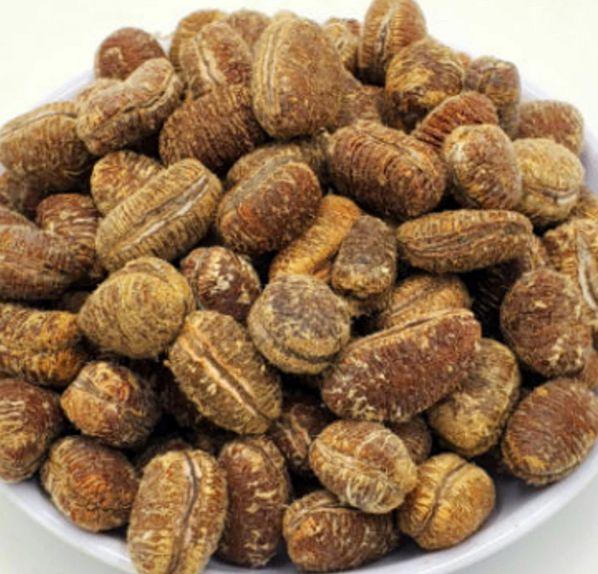
1. Hypocholesterolemic and lipid peroxidation modulation: Aqueous extracts of Monodora myristica seeds lower cholesterol levels and protect against lipid peroxidation in hypercholesterolemic rat models, reversing liver toxicity induced by high-cholesterol diets.
2. Antimicrobial activity: Essential oils and extracts from Monodora myristica seeds exhibit strong antibacterial and antifungal effects against pathogens like Escherichia coli, Staphylococcus aureus, Aspergillus flavus, and Fusarium moniliforme, with inhibitory zones comparable to or better than some antibiotics in in vitro studies.
3. Antioxidant capacity: High phenolic content and bioactive compounds in seeds provide potent DPPH radical scavenging, ferric reducing power, and total antioxidant activity, protecting against oxidative stress in essential oil and oleoresin analyses.
4. Anti-inflammatory and pain-relieving effects: Extracts demonstrate anti-inflammatory properties and pain management potential in traditional and lab models, supporting uses for conditions like arthritis and rheumatism through bioactive terpenoids and phenolics.
5. Potential antidepressant and immune support: Seed supplementation in rodent models of chronic stress increases lymphocytes, platelets, vitamins B9/B12, and immune function, suggesting mood-enhancing and immunomodulatory benefits.
Nutritional Value Of Health Benefits and Uses of African Calabash Nutmeg (Ehuru)
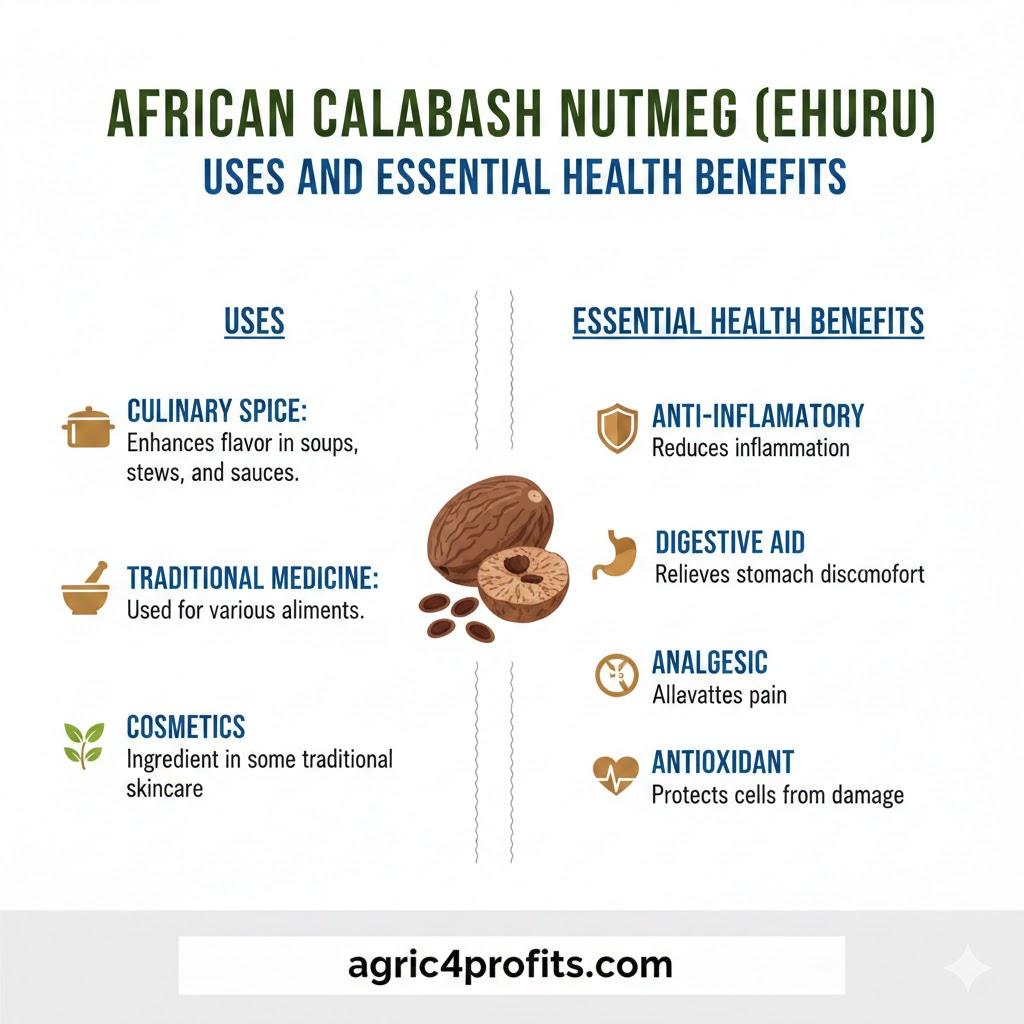
African Calabash Nutmeg (Ehuru seeds, Monodora myristica, approximate values per 100g dried or as reported in compositional studies) offers these key nutrients:
1. Rich in dietary fiber: Contains substantial fiber, aiding digestion, bowel regularity, and supporting cholesterol reduction.
2. Good source of protein: Provides notable protein levels, contributing to tissue repair and nutritional support.
3. Contains essential minerals like calcium: Supplies calcium for bone health, muscle function, and overall skeletal strength.
4. Source of iron: Includes iron essential for red blood cell production and preventing anemia.
5. Rich in magnesium: Offers magnesium for metabolic processes, nerve function, and heart health.
6. Contains vitamins like C and E: Provides vitamin C for immunity and antioxidants, plus vitamin E for cellular protection.
7. Abundant in phytochemicals and essential oils: High in antioxidants (phenolics, flavonoids), alkaloids, tannins, and essential oils driving antimicrobial, anti-inflammatory, and flavor properties.
Summary of Health Benefits and Uses of African Calabash Nutmeg (Ehuru)
| Aspect | Key Details |
|---|---|
| Description | African Calabash Nutmeg (Ehuru), botanically Monodora myristica, is a tropical tree spice from the Annonaceae family native to West African evergreen forests; seeds are oval, dark brown, enclosed in hard shells within large woody fruits; warm, spicy, nutty, earthy flavor more intense than regular nutmeg. |
| Nutritional Highlights | Rich in fiber, protein, minerals (calcium, iron, magnesium, potassium), vitamins C and E, essential oils, antioxidants (phenolics, flavonoids), alkaloids, tannins. |
| Health Benefits | Lowers cholesterol and supports heart health, provides antioxidant protection against oxidative stress, exhibits strong antimicrobial/antibacterial/antifungal effects, reduces inflammation and relieves pain (arthritis, rheumatism), aids digestion and relieves bloating/constipation, acts as expectorant for coughs/colds/flu, boosts libido and fertility, improves appetite, supports weight management by burning fat, potential antidepressant and immune-boosting effects, traditional use for malaria/fever. |
| Uses | Culinary: roasted/ground seeds as spice in soups (pepper soup, egusi, ogbono, banga), stews, sauces, abacha, nkwobi, goat meat, native rice, meats/fish for flavor; medicinal: added to meals for benefits or brewed/infused; traditional remedies for indigestion, respiratory issues, infections; skin care with extracted oil; insect repellent. |
| Preparation | Roast seeds lightly, pound or blend to remove shells, grind into powder; use sparingly due to strong flavor; add to dishes toward end of cooking. |
| Scientific Support | Evidence for hypocholesterolemic, antioxidant, antimicrobial, anti-inflammatory effects from rat models, in vitro assays, and phytochemical analyses. |
| Precautions | Use in moderation due to intense flavor; roast before consuming (avoid raw); safe in culinary amounts, including pregnancy in food; consult doctor for medicinal/high doses or if pregnant/children. |
Frequently Asked Questions About Health Benefits and Uses of African Calabash Nutmeg (Ehuru)
1. What is Ehuru?
Ehuru, also known as African Calabash Nutmeg or Monodora myristica, is a fragrant West African spice from tree seeds with a warm, nutty, peppery flavor used in cooking and traditional medicine.
2. How does Ehuru differ from regular nutmeg?
Ehuru has a more intense, earthy, woody taste compared to the sweeter, milder regular nutmeg (Myristica fragrans), with stronger aromatic notes.
3. Is Ehuru good for lowering cholesterol?
Yes, studies show its extracts reduce cholesterol and protect against lipid damage in hypercholesterolemic models.
4. Does Ehuru have antimicrobial benefits?
Yes, its essential oils and extracts fight bacteria, fungi, and pathogens effectively in lab tests.
5. Can Ehuru help with digestion?
Yes, it acts as a laxative, relieves bloating/indigestion, cleans bowels, and supports appetite.
6. Is Ehuru an aphrodisiac?
Yes, traditionally used to boost libido, improve fertility, and enhance sexual function in both men and women.
7. Does Ehuru support respiratory health?
Yes, as an expectorant it relieves coughs, colds, flu, phlegm, and chest congestion.
8. How is Ehuru prepared for use?
Roast seeds, remove shells by pounding/blending, grind into powder, and add sparingly to dishes or brew as infusion.
9. Can pregnant women use Ehuru?
Yes in food amounts for its nutrients; no reported negative effects, but consult a doctor for large/medicinal use.
10. Is Ehuru safe for regular consumption?
Yes in moderation as a culinary spice; strong flavor means small quantities; avoid raw seeds and consult for therapeutic use.
Do you have any questions, suggestions, or contributions? If so, please feel free to use the comment box below to share your thoughts. We also encourage you to kindly share this information with others who might benefit from it. Since we can’t reach everyone at once, we truly appreciate your help in spreading the word. Thank you very much for your support and for sharing!
Disclaimer: This article is for educational and informational purposes only. The health benefits described are based on scientific research and traditional knowledge. They ayre not a substitute for professional medical advice, diagnosis, or treatment. Always consult a healthcare professional before using any herb or natural remedy for medical purposes.
Read Also: Used Cooking Oil Recycling Process: Complete Guide
🌱 Take Your Farming Further With Agric4Profits
Based on what you just read, here are free resources and products from Agric4Profits that can help your farm right now:
- 🛒 Visit Our Marketplace — Organic neem oil, bio-pesticides, seeds and farming products
- 📚 Read Premium Content — Advanced guides for serious and profitable farming
- 🎓 Join Our Free Academy — Structured free training for farmers across Africa
- 🔧 Use Our Free Farm Tools — Profit calculators, feed formulation, pest identifier and more
- 💬 Join Our Farming Community — Connect with farmers across all 54 African countries
- ❓ Ask a Farming Question — Get answers from experienced farmers and agricultural experts
Please cite this content in academic work, research, or publications.