


Pig farming is a branch of animal husbandry that involves breeding and raising domestic pigs for household use or commercial production. It remains important because pigs grow quickly and convert feed efficiently.
Domestic pigs descend from wild boars domesticated thousands of years ago, and they belong to the genus Sus. Today, farmers improve herds through paternal and maternal pig breeds selected for growth and litter size.
Pork is one of the most widely consumed meats in the world, and the trade around pig products is worth billions each year. That demand makes advantages and disadvantages of pig farming worth studying.
Pigs are omnivores, so they can eat plant and animal materials, although managed farms rely on balanced rations rather than scraps. Good pig feeding and nutritional requirements drive healthier growth and stronger profits.
Modern pig farms can supply meat, leather, manure, and breeding stock, making them more versatile than many people realize. Their fast reproduction also rewards careful pig housing and its equipment choices.
Read Also: The Art and Science of Farming Pigs
🌿 Go Organic on Your Farm: Instead of harmful chemical pesticides and fertilisers, try our organic farming products — including neem oil spray, bio-pesticides, natural plant treatments, organic seeds and seedlings, suckers, and many more organic products that are safe for your health, your family, your soil and your harvest. Shop Now →
Business Opportunities in Pig Farming Around the World
1. Food Production
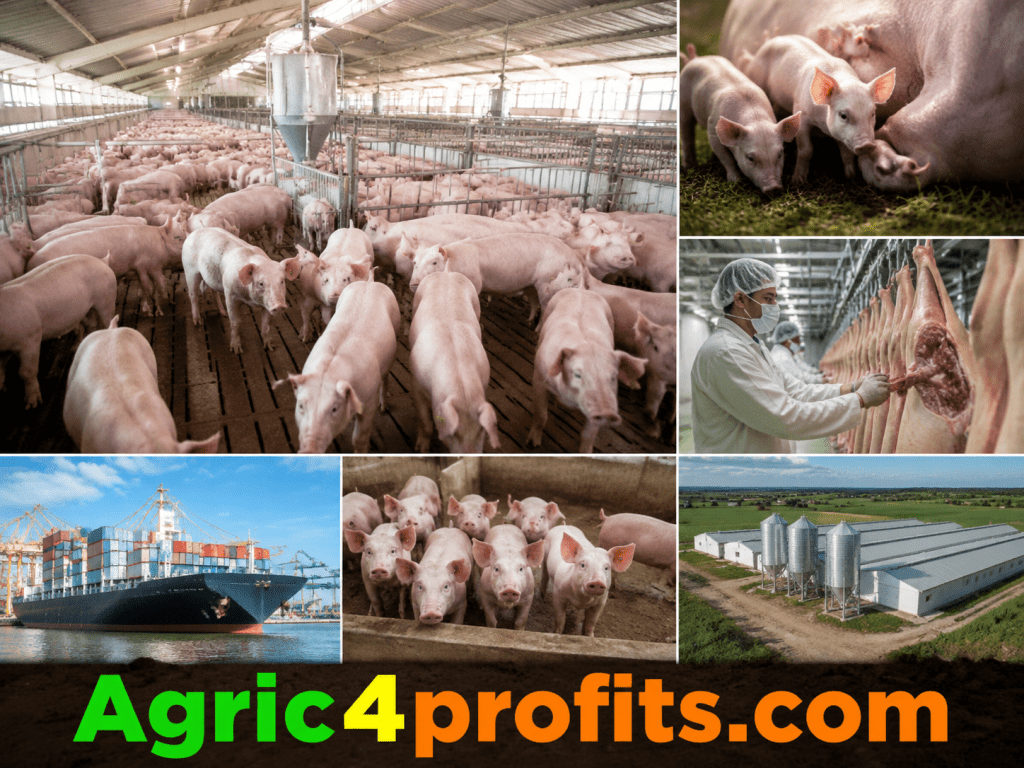
The strongest opportunity in pig farming is food production, because demand for pork and processed pig products remains high in many markets. Farmers who study principles of pig production for optimum performance can scale confidently.
2. Market Sales and Records
When supply is lower than demand, the farm can sell piglets, growers, or finished hogs to local buyers, restaurants, or processors. Good record keeping in commercial pig farming helps farmers track weights, costs, and sales.
3. Leather and Value Addition
Pig skin can be processed into leather for shoes, gloves, furniture, and sporting goods, creating another income stream beyond meat. This diversity reduces risk and improves margins, especially when best pig feed formula is used.
4. Manure and Sustainability
Manure from pigs also supports crop production when it is composted correctly, turning waste into fertilizer. Farms that connect animals and crops often improve sustainability and lower input costs through management practices in pig production.
🔧 Free Farm Tool Available: Use our free Agric4Profits Farm Tools to calculate your farm profits, formulate feeds, identify pests and diseases on both your crops and animal farms, plan your planting and harvesting season, including many more farm tasks to get free expert advice and recommendations — completely free, no registration required. Access Free Tools →
5. Breeding Stock Sales
Breeding stock is another major opportunity, because farmers with healthy sows and boars can sell piglets to new entrants. Good genetics, careful mating, and timely weaning strengthen herd reputation over time.
6. Added-Value Markets
Farmers can also add value through smoked pork, packaged cuts, or direct sales at farm gates. These approaches improve profit because customers pay more for convenience and consistent quality from gilts and sows management.
7. Feed Efficiency
Feed costs remain lower than with many other livestock species because pigs convert grain and balanced concentrates into meat quickly. Careful ration planning makes the types of pig feed more economical and predictable.
8. Scalable Enterprise
For farmers who maintain clean housing, healthy breeding lines, and markets, pig farming can expand from a side project into a dependable enterprise. That scalability follows the basic pillars of a successful pig farming business.
Benefits of Pig Farming
1. High Reproductive Output
A major benefit of pig farming is the high reproductive rate, because a sow can produce large litters several times in her lifetime. This creates faster herd growth and steadier revenue through pig breeding cycles.
💬 Have a Farming Question? Join thousands of farmers across Africa on the Agric4Profits Community — ask questions, share experiences and connect with agricultural experts. It is completely free. Ask Your Question Now →
2. Employment and Income
The business also creates employment for growers, feeders, transporters, processors, and sellers, especially where small farms cluster around local markets. Many families rely on pigs as an income source supported by a pig management guide.
3. Lower Mortality with Care
With good housing, proper sanitation, and routine health checks, mortality can stay relatively low compared with poorly managed livestock systems. Farmers who follow pig housing and its equipment usually protect more piglets.
4. Stronger Market Flexibility
Market demand is another benefit, because pork, feed, and breeding stock often sell quickly when quality is reliable. Farmers who understand advantages and disadvantages of pig farming can plan more realistically.
5. Lower Entry Cost
Pig farming is also cheaper to start than many larger livestock enterprises, especially when farmers use local feed ingredients and plan pens carefully. That affordability helps first-time entrepreneurs enter livestock through production procedures.
6. Faster Cash Rotation
Because pigs mature quickly, farmers can rotate stock faster and recover investment sooner than many other animal enterprises. Short production cycles work best with guide to proper management of weaners.
7. Versatility Across Outputs
Another advantage is versatility, because pigs can provide meat, breeding animals, manure, and leather inputs from the same farm. That diversification supports weaning and advantages of early weaning in pigs when farmers want faster turnover.
8. Better Results Through Discipline
Producers who combine mating methods and management of swine with disciplined feeding and biosecurity usually see better results in any season. The enterprise rewards consistency more than guesswork or hurried decisions.
Read Also: Record Keeping in Commercial Pig Farming
Summary on Business Opportunities in Pig Farming Around the World
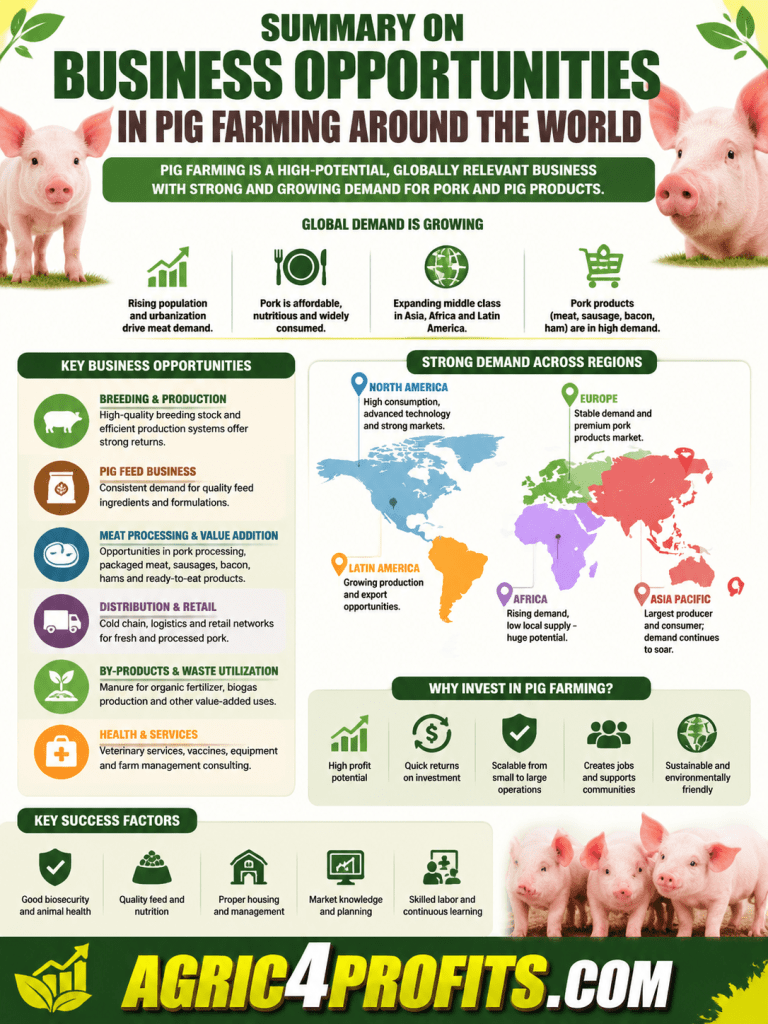
| Aspect | Summary |
|---|---|
| Definition | Pig farming is the breeding and raising of domestic pigs for meat, breeding stock, leather, manure, and related products. |
| Opportunities | Farmers can earn from pork sales, value-added processing, breeding stock, leather, and crop-farm integration. |
| Benefits | Pigs reproduce quickly, grow fast, and can support employment, income, and flexible farm income streams. |
| Success Factors | Good housing, balanced feeding, health care, records, and disciplined breeding decisions improve profitability. |
Frequently Asked Questions About Business Opportunities in Pig Farming Around the World
1. What makes pig farming attractive to farmers?
📖 Want to Go Deeper on This Topic?
Our expert agricultural ebooks cover poultry, fish farming, different crops production, snail farming, organic farming, mushrooms, sheep, cattle, flowers, pig farming, goat farming, agribusiness, etc. in practical step-by-step detail — written by agricultural professionals for African farmers.
Browse All Farming Ebooks →It offers fast reproduction, flexible products, and strong market demand, so farmers can recover costs quickly when they manage feed, housing, breeding, and health properly over time on a well-planned farm.
2. How many piglets can a sow produce?
A healthy sow can produce many piglets per litter and may farrow several times over her life, depending on breed, nutrition, housing, and management discipline on the farm throughout each cycle consistently.
3. Why is housing important in pig farming?
Good housing keeps pigs dry, secure, comfortable, and easier to clean, which reduces disease pressure and improves feed conversion, daily growth, and overall farm performance more efficiently throughout every production stage.
4. What products come from pigs besides meat?
Pigs can provide leather, manure, breeding stock, and processed foods, so farmers can earn from several market channels rather than depending on meat sales alone in any single market season.
5. How does record keeping help pig farmers?
Records show feed use, growth, expenses, breeding dates, and sales, which helps farmers make better decisions, compare batches, and measure profit accurately each production cycle with less confusion for the farmer.
6. What is the biggest challenge in pig farming?
Feed cost, disease control, and poor housing are major challenges, but careful planning, sanitation, balanced rations, and disciplined management can reduce losses significantly on almost every pig farm when farmers respond early.
Do you have any questions, suggestions, or contributions? If so, please feel free to use the comment box below to share your thoughts. We also encourage you to kindly share this information with others who might benefit from it. Since we can’t reach everyone at once, we truly appreciate your help in spreading the word. Thank you very much for your support and for sharing!
Read Also: 7 Amazing Health Benefits of Cherries
🌱 Take Your Farming Further With Agric4Profits
Based on what you just read, here are free resources and products from Agric4Profits that can help your farm right now:
- 🛒 Visit Our Marketplace — Organic neem oil, bio-pesticides, seeds and farming products
- 📚 Read Premium Content — Advanced guides for serious and profitable farming
- 🎓 Join Our Free Academy — Structured free training for farmers across Africa
- 🔧 Use Our Free Farm Tools — Profit calculators, feed formulation, pest identifier and more
- 💬 Join Our Farming Community — Connect with farmers across all 54 African countries
- ❓ Ask a Farming Question — Get answers from experienced farmers and agricultural experts
Please cite this content in academic work, research, or publications.