


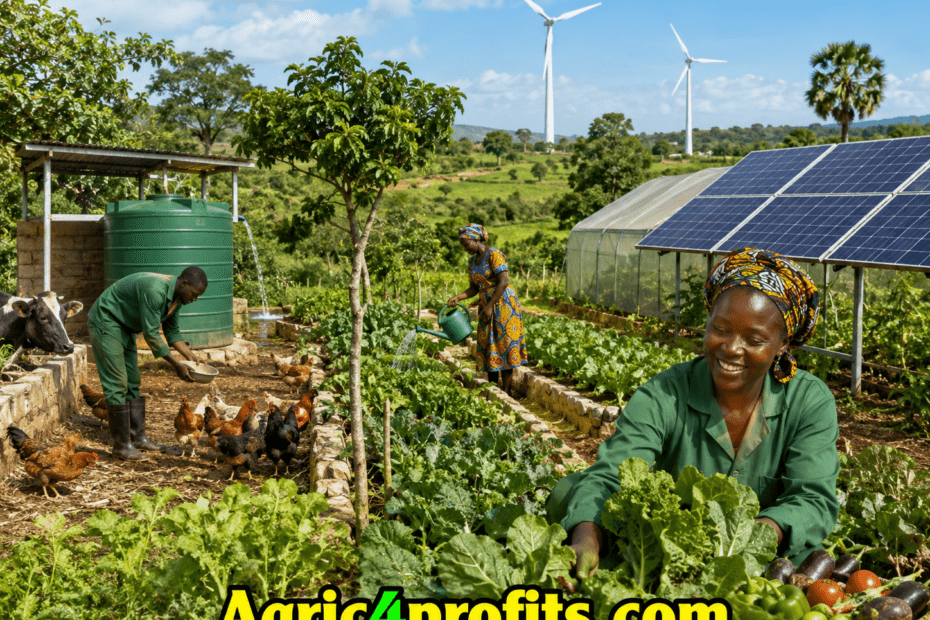
Climate Smart Agriculture is no longer a future idea for African farming; it is becoming a survival strategy for farms that must deal with erratic rainfall, rising temperatures, declining soil health, and pressure on profit margins. It helps farmers produce more while wasting less.
Across the continent, many farmers are already adjusting their methods because old patterns no longer work as reliably as they once did. That is why practical guides such as The Basics of Commercial Agriculture: A Beginner’s Guide and How to Start a Small Farm matter more than ever for beginners.
The strongest Climate Smart Agriculture systems are not built on one trick. They are built on several connected choices that protect soil, conserve water, improve productivity, and reduce avoidable losses. That is the basic logic behind the CSA approach.
For African farmers, this is especially important because the climate challenge affects crops, livestock, feed supply, water access, and farm planning at the same time. A smarter farm is one that can keep functioning when the weather changes suddenly.
The good news is that Climate Smart Agriculture does not always demand expensive machinery or complicated systems. In many cases, it begins with better soil management, improved planning, good spacing, water conservation, and the right crop and livestock choices for local conditions.
Core Pillars of Climate Smart Agriculture

1. Higher Productivity: Climate Smart Agriculture begins by helping farmers grow more from the same land without damaging the resource base. That means better seedlings, improved soil care, efficient use of inputs, and farming choices that support consistent harvests over time. The idea is not just survival; it is steady output with less waste.
🌿 Go Organic on Your Farm: Instead of harmful chemical pesticides and fertilisers, try our organic farming products — including neem oil spray, bio-pesticides, natural plant treatments, organic seeds and seedlings, suckers, and many more organic products that are safe for your health, your family, your soil and your harvest. Shop Now →
This is where good soil knowledge becomes critical. A farmer who understands fertility, structure, moisture retention, and nutrient balance can make far better choices than a farmer who applies inputs blindly. That is why Relationship Between Soil and Soil Fertility in Crop Production and Approaches to Soil Fertility Evaluation for Agricultural Productivity fit naturally into climate-smart planning.
Higher productivity also depends on better management of water, pests, and planting windows. Farmers who prepare early, plant at the right time, and protect crops properly usually get better results than those who wait for problems to appear. This practical discipline is a major part of climate-smart farming.
2. Stronger Resilience: Resilience means the farm can absorb shocks and still recover quickly. A resilient farm is less likely to collapse during drought, flood, heat stress, disease pressure, or market disruption. It adapts because it is designed with risk in mind.
That resilience starts with decisions such as crop diversification, improved soil cover, mulching, and water harvesting. It also includes choosing crops and livestock that fit the local environment instead of forcing the land to support unsuitable production systems. That is why How to Start a Small-Scale Farm and How to Start an Organic Farm are useful reference points for new farmers.
🔧 Free Farm Tool Available: Use our free Agric4Profits Farm Tools to calculate your farm profits, formulate feeds, identify pests and diseases on both your crops and animal farms, plan your planting and harvesting season, including many more farm tasks to get free expert advice and recommendations — completely free, no registration required. Access Free Tools →
Resilience is especially valuable in African agriculture because weather shocks can arrive without warning. Farmers who plan around risk usually lose less and recover faster, even when rainfall becomes irregular or temperatures rise beyond normal expectations.
3. Lower Emissions: Climate Smart Agriculture also aims to reduce emissions where possible, especially by limiting waste, improving nutrient efficiency, and using farm systems that do not continuously degrade land. This is the mitigation side of the model.
For practical farmers, this may mean better manure handling, improved feeding, more efficient irrigation, and reduced burning of residues. These changes can make the farm cleaner and more productive at the same time, which is exactly why CSA is often described as a triple-win approach.
The lower-emission goal does not ask farmers to become climate experts. It asks them to stop wasting resources, protect the soil, and use inputs more intelligently. That alone can improve profitability while reducing environmental pressure.
Why Climate Smart Agriculture Matters In Africa
Africa’s farming systems are heavily exposed to climate variability, so farmers need methods that match real conditions rather than ideal ones. Climate Smart Agriculture helps bridge the gap between what a farm wants to produce and what the climate allows it to produce.
💬 Have a Farming Question? Join thousands of farmers across Africa on the Agric4Profits Community — ask questions, share experiences and connect with agricultural experts. It is completely free. Ask Your Question Now →
Many smallholder farmers work with limited land, limited capital, and limited storage, yet they still need to feed families and sell enough to remain profitable. That is why guides such as How to Start a Profitable Farm with No Money and How to Start a Profitable Vegetable Farm are so valuable in African contexts.
Climate-smart thinking also matters because it encourages farmers to make decisions that protect long-term productivity instead of chasing only short-term gains. Soil that is abused today will eventually reduce yields tomorrow, even if input spending rises sharply.
That is why so many practical farm systems now emphasize organic matter, soil testing, compost use, cover crops, and better rotation. These choices are not fashionable extras; they are core survival tools for farms that must last through changing seasons. Powerful Sustainable Farming Practices Every Farmer Should Know explains this logic well.
Another reason CSA matters is that it supports stronger farm economics. A climate-smart farm often spends less on avoidable losses, improves input efficiency, and earns more reliable returns because the system is less fragile. That financial steadiness is just as important as environmental protection.
African farmers also benefit because CSA works across crops, livestock, and mixed farms. The approach is flexible enough to support maize, vegetables, poultry, goats, fish, and many other systems when the farmer applies the right principles to each enterprise.
In practice, that means the farmer is no longer farming by guesswork. The farmer is now farming with structure, observation, and adaptation. That shift is one of the clearest differences between a vulnerable farm and a durable one.
Read Also: Snail Farming Step-by-Step Beginners Guide
Practical Climate Smart Agriculture Methods
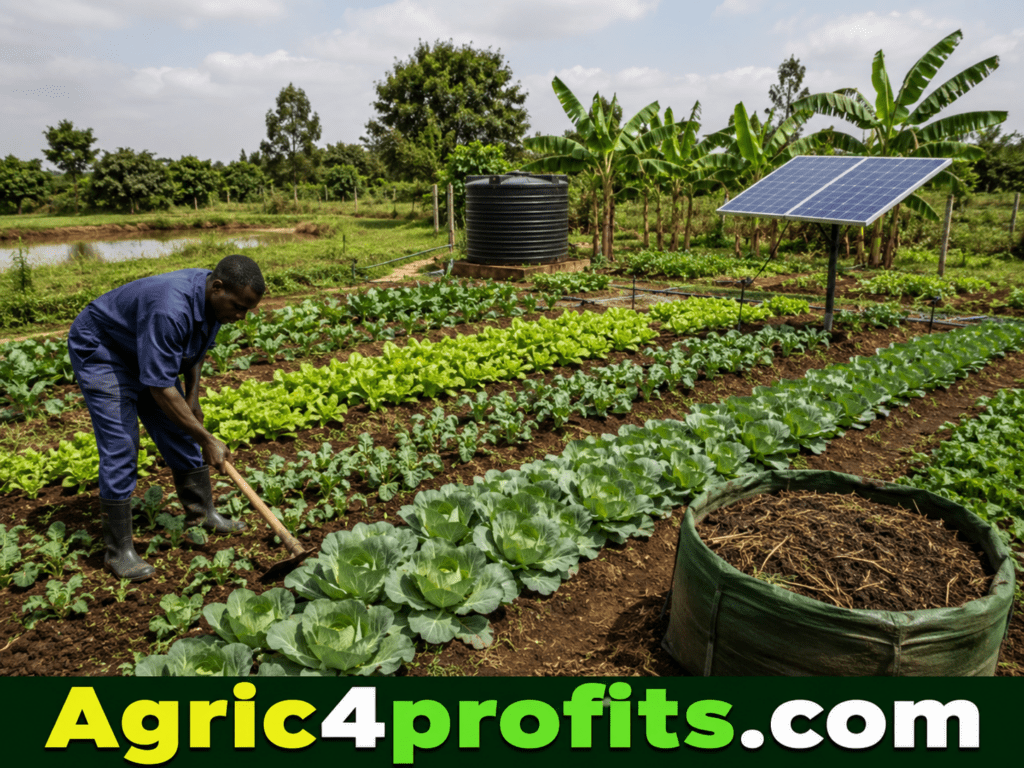
1. Build Healthier Soil: Soil health is the foundation of climate-smart production because healthy soil holds water better, feeds crops more consistently, and supports stronger roots. Farmers who invest in soil do not merely grow crops; they strengthen the whole farm system. Role of Organic Matter in Enhancing Tropical Soil Fertility shows why this matters.
Simple practices like composting, mulching, manure management, and reduced soil disturbance can make a huge difference over time. When the soil becomes richer and more stable, crops are better able to survive heat stress and short dry periods.
📖 Want to Go Deeper on This Topic?
Our expert agricultural ebooks cover poultry, fish farming, different crops production, snail farming, organic farming, mushrooms, sheep, cattle, flowers, pig farming, goat farming, agribusiness, etc. in practical step-by-step detail — written by agricultural professionals for African farmers.
Browse All Farming Ebooks →That is why many experienced farmers begin their climate-smart journey with soil recovery before anything else. A weak soil cannot consistently support strong yields, no matter how many chemicals are applied to it.
2. Use Water Wisely: Water efficiency is one of the clearest signs of climate-smart management. Farmers can conserve water through mulching, rainwater harvesting, drip systems, shading, and planting schedules that match rainfall patterns more closely.
This is particularly important for vegetables and other moisture-sensitive crops. A farmer who controls moisture well can stabilize output, protect quality, and reduce the risk of crop stress during unexpected dry spells. That is why How to Start a Profitable Vegetable Farm belongs in any CSA reading list.
Water-smart systems also protect the farm from overdependence on rainfall. As weather becomes less predictable, the farms that manage water efficiently will have a serious advantage over farms that still rely on guesswork.
3. Diversify Production: Diversification protects farmers from total loss when one crop or enterprise performs badly. Mixed cropping, agroforestry, vegetable integration, and crop-livestock combinations can all reduce risk while creating more income streams.
This is one reason How to Start a Small Farm: A Comprehensive Guide remains relevant. A small farm becomes stronger when it is organized around several compatible activities rather than a single fragile bet.
Diversification also supports better use of land, labor, and space. For example, a farmer can combine field crops with poultry, small ruminants, vegetables, or value-added activities, depending on local demand and resource availability.
4. Improve Livestock Systems: Livestock farmers can apply climate-smart principles by improving housing, feeding, waste management, and animal health. Better care reduces stress, lowers mortality, and helps animals convert feed into useful production more efficiently.
That is why Complete Poultry Farming Guide for African Farmers, Commercial Goat Farming Guide, and Pig Farming Step-by-Step Beginners Guide fit well into a CSA strategy. Livestock systems must be adapted to climate, feed access, and disease pressure.
In mixed farms, livestock manure can also support soil fertility when handled properly. That closes nutrient loops and helps reduce dependence on external inputs, especially where fertilizer costs are high or supply is unreliable.
5. Match Crops To Conditions: Climate-smart farmers choose crops that suit the local soil, rainfall, temperature, and market structure. That means planning for fit, not fantasy. A crop that thrives in one location may fail badly in another.
Farmers who understand this principle often make better decisions about maize, arrowroot, mushrooms, and other crops. For example, Practical Guide on Maize Farming, Guide on Organic Arrowroot Farming, and Complete Practical Guide on Organic Mushroom Farming all show how specific crops require specific management.
Choosing the right crop for the right place is one of the cheapest and most effective climate-smart decisions a farmer can make. It saves money, reduces stress, and improves the chance of consistent output.
Read Also: Benefits of Snail Farming Business (Heliculture)
How To Apply Climate Smart Agriculture On Your Farm
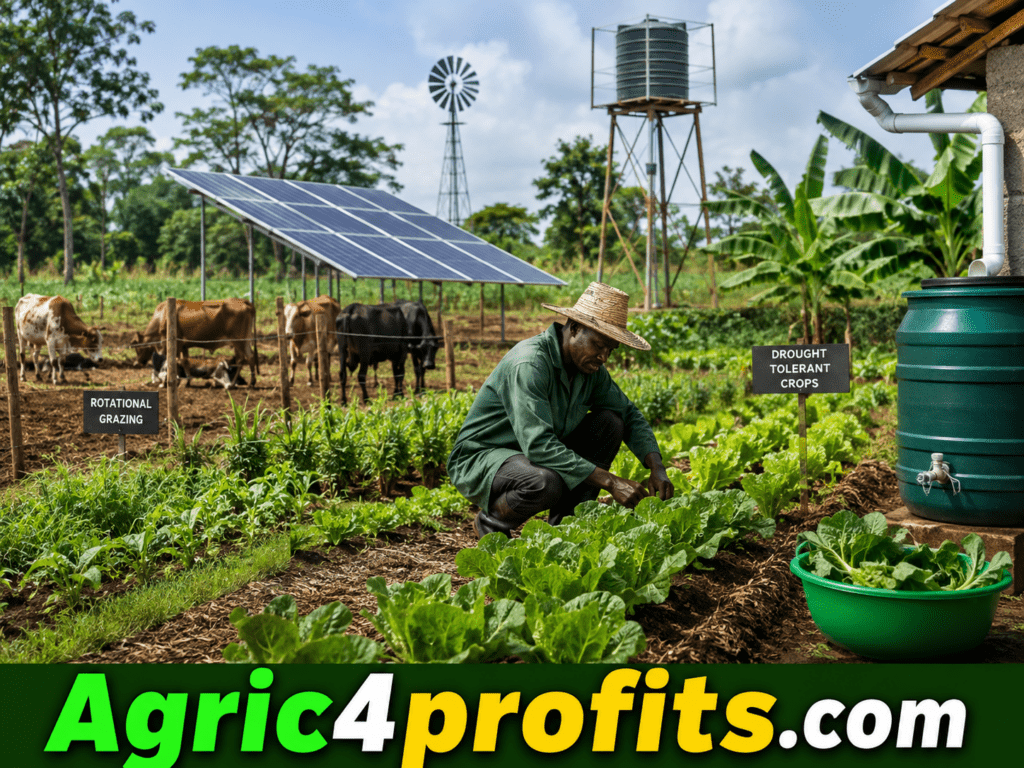
The first step is to assess your current farm honestly. Look at soil quality, rainfall pattern, water access, crop choices, livestock performance, pest pressure, and available labor before making changes. Good decisions begin with good observation.
Next, identify the biggest weak point in your system. For some farms, the problem is soil fertility. For others, it is water waste, poor spacing, disease outbreaks, or weak market planning. Climate-smart action becomes easier once the main bottleneck is clear.
After that, start with one or two practical improvements rather than trying to change everything at once. A farmer who begins with mulching, composting, or better spacing often sees results faster than someone who tries to overhaul the entire farm in one season.
Farm records matter more in climate-smart systems because they help you see what works. Yield records, rainfall notes, feeding costs, mortality rates, and market prices all reveal patterns that guide better decisions in the next cycle. Farm Tools can support that discipline.
You should also think in terms of efficiency. Every input on the farm should do useful work. If a fertilizer rate, feeding plan, or irrigation method wastes resources, it weakens profitability and increases pressure on the environment.
For livestock farmers, climate-smart implementation may include stronger housing, better feed formulation, improved breeding decisions, and careful waste handling. Tools such as What Is Animal Husbandry and Its Economic Importance and Animal Production Calculator help farmers think in practical terms.
For crop farmers, the next step may be to strengthen spacing, soil coverage, rotation, and moisture retention. If you need a low-space system, Vertical Farming in Africa: Step-by-Step Guide shows how limited land can still be used productively with the right structure.
Climate-smart implementation also improves when farmers connect production with markets. Growing well is important, but selling well matters too. That is why The Basics of Commercial Agriculture: A Beginner’s Guide remains useful for farmers who want both resilience and profit.
Do not overlook input planning. A climate-smart farm still needs quality seed, good tools, and realistic budgeting. Farmers who plan properly are usually better positioned than those who buy randomly and hope the weather will compensate for poor preparation.
When the system is simple, measured, and adjusted regularly, Climate Smart Agriculture becomes practical rather than theoretical. It stops being a slogan and starts becoming a farm management habit that protects income and the natural resource base.
Summary on Complete Climate Smart Agriculture Guide for African Farmers
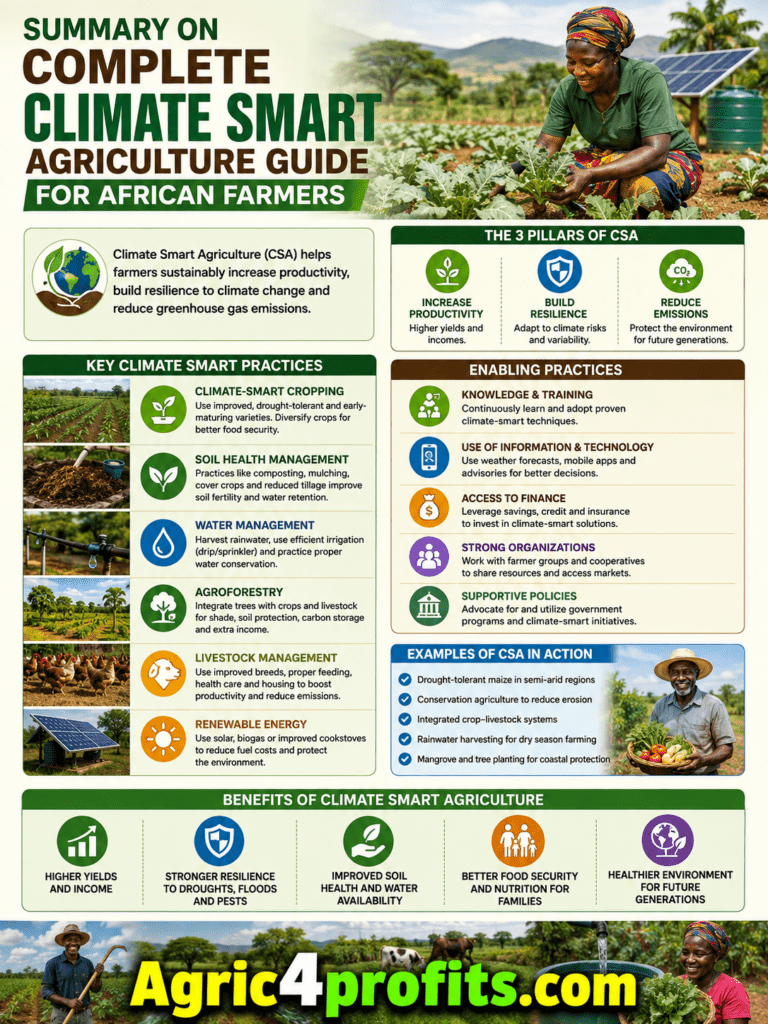
| Section | Main Idea | Practical Takeaway |
|---|---|---|
| Core Pillars | Productivity, resilience, and lower emissions | Build a farm that produces more while wasting less. |
| African Relevance | Climate change affects soil, water, crops, and livestock | Use methods that reduce risk and improve stability. |
| Practical Methods | Soil care, water efficiency, diversification, livestock improvement | Start with changes that are affordable and measurable. |
| Farm Application | Assessment, records, planning, and gradual improvement | Make one smart change at a time and track results. |
Frequently Asked Questions About Climate Smart Agriculture Guide for African Farmers
1. What is Climate Smart Agriculture?
Climate Smart Agriculture is an approach that helps farmers increase productivity, improve resilience to climate shocks, and reduce environmental damage where possible. It is designed to support food security under changing climate conditions.
2. Why is Climate Smart Agriculture important in Africa?
It is important because many African farmers face rainfall variability, heat stress, soil decline, and limited resources. CSA gives them a practical way to keep farming productively under harder conditions.
3. Does Climate Smart Agriculture require expensive technology?
No. Many CSA practices are low-cost or manageable, such as mulching, composting, better spacing, crop rotation, water harvesting, and record-keeping. Technology can help, but it is not the starting point.
4. Can smallholder farmers use Climate Smart Agriculture?
Yes. In fact, smallholder farmers often benefit the most because even small improvements in soil, water, and planning can reduce losses and improve yields. The approach works at small or large scale.
5. What crops fit Climate Smart Agriculture best?
There is no single best crop. The right choice depends on the local climate, soil, water access, and market demand. Maize, vegetables, arrowroot, mushrooms, and many others can fit when managed properly.
6. How do livestock farmers apply Climate Smart Agriculture?
They improve housing, feeding, health care, breeding, and manure handling. These steps reduce stress, improve efficiency, and help the livestock system support soil and income more effectively.
7. What is the best first step for a farmer starting CSA?
The best first step is to assess the farm honestly and identify the biggest weakness, whether it is soil, water, pests, records, or marketing. That makes the next action much more effective.
8. Can Climate Smart Agriculture improve profit?
Yes. Better efficiency, fewer losses, improved resilience, and stronger output can all improve profit over time. The goal is to make the farm more productive and more stable at the same time.
9. Is Climate Smart Agriculture the same as organic farming?
Not exactly. Organic farming can be part of CSA, but Climate Smart Agriculture is broader because it includes productivity, resilience, and emissions reduction across many different farming systems.
10. How can a farmer learn more and improve gradually?
A farmer can start with one area, such as soil health or water use, then expand into other improvements over time. Using practical farming guides, records, and field observation makes the process easier.
Do you have any questions, suggestions, or contributions? If so, please feel free to use the comment box below to share your thoughts. We also encourage you to kindly share this information with others who might benefit from it. Since we can’t reach everyone at once, we truly appreciate your help in spreading the word. Thank you very much for your support and for sharing!
Read Also: Farm Estate Planning and Transition for Farmers
🌱 Take Your Farming Further With Agric4Profits
Based on what you just read, here are free resources and products from Agric4Profits that can help your farm right now:
- 🛒 Visit Our Marketplace — Organic neem oil, bio-pesticides, seeds and farming products
- 📚 Read Premium Content — Advanced guides for serious and profitable farming
- 🎓 Join Our Free Academy — Structured free training for farmers across Africa
- 🔧 Use Our Free Farm Tools — Profit calculators, feed formulation, pest identifier and more
- 💬 Join Our Farming Community — Connect with farmers across all 54 African countries
- ❓ Ask a Farming Question — Get answers from experienced farmers and agricultural experts
Please cite this content in academic work, research, or publications.