


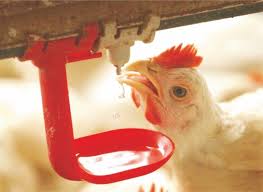
Water is often overlooked in poultry management, but it is just as important as feed. A broiler can survive longer without food than without water. Poor water quality leads to digestive problems, reduced feed intake, slower growth, and higher mortality rates. These are all avoidable losses, and most of them trace back to water management decisions that are entirely within a farmer's control.
The quality of water your birds drink affects everything downstream. Bad water undermines even the best feeding program and can make your flock more vulnerable to disease. On the other hand, clean, properly managed water supports healthy digestion, strong immune function, and consistent performance from day one through to slaughter weight.
This article covers the key water quality standards for poultry, how to maintain drinking systems, and how to track and adjust water consumption based on bird age and climate. The goal is to give you a clear, practical framework for managing water on your farm the right way.
1. Water Quality Standards
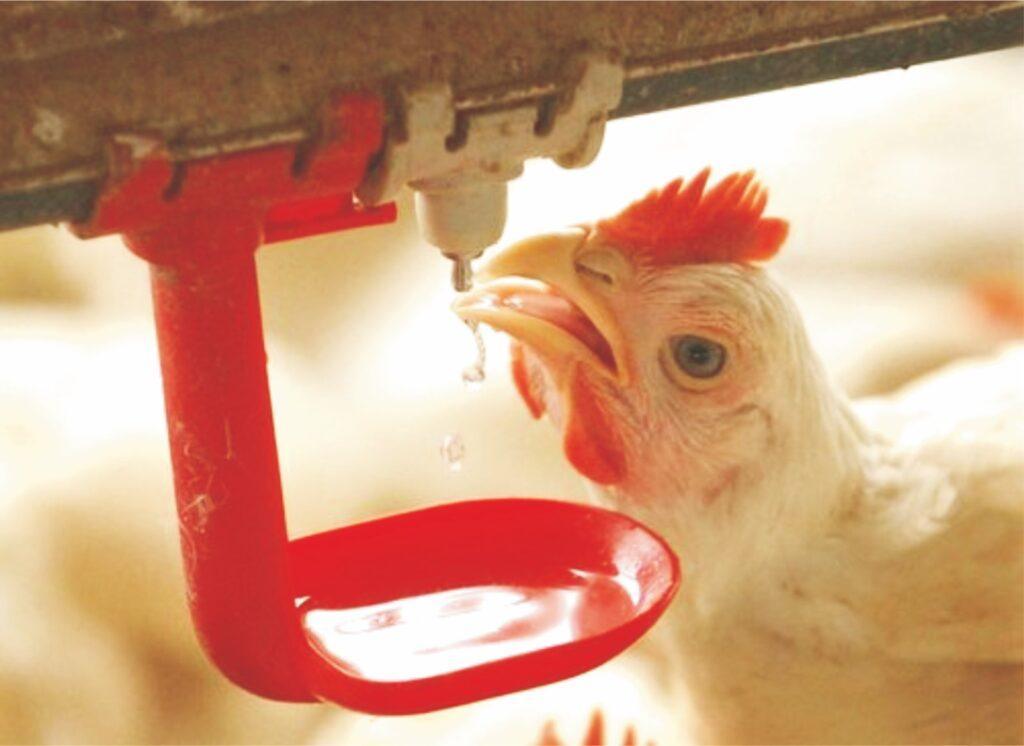
Not all water that looks clean is safe for poultry. You need to test regularly and understand what the results mean. Water quality falls into four broad categories: very pure, drinkable, suspect, and bad. Drinkable water is the minimum acceptable standard for poultry.
A. Microbiological Standards
Microbial contamination is the most immediate threat to poultry water safety. Even low levels of certain pathogens can cause serious flock health problems.
i. Total Germ Count: Very pure water contains 0 to 10 germs per ml. Drinkable water allows up to 100. Suspect water ranges from 1,000 to 10,000, and bad water exceeds 100,000 germs per ml.
🌿 Go Organic on Your Farm: Instead of harmful chemical pesticides and fertilisers, try our organic farming products — including neem oil spray, bio-pesticides, natural plant treatments, organic seeds and seedlings, suckers, and many more organic products that are safe for your health, your family, your soil and your harvest. Shop Now →
ii. Salmonella: Both very pure and drinkable water must contain zero Salmonella per ml. Any detectable presence is a red flag that requires immediate investigation.
iii. E. coli Levels: Very pure and drinkable water should have zero E. coli. Suspect water may show 10 to 50 per ml, while bad water reaches 100 per ml.
B. Chemical Standards
Chemical composition affects how well birds absorb water and how the water interacts with their digestive systems. High mineral loads or incorrect pH can reduce water uptake and cause long-term health issues.
i. Water Hardness: Very pure water has a hardness of 5 to 15 degrees. Drinkable water sits between 15 and 30 degrees. Anything above 30 degrees is suspect or bad.
🔧 Free Farm Tool Available: Use our free Agric4Profits Farm Tools to calculate your farm profits, formulate feeds, identify pests and diseases on both your crops and animal farms, plan your planting and harvesting season, including many more farm tasks to get free expert advice and recommendations — completely free, no registration required. Access Free Tools →
ii. Organic Matter: Very pure water should contain 0 mg per litre. Drinkable water allows up to 1 mg, suspect water up to 3 mg, and bad water reaches 4.6 mg per litre.
iii. Nitrates and Ammonia: Drinkable water should contain 0 to 15 mg per litre of nitrates and zero ammonia. Bad water exceeds 30 mg per litre of nitrates and 10 mg per litre of ammonia.
C. Additional Chemical Parameters
i. Mineral Limits: Water becomes problematic when key minerals exceed certain thresholds. Bad water exceeds the following per litre: iron at 1 mg, manganese at 0.5 mg, copper at 1.5 mg, zinc at 15 mg, calcium at 200 mg, magnesium at 150 mg, sulphates at 400 mg, and chlorides at 600 mg.
ii. pH Range: Drinkable water should maintain a pH between 7 and 8.5. Suspect water may range from 6.5 to 9.2, which signals potential chemical imbalances worth investigating.
iii. Turbidity: Drinkable water should not exceed 5 turbidity units. Suspect water reaches up to 25 units. High turbidity often indicates contamination or poor source quality.
💬 Have a Farming Question? Join thousands of farmers across Africa on the Agric4Profits Community — ask questions, share experiences and connect with agricultural experts. It is completely free. Ask Your Question Now →
D. Importance of Regular Testing
i. Sampling Accuracy: The reliability of any water test depends on when, where, and how the sample was taken. Repeated sampling from the same source over time gives a far more accurate picture than a single test.
ii. Laboratory Guidance: Use your laboratory's materials and sampling instructions. This ensures results are consistent and comparable across testing periods.
iii. Acting on Results: If any parameter exceeds drinkable water standards, treat the water as a likely cause of any digestive or general health problems your flock is experiencing. Do not wait for symptoms to worsen before acting.
Read Also: Proper Irrigation and Drainage Guide
2. Maintaining Drinking Systems
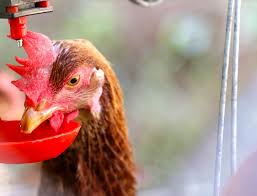
Even clean source water can become contaminated inside the drinking system. Feed particles, biofilm, and bacterial growth inside pipes and drinkers are common problems that regular maintenance prevents.
A. Cleaning Baby Chick Fonts
i. Contamination Risks: Round and trough-type baby chick fonts are easily soiled by feed particles. Once contaminated, they become a breeding ground for bacteria that young chicks drink directly from.
ii. Cleaning Frequency: Clean these drinkers daily during the first two weeks of a chick's life. After that, weekly cleaning is sufficient under normal conditions to keep germ levels down.
iii. Hot Climate Protocols: In hot climates, daily cleaning and disinfection are necessary throughout the flock cycle. Maintain a water depth of 15 mm to ensure all chicks can drink without difficulty.
B. Maintaining Nipple Drinkers
i. Regular Flushing: Flush nipple drinker systems regularly, and always after administering vitamins, vaccines, or milk-based products through the water. These substances leave residues that encourage bacterial growth and cause blockages.
📖 Want to Go Deeper on This Topic?
Our expert agricultural ebooks cover poultry, fish farming, different crops production, snail farming, organic farming, mushrooms, sheep, cattle, flowers, pig farming, goat farming, agribusiness, etc. in practical step-by-step detail — written by agricultural professionals for African farmers.
Browse All Farming Ebooks →ii. Water Pressure Monitoring: Check water pressure frequently, especially during hot weather. Insufficient pressure means birds at the end of the line may not get enough water, which can cause dehydration and sudden losses.
iii. Cost of Cutting Corners: Skimping on nipple drinker numbers or ventilation in hot climates is a false economy. The losses from dehydration and heat stress far outweigh any short-term savings on equipment.
C. Water Treatment Practices
i. Chemical Treatment: Sodium hypochlorite is an effective and widely used treatment for destroying germs in pipes and drinkers. Always check residual chlorine levels at the end of the water line to confirm the treatment is reaching all points in the system.
ii. Tank and Pipe Hygiene: During clean-out periods between flocks, clean and disinfect all water tanks and pipes thoroughly. This is when you have the best opportunity to eliminate biofilm and dangerous germs that build up during a production cycle.
iii. Ongoing Monitoring: Do not assume the water at the tap is representative of what birds are drinking. Check water quality at the last drinking point in the system regularly. Contamination often increases with distance from the source.
Read Also: Agronomic Measures to Control Soil Erosion
3. Water Consumption Guidelines
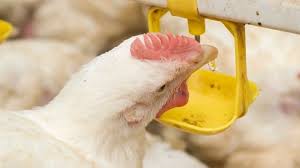
Knowing how much water your birds should be drinking helps you spot problems early. A significant drop or spike in consumption often signals a system fault, a health issue, or an environmental problem before other symptoms become obvious.
A. Consumption Patterns
i. Feed-to-Water Ratio: Under normal house temperatures, water consumption is typically 1.7 to 1.8 times the amount of feed consumed. This ratio is a useful baseline for daily monitoring.
ii. Investigating Anomalies: If birds are drinking significantly more or less than expected, investigate immediately. Common causes include incorrect water pressure, blocked nipples, or changes in flock health status.
iii. Hot Weather Impact: Water consumption can double in hot climates. This is normal, but your system needs to be capable of meeting that demand. Failure to supply enough water during heat events causes rapid deterioration in flock condition.
B. Consumption by Age
Water needs decrease as birds grow, relative to body weight. These figures are for temperate climates and should be adjusted upward for hot conditions.
i. 7 Days Old: Chicks consume approximately 370 ml of water per kg of live body weight per day.
ii. 14 to 49 Days Old: Consumption drops progressively from 270 ml per kg at 14 days, to 210 ml at 21 days, 180 ml at 28 days, 155 ml at 35 days, 135 ml at 42 days, and 125 ml per kg at 49 days.
iii. Treatment Calculations: Use these age-based figures as the baseline when calculating how much medicated or supplemented water to prepare. Always adjust upward for flocks in hot climates.
C. System Adjustments
i. Water Pressure: Maintain correct pressure throughout the system at all times, but especially during hot weather when demand is highest. Low pressure at the end of lines is one of the most common and easily preventable causes of dehydration in broilers.
ii. Drinker Depth: Keep water depth in open drinkers at the appropriate level so all birds can access water easily, including smaller or weaker birds in the flock.
iii. Routine Inspections: Walk the drinking system daily. Check for leaks, blockages, and pressure inconsistencies. Problems caught early are far cheaper to fix than health issues that develop from inadequate water access.
Summary on Ensuring Quality Drinking Water for Poultry
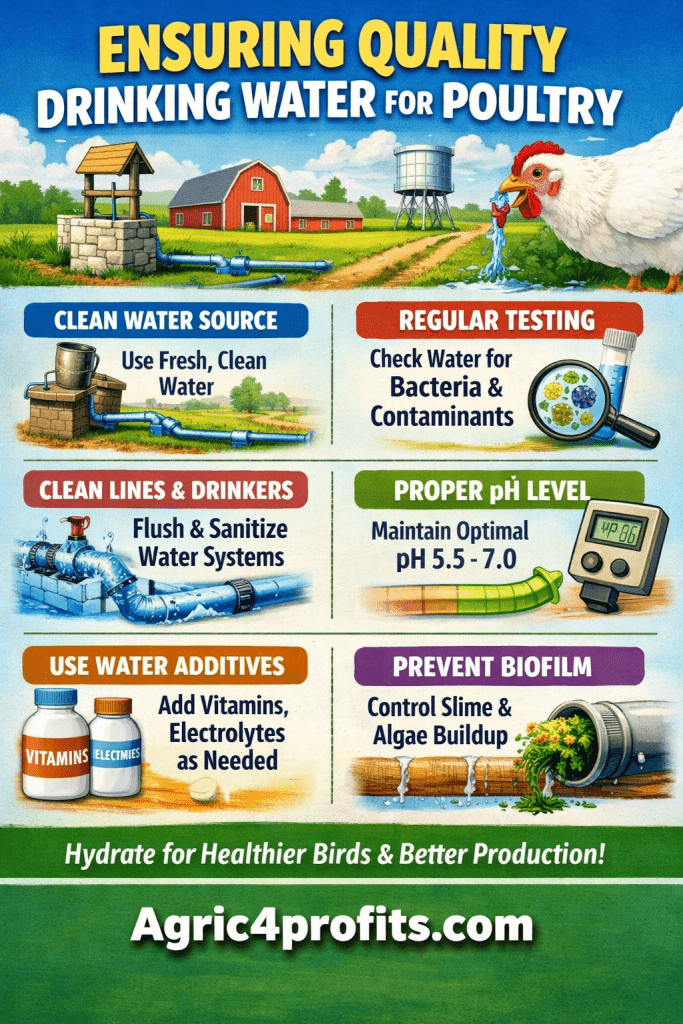
| Category | Key Points |
|---|---|
| Microbiological Standard | Zero Salmonella and E. coli in drinkable water |
| Acceptable Germ Count | Up to 100 germs per ml for drinkable water |
| pH Range | 7 to 8.5 for drinkable water |
| Turbidity Limit | No more than 5 turbidity units |
| Chick Font Cleaning | Daily for first 2 weeks, weekly after that |
| Hot Climate Cleaning | Daily cleaning and disinfection throughout the cycle |
| Nipple Drinker Maintenance | Flush regularly, check pressure, especially in heat |
| Water Treatment | Sodium hypochlorite, monitored at the last drinking point |
| Feed-to-Water Ratio | 1.7 to 1.8 times feed intake under normal temperatures |
| Hot Weather Consumption | Can double, system must be able to meet demand |
| Age-Based Consumption | Decreases from 370 ml/kg at 7 days to 125 ml/kg at 49 days |
Frequently Asked Questions About Ensuring Quality Drinking Water for Poultry
1. Why does water quality matter so much in poultry farming? Water affects digestion, feed intake, immune function, and growth rate. Poor water quality directly increases the risk of disease and mortality, even when all other management factors are good.
2. What is the minimum acceptable water quality standard for poultry? Drinkable water is the minimum. This means zero Salmonella, zero E. coli, nitrates below 15 mg per litre, ammonia at zero, and a pH between 7 and 8.5.
3. How often should water be tested on a poultry farm? Test regularly and always from the same source points to ensure results are comparable. Also test after any changes to the water source, treatment system, or following a disease outbreak.
4. What causes water to become contaminated inside the drinking system? Feed particles, biofilm buildup, residues from vitamin or vaccine administration, and infrequent flushing are the most common causes. Contamination often increases toward the end of water lines.
5. How can you tell if birds are not getting enough water? Reduced feed intake, increased mortality during hot weather, birds clustering around drinkers, and lower-than-expected daily water meter readings are all warning signs to check immediately.
6. What is the best treatment for contaminated water in poultry systems? Sodium hypochlorite is the most widely used option. Apply it correctly and verify residual chlorine at the last drinking point to confirm the treatment is effective throughout the entire system.
7. How does hot weather change water management requirements? Consumption can double in hot climates. Cleaning frequency must increase, system pressure must be monitored more closely, and the overall capacity of your drinking system must be sufficient to meet peak demand.
8. Can poor water quality cause disease outbreaks even with good biosecurity? Yes. Contaminated water is an internal disease vector that bypasses most external biosecurity measures. It is one of the reasons water testing and system hygiene must be treated as core biosecurity practices, not optional extras.
Do you have any questions, suggestions, or contributions? If so, please feel free to use the comment box below to share your thoughts. We also encourage you to kindly share this information with others who might benefit from it. Since we can’t reach everyone at once, we truly appreciate your help in spreading the word. Thank you very much for your support and for sharing!
Read Also: What You Should Know About SWOT Analysis
🌱 Take Your Farming Further With Agric4Profits
Based on what you just read, here are free resources and products from Agric4Profits that can help your farm right now:
- 🛒 Visit Our Marketplace — Organic neem oil, bio-pesticides, seeds and farming products
- 📚 Read Premium Content — Advanced guides for serious and profitable farming
- 🎓 Join Our Free Academy — Structured free training for farmers across Africa
- 🔧 Use Our Free Farm Tools — Profit calculators, feed formulation, pest identifier and more
- 💬 Join Our Farming Community — Connect with farmers across all 54 African countries
- ❓ Ask a Farming Question — Get answers from experienced farmers and agricultural experts
Please cite this content in academic work, research, or publications.