


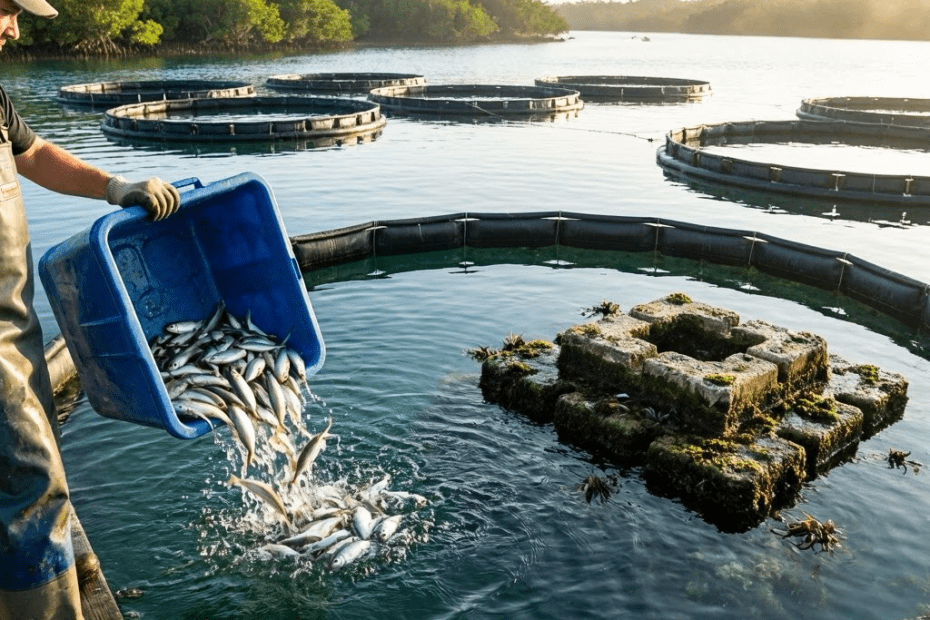
Fisheries enhancement refers to deliberate actions that increase fish recruitment, survival, and overall yield in water bodies where natural productivity alone cannot reliably meet demand, market pressure, or public health needs.
These interventions sit between capture fisheries and aquaculture, because they improve production without fully replacing the natural system that supports fish growth, movement, breeding, and seasonal regeneration across managed aquaculture systems.
Where fisheries are carefully enhanced, managers can use habitat works, stocking, fertilization, and water control to raise output while still depending on the ecosystem’s own biological base for continued production.
Well-designed enhancement can help communities harvest more fish from lakes, floodplains, reservoirs, and coastal waters, especially where pressure on wild stocks has reduced natural returns and weakened local food supply in pond culture.
The idea matters because many inland waters remain productive only when people actively protect breeding areas, regulate access, and add measures that support recruitment, juvenile survival, and long-term stock recovery.
At the same time, enhancement is not automatic success. It depends on sound planning, user rights, water conditions, local knowledge, institutional cooperation, and a realistic understanding of costs and benefits.
🌿 Go Organic on Your Farm: Instead of harmful chemical pesticides and fertilisers, try our organic farming products — including neem oil spray, bio-pesticides, natural plant treatments, organic seeds and seedlings, suckers, and many more organic products that are safe for your health, your family, your soil and your harvest. Shop Now →
This article explains the main forms of fisheries enhancement, traditional systems, common constraints, and the practical reasons many projects fail when management is weak, fragmented, poorly coordinated, or financially unrealistic, according to production planning.
By the end, the reader should understand how enhancement works in practice, where it is most useful, and why strong governance matters as much as the biological interventions themselves in sustainable fisheries.
A. Definition of Fisheries Enhancement
Fisheries enhancement is the deliberate improvement of aquatic production through managed interventions that support fish recruitment, survival, and harvest beyond what unmanaged natural processes would ordinarily provide in a water body.
Unlike open-access capture fisheries, enhanced systems usually involve some form of planning, ownership, stocking, or habitat manipulation, because the goal is to raise output without abandoning ecological limits altogether in practice.
🔧 Free Farm Tool Available: Use our free Agric4Profits Farm Tools to calculate your farm profits, formulate feeds, identify pests and diseases on both your crops and animal farms, plan your planting and harvesting season, including many more farm tasks to get free expert advice and recommendations — completely free, no registration required. Access Free Tools →
The approach is widely used where local people depend on inland waters for food, income, and employment, but natural recruitment has become unreliable because of habitat loss, pressure, or poor governance in many communities.
Enhancement becomes more effective when it follows sound management principles, because decisions about access, effort, and water use strongly influence whether the additional production is sustained at every stage.
The Food and Agriculture Organisation describes enhanced fisheries as actions that supplement or sustain recruitment and raise production above what natural processes alone can support, especially in managed environments with recurring pressure.
That definition matters because enhancement is not limited to stocking fish. It may also include water control, fertilization, shelter creation, access regulation, and selective harvesting of valuable stocks over time.
Every enhancement plan must match the ecology of the water body, because a lake, floodplain, reservoir, or lagoon responds differently to intervention, as pond culture systems show clearly in practice.
💬 Have a Farming Question? Join thousands of farmers across Africa on the Agric4Profits Community — ask questions, share experiences and connect with agricultural experts. It is completely free. Ask Your Question Now →
When the definition is understood correctly, fisheries enhancement becomes a practical resource-management tool, and that clarity helps farmers, agencies, and communities make better decisions about feed planning and harvest timing.
B. Forms of Fisheries Enhancement
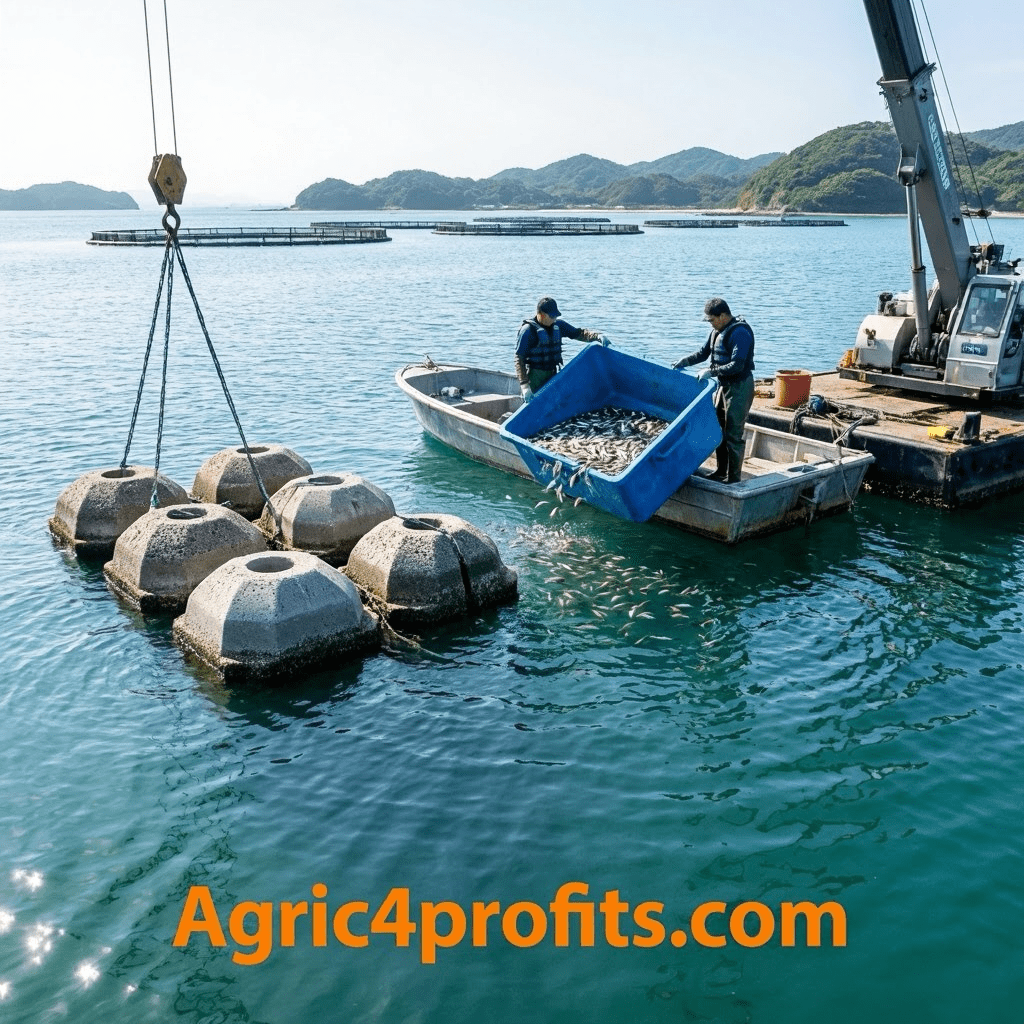
i. Introduction of new species: Managers may introduce carefully selected species to exploit unused food chains or habitat layers, but the choice must fit local ecology, market demand, and community expectations through species planning.
ii. Stocking of water bodies: Stocking improves recruitment by adding juveniles or fingerlings to waters where natural spawning is weak, irregular, or limited by fishing pressure, as shown in stocking plans.
iii. Fertilization of the water: Fertilization raises natural productivity by stimulating plankton growth, which strengthens the food base for fish, but it must be managed to avoid oxygen stress, blooms, and best feed choice.
iv. Engineering the environment: Habitat engineering improves reproduction, migration, shelter, and feeding by changing water movement, substrate, or structure, and it often produces stronger results than stocking alone in suitable sites.
v. Elimination of predators: Removing unwanted predators or competing species can protect juveniles and improve survival, although the method must be selective, lawful, and aligned with broader ecosystem objectives over the long term.
These methods work best when planners match intervention intensity to water size, access, and season, because the same strategy can be profitable in one setting and wasteful in another during different harvest cycles.
Practical enhancement often depends on culture systems that combine stocking, feeding, and site control, since fish production improves when the environment is managed rather than left to chance or chance alone in practice.
Successful projects also rely on productive water layouts and realistic harvest plans, because the physical design of the water body determines how easily fish can be guarded, fed, and collected efficiently.
📖 Want to Go Deeper on This Topic?
Our expert agricultural ebooks cover poultry, fish farming, different crops production, snail farming, organic farming, mushrooms, sheep, cattle, flowers, pig farming, goat farming, agribusiness, etc. in practical step-by-step detail — written by agricultural professionals for African farmers.
Browse All Farming Ebooks →C. Traditional Fisheries Enhancement

Traditional fisheries enhancement usually adds management beyond ordinary capture fisheries, but it remains rooted in local knowledge, seasonal experience, and practical control over specific water areas rather than fully industrial systems and constant inputs.
These systems depend on clearer property rights than open-access fishing, because people invest labour, materials, and time only when they expect some control over the resulting fish harvest and future access.
Enhancement areas may involve movement of fish stocks, improved water retention, better fertility, or additional feed resources, and they are often linked with simple attraction or confinement methods used by local communities and fishers.
i. Habitat modification or fish shelter systems: Fish aggregating devices and similar structures create shelter, reduce predation, and concentrate fish around productive spots, which makes capture easier and can improve juvenile survival.
ii. Brush parks: These submerged wooden structures use branches and brushwood to attract fish, provide breeding shelter, and support attached aquatic organisms that become additional food for resident stocks and feeding opportunities.
Brush parks are labor-intensive, but they remain important in brackish lagoons, freshwater lakes, and rivers because they can transform ordinary habitats into productive sites when local management is consistent and secure.
iii. Retention systems: Retention methods rely on weirs, ponds, or flood depressions that hold water long enough for fish to grow, while feeding, fertilization, and guarded access improve productivity and harvest control with care.
iv. Permanent or semi-permanent barriers: Reeds, mud, timber, or stronger materials can be used to control water flow, retain fish, and support easier harvesting when floodwaters begin to recede and downstream control improves.
v. Fences and traps: Bamboo or palm-frond fences can guide migrating fish into traps, although these tools function more like catching devices unless they are combined with broader management measures in a controlled way.
vi. Drain-in ponds: Deepened depressions in floodplains store water longer, trap fish as floods fall, and support harvesting later in the season, especially where natural flooding follows a regular annual cycle for communities.
Read Also : Basic Concept of Fisheries Management
D. Constraints of Traditional Fisheries Enhancements
Several constraints limit traditional enhancement, and the first is cost, because brush parks, barriers, and retention works require materials, labour, and maintenance that many communities struggle to finance over time, especially with costly structures.
A second constraint is market pressure. When large structures produce a bulk harvest at once, supply can rise faster than demand, and prices may fall before farmers recover their investment or running costs.
Environmental strain also matters, because large-scale brush collection and repeated wood use can contribute to deforestation, while sourcing materials from far away may increase conflict with surrounding communities and support structures.
Resource-use conflict becomes serious when water-retention sites are scarce, because one group’s exclusive access may block others from fishing, farming, or drawing water from the same landscape and seasonal catchment.
Productivity can also fall when water quality is not managed well, since poor exchange, low oxygen, and waste accumulation make confined waters less suitable for healthy fish growth and stable production.
The same problem appears in poor water management, where feeding errors or weak aeration allow waste to build up and undermine the gains expected from enhancement structures and retained fish.
Strong results therefore require monitoring, regular repair, and realistic budgeting, because a neglected retention site quickly becomes expensive to run and difficult to defend against natural stress, theft, and collapse over time.
Planners who combine environmental care with ecosystem thinking usually reduce losses, because the surrounding habitat, not just the fish stock, determines whether enhancement remains sustainable, resilient, profitable, and worthwhile over time.
E. Reasons for Failures of Fisheries Enhancement Projects in Africa
Many enhancement projects fail because returns are too low, and once farmers or communities see weak profits, they often lose interest before the system reaches stable production or wider community acceptance.
Failure also comes from poor planning. Fisheries work is labour-intensive, and when it is not designed with target users and technical experts, the project often competes badly with other farm duties and sorting routines.
Inputs such as land, water, fingerlings, feed, and fertilizers have opportunity costs, so long-term sustainability depends on regular supply chains and realistic calculation of what each resource could earn elsewhere in farming.
Another weakness is that the skills required for aquaculture are not always part of traditional knowledge systems, so farmers may struggle with stocking, feeding, disease control, or harvest timing, even with growth control.
That gap is why training and feasibility planning matter, because a clear business assessment helps operators match technology, labour, and market demand before building enhancement structures or signing up partners.
Projects also fail when institutional rules are weak. If users cannot secure benefits from the investments they make, they will hesitate to maintain shelters, retain water, or protect stocked fish, especially after stock losses.
Modern culture-based fisheries usually need exclusive use rights, yet those rights can conflict with older access arrangements, especially where communities expect open sharing of lakes, floodplains, and seasonal fishing grounds, which seed supply depends on.
In practice, business discipline, secure rights, and local participation are all required, because enhancement succeeds only when the people bearing the costs can also capture the gains over time.
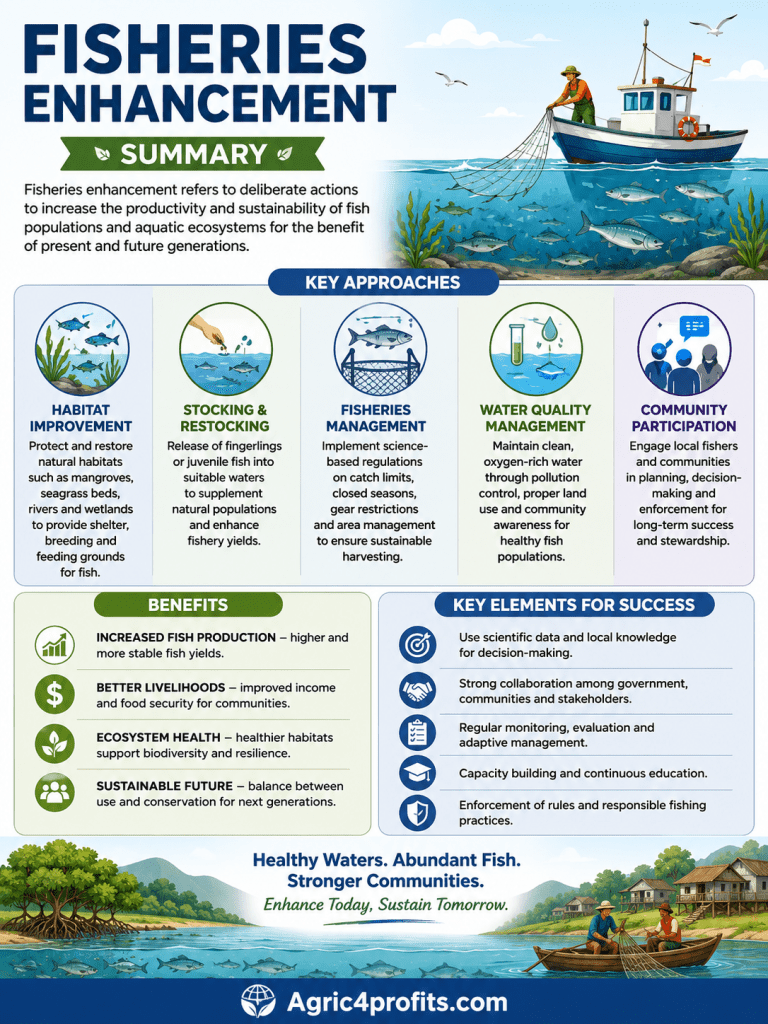
Summary on Fisheries Enhancement
| Section | Main idea | Practical takeaway |
|---|---|---|
| Definition | Enhancement raises fish production beyond natural limits through management. | It works best when intervention fits the water body. |
| Forms | Methods include stocking, fertilization, habitat engineering, and predator control. | Each method should match ecological and market conditions. |
| Traditional systems | Brush parks, retention systems, barriers, and traps improve access and survival. | Local knowledge and property rights are essential. |
| Constraints | High cost, market pressure, environmental damage, and water-quality problems can limit success. | Good planning reduces losses and conflict. |
| Failures in Africa | Poor planning, weak institutions, and limited skills often undermine projects. | Training, secure rights, and realistic budgeting improve outcomes. |
Frequently Asked Questions About Fisheries Enhancement
1. What is fisheries enhancement?
It is the deliberate improvement of fish production in natural or semi-natural waters through stocking, habitat work, fertilization, or access control.
2. How is fisheries enhancement different from aquaculture?
Aquaculture fully raises fish in controlled systems, while enhancement improves wild or semi-wild waters without replacing the ecosystem.
3. What are the main forms of fisheries enhancement?
The main forms include introduction of species, stocking, fertilization, habitat engineering, and predator removal.
4. Why do brush parks work?
Brush parks create shelter, attract fish, and support organisms that become food for resident fish.
5. What is the biggest constraint to enhancement projects?
Cost is usually the biggest constraint because materials, labour, maintenance, and water control all require steady funding.
6. Why do many projects fail in Africa?
Many fail because of weak planning, poor water control, low returns, and the absence of secure use rights.
7. Can retention systems be profitable?
Yes, but only when water quality, feeding, harvesting, and ownership are managed carefully.
8. Why are user rights important?
People invest more confidently when they know they can benefit from the fish produced in the enhanced area.
Do you have any questions, suggestions, or contributions? If so, please feel free to use the comment box below to share your thoughts. We also encourage you to kindly share this information with others who might benefit from it. Since we can’t reach everyone at once, we truly appreciate your help in spreading the word. Thank you very much for your support and for sharing!
Read Also : Complete Waste Management For Restaurants
🌱 Take Your Farming Further With Agric4Profits
Based on what you just read, here are free resources and products from Agric4Profits that can help your farm right now:
- 🛒 Visit Our Marketplace — Organic neem oil, bio-pesticides, seeds and farming products
- 📚 Read Premium Content — Advanced guides for serious and profitable farming
- 🎓 Join Our Free Academy — Structured free training for farmers across Africa
- 🔧 Use Our Free Farm Tools — Profit calculators, feed formulation, pest identifier and more
- 💬 Join Our Farming Community — Connect with farmers across all 54 African countries
- ❓ Ask a Farming Question — Get answers from experienced farmers and agricultural experts
Please cite this content in academic work, research, or publications.