


Public Group
Active 1 year, 3 months ago
Group Type By Animal
Group Leadership
- Group Administrators
-

Fish Farmers Community — Classified by Fish Classes:
Agnatha: Jawless fish like lampreys and hagfish.
Chondrichthyes: Cartilaginous fish like sharks, rays, skates, and chimaeras.
Osteichthyes: Bony fish, which make up the vast majority of fish species. E.g. catfish, tilapia, salmon, carp, trout, cod, mackerel, sardines, snapper, tuna, eel (some types), bass, grouper, etc.
Preventing Common Fish Pond Diseases
- This topic is empty.
- AuthorPosts
- June 26, 2026 at 1:12 pm #776207
 Agric4ProfitsModerator
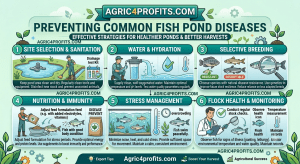
Fish farming can be highly profitable, but disease outbreaks can quickly reduce production and cause significant financial losses. Most fish diseases develop when fish are stressed due to poor water quality, overcrowding, poor nutrition, or inadequate pond management. The good news is that many common fish diseases can be prevented through proper management rather than relying on expensive treatments.
By maintaining a healthy pond environment and following good biosecurity practices, farmers can keep their fish healthy and productive throughout the production cycle.
1. Maintain Good Water Quality
Water quality is the foundation of fish health. Fish live entirely in water, so poor water conditions can weaken their immune systems and make them more vulnerable to diseases.
Farmers should regularly monitor water temperature, dissolved oxygen, pH, and ammonia levels. Frequent water exchange, proper aeration, and removing waste help maintain a healthy environment for fish.
Water Quality Factor Recommended Range Importance Dissolved Oxygen Above 5 mg/L Supports healthy breathing and growth pH 6.5–8.5 Maintains normal body functions Temperature Depends on fish species Influences feeding and metabolism Ammonia Near 0 ppm Prevents stress and poisoning 2. Avoid Overstocking the Pond
Overcrowding increases stress levels and allows diseases to spread quickly among fish. High stocking densities also reduce oxygen levels and increase waste accumulation.
Farmers should stock ponds according to their size, water quality, and management capacity. Giving fish enough space improves growth and reduces disease outbreaks.
Read Also: Practical Tips for Fish Pond Aeration
3. Feed Fish with High-Quality Feed
Balanced nutrition strengthens the immune system and helps fish resist infections. Poor-quality or moldy feed weakens fish and can introduce harmful toxins into the pond.
Use fresh commercial feed or properly formulated farm-made feed that meets the nutritional needs of the fish at different growth stages.
4. Remove Dead and Sick Fish Immediately
Dead or infected fish can become a source of bacteria, fungi, and parasites. Leaving them in the pond increases the risk of disease spreading to healthy fish.
Inspect ponds daily and remove dead or visibly sick fish as soon as they are noticed. Dispose of them safely away from water sources.
5. Practice Good Pond Hygiene
Clean ponds provide a healthier environment for fish. Remove excess mud, uneaten feed, weeds, and organic waste that encourage the growth of harmful microorganisms.
Disinfect equipment such as nets, buckets, and harvesting tools before moving them between ponds to prevent cross-contamination.
6. Quarantine New Fish Before Stocking
New fish may carry diseases even if they appear healthy. Introducing them directly into production ponds can infect the entire stock.
Keep newly purchased fingerlings or broodstock in a separate quarantine pond for at least two weeks. Observe them carefully for any signs of illness before mixing them with existing fish.
7. Recognize Early Signs of Disease
Early detection allows farmers to respond quickly before diseases spread throughout the pond.
Common warning signs include:
Symptom Possible Cause Loss of appetite Poor water quality or disease Swimming near the surface Low oxygen levels White spots on the body Parasitic infection Red sores or ulcers Bacterial infection Slow movement Stress or illness Excess mucus Parasites or poor water quality Monitoring fish behavior every day makes it easier to detect problems early.
8. Control Parasites and Predators
Birds, frogs, snails, and other wild animals can introduce parasites and disease-causing organisms into fish ponds.
Installing bird nets, fencing ponds, and controlling unwanted visitors help reduce disease risks. Farmers should also remove aquatic weeds that provide hiding places for parasites.
9. Strengthen Fish Immunity
Healthy fish naturally resist many diseases better than stressed fish. Providing balanced nutrition, maintaining stable water conditions, and minimizing handling stress all contribute to stronger immunity.
Some farmers also use approved probiotics and water conditioners to improve pond health and reduce harmful bacteria.
10. Keep Accurate Farm Records
Good record-keeping helps farmers identify recurring disease problems and evaluate the effectiveness of management practices.
Useful records include:
Record Type Benefit Feeding records Monitor feed intake and growth Water quality records Detect changes before problems occur Mortality records Identify unusual fish deaths Treatment records Track disease management history Stocking records Improve future production planning Preventing fish pond diseases is far easier and less expensive than treating them after an outbreak. Farmers who maintain good water quality, provide balanced nutrition, avoid overcrowding, and follow proper hygiene and biosecurity practices can significantly reduce disease risks. Daily observation and early intervention are equally important for keeping fish healthy. By adopting these preventive measures, fish farmers can improve survival rates, increase production, and maximize profits.
Frequently Asked Questions
1. What is the most common cause of fish pond diseases?
Poor water quality is one of the leading causes of fish diseases because it weakens the immune system and encourages the growth of harmful microorganisms.
2. How often should pond water be checked?
Basic observations should be made daily, while important water quality parameters should be tested regularly, depending on the farming system.
3. Can overfeeding cause fish diseases?
Yes. Uneaten feed decomposes in the pond, reducing water quality and encouraging harmful bacteria and parasites.
4. Why should sick fish be removed immediately?
Removing sick or dead fish helps prevent diseases from spreading to healthy fish in the pond.
5. How long should new fish be quarantined?
New fish should ideally be quarantined for at least two weeks before they are introduced into the main pond.
6. What are the early signs of fish disease?
Common signs include poor appetite, unusual swimming behavior, white spots, ulcers, slow movement, and increased mortality.
7. Can good nutrition help prevent fish diseases?
Yes. Balanced nutrition strengthens the fish’s immune system, making them more resistant to infections.
8. Is disease prevention cheaper than treatment?
Absolutely. Preventive management practices are generally far less expensive than treating disease outbreaks after they occur.
Read Also: keep garbage cans clean and free of buildup
- AuthorPosts

- You must be logged in to reply to this topic.