


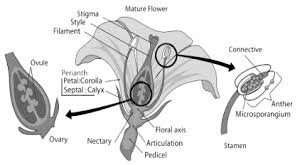
The blueberry ovary is a part of the female reproductive structure within the flower of the blueberry plant (Vaccinium spp.). It is the swollen base of the pistil and serves as the structure that contains the ovules, which are the potential seeds of the fruit.
The ovary is located at the base of the pistil, below the stigma and style. After pollination, when pollen grains land on the stigma and germinate, pollen tubes grow down through the style and into the ovary. Within the ovary, the pollen tubes deliver sperm cells to the ovules, fertilizing them.
Once fertilized, the ovules develop into seeds, and the ovary begins to enlarge and mature into the fruit, which we know as the blueberry. The ovary wall becomes the outer skin of the berry, while the seeds develop within the flesh.
As the blueberry fruit matures, the ovary and other floral parts wither and fall away, leaving behind the fully developed berries.
Overall, the blueberry ovary is a crucial structure in the reproductive cycle of the plant, serving as the site of seed development and ultimately leading to the formation of delicious and nutritious blueberries.
The Economic Importance and Uses of Blueberry Ovary

1. Fruit Production: The blueberry ovary is crucial for fruit production. It houses the ovules, which, after fertilization, develop into blueberries, a commercially valuable fruit.
🌿 Go Organic on Your Farm: Instead of harmful chemical pesticides and fertilisers, try our organic farming products — including neem oil spray, bio-pesticides, natural plant treatments, organic seeds and seedlings, suckers, and many more organic products that are safe for your health, your family, your soil and your harvest. Shop Now →
2. Commercial Blueberry Industry: Blueberry ovaries contribute significantly to the commercial blueberry industry. They are the starting point for the development of blueberries, which are harvested and sold in markets worldwide.
3. Horticulture: Blueberry ovaries are essential in horticulture for breeding new cultivars with desirable traits such as disease resistance, fruit size, and flavor. They serve as a key component in breeding programs aimed at improving blueberry varieties.
4. Genetic Research: Researchers study blueberry ovaries to understand the genetic makeup of blueberries better. This research aids in developing improved varieties that are more resilient to pests, diseases, and environmental stresses.
5. Food Processing: Blueberry ovaries are used in food processing to create a variety of blueberry products, including jams, jellies, sauces, and syrups. These products contribute to the food industry and provide consumers with convenient and flavorful options.
🔧 Free Farm Tool Available: Use our free Agric4Profits Farm Tools to calculate your farm profits, formulate feeds, identify pests and diseases on both your crops and animal farms, plan your planting and harvesting season, including many more farm tasks to get free expert advice and recommendations — completely free, no registration required. Access Free Tools →
6. Export Industry: Blueberry ovaries support the export industry by providing a valuable agricultural product that is in demand globally. Countries with significant blueberry production rely on the export of fresh and processed blueberries for economic growth.
7. Culinary Arts: Blueberry ovaries are used in culinary arts to create dishes ranging from pies and cakes to salads and smoothies. Their sweet and tart flavor profile adds depth and complexity to a wide range of culinary creations.
8. Nutritional Benefits: Blueberry ovaries are rich in antioxidants, vitamins, and minerals, making them a nutritious addition to the diet. Consuming blueberries and products derived from their ovaries supports overall health and well-being.
9. Medicinal Uses: In traditional medicine, extracts from blueberry ovaries are used for their potential health benefits, including anti-inflammatory and antioxidant properties. These extracts are incorporated into various herbal remedies and dietary supplements.
10. Landscape Design: Blueberry plants, including their ovaries, are used in landscape design to add beauty and functionality to outdoor spaces. Their attractive foliage, flowers, and fruits enhance the aesthetic appeal of gardens, parks, and residential landscapes.
💬 Have a Farming Question? Join thousands of farmers across Africa on the Agric4Profits Community — ask questions, share experiences and connect with agricultural experts. It is completely free. Ask Your Question Now →
11. Botanical Education: Blueberry ovaries are used in educational settings to teach students about plant reproduction, fruit development, and agricultural practices. Hands-on learning experiences with blueberry plants help students understand botanical concepts and principles.
12. Biodiversity Conservation: Blueberry plants, including their ovaries, play a role in biodiversity conservation by providing habitat and food for pollinators and other wildlife species. Protecting blueberry habitats contributes to the preservation of biodiversity.
13. Soil Conservation: Blueberry plants, with their deep root systems, help prevent soil erosion and improve soil structure and fertility. Planting blueberries, including their ovaries, in erosion-prone areas helps maintain soil health and stability.
14. Livestock Forage: Blueberry plants, including their ovaries, can serve as forage for livestock such as cattle, goats, and sheep. Grazing on blueberry foliage provides animals with a nutritious food source, especially in areas where traditional forage is limited.
15. Ecotourism: Blueberry farms and orchards, where ovaries develop into ripe berries, attract tourists and visitors interested in agritourism experiences. Tourists can participate in activities such as berry picking, farm tours, and tasting events, contributing to local economies.
16. Environmental Sustainability: Blueberry plants, including their ovaries, are grown using sustainable agricultural practices such as integrated pest management, crop rotation, and water conservation. Sustainable blueberry production minimizes environmental impact and promotes long-term ecological balance.
17. Culinary Tourism: Regions known for blueberry production, where ovaries are transformed into ripe berries, often promote culinary tourism centered around blueberry-themed dishes, festivals, and events. Culinary tourists visit these destinations to experience local cuisine and culture.
Read Also: Rabbit Reproduction: Pregnancy, Kindling, Sexing, and Weaning
The Products and By-products That Can Be Derived From Blueberry Ovary

1. Fresh Blueberries: Blueberry ovaries develop into fresh blueberries, which are harvested and sold as a popular fruit in markets worldwide.
📖 Want to Go Deeper on This Topic?
Our expert agricultural ebooks cover poultry, fish farming, different crops production, snail farming, organic farming, mushrooms, sheep, cattle, flowers, pig farming, goat farming, agribusiness, etc. in practical step-by-step detail — written by agricultural professionals for African farmers.
Browse All Farming Ebooks →2. Processed Blueberry Products: Blueberry ovaries are used to produce a variety of processed blueberry products, including jams, jellies, sauces, syrups, and concentrates.
3. Blueberry Extracts: Extracts from blueberry ovaries are used in dietary supplements, herbal remedies, and cosmetic formulations for their potential health benefits and antioxidant properties.
4. Blueberry Flavored Beverages: Blueberry ovaries are used to flavor a range of beverages, including juices, smoothies, teas, and alcoholic beverages.
5. Blueberry Infused Products: Blueberry ovaries are infused into various products such as oils, vinegars, and spirits to impart their distinctive flavor and aroma.
6. Blueberry Desserts: Blueberry ovaries are used in the production of desserts such as pies, cakes, muffins, and ice creams, adding sweetness and tartness to these culinary creations.
7. Blueberry Flavored Snacks: Blueberry ovaries are incorporated into snacks such as granola bars, trail mixes, and dried fruit snacks, offering a nutritious and flavorful snack option.
8. Blueberry Yogurts and Dairy Products: Blueberry ovaries are used to flavor yogurts, cheeses, and other dairy products, enhancing their taste and nutritional profile.
9. Blueberry Cosmetics: Extracts from blueberry ovaries are used in cosmetic formulations such as skincare products, shampoos, and conditioners for their antioxidant and anti-inflammatory properties.
10. Blueberry Scented Products: Blueberry ovaries are used to create scented products such as candles, soaps, and air fresheners, providing a fragrant and uplifting aroma.
11. Blueberry Infused Spirits: Blueberry ovaries are used to infuse spirits such as vodka, gin, and liqueurs, creating flavorful and aromatic alcoholic beverages.
12. Blueberry Bakery Items: Blueberry ovaries are used in the production of bakery items such as bread, pastries, and cookies, adding texture and flavor to these baked goods.
13. Blueberry Breakfast Foods: Blueberry ovaries are used in breakfast foods such as pancakes, waffles, and cereals, providing a delicious and nutritious morning meal option.
14. Blueberry Salad Dressings: Blueberry ovaries are used to flavor salad dressings and vinaigrettes, adding a sweet and tangy taste to salads and other dishes.
15. Blueberry Jam and Preserves: Blueberry ovaries are cooked down with sugar to make blueberry jam, preserves, and fruit spreads, perfect for spreading on toast or adding to baked goods.
16. Blueberry Infused Waters: Blueberry ovaries are used to infuse water, creating a refreshing and flavorful beverage option without added sugars or artificial flavors.
17. Blueberry Scented Candles: Blueberry ovaries are used to create scented candles, providing a sweet and fruity aroma when burned.
Read Also: Gray Leaf Spot (Stemphylium spp) – Symptoms and Damage Control
Frequently Asked Questions (FAQs) About Blueberry Ovary
1. Are blueberry ovaries edible?
Blueberry ovaries are not typically consumed directly as food. However, they develop into blueberries, which are edible and commonly consumed.
2. Do blueberry ovaries contain seeds?
Yes, blueberry ovaries contain ovules, which develop into seeds when fertilized. These seeds are found within the flesh of the mature blueberry fruit.
3. How do blueberry ovaries develop into fruit?
After pollination, the ovules within the blueberry ovaries undergo fertilization and develop into seeds. The ovaries swell and ripen, forming the flesh of the blueberry fruit.
4. Are blueberry ovaries used in cooking?
Blueberry ovaries are not typically used directly in cooking. However, the fruits that develop from the ovaries are widely used in culinary applications.
5. Can you plant blueberry ovaries to grow blueberry plants?
No, blueberry ovaries cannot be planted to grow blueberry plants. Blueberry plants are typically propagated from cuttings or tissue culture methods rather than from seeds.
6. Do blueberry ovaries need to be pollinated to develop fruit?
Yes, pollination is necessary for blueberry ovaries to develop into fruit. Pollen must be transferred from the stamens to the stigma of the flower for fertilization to occur.
7. How long does it take for blueberry ovaries to develop into ripe fruit?
The time it takes for blueberry ovaries to develop into ripe fruit varies depending on factors such as the blueberry variety, growing conditions, and climate. Generally, it takes several weeks to months from pollination to fruit ripening.
8. Are blueberry ovaries the same as blueberry seeds?
No, blueberry ovaries are not the same as blueberry seeds. Ovaries contain ovules, which develop into seeds after fertilization. The seeds are found within the flesh of the mature blueberry fruit.
9. Can you eat blueberry ovaries raw?
Blueberry ovaries are not typically consumed raw as they are small and not as palatable as the mature blueberry fruit. However, they are edible and can be consumed along with the fruit when eaten fresh or used in cooking.
10. Do blueberry ovaries have any nutritional value?
Blueberry ovaries contain nutrients such as vitamins, minerals, and antioxidants, although they are not consumed in large quantities. The majority of the nutritional value comes from the mature blueberry fruit that develops from the ovaries.
Read Also: How to Store Fresh Fruit, Vegetables and Herbs
🌱 Take Your Farming Further With Agric4Profits
Based on what you just read, here are free resources and products from Agric4Profits that can help your farm right now:
- 🛒 Visit Our Marketplace — Organic neem oil, bio-pesticides, seeds and farming products
- 📚 Read Premium Content — Advanced guides for serious and profitable farming
- 🎓 Join Our Free Academy — Structured free training for farmers across Africa
- 🔧 Use Our Free Farm Tools — Profit calculators, feed formulation, pest identifier and more
- 💬 Join Our Farming Community — Connect with farmers across all 54 African countries
- ❓ Ask a Farming Question — Get answers from experienced farmers and agricultural experts
Please cite this content in academic work, research, or publications.