


Having learned about the characteristics of market structures in the previous article, it is necessary to learn about the types of market structures. This will help to appreciate the behavior and performance of participants in the agricultural market system.
1. Atomistic or Pure Competition in Agriculture
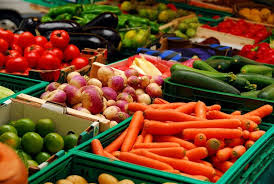
This is a situation where there are many firms on the seller side of the market that produce and sell a product which is standardized in the eyes of the buyers. A purely competitive market is also characterized as one that has virtually no barriers to entry or exit.
The level of market knowledge is used to distinguish between pure and perfect competition. Where the three characteristics mentioned above exist, it is a state of pure competition, but if in addition, there is the existence of full market knowledge or perfect market knowledge, it is called a perfect market or perfect competition.
The same term 'Pure competition' is used on the buyers' side of the market where there are many buyers purchasing a standardized product. Atomistic competition is difficult to find in practical life situations, but the agricultural sector most closely illustrates it.
Read Also: How to know the Best Specie of Fish to Raise
🌿 Go Organic on Your Farm: Instead of harmful chemical pesticides and fertilisers, try our organic farming products — including neem oil spray, bio-pesticides, natural plant treatments, organic seeds and seedlings, suckers, and many more organic products that are safe for your health, your family, your soil and your harvest. Shop Now →
2. Monopolistic and Monopsonistic Competition in Agricultural Markets
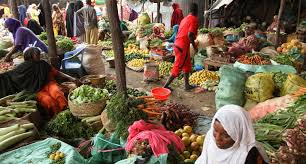
This is a situation where there are many firms selling differentiated products. It is a state of competition because many sellers are involved. The only difference between this and pure competition is in the nature of the product differentiated product.
The feed mills are typical examples of this market structure. There are many feed mills scattered all over Nigeria, but they all sell differentiated products as branded formula feeds and feed supplements.
🔧 Free Farm Tool Available: Use our free Agric4Profits Farm Tools to calculate your farm profits, formulate feeds, identify pests and diseases on both your crops and animal farms, plan your planting and harvesting season, including many more farm tasks to get free expert advice and recommendations — completely free, no registration required. Access Free Tools →
What is meant by product differentiation? A product is said to be differentiated if it is a little bit different in the eyes of the buyers. The difference may be in the nature of the product, the quality of the product, or in such aspects as packaging, branding, or conditions of sale.
For example, Coca-Cola and Pepsi are both soft drinks, but they are different in the eyes of the buyers. They may differ in taste, the brand names are different, and the bottles are different.
The models of monopolistic and monopsonistic competition have the structural characteristics of (a) many buyers and many sellers, (b) product or service differentiation, and (c) relatively easy entry or exit.
Since the products are differentiated, it generally pays the firms to engage in merchandising (advertising), sales promotion, product and service improvement through research and development.
Product differentiation permits each firm to set its own price. Thus, a firm selling in a market under monopolistic competition is a "price marker," not a "price taker."
💬 Have a Farming Question? Join thousands of farmers across Africa on the Agric4Profits Community — ask questions, share experiences and connect with agricultural experts. It is completely free. Ask Your Question Now →
Read Also: The Most Lucrative between Production of Fish Fingerlings or Raising them to Table Size
3. Oligopolistic and Oligopsonistic Competition in Agriculture
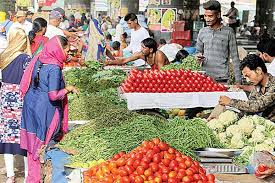
This is the type of market structure in which few firms are engaged in buying and selling. If a few firms are engaged in selling a homogeneous product, this is referred to as purely oligopoly. On the other hand, a situation where a few firms are engaged in selling differentiated products is referred to as differentiated oligopoly.
On the buying side of the transaction, few firms or buyers buying a homogeneous product is referred to as pure oligopsony, and a situation where a few buyers buy differentiated products is referred to as differentiated oligopsony. In all cases of oligopoly or oligopsony, entry into the market is difficult and, in a few cases, virtually impossible.
Oligopolistic firms are price makers when they have differentiated products. Pricing tends to be a delicate issue in oligopoly market structure because of the fewness of firms participating in the market.
Thus, any foreseeable gain in the market share of one firm usually leads to a perceptible loss in the market share of one or more of its few competitors. Hence, any simple move by one firm, such as a price cut that erodes the market share of other rivals, will result in a price war.
One marked feature of the oligopoly market structure is the interdependence of the few buyers and sellers involved in the market. Such interdependence could lead to collusion. While interdependence may limit the managerial discretion of a firm, it could also provide marketing or procurement opportunities not available in competitive market structures.
These opportunities revolve around the fact that certain actions taken in recognition of mutual interdependence may benefit the whole group. Under this structure, it is common for a big firm among the few sellers, which has a larger proportion of the market share, to play the role of price leadership while the other firms follow suit.
📖 Want to Go Deeper on This Topic?
Our expert agricultural ebooks cover poultry, fish farming, different crops production, snail farming, organic farming, mushrooms, sheep, cattle, flowers, pig farming, goat farming, agribusiness, etc. in practical step-by-step detail — written by agricultural professionals for African farmers.
Browse All Farming Ebooks →Oligopolies with homogeneous products have nearly identical prices, while oligopolies with differentiated products may have a considerable variety of prices.
4. Pure Monopoly in Agriculture
This is a market structure in which there is a single firm selling a unique product. A monopoly is also characterized by completely blocked entry conditions and the continued effort to keep the market to itself. On the buyer's side, a market structure in which there is a single buyer buying a unique product is called a monopsony market.
Monopsonies may exist in geographically restricted areas where there may be only one purchaser of farm products in certain highly dispersed farming areas. This one buyer thus has influence over the price paid to sellers.
A monopsonist can retain their position only by blocking the entry of other buyers into the market in which they operate. An example of a monopsonist in Nigeria was the defunct Cotton Board, which was the only body empowered by law to purchase and gin seed cotton produced in Nigeria.
Do you have any questions, suggestions, or contributions? If so, please feel free to use the comment box below to share your thoughts. We also encourage you to kindly share this information with others who might benefit from it. Since we can’t reach everyone at once, we truly appreciate your help in spreading the word. Thank you so much for your support and for sharing!
Read Also: Succulent Plants: A Guide to Growing and Caring for These Unique Plants
Frequently Asked Questions
We will update this section soon.
🌱 Take Your Farming Further With Agric4Profits
Based on what you just read, here are free resources and products from Agric4Profits that can help your farm right now:
- 🛒 Visit Our Marketplace — Organic neem oil, bio-pesticides, seeds and farming products
- 📚 Read Premium Content — Advanced guides for serious and profitable farming
- 🎓 Join Our Free Academy — Structured free training for farmers across Africa
- 🔧 Use Our Free Farm Tools — Profit calculators, feed formulation, pest identifier and more
- 💬 Join Our Farming Community — Connect with farmers across all 54 African countries
- ❓ Ask a Farming Question — Get answers from experienced farmers and agricultural experts
Please cite this content in academic work, research, or publications.