


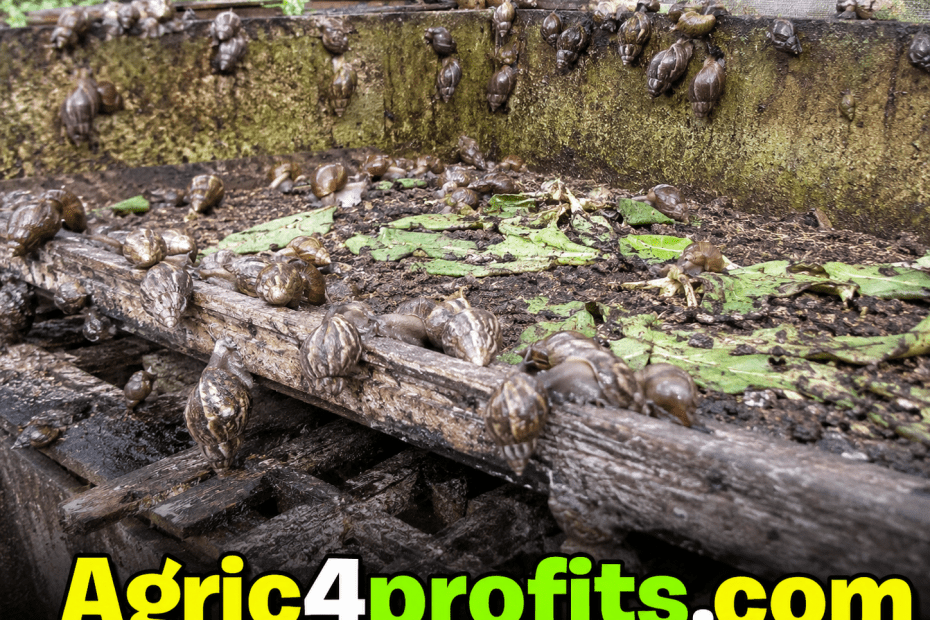
Snail farming attracts attention because it looks simple, quiet, and inexpensive to start, especially for smallholders. However, farmers who study snail housing materials and farm planning first avoid many costly surprises later in production.
The business can be rewarding, but it is never free from risk. Success depends on careful moisture control, good feed, secure pens, and constant observation, which is why a complete snail farming guide matters.
Many beginners enter snail rearing expecting fast profit, yet the reality is more patient and technical. Poor housing, weak records, and careless management can quickly reduce survival, delay growth, and undermine the whole venture.
A farmer also has to think beyond meat production. Market preferences, climate pressure, pest control, and stocking density all affect profit, so even a low-cost venture still needs disciplined management and realistic expectations.
This revised guide explains the main disadvantages clearly, then balances them with facts, benefits, equipment, breeds, and practical references for readers comparing snail farming with other livestock ventures and business choices.
Major Disadvantages of Snail Farming / Snail Rearing
1. Climate: Snails thrive in cool, moist, and stable conditions, so hot weather, harsh wind, or long dry periods can quickly reduce feeding, breeding, and shell quality unless housing is well managed.
🌿 Go Organic on Your Farm: Instead of harmful chemical pesticides and fertilisers, try our organic farming products — including neem oil spray, bio-pesticides, natural plant treatments, organic seeds and seedlings, suckers, and many more organic products that are safe for your health, your family, your soil and your harvest. Shop Now →
2. Cultural restrictions: In some communities, snail meat is highly valued, but in others it is avoided for religious, traditional, or personal reasons. That difference makes demand uneven and sales harder to predict.
3. Slow growth: Snails mature gradually, and only a limited part of their live weight becomes edible meat. As a result, farmers often wait longer for returns than they would in faster livestock businesses.
4. Pest risk: Escaped snails can spread into gardens or crop fields, where they may damage tender leaves and create nuisance problems. Poor containment can therefore turn a farm asset into a public complaint.
These drawbacks explain why farmers should treat snail rearing as a carefully planned enterprise rather than an impulsive side project. The most successful operators study management, costs, and housing before they stock their pens.
🔧 Free Farm Tool Available: Use our free Agric4Profits Farm Tools to calculate your farm profits, formulate feeds, identify pests and diseases on both your crops and animal farms, plan your planting and harvesting season, including many more farm tasks to get free expert advice and recommendations — completely free, no registration required. Access Free Tools →
A good starting point is to compare expected profit with the expense of pens, feed, daily care, and replacement stock. Farmers who read cost projections early can avoid unrealistic budgeting mistakes.
Another important step is choosing the right production system. A guided review of production systems helps farmers match scale, climate, labour availability, water access, and management style to their long-term goals.
Careful routine management also reduces hidden losses. Farmers who follow daily farm duties and routine maintenance usually keep snails healthier, cleaner, and more productive throughout each breeding cycle and season.
Read Also: Introduction to Snail Farming as a Lucrative Business
Facts about Snail Farming Business / Snail Rearing
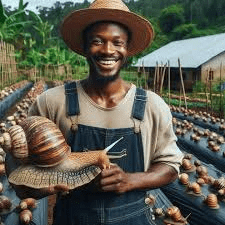
1. Snails produce a thick protective slime that helps them move over rough surfaces without injury. The secretion also reduces friction, supports moisture retention, and explains how they can crawl on sharp objects.
💬 Have a Farming Question? Join thousands of farmers across Africa on the Agric4Profits Community — ask questions, share experiences and connect with agricultural experts. It is completely free. Ask Your Question Now →
2. Most snails are hermaphrodites, which means each mature snail carries both male and female reproductive organs. This biological trait can simplify breeding, although successful reproduction still depends on age, health, and matching conditions.
3. Garden snails are famous for having thousands of tiny teeth arranged on a tongue-like organ called the radula. They use it to scrape food, which is why soft leaves and tender plants are easily eaten.
4. Among the popular commercial species in West Africa, Achatina achatina is often described as one of the largest. Its size, shell shape, and market appeal make it familiar to many Nigerian snail farmers.
5. Snails can survive harsh weather by entering dormancy during very cold or very dry periods. They seal themselves in a protective covering and remain inactive until moisture and temperature improve again.
6. Snails are nocturnal animals, so they become more active at night when temperatures are cooler and moisture levels are higher. This habit affects feeding schedules, observation routines, and overall farm management.
7. Snail meat is a valuable source of high-quality protein and is often promoted as a healthier alternative to some heavier meats. It also provides useful minerals that support nutrition in family diets.
8. Because of the suction created by their slimy movement, some snails can crawl upside down on certain surfaces. That unusual ability is one reason they are admired for their balance and adaptability.
9. Snails do not hear in the same way humans or birds do, but they still sense their environment through touch, smell, and vibration. Farmers therefore depend more on observation than on sound-based behavior.
10. Many species can live for years under good conditions, and some may survive far longer than many people expect. Long lifespan means snail farming rewards patient management, clean housing, and regular inspection.
📖 Want to Go Deeper on This Topic?
Our expert agricultural ebooks cover poultry, fish farming, different crops production, snail farming, organic farming, mushrooms, sheep, cattle, flowers, pig farming, goat farming, agribusiness, etc. in practical step-by-step detail — written by agricultural professionals for African farmers.
Browse All Farming Ebooks →Equipments and Tools Used for Snail Farming Business
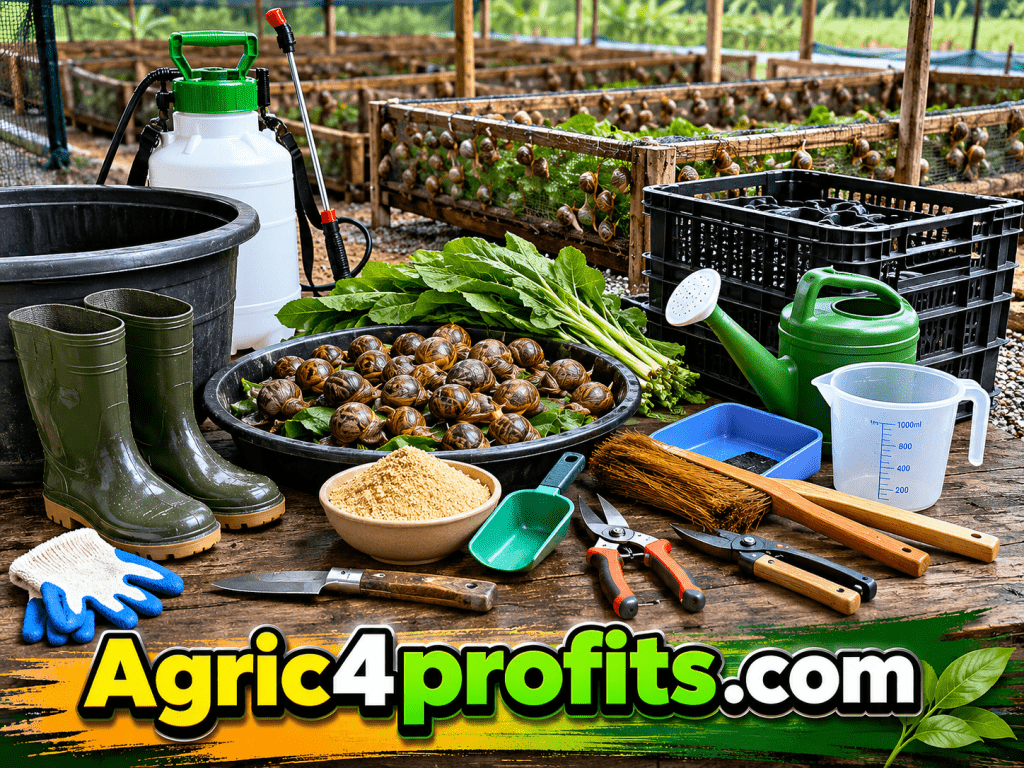
1. A clean water tank is essential because snails need moisture and regular washing. Farmers use it to keep the environment damp, support sanitation, and maintain the calm conditions snails prefer.
2. Watering cans help apply moisture gently without flooding the pen. They are simple tools, but they matter because controlled watering protects soil structure and keeps humidity levels suitable for snail activity.
3. A hand trowel is useful for mixing soil, removing debris, and checking pen conditions. Small tools like this save time during routine cleaning and help farmers work without disturbing the snails too much.
4. A rake makes it easier to clear leaves, spread mulch, and keep the surrounding area tidy. Good cleanliness supports better hygiene, lower stress, and fewer pest problems in the snail house.
5. A shovel is needed for moving soil, compost, or bedding materials during construction and maintenance. Farmers rely on it when preparing housing units or replacing dirty substrate inside pens and cages.
6. A digital weighing scale is valuable because it helps farmers track growth accurately. Reliable weights make it easier to evaluate feed performance, compare batches, and sell snails with confidence and clarity.
7. Buckets are useful for carrying feed, water, soil, and waste during daily work. They simplify handling, especially on small farms where the same equipment may serve several routine tasks and cleanup jobs.
8. Feeders keep food organized and reduce contamination from dirt or trampling. They also make it easier to monitor how much snails eat, which is important for smart management and record keeping.
9. A pipe or hose helps farmers deliver water quickly to pens and nearby cleaning areas. It saves time, improves consistency, and supports the moisture control that snails need for healthy activity.
Snail Breeds / Species in Snail Farming Business / Snail Rearing
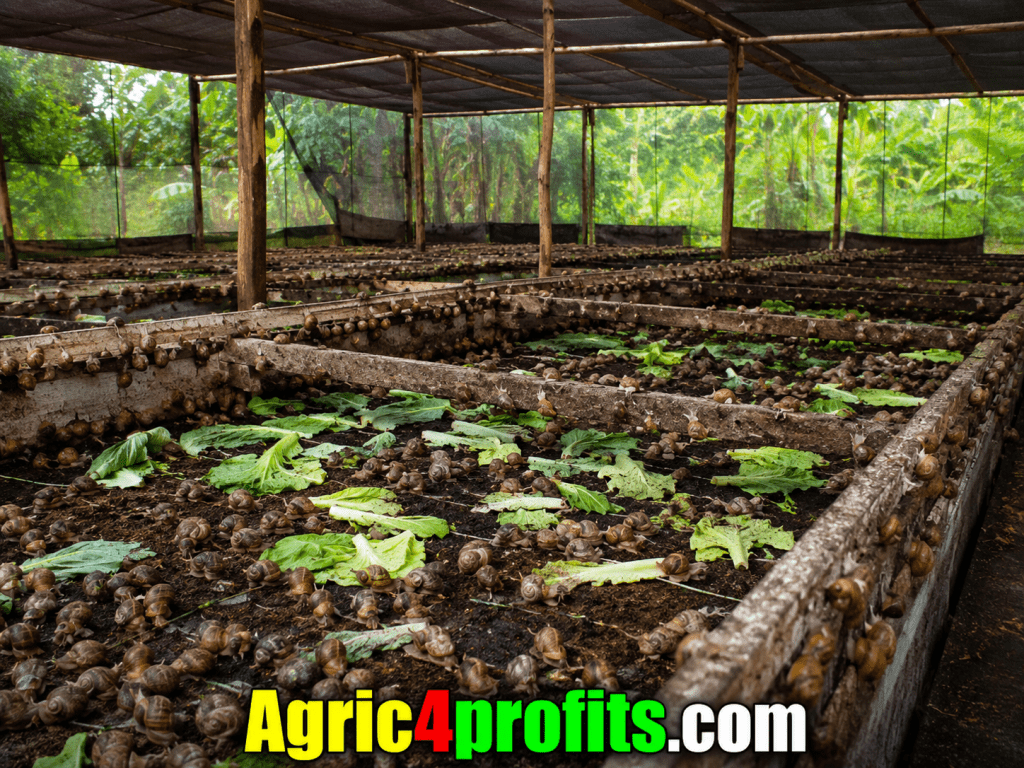
When choosing breeds, farmers should think about size, growth rate, fertility, and local adaptability. A careful comparison of stocking density and health management helps each farmer choose the most practical species for the available space.
1. Archachatina Marginata (AM): The giant African snail is the most familiar large species in many West African markets, and its body size often makes it the preferred breeding option for farmers seeking premium stock.
This species can grow to impressive length, lay several clutches each year, and remain productive for many seasons. It takes longer to begin laying, but farmers value it for size, resilience, and market value.
2. Achatina Achatina (AA): This breed is known for its strong reproductive output and wide acceptance in several markets, which is why many farmers consider it when they want faster multiplication and reliable demand.
The eggs usually hatch within a few weeks, and the species can begin laying earlier than some larger snails. That combination of strong reproduction and familiar demand makes it important in many farms.
3. Achatina Fulica (AF): The species is smaller, but it remains useful where space is limited and where farmers want a manageable breeding snail that still performs well under proper care.
Like the other species, it can lay many eggs in a season when conditions are favorable. Farmers who protect breeding stock from stress and disease pressure usually achieve better results with this species.
Whichever species a farmer chooses, success depends on husbandry rather than name alone. Clean housing, good feed, careful breeding, and reliable records matter more than simply buying the biggest or most famous snail.
Snail farming remains manageable when farmers stay realistic about climate, market demand, and daily care. The best results come from patient planning, good records, and disciplined management throughout the production cycle.
Read Also: Mechanism of Animal Body Defence against Stress
Summary on Major Disadvantages of Snail Farming / Snail Rearing
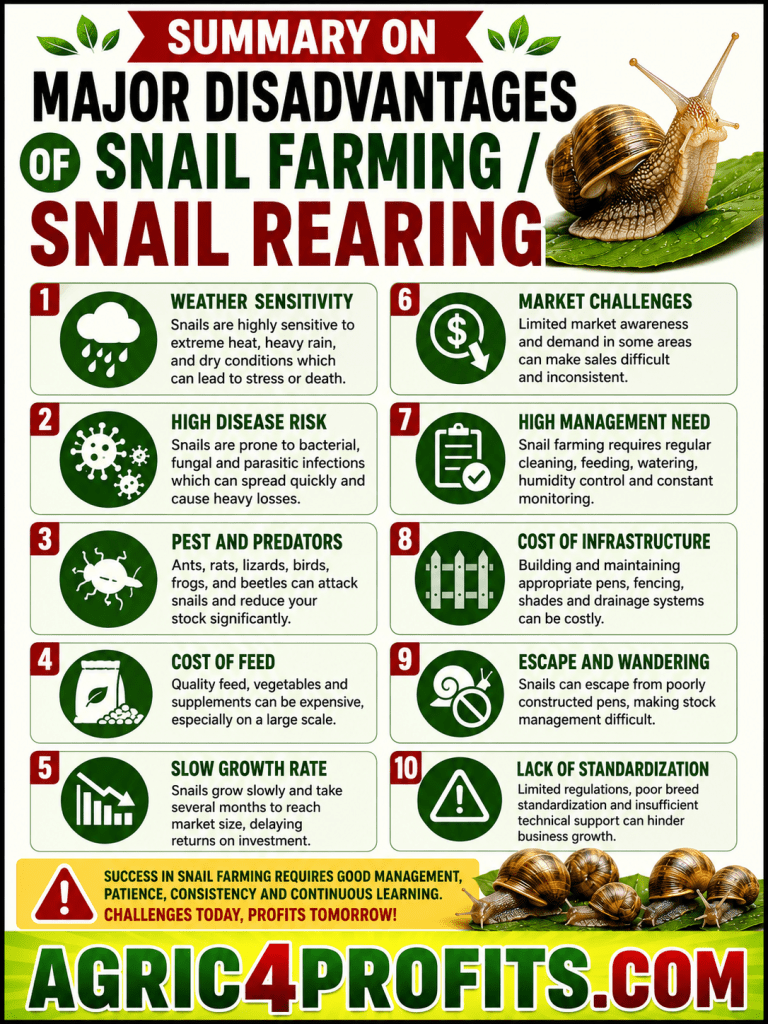
| Aspect | Summary |
|---|---|
| Main issue | Snail farming can suffer from climate stress, slow growth, cultural resistance, and escape risks. |
| Practical effect | Those limitations reduce speed of profit, sales certainty, and production consistency when management is weak. |
| Best response | Good housing, disciplined routine care, and realistic budgeting help farmers control losses. |
| Useful support | Planning tools, production guides, and cost studies improve decision-making before stocking begins. |
| Overall lesson | Snail farming works best as part of a diversified, patient, and well-managed agribusiness plan. |
Frequently Asked Questions About Major Disadvantages of Snail Farming / Snail Rearing
1. What makes climate such a serious challenge for snail farming?
Snails need cool, moist, and stable conditions. Heat, wind, and dry spells slow feeding, weaken breeding, and raise mortality unless housing and moisture are carefully controlled.
2. Why do cultural preferences affect snail sales so much?
Some communities love snail meat, while others avoid it for religious or traditional reasons. That difference changes demand, pricing, and the size of the market a farmer can reach.
3. How fast do snails usually grow?
Snails grow slowly compared with many livestock species. Farmers must wait patiently for market size, which means cash flow is slower and planning becomes more important.
4. Can escaped snails really become a problem?
Yes. Escaped snails may enter gardens or fields and damage tender plants. They can also create nuisance complaints that harm the farmer’s reputation in the community.
5. Which species is most common in West Africa?
Archachatina Marginata is often the best-known giant African snail in West Africa. Farmers appreciate its size, shell strength, and commercial value.
6. What tools are most important for a beginner?
Basic tools include water containers, watering cans, feeders, a shovel, a rake, and a weighing scale. These items support clean housing, moisture control, and growth checks.
7. Is snail farming profitable for small farmers?
It can be profitable when farmers manage feed, housing, and breeding well. Small farms often succeed because start-up costs are lower and labour needs remain modest.
8. How can a farmer reduce losses in snail rearing?
Losses fall when the farmer uses proper housing, follows daily routines, keeps records, prevents disease, and avoids overcrowding the pens.
Do you have any questions, suggestions, or contributions? If so, please feel free to use the comment box below to share your thoughts. We also encourage you to kindly share this information with others who might benefit from it. Since we can’t reach everyone at once, we truly appreciate your help in spreading the word. Thank you very much for your support and for sharing!
Read Also: Conventional Sewage Treatment Guide
🌱 Take Your Farming Further With Agric4Profits
Based on what you just read, here are free resources and products from Agric4Profits that can help your farm right now:
- 🛒 Visit Our Marketplace — Organic neem oil, bio-pesticides, seeds and farming products
- 📚 Read Premium Content — Advanced guides for serious and profitable farming
- 🎓 Join Our Free Academy — Structured free training for farmers across Africa
- 🔧 Use Our Free Farm Tools — Profit calculators, feed formulation, pest identifier and more
- 💬 Join Our Farming Community — Connect with farmers across all 54 African countries
- ❓ Ask a Farming Question — Get answers from experienced farmers and agricultural experts
Please cite this content in academic work, research, or publications.