


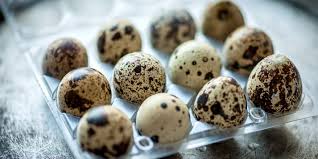
Quail eggs (small in size but packed with essential minerals and vitamins) are more nutritious than most eggs. Quail eggs are richer in vitamins and minerals compared to chicken eggs.
Quail eggs contain 13 per cent protein compared to 11 per cent found in chicken eggs. They also contain 140 per cent of Vitamin B1, compared to 50 per cent found in chicken eggs, they also contain vitamin B2 etc. and Minerals like Zinc, Iron etc.
They have good type of cholesterol (HDL) and are highly proteinous. Quail eggs are recommended as treatment or part of treatment by natural treatment practitioners depending on the illness or condition.
Health Benefits of Quail Eggs

Quail eggs are undoubtedly very nutritious and are proven to have numerous health benefits that cut across many illnesses and health conditions common to all ages. With varying opinions by numerous authors, it still remains a fact that Quail eggs have some basic characteristics that are common to all views.
Quail eggs are said to be very low in calories and little or no trace of carbohydrates. Quail eggs are full of essential nutrients such as:
Vitamin A (retinol)
Vitamin B2 (Riboflavin)
Vitamin B12
Vitamin B6
Vitamin B1
Vitamin C
Vitamin D
Vitamin E
Research also confirmed that quail eggs are antioxidants and also contain:
Omega-3
Omega-6 fatty acids
Selenium
Choline
It is also rich in minerals such as:
Magnesium
Potassium
Folic acid
Iron
Phosphorus
Zinc.
These key essential nutrients all packed in one small quail egg makes it a prized dietary and healing food that everyone must take regularly. It is recorded that Chinese medical practitioners have used quail eggs for thousands of years in the remedy of diseases.
British researchers say that eggs should be pronounced a super food. It is said to be one of the richest in good and essential ingredients and we should consume them daily.
Read Also: What are the health benefits of Quail Eggs?
34 Amazing Health Benefits of Quail Eggs
1. Quail eggs for fighting several diseases
Quail eggs can provide the following: Healthy skin, Sexual potency, Remedy for kidney stones, Remedy for ulcers, Remedy for heart disease, Remedies for cancer, Remedy for anemia, Remedy for diabetes, Foetal and child brain development, Natural anti-aging, Stop asthma flair-ups.
2. Good for eyes
Eating quail eggs on a regular and moderate basis has been found to be very beneficial for improving our eyesight and for protecting our eyes from damage. This benefit is mainly because of the presence of antioxidants like vitamin A in them.
3. Quail eggs for a healthy skin
Quail eggs control allergic skin conditions by healing skin damaged from eczema and psoriasis and minimizing future skin flair-ups. They are rich in essential fatty acids, vitamin B2, vitamin A, and vitamin B12, which help repair damaged tissue, hydrate skin, and inhibit inflammatory cytokines.
Read Also: Facts about Quails you should be Aware of
4. Quail eggs for sexual potency
Quail eggs improve blood circulation, strengthen the heart muscle, and nourish the prostate gland with phosphorus, proteins, vitamin B, vitamin D, and vitamin E, boosting libido and sexual performance naturally without side effects.
5. Quail eggs for healthy body organs
Quail eggs help maintain healthy organs by providing antioxidants, magnesium, vitamin B6, potassium, and alkaline properties that support kidney health, reduce stone formation, and aid in digestive and heart conditions.
6. Quail eggs for ulcer treatment
Quail eggs are high in alkaline-forming properties and antioxidants like selenium and vitamin A, making them an effective natural alternative for relieving stomach ulcers, gastritis, and acid-related discomforts.
Read Also: How to Make Money as a Poultry Farmer
7. Quail eggs as relief from medicinal conditions
Quail eggs help alleviate conditions such as cancer growth, anaemia, diabetes, asthma, and more through their nutrient profile and antioxidant effects.
8. Quail eggs for heart conditions
Quail eggs contain HDL (good) cholesterol, folic acid, vitamin B12, iron, phosphorus, protein, riboflavin, and selenium, helping lower blood pressure and reduce heart disease risk.
9. Quail eggs for cancer
Rich in vitamin A and selenium, quail eggs act as antioxidants to protect cells from free radical damage and create an alkaline environment less favorable for cancer growth.
10. Quail eggs for anemia
Quail eggs provide natural iron, vitamin A, and vitamin B12 to ease anemia symptoms and support red blood cell production without invasive treatments.
11. Quail eggs for diabetes
Low in carbohydrates and calories, quail eggs help regulate blood sugar and cholesterol levels, supporting diabetes management as part of a balanced diet.
Read Also: 12 Poultry Eggs Fascinating Facts you must know about
12. Fetus and child brain development
Quail eggs supply omega-3 fatty acids, choline, and DHA for fetal brain development, neural function, and improved IQ in children.
13. Natural anti-aging and beauty care
Packed with antioxidants, essential fatty acids, selenium, and vitamins A, B, and E, quail eggs protect telomeres, slow aging, and promote youthful skin.
14. Asthma
Quail eggs act as a natural histamine suppressor with vitamin A, selenium, and a favorable omega-3 to omega-6 ratio, reducing inflammation and asthma flare-ups.
15. Manages cholesterol level
About 60 percent of fat in quail eggs is beneficial HDL cholesterol, helping reduce bad LDL, prevent artery plaque, and support cardiovascular health.
16. Good for growth
High protein content supports overall body development, cell repair, and tissue growth.
17. Provides relief from hypertension
Potassium in quail eggs acts as a natural vasodilator to relax blood vessels and regulate high blood pressure.
18. Helps in detoxification
Antioxidants, water content, and amino acids help remove toxins and improve bowel movement.
19. Provides antioxidantal benefits
Vitamins and compounds fight free radicals, reducing risks of cancer and supporting immune, cardiovascular, and cognitive health.
Read Also: All you need to know about Eggs
20. Soothe allergies
Ovomucoid protein in quail eggs helps soothe allergy symptoms like congestion and inflammation.
21. Boosts metabolism
B vitamins enhance metabolic rate, aiding digestion, calorie burning, and nutrient absorption.
22. Provides energy boost
Nutrient-dense profile delivers sustained energy, making quail eggs ideal for breakfast.
23. Good for brain
Antioxidants and nutrients protect neurons, improving cognitive function and reducing risks of neurodegenerative diseases.
24. Make our immune system stronger
Antioxidants, lysine, and other nutrients strengthen immunity and reduce infection risks.
Read Also: 6 Major Side Effects of Eating Too Many Quail Eggs
25. Regulates blood sugar level
Low glycemic index, fiber, and leucine help stabilize blood sugar for diabetes management.
26. Maintains healthy skin
Nutrients promote collagen synthesis, protect against oxidative damage, and reduce premature aging signs.
27. Keeps our cardiovascular system healthy
Antioxidants, vitamin E, and cholesterol management lower cardiovascular risks.
28. Promotes healthy hair and scalp
Nutrients improve circulation, nourish the scalp, and reduce premature graying.
Read Also: 6 Ways to Enhance Egg Production and Maximize Profits on Poultry Layers
29. Good for bone development
Lysine, iron, zinc, and potassium support bone strength and reduce osteoporosis risk.
30. Good for teeth
Zinc helps maintain healthy teeth and oral health.
31. Provides relief from depression
Antidepressant compounds like Hormone P provide relief, especially in menopausal women.
32. Helps in faster recovery
Protein, antioxidants, and nutrients speed wound healing and illness recovery.
33. Good for respiratory system
Vitamin A and E support lung health and reduce risks of bronchitis and asthma.
34. Helps in treating gastritis
Antioxidants and amino acids reduce inflammation and repair stomach lining.
Scientific Evidence and Case Studies on Quail Eggs
1. Nutritional Superiority: Quail eggs contain higher levels of protein (13% vs 11% in chicken eggs), vitamin B1 (140% more), and various minerals like iron, zinc, and selenium compared to chicken eggs, with studies confirming richer nutrient density per gram.
2. Antioxidant and Anti-inflammatory Effects: Quail eggs are rich in vitamin A, selenium, and omega-3/6 fatty acids, which act as antioxidants to reduce oxidative stress, inflammation, and free radical damage in lab and dietary studies.
3. Cardiovascular Health: Consumption supports HDL (good) cholesterol levels and helps regulate blood pressure through potassium and low carbohydrate content, linked to reduced heart disease risk in observational nutrition research.
4. Allergy Relief: Ovomucoid protein in quail eggs has been shown in studies to inhibit allergic responses and soothe symptoms like inflammation and congestion.
5. Brain and Developmental Support: Omega-3 fatty acids (including DHA) and choline promote fetal and child brain development, neural function, and cognitive performance, supported by nutritional studies on essential fatty acids.
Summary of Quail Eggs
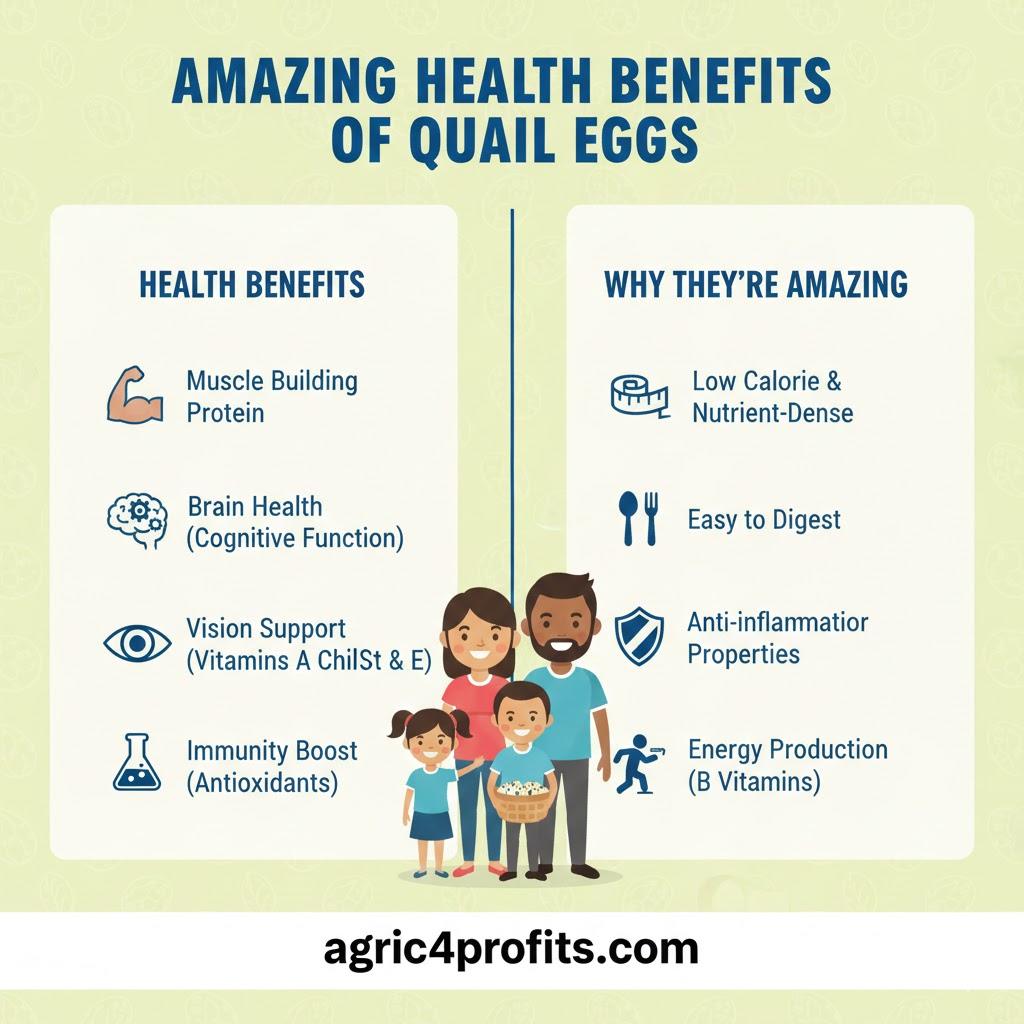
| Aspect | Description |
|---|---|
| What are Quail Eggs | Small, nutrient-dense eggs from quail birds, considered a superfood with higher vitamin, mineral, and protein content than chicken eggs; low in calories and carbs. |
| Key Nutrients | High in protein, vitamins A, B1, B2, B6, B12, C, D, E; omega-3 & omega-6 fatty acids, choline, selenium; minerals like iron, zinc, magnesium, potassium, phosphorus, folic acid. |
| Main Health Benefits | Supports eye health, skin repair, sexual potency, heart health, diabetes management, anemia relief, brain development, anti-aging, asthma control, allergy soothing, detoxification, immunity boost, and more. |
| Traditional & Modern Uses | Used in Chinese medicine for thousands of years; recommended for various conditions including ulcers, kidney stones, cancer prevention, hypertension, and respiratory issues. |
| Scientific Insights | Superior nutrient profile confirmed; antioxidants reduce oxidative stress; supports cholesterol balance, blood sugar regulation, and developmental health; some benefits backed by nutritional comparisons and studies. |
Frequently Asked Questions
1. Why are quail eggs considered more nutritious than chicken eggs?
Quail eggs have higher protein (13% vs 11%), significantly more vitamin B1, and richer levels of vitamins A, B-complex, E, iron, zinc, selenium, and omega fatty acids per egg.
2. How do quail eggs benefit heart health?
They contain mostly HDL (good) cholesterol, potassium to regulate blood pressure, and antioxidants to reduce oxidative stress, helping lower cardiovascular risks.
3. Can quail eggs help manage diabetes?
Yes, their low carbohydrate and calorie content, along with leucine and slow sugar release, help stabilize blood sugar levels as part of a diabetic diet.
4. Do quail eggs improve skin health?
Quail eggs provide vitamin A, B2, B12, essential fatty acids, and lysine to repair damaged skin, hydrate it, reduce eczema/psoriasis flare-ups, and promote collagen for youthful skin.
5. Are quail eggs good for brain development in children?
They supply omega-3 (DHA), choline, and other nutrients vital for fetal brain growth, neural development, IQ improvement, and cognitive function in children.
6. How do quail eggs help with allergies and asthma?
Ovomucoid protein soothes allergic reactions, while vitamin A, selenium, and omega-3/6 balance reduce inflammation, histamine, and asthma flare-ups.
7. Can quail eggs support eye health?
Vitamin A and antioxidants protect eyes from oxidative damage, improve vision, and lower risks of age-related macular degeneration and cataracts.
8. Do quail eggs aid in anti-aging?
Rich in antioxidants, selenium, essential fatty acids, and vitamins A, B, E, they protect telomeres, reduce oxidative damage, and promote youthful skin and organ health.
9. Are quail eggs beneficial for anemia?
They provide natural iron, vitamin B12, and vitamin A to support red blood cell production and ease anemia symptoms without synthetic supplements.
10. Is it safe to eat quail eggs regularly?
Yes, in moderation as part of a balanced diet; they are nutrient-rich and low-risk, though overconsumption may lead to excess of certain nutrients like cholesterol in sensitive individuals.
Do you have any questions, suggestions, or contributions? If so, please feel free to use the comment box below to share your thoughts. We also encourage you to kindly share this information with others who might benefit from it. Since we can’t reach everyone at once, we truly appreciate your help in spreading the word. Thank you very much for your support and for sharing!
Disclaimer: This article is for educational and informational purposes only. The health benefits described are based on scientific research and traditional knowledge. They ayre not a substitute for professional medical advice, diagnosis, or treatment. Always consult a healthcare professional before using any herb or natural remedy for medical purposes.
Read Also: Trends in Crop Production Nationally and Globally