


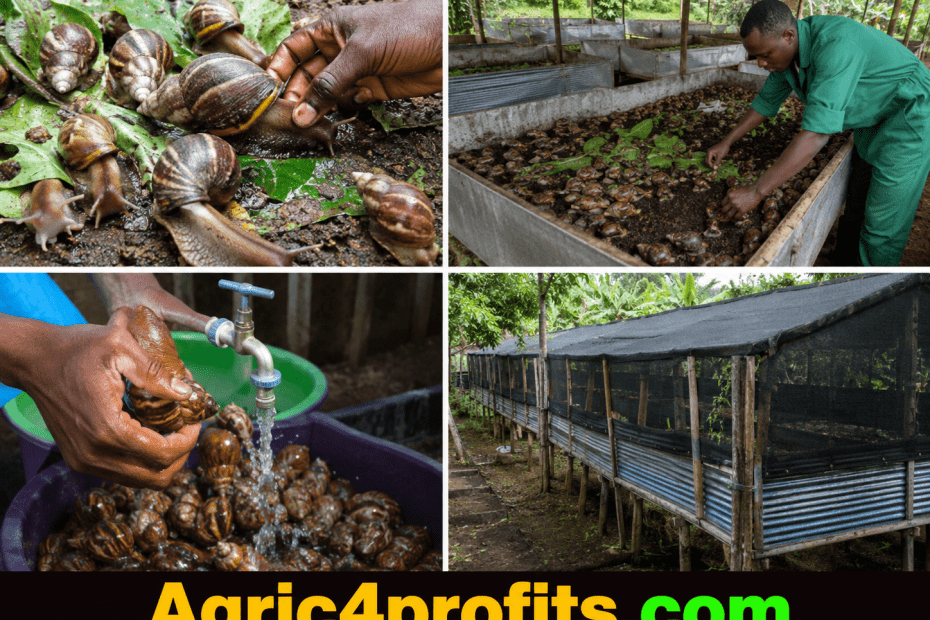
In any livestock enterprise, success depends on calm routines, careful observation, and consistent husbandry. Snail farming is no exception, because these soft-bodied animals respond quickly to moisture, feed quality, housing, and hygiene.
When farmers ignore small details, production slows, shell quality drops, and mortality rises. However, when daily care is disciplined and seasonal planning stays practical, snails grow well and breeding performance improves steadily.
Good management also protects investment, especially in semi-intensive and intensive systems where many snails share limited space. Therefore, every farmer should understand the needs of hatchlings, growers, breeders, and market-size snails.
In West African conditions, snail activity often follows rainfall, humidity, and temperature changes. Even so, domesticated snails can still lay eggs during drier months when housing, soil moisture, and feed are well managed.
Because climates differ across tropical regions, farmers should adjust routines to local weather rather than copy one system blindly. Careful adaptation prevents unnecessary stress and helps the farm remain productive throughout the year.
Seasonal Management Practices for Snail
Seasonal management begins with reading the weather and planning work around it. During rainy months, the farmer should maintain clean shelters, while in dry periods, moisture control becomes the most important daily habit.
🌿 Go Organic on Your Farm: Instead of harmful chemical pesticides and fertilisers, try our organic farming products — including neem oil spray, bio-pesticides, natural plant treatments, organic seeds and seedlings, suckers, and many more organic products that are safe for your health, your family, your soil and your harvest. Shop Now →
Breeding tends to improve when the pen stays cool, shaded, and well drained. Good housing supports that balance, and a well-built snail house reduces heat stress, escape losses, and unnecessary disturbance.
Farmers should also pay attention to soil condition, because snails lay eggs in loose, moist earth. When soil hardens, egg laying becomes difficult, so light turning and regular watering help maintain fertility.
Feed availability changes from season to season, so farmers should secure leafy materials, fruits, and compound rations early. For practical guidance, feeding snails locally and how to formulate snail feeds remains a useful reference.
Seasonal rainfall can increase disease pressure, especially when waste builds up around the pens. Regular cleaning, proper drainage, and the use of general routine maintenance practices of snail help keep the environment safer.
🔧 Free Farm Tool Available: Use our free Agric4Profits Farm Tools to calculate your farm profits, formulate feeds, identify pests and diseases on both your crops and animal farms, plan your planting and harvesting season, including many more farm tasks to get free expert advice and recommendations — completely free, no registration required. Access Free Tools →
Crop residues, tender leaves, and calcium sources should be stored in a dry, clean place before use. That habit reduces spoilage and supports predictable feeding when field supply becomes poor.
Planning ahead also saves money, because seasonal shortages often push feed costs higher. A farmer who studies cost of rearing 100 snails within six (6) months can budget more realistically and avoid surprises.
Above all, seasonal control should protect growth, breeding, and survival at the same time. Farmers who combine observation, moisture management, and steady nutrition usually record better output than those who wait for problems.
Caring for Snail Hatchlings
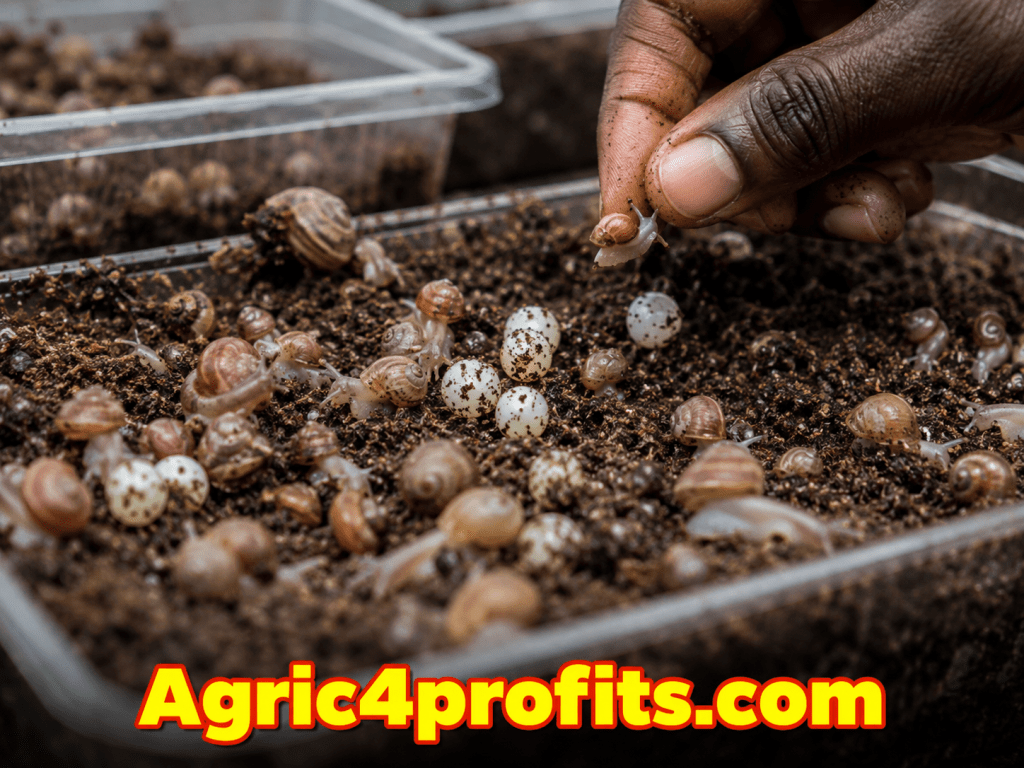
Hatchlings need softer treatment than mature snails because their shells and bodies are still developing. They thrive best in humid pens with tender leaves, clean water, and enough calcium for shell formation.
Because they are tiny and agile, hatchlings escape easily through wide mesh or loose covers. Fine nylon mesh, careful supervision, and secure lids reduce losses and keep the young stock safely contained.
💬 Have a Farming Question? Join thousands of farmers across Africa on the Agric4Profits Community — ask questions, share experiences and connect with agricultural experts. It is completely free. Ask Your Question Now →
Feed should remain fresh, gentle, and easy to chew. Tender pawpaw leaves, cocoyam leaves, and similar materials work well, especially when they are supplemented with mineral sources for stronger shell growth.
Moist soil is equally important, because young snails dig lightly and absorb water through their surroundings. When the pen becomes dry, they slow down, so the farmer must mist and mulch regularly.
Stocking density must remain high enough for efficient space use, yet low enough to prevent crowding. Hatchlings and juveniles can be reared together in carefully managed groups, provided the space is not overstressed.
Clean water should remain available at all times, but the water point must never flood the pen. Small containers and shallow trays help prevent drowning while still supporting humidity and feeding activity.
When hatchlings grow, the farmer should monitor weight, shell strength, and movement. Those signs reveal whether the pen condition is right or whether nutrition, moisture, or sanitation needs immediate correction.
Practical knowledge from snail farming techniques, breeding, housing, and feeding helps the farmer avoid common mistakes. With patience, discipline, and regular supervision, hatchlings can move smoothly into the grower stage.
Caring for Snail Growers
Growers are stronger than hatchlings, yet they still need careful handling because they are not fully mature. Around three months of age, they should move into separate pens with more space and better organisation.
At this stage, the farmer should reduce pressure and maintain a moderate stocking rate. Good separation improves feeding access, lowers stress, and makes it easier to sort snails for future breeding or sale.
Growers benefit from a wider diet that combines leafy materials with balanced formulated feed. A practical feed formulation and feeding trough for snails can improve intake, reduce waste, and support steady body development.
📖 Want to Go Deeper on This Topic?
Our expert agricultural ebooks cover poultry, fish farming, different crops production, snail farming, organic farming, mushrooms, sheep, cattle, flowers, pig farming, goat farming, agribusiness, etc. in practical step-by-step detail — written by agricultural professionals for African farmers.
Browse All Farming Ebooks →Protein, calcium, and phosphorus matter strongly during this stage because they influence flesh gain and shell quality. When these nutrients are missing, growth becomes uneven and market readiness takes longer to achieve.
Growers also need clean, cool pens with enough hiding places and moist substrate. A tidy pen encourages natural movement, protects the snails from injury, and makes daily inspection much easier.
Farmers should not overfeed, because stale feed attracts pests and encourages waste. Leftovers must come out each morning, and the next ration should match the group’s appetite and growth stage.
Growth records help the farmer see which lines perform well and which pens need adjustment. That information supports smarter stocking choices, better feeding plans, and stronger profit tracking across the season.
Careful growers often respond well when the farm follows the benefits of snail farming approach, because good management turns low-input labour into a dependable source of meat and breeding stock.
Snail Breeders

Breeders deserve the highest level of attention because they determine the next generation of stock. When they reach sexual maturity, usually around ten to twelve months, they should move into dedicated breeding pens.
Breeding pens must stay loose, moist, and quiet so that snails can mate and lay eggs without unnecessary stress. A crowded or hardened pen reduces egg laying and makes management more difficult.
The farmer should also maintain proper density, because excess crowding can trigger stress, injury, and poor fertility. Careful spacing supports mating activity and allows the breeder to move comfortably at night.
Nutrition matters greatly at this stage, so breeders should receive more calcium and protein than ordinary stock. Formula for a self-mix snail feed can help farmers strengthen shell quality and improve reproductive performance.
Once eggs appear on the surface, the farmer should bury them gently at the correct depth. That simple step protects the clutch, supports uniform incubation, and limits damage from sun or predators.
Before hatching, the soil above the clutch may need light loosening so the young snails can emerge evenly. After emergence, the adults should move away quickly to prevent cannibalism and accidental crushing.
The image below reflects the calm, shaded environment that breeder snails need for reliable production. It also reminds farmers that pen design, soil care, and supervision must work together every day.
Farmers who want a broader profit view should compare these breeding demands with simple analysis for snail farming and advantages of snail farming or snail rearing. That comparison makes decision-making more realistic.
Read Also: Recommended Equipments and Tools Needed in Snail Farming Business
Daily management involves several activities which include the following:
Daily management keeps the farm stable because small failures quickly become expensive losses. A disciplined farmer checks feed, water, housing, soil, and records every day, then responds before stress turns into death.
Feeding should happen after sunset, when snails naturally become active and more willing to eat. Fresh materials are best, because stale or mouldy feed can reduce appetite and damage the pen environment.
Water must remain clean and available, yet it should never flood the housing. Moisture supports movement and feeding, while excessive wetness can encourage rot, foul odour, pests, and other avoidable losses.
Inspecting the pen structure matters just as much as feeding. Wire mesh, covers, and doors should stay intact, because weak points allow escape and expose snails to rats, frogs, and insects.
Soil care also needs consistency, since compacted ground makes movement and egg laying difficult. Farmers should keep the substrate moist, but they must avoid fresh poultry droppings and other harmful contamination.
Hygiene remains essential because dead snails, leftover feed, and waste can attract disease. Good sanitation reflects the equipment and tools used for snail farming business and the guide on how to build a snail house.
Recording is the final daily task, yet it often separates profitable farms from careless ones. When the farmer logs feed use, labour, repairs, and losses, farm performance becomes easier to assess accurately.
Daily discipline also protects long-term growth by reinforcing the snail housing and equipments approach and reducing preventable mistakes that often destroy productive farms across many wet and dry seasons in practice.
Read Also: Mechanism of Animal Body Defence against Stress
Five (5) Funny Requests of Snails

Snails may not speak, but their needs are easy to understand when farmers watch closely. They ask for moisture, steady feeding, space to move, reliable shade, and a calm environment that supports survival.
1. Check on me every day, because regular attention helps you notice hunger, dryness, illness, or escape risks before the problem becomes serious, widespread, costly, and very expensive very quickly.
2. Give me a cool home with soft mulch, shade, and enough moisture, because a comfortable pen keeps me active, healthy, less stressed, and ready to feed through changing weather.
3. Serve fresh food and remove leftovers quickly, because stale feed makes my surroundings dirty, invites pests, weakens my appetite, and slows my growth rate over time every single day.
4. Watch carefully when I look slow or weak, because early action often saves me, protects the rest of the stock, and keeps the whole farm healthier and more productive.
5. Do not crowd me with too many others, because tight space makes movement hard, reduces feeding access, raises stress, and increases the chance of sickness, injury, and early death.
These playful requests contain real farming lessons, and they match the practical advice in challenges and potential of snail farming and 4 mistakes snail farmers make in snail farming every day.
Treating snails well also supports calm growth, better shell quality, and stronger survival rates. In simple terms, the farmer succeeds when every snail’s basic needs are met without delay or neglect.
Read Also: 7 Amazing Health Benefits of Cherries
Summary on Seasonal and Daily Management Practices for Snail
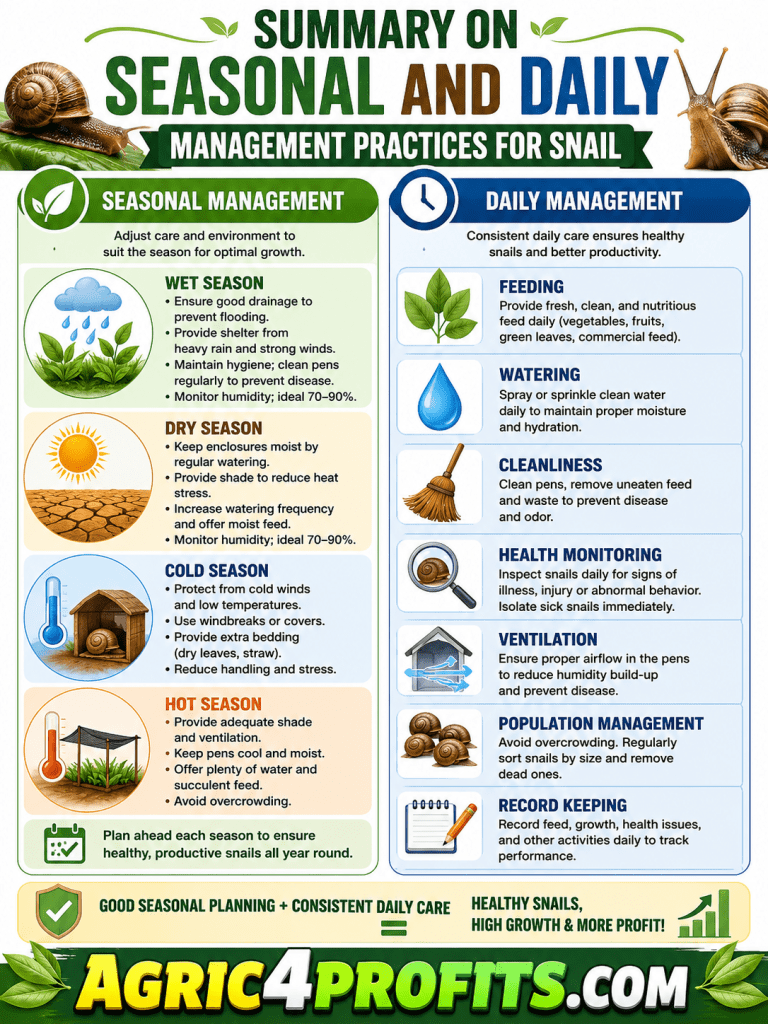
| Section | Main focus | Key action | Result |
|---|---|---|---|
| Seasonal planning | Weather, moisture, and feed supply | Adjust housing and stocking to rainfall and dry periods | More stable production across the year |
| Hatchlings | Humidity, gentle feed, and escape control | Use fine mesh, moist soil, and tender leaves | Better survival and shell development |
| Growers | Space, balanced rations, and hygiene | Increase room and support nutrient intake | Faster growth and stronger uniformity |
| Breeders | Loose soil, density control, and egg care | Keep pens moist, quiet, and well managed | Improved fertility and safer hatching |
| Daily care | Feeding, cleaning, records, and inspection | Check pens every day and remove waste quickly | Lower losses and clearer farm decisions |
| Farmer discipline | Observation and consistency | Respond early to stress, dryness, and spoilage | Healthier stock and better profit potential |
Frequently Asked Questions About Seasonal and Daily Management Practices for Snail
1. In everyday snail farming, which routine deserves the most attention, and why does that single habit matter so much when you are trying to avoid hidden losses across the farm?
The most important daily task is consistent inspection, because small changes in feed, moisture, health, or housing can quickly become losses when the farmer delays action or ignores warning signs.
2. Why do hatchlings need a wetter and more protected environment than mature snails, and what does that difference mean for shell development, survival, and early growth in the pens overall?
Hatchlings dry out faster, so they need humid soil, tender feed, and gentle handling. These conditions support shell formation, reduce stress, and help the young stock survive the first growth stage.
3. How often should leftover feed be cleared from the pen, and what problems can appear when stale feed stays too long and begins to spoil the cleanliness of the snail house?
Leftover feed should be removed every morning, because stale material attracts pests, encourages bad odour, and reduces hygiene. Fresh feed should then be offered after sunset when snails become active.
4. Which kinds of feed usually work best for growing snails, and how do protein, calcium, and phosphorus support steady growth, strong shells, and better market readiness at that stage exactly?
Growing snails do well on leafy materials, fruits, and balanced formulated rations that contain protein, calcium, and phosphorus. This mix supports shell strength, faster growth, and better uniformity in the pen.
5. Why should breeder snails live in separate pens instead of being mixed with younger stock, and how does that separation improve mating, egg laying, and the safety of the clutches?
Breeder snails need separate pens so mating, egg laying, and incubation can happen without disturbance. Separate housing also helps the farmer control density, protect clutches, and reduce cannibalism after hatching.
6. How moist should the soil inside a snail pen remain, and what balance should a farmer keep so the ground stays useful for movement, egg laying, and healthy digging each day?
Snail soil should stay moist, loose, and cool, but not waterlogged. Good soil allows movement, egg laying, and digging, while excess water creates stress, foul smell, and a higher disease risk.
7. Why does record keeping matter in snail farming, and how can written notes about feed, labour, repairs, and losses help a farmer improve profit and daily management decisions over time?
Record keeping helps the farmer track feed use, labour, repairs, losses, and output. With those figures, it becomes easier to measure profit, compare growth, and make better management decisions daily.
8. What practical steps can a farmer take to reduce snail escape losses, and why does secure housing matter so much when the stock is small, valuable, and easy to lose?
A farmer can reduce escape losses by sealing gaps, using fine mesh, locking covers, and checking the housing regularly. Secure pens protect stock, save time, and make production more predictable.
🌱 Take Your Farming Further With Agric4Profits
Based on what you just read, here are free resources and products from Agric4Profits that can help your farm right now:
- 🛒 Visit Our Marketplace — Organic neem oil, bio-pesticides, seeds and farming products
- 📚 Read Premium Content — Advanced guides for serious and profitable farming
- 🎓 Join Our Free Academy — Structured free training for farmers across Africa
- 🔧 Use Our Free Farm Tools — Profit calculators, feed formulation, pest identifier and more
- 💬 Join Our Farming Community — Connect with farmers across all 54 African countries
- ❓ Ask a Farming Question — Get answers from experienced farmers and agricultural experts
Please cite this content in academic work, research, or publications.